There are many festival cycles in the ancient Hellenic festival calendar. Some are related to cults, like the Eleusinian or Dionysian Mysteries, some tied to the weather and other to the harvest. Of the non-Attic festivals, we have very little knowledge available, let alone of the cycles. But I recently came across a set of festivals tied to the barley growth cycle and I have been fascinated ever since. Today, I would like to share the findings of my research.


Agriculture was the foundation of the Ancient Hellenic economy. Nearly 80% of the population was involved in this activity. The Mediterranean climate is characterized by two seasons: the first dry and hot, from Mounichion to Metageitnion (April to September) when river beds tended to dry up, the second is humid and marked by often violent rain storms brought in by west winds, with mild, frost free temperatures.

During the early part of Hellenic history, as shown in the Odyssey, Hellenic agriculture and diet was based on cereals: barley (κριθαί, kritaí), durum wheat (πύρος, pýros), and, less commonly, millet or common wheat. The generic term sitos (σῖτος), usually translated as wheat, could in fact designate any type of cereal grain. In reality, 90% of cereal production was barley. Even if the ancients were aware of the better nutritional value of wheat, the growing of barley was less demanding and more productive. Various attempts have been made to calculate Attican grain production in the period, but results have not been conclusive.

It seems that rituals were held for each stage in the development of the barley crop beginning with the Proerosia (before sowing), followed by the Khloaia (sprouting), then the Kalamaia (shooting of stalks), the Antheia (blossoming), and ending with the Thalysia (first-fruit offering). The Plerosia (fulfillment and satiation) was perhaps connected to this cycle as well.

To date these festivals, we must look at the growth cycle of barley in a Mediterranean climate. In modern times, it takes fall-planted barley about 60 days after spring growth begins to mature, for a total of about three months growth time. We have ancient records by botanist Theophrastos that attest that--except in Khalkeia on Rhodes where they sowed wheat and barley together in the autumn, then harvested the barley early and sowed more which they reaped 'with the remaining crops'--barley in his time took seven to eight months to ripen (and wheat a bit longer). If the Proerosia--as a pre-sowing festival--was held in what roughly equates to (mid) October, this cycle would extend to Skirophorion, or (late) Thargelion in a good year.

Interestingly enough, we don't have an attested harvest festival on the calendar for either month. The closest we come is a sacrifice to Demeter Khloe on the 6th of Thargelion--too early for this purpose, nor the 'right' epithet. 'Khloe' (Χλοη) means 'Green'; and epithet of Demeter the protectress of the green fields. Not a sowing festival, as the straw of fully matured barley will be brittle and golden in color. The other option is the Skirophoria--which is, indeed, a festival often associated with this the harvest cycle.

The Skiraphoria was one of the few days when the women of ancient Athens would gather in public to honor Demeter and bless the harvest. They refused to sleep with the men on this day and took part in a very odd tradition: casting piglets down into a chasm where they were left to rot until the Stenia. In short, it was not a harvest festival as such, but a post-harvest festival with the purpose to make the ground fertile for the next cycle. Connected, yes--all festivals were connected, especially those of Demeter--but not solely and directly linked to the barley harvest.

I propose the entire growth cycle of the barley took place between the Proerosia and the Skiraphoria, so between 6 Pyanepsion and 12 Skirophorion. We have one other thing going for us in dating the remainder: we know the modern day growth cycle of winter barley.

Barley goes through four stages of development: Tillering, stem extension, heading, and ripening. the Khloaia would have most likely been celebrated very early on, at the start of the tillering stage. The Kalamaia was most likely also celebrated early on, when the shoots grow into stalks (kalamos is a reed or cane). I would place this during the stage of stem extension. The Antheia would have been celebrated in the 'heading' stage, when the barley flowers, and the Thalysia during ripening, just before the harvest.

So when are these stages? Sprouting depends greatly on the moment of planting--as do all stages--but a safe guestimation is late October. Early tillering tends to take place by the end of November. By mid April, stem elongation tends to take place. Flowering takes place around mid to late May. Winter barley is harvested in June in warmer climates like the Mediterranean. Translating this to the ancient Hellenic calendar, here are my best guesses for the dating of the festivals within the months:

Proerosia: 6 Pyanepsion
Khloaia: (late) Pyanepsion / (early) Maimakterion
Kalamaia: (late) Maimakterion
(Plerosia: 5 Poseideon)
Antheia: (early) Thargelion
Thalysia: (early) Skirophorion

Can we, then, determine actual dates? No. There is a clear reason for this: it depended on the year when the barley reached the desired development stage. This could be earlier or later than a set date. As it was not outside the realm of the ancient Hellenic religion to set dates for floating events, here are my suggestions should you want to observe this cycle, based on existing and known festivals and the research provided above:

Proerosia: 6 Pyanepsion
Khloaia: 6 Maimakterion
Kalamaia: 24 Maimakterion
(Plerosia: 5 Poseideon)
Antheia: 6 Thargelion
Thalysia: 6 Skirophorion

If you look at the ancient Hellenic calendar, you can see that the attested festivals Demeter often fall on a sixth day, or a multiple of it. This is why the Khloaia is placed as such, as well as the Kalamaia and the Thalysia. The Antheia is placed on the previously mentioned 6th of Thargelion as there is already an attested sacrifice to Demeter Khloe that matches very well.

I will most likely revisit this theory at a later date, if and when more information becomes available. Feel free to comment on this theory; I would love the input.
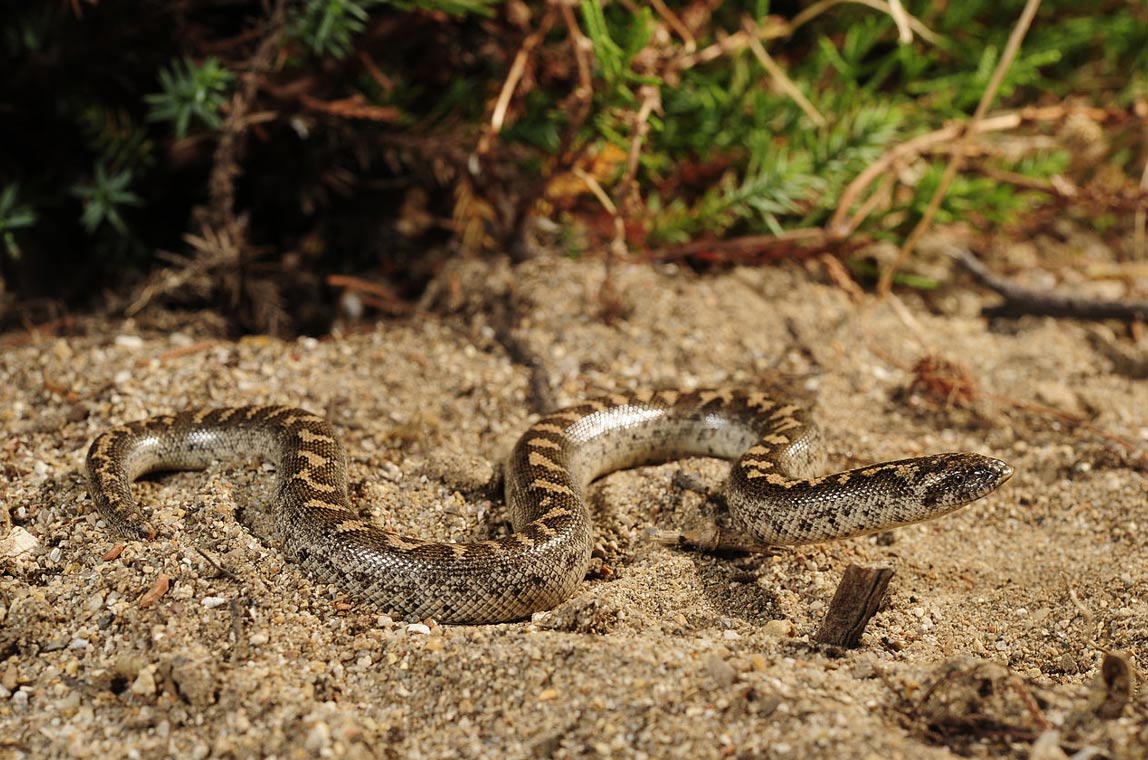
It can come as no surprise to you that the ancient Hellenes were often at war. In fact, it was quite common for ancient Hellenic city-states to go to war against each other. For their naval battles, the ancient Hellenes built huge war ships called triremes. A trireme was rowed bij 170 oarsmen, three rows per side, who were either poor citizens or dolos--slaves. A trireme would try to sink an enemy ship by ramming it from the side with its bronze nose. Alternative, they would sail past and allow the soldiers to throw spears at their enemy. Sometimes, however, they threw pots filled with burning liquids, or even poisenous snakes. This species of snake, the Javelin Sand Boa, has recently been rediscovered on Sicily, or so the Telegraph reports.


The Telegraph and many other news outlets make this statement based on a short rapport published in in the journal Acta Herpetologica. The Javelin Sand Boa had not been officially recorded in Italy for 80 years, but sightings by locals suggested that it might still survive in a region of Sicily. Snake experts decided to investigate and found the species, officially known as Eryx jaculus, living in an area of sand dunes and woodland around the resort town of Licata, on the island’s south coast.

The shy, non-venomous snake is not native to Sicily but the researchers think the ancient Hellenes introduced it long ago because it is there in numbers and locals have names for it. The area where it was found is close to the sites of two ancient battles, one in the fifth century BC and the other in the fourth century AD. Gianni Insacco, one of the researchers, told the news agency Ansa:

"The Greeks used to use snakes as projectiles, hurling them at enemy ships before attacking in order to create confusion and fear. In general they used vipers that had had their venom removed. Alternatively they would use similar species, like the sand boa."

The javelin sand boa grows up to 84 cm (33 inches) but is usually 30 to 60 cm (12 to 24 inches) long. Its range is southeastern Europe, Greece, the Balkans, the Caucasus Mountains, into the Middle East and northern Africa. It was first reported in Sicily in the news media in 2006, but the researchers confirmed its presence there in their new study. They found six specimens—three live and three dead, two dead on the road and one drowned in a shaft, and there have been many reports over the years of other sightings.
At dusk on January 6th, the Haloa (῾Αλῶα) starts. This ancient Hellenic festival was held in honor of Demeter, Dionysos and a little bit in honor of Persephone. Like all festivals of Demeter and Persephone's 'Kore' persona, women were the only ones who were allowed to handle the religious and sacrificial side of it. Women, will you join me in celebrating freedom and fertility come 10 am EST on January 7th?


The Haloa is part of the Mysteries, and thus linked to the festivals of Proerosia (6 Pyanepsion), Thesmophoria (11-13 Pyanepsion), the Lesser Mysteries (20-26 Anthesterion), Stenia (9 Pyanepsion), Skirophoria (12 Skirophorion) and the Greater Mysteries themselves, which were held 13-23 Boedromion. It was a rural festival, meaning it wasn't state-organized and widely spread, so most details are incredibly fuzzy. He're what we do know about it:

The Haloa is assumed to be a celebration of the pruning of the vines and the tasting of the wine after its first fermentation, or it may be to encourage the growth of corn from the seed. It is named after the hálōs (ἅλως), which means both threshing floor and garden. Since the first sense of the word would be inapplicable to a festival celebrated in January, scholars--including Nilsson in his 'Greek Popular Religion'--insist it must have been a gardening festival.

Some time during the festival, the entire population was invited by the priests of Dionysos and the priestesses of Demeter and Kore to give sacrifice to these Theos; to Demeter and Kore for the fertility of the earth in which the grapevines grew, and to Dionysos in remembrance of Ikários, who was such a fine winemaker that he could produce wine so strong, those who drank it appeared to be poisoned. His skill turned out to be his undoing; Íkaros was killed by those who drank his wine, thinking the wine maker was out to kill them. This sense of being poisoned might have come from permanent erections brought on by the wine; they only went away when an oracle told the men to put out clay phallus-shaped objects. When they did so, their limpness returned. This event was celebrated at home, by the men, but the women traveled to Eleusis.

In the earliest times the religious part of the festival might have been restricted to married women, but after the fourth century BCE its celebration may have been limited to hetairai (ἑταῖραι, female companions, a term used non-sexually for women, about women, but used by men to indicate a woman hired for entertainment, often leading to sex), or they were simply also allowed to hold their own symposium during the Haloa, either at home or at Eleusis. The Haloa would have been the day on which they were initiated into the Mysteries. The Eleusinian Arkhontes (Ἄρχοντες, male magistrates of the Mysteries) prepared a huge banquet on this day, with a huge variety, including phallus- and vagina-shaped cakes, but not foods forbidden in the Mysteries: pomegranates, apples, eggs, fowls, some types of fish were out. Animal sacrifice was also disallowed on this day: Demeter received offerings of fresh fruit.

After preparing the food, the Arkhontes left, leaving the women to eat, to drink lots and lots of wine, and to celebrate being a woman and fertile (or the wish to be fertile). The Arkhontes went to the men who were waiting outside of Eleusis for their part in the Mysteries, and told them the story of Eleusis, and how the Eleusinians had discovered nourishment for the entire human race. A giant phallus is often assumed to have been set up on the hálōs, and the women would dance around it carrying clay models of phalli and vaginas, but it is more likely the phallus was never there, but depicted on artwork abbot the Haloa to indicate the fertility aspects of the festival and the dances that occurred there. As part of the festivities, the women engaged in sexualized conversation with each other. As part of the sacrifice, the women carried kernoi (κέρνοι, offering dishes) on their heads, containing incense, grains or other offerings, which they tipped onto the giant phallus or, and this is probably far more accurate, onto the altar.

After the feast and sacrifice, the men who had been waiting were admitted to the grounds, and the women were encouraged by each other--including the priestesses--to take secret lovers for the night. A priest and priestess--with torches representing Demeter and Persephone--apparently sat watch on chests as they presided over the fertility celebration.

The Haloa is the perfect time to organize an adult 'girl's night' with your closest female friends. Watch a movie with erotic tones, drink wine together, gorge yourselves on chocolate and gossip about your partners. If you have an agreement about it with your partner, you could find a lover for the night. If not, go home to him or her and spend the night together in your own 'fertility rite'. If you're single and have no one to fill your bed... well... a girl can get creative, can't she?

For the men, the Haloa might have had an extra ritual part as well; honoring Poseidon as an agricultural Theos. There is evidence that the men built a huge bonfire and had their own conversations around it. Afterwards, they joined the women, when possible (and desired). Single men; I'm sure you can be as creative as the single women reading this.

So, ladies, will you join me on the 7th of January, at 10 am EST? The community page can be found here and the ritual here. Enjoy your Haloa celebration! Be safe, happy, and sated!
It can't have escaped your notice that yesterday, the secular new year came to an end. Interestingly enough, I recognize many themes of the Deipnon within these festivities. Purification of the house and person, tying up loose ends of the old year, setting goals for a set period ahead. It makes me more comfortable to indulge in good food and friendship to recognise these very familiar efforts.
I've never really observed new year's as something special (mostly because I celebrated it around Samhain since I was thirteen), but in my Hellenistic tradition, new year's is still half a year away (the Athenians and the other Ionian peoples began their year with the first new moon after the summer solstice, the Dorians with the first new moon after the autumnal equinox, the Boeotians and other Aeolians with the new moon after the winter solstice). Still, it's a fun evening and night to spend with family, friends and other loved ones. I hope you enjoyed it as much as I did.

As a bit of a tradition, let me share the top ten search results that brought you here, my dear readers, just to show how awesome you guys are and how completely on topic!

- baring the aegis
- hellenismos
- medusa poseidon
- ancient greek barley cake recipe
- baringtheaegis
- kharis
- tenets of arete
- the 12 gods of olympia
- baringtheaegis.blogspot.com
- aegis

 I wish you all the absolute best in the secular new year!
Naukratis (Ναύκρατις, meaning 'naval victory) was a city of Ancient Egypt, on the Canopic branch of the Nile river, 45 mi (72 km) South East of the open sea and the later capital of Ptolemaic Egypt, Alexandria. It was the first and, for much of its early history, the only permanent Hellenic colony in Egypt; acting as a symbiotic nexus for the interchange of Hellenic and Egyptian art and culture.

The modern site of the city has become an archaeological find of the highest significance and the source of not only many beautiful objects of art now gracing the museums of the world but also an important source of some of the earliest Hellenic writing in existence, provided by the inscriptions on its pottery.
According to the Classical historian Herodotos, in the mid-sixth century BC the Egyptian Pharaoh Amasis gave the town of Naukratis to Hellenes from twelve different cities to live in, including land where non-resident traders could erect sanctuaries. However, archaeology attests the site’s existence already under Pharaoh Psammetichus (Psamtek) I, from at least 620/610 BC. Furthermore, Naukratis was not just a Hellenic but also an Egyptian town, in which Hellenes and Egyptians lived side by side for centuries. To Egyptians, the site was known as Nokradj (the Hellenic name ‘Naukratis’ deriving from this Egyptian name), or as Per-Meryt, the-House-of-the-Harbour. The city had close connections to the Egyptian royal city Sais, located on the neighbouring branch of the Nile.

Naukratis was frequented by traders from many Hellenic cities as well as by Phoenicians and Cypriots; it became famous for its elaborate symposia (dining parties) and beautiful hetairai (courtesans). Naukratis functioned as the main trading port in the Western Nile Delta until the foundation of Alexandria, and continued to be significant also throughout the Hellenistic and Roman periods. Officers (prostatai) appointed by the nine founding cities of the Hellenion administered the emporion (Hellenic trading post) at least from the time of Amasis. Imports into Egypt included wine, oil, and silver, and exports from Egypt grain, flax, natron, papyrus, perfume and other semi-luxuries.

During the Hellenistic period Naukratis was one of three Hellenic poleis (city-states) in Egypt and remained an important town and regional hub. Alexander the Great’s finance minister, Kleomenes, was born here. In the late fourth century BC Naukratis briefly issued its own bronze coinage.

Artefacts dating from the late first century BC to the seventh century AD show that Naukratis continued to be occupied well into the Roman period and beyond. The settlement had shrunk into a town by the second century AD, though it retained some status. Games, featuring poetry competitions, apparently continued to be performed there into the third century AD, and the site was home to the famous culinary writer Athenaeus. Byzantine period (AD 330 to 641) artefacts, sometimes displaying Christian symbols, are rare, and it seems that by the seventh century AD Naukratis had fallen into obscurity.

For more information about the city and images of many of the artifacts found, visit the website of the British Museum.
Michael D. Konaris recently posted a history of modern scholarship on the ancient Hellenic religion that I would like to share with you today. Konaris studied Classics and Ancient and Modern History at Oxford and Cambridge and has held postdoctoral research positions at FU, Berlin, Princeton, and EHESS. The Greek Gods in Modern Scholarship: Interpretation and Belief in Nineteenth and Early Twentieth Century Germany and Britain is based on his doctoral dissertation at Balliol College, Oxford under the supervision of Prof. Robert Parker.


"The nineteenth and early twentieth centuries are a key period in the history of modern scholarship on ancient Greek religion. It was in nineteenth-century Germany that the foundations for the modern academic study of Greek religion were laid and the theories formulated by German scholars as well as by their British colleagues in the late nineteenth and early twentieth century exercised a profound influence on the field which would resonate until much later times.

Throughout this period fierce debates were conducted over the interpretation of Greek religion: what were the origins of the Greek gods and what light did they shed on their conception in historical times? Was there a monotheistic strand in Greek polytheism and if so, how was it to be explained? In terms of an innate human tendency, or diffusion from abroad? And if the latter, where from? How similar or different was Greek religion to the religions of other Indo-European peoples, to the non-Indo-European religions of the ancient Near East, or to the modern polytheistic religions of Africa and Asia? At a time of growing scientification and professionalization in the discipline, classical scholars in Germany and Britain drew on developments in philology, archaeology, comparative mythology, anthropology, and later sociology to propose strikingly different answers to these questions.

Consider the issue of origins, for example. According to a very influential tradition of comparative interpretation in the nineteenth century, the Greek gods, like the gods of other ancient religions, derived from the personification of natural elements and domains—Zeus of the sky, Poseidon of the sea, and so forth. Because of the variety of natural forces and phenomena, Ludwig Preller (1809-1861), one of the most eminent representatives of this approach, described polytheism as an inherent weakness of Greek religion.

In the course of the second half of the nineteenth century, this view was strongly opposed by scholars such as Heinrich Dietrich Müller (1819-1893) and Ernst Curtius (1814-1896), who rejected the idea that Greek religion was inherently polytheistic and to whom the worship of natural powers was redolent of irrationality and mysticism. In their eyes, it was typical of Asian religions, but could not have provided the basis of the religion of the Greeks. Far from being personifications of different elements of the natural world, they suggested that Zeus, Poseidon, and the other Olympians were originally universal, omnipotent gods—like the God of Judaism and Christianity. Ascribing a form of monotheism to the Greeks they argued that initially each Greek community had worshipped a single, all-powerful god. Greek polytheism was a late outcome of historical contingencies as the separate gods of the different communities were gradually brought together and their once universal powers started to contract.

This theory was, in turn, challenged in the late nineteenth and early twentieth century by British anthropology and evolutionism. The concept of gods endowed with universal powers was now seen as belonging to late stages of religious development rather than its beginnings. Jane Ellen Harrison (1850-1928), one of the first to apply sociological theory to the study of Greek religion, in fact envisaged an early stage of Totemism in ancient Greece where no gods at all had existed. In her view, what was primary in Totemism was “the idea of the unity of a group.” Gods were a “by-product” that emerged gradually out of pre-existing rituals which expressed group cohesion.

These issues were far from being of mere antiquarian interest. The interpretation of Greek religion during the nineteenth and early twentieth century was heavily affected by, and closely implicated in, contemporary discussions of crucial questions concerning the origins and nature of religion, the roots of Western culture and its relation to the “Orient,” or humankind’s attitudes to nature. Clashes between devout Christian scholars and proponents of “scientific atheism,” confessional rivalries between Catholics and Protestants and national rivalries between the Germans and the British were some of the factors that informed the study of Greek religion and made it highly relevant to present concerns.

The modern assumptions and agendas of past interpretations of Greek religion highlight the intersection of the history of the discipline with contemporary intellectual, cultural, and religious history. They not only shed light on why the field evolved in the way it has, but also invite us to reflect on the interrelations between current views of Greek religion and their context."


I, too, have noticed, lately, how modern scholarly works focus more on the intersection between disciplines to provide information and interpretation based on archaeological finds and previously drawn conclusions. New and old discoveries are being interpreted through psychological, sociological, economical, and any of another number of disciplines to provide a larger whole that fosters understanding of the ancient religion and society instead of just informing about it. Personally, I am a huge fan of this trend and I hope it continues. It makes scholarly work more easily accessible and also provides much more information that just the bare basics of previous eras
A.L. Eleutherios over at Under Two Trees recently posted a very thought provoking article on absolute anti-theism. This opinion piece argues that many celebrated atheists thoughts, sayings, and actions are actually anti-theist, and that this anti-theist movement is hurtful to followers of minority religions, as they are conflated with the oft-meant majority religious groups that fueled aforementioned thoughts, sayings, and actions.

The major example given was the 'God graveyard' (part two) stunt that took place in 2013 by the Atheists, Humanists, and Agnostics at the University of Wisconsin. The group had created a graveyard filled with (paper) tombstones with names, images, year of birth, year of death, and a short description of many popular Pagan and Non-Pagan Gods. The group never released their reason for putting up this specific display, but did comment on Facebook to criticism saying:

"Our sign said "Once worshipped by entire civilizations, now only myths." Perhaps we should have said "now considered myths". The fact is that every god that we included was once worshipped by an entire civilization, but those civilizations have since died, and their gods are now no longer worshipped at all, or by nowhere near as many people as before. 

As atheists, we believe ALL gods are myths, but we chose to only include the gods that are now considered myths by the majority of human beings. The Judeo-Christian, Hindu, Islamic, etc gods are undoubtedly at the height of their worship, and thus can be considered "the gods of today". We then posed a simple question: looking at all these gods that were once worshiped widely, but have since ceased being worshiped altogether or at least lost a significant amount of followers, how much longer will the current gods 'live' or remain in the mainstream?"

Eleutherios recounts these events and puts them into another --much darker--light:

"It’s not that it bothers me what these kids believe about the old gods. It’s because the graveyard, essentially, is an endorsement of cultural genocide, no different from building a monument to Christopher Columbus. Basically, how this sounds like is, “These cultures are dead and you’re next”. But since these cultures didn’t die of “natural causes” or “old age”, this isn’t a reminder of mortality — it’s a threat. We know from history that most of those religions “died” and their gods “forgotten” because of coercion, not for simply falling out of favour.

Now, I understand how they want to “help” monotheists see how ridiculous it is to question other religions but not theirs. I think that’s important. However, this graveyard stunt (and others like it) comes off as historically and culturally uninformed. There are countless accounts of pagan peoples fighting for their right to exist in an increasingly pagan-hostile society, ultimately losing because the enemy had more money for a bigger army. In some places, it still happens."

These types of actions, and condoning them, is not atheism, it's anti-theism, and it paints--in Eleutherios' words 'religious people [as] a monolith; a cohesive group of delusional, backward bigots holding the world back from science, reason, and progress'.

Now, I do not condone the stunt pulled, nor do I support or appreciate anyone speaking highly of it. But as I said then, I do not feel personally offended. This was a thought exercise--or threat, if that is how you want to view it--not to the Pagan and/or ancient religions (as a conglomerated whole), but to those religions currently in major practice. Does this equate cultural genocide? I don't know. I doubt that was the goal of the graveyard, and few atheists I know are actively looking forward to, or working towards, a day where all religions have disappeared (with or without its previous believers).

Now, 'anti-theism', as described in the blog post is very real. To a very, very, very small group of people, all people who believe in some form of divinity are pretty much basket cases. Some people in the world extend their hate towards believers of a particular faith to all people of faith. And a larger group of people with receive information about being a follower of a minority religion with skepticism or ridicule. Yes, this is all true. I do think, however, that the distinction between theism and anti-theism is a lot more nuanced than proclaimed in the blog and that the graveyard is a form of atheism (as badly thought out as it was), not anti-theism. You will recognize anti-theism instantly, I feel: if you doubt it’s anti-theistic, it probably is not.

For me, anti-theism is the Chapel Hill shooting, or the 2015 Oregon shooting. It's outright violence and/or the spreading of hatein the name of atheism. It's getting others to share your views in a way that is clearly meant to incite, not provoke objective thought. Anti-theism is the radicalized version of atheism, and radicalization no matter the form is scary, deadly, and very hard to root out. But just like Muslims cannot and should not be judged by the actions of a very small few who kill in the name of their religion, we cannot judge atheists in the same way. Some people simply do not believe. Some people talk about not believing like I talk about believing. And there is enough room in the world for both. There is not, however, room in the world for extremism of any kind and while atheist thought, in my opinion, falls under freedom of speech, true anti-theism never, ever does.