Projection: First Light is a platform computer game that follows the adventures of Greta, a girl living in a mythological shadow puppet world, as she embarks on a journey of self-enlightenment with the assistance of legendary heroes from each culture she explores.


Accompanied by atmospheric visuals and an ethereal soundtrack made with antique instruments used for shadow puppet performances, Projection: First Light takes players on an inclusive voyage through the history of shadow puppets as it evolves through Indonesia, China, Turkey, Greece, and 19th century England.

Early in her expedition, Greta takes control of a source of light and learns of her ability to manipulate it. Shadows become platforms and walls, other elegant and imaginative solutions irradiate puzzles, and enemies can be dispersed – as Projection: First Light explores themes of worldliness, respect and understanding.

Project: First Light is developed by Shadowplay Studios, a small indy developer based out of Australia. Although the release date is expected to be fall of 2019, you can go check out the game on Steam and their website. The game will be available on Mac, PC, PS4, Switch, and the Xbox One.
We all know the Orphic Hymns; a collection of eighty-seven short religious poems composed in either the late Hellenistic or early Roman (first or second century AD) era. They are based on the beliefs of Orphism, a mystery cult or religious philosophy which claimed descent from the teachings of the mythical hero Orpheus. The Mysteries were mostly connected to Demeter, Persephone, life after death and reincarnation. From the Orphic Hymns also comes a list of which incenses to offer to which deity. For all Orphic Hymns, go here.

Beyond the Orphic Hymns, there are the Orphic Fragments, poems and lines connected to the Orphic school of thought. Many of these are a true treasure-trove of information and religious material. As I'm swamped today, I am leaving you with one of these poems on queue.

"Zeus is the first. Zeus the thunderer, is the last.
Zeus is the head. Zeus is the middle, and by Zeus all things were fabricated.
Zeus is male, Immortal Zeus is female.
Zeus is the foundation of the earth and of the starry heaven.
Zeus is the breath of all things. Zeus is the rushing of indefatigable fire.
Zeus is the root of the sea: He is the Sun and Moon.
Zeus is the king; He is the author of universal life;
One Power, one Dæmon, the mighty prince of all things:
One kingly frame, in which this universe revolves,
Fire and water, earth and ether, night and day,
And Metis (Counsel) the primeval father, and all-delightful Eros (Love).
All these things are United in the vast body of Zeus.
Would you behold his head and his fair face,
It is the resplendent heaven, round which his golden locks
Of glittering stars are beautifully exalted in the air.
On each side are the two golden taurine horns,
The risings and settings, the tracks of the celestial gods;
His eyes the sun and the Opposing moon;
His unfallacious Mind the royal incorruptible Ether."

The cost of entry fees to 24 archaeological sites, museums and monuments in Greece will increase after the Central Archaeological Council (CAC) approved proposals put forward by a working team responsible for determining the new pricing system for sites across the country. According to the proposals, the 2-1 euro ticket category will be replaced by the 3-2 euro class, while there will be an increase in fees in a total of 24 archaeological sites, museums and monuments and a reduction in five sites. The new costs will take effect from 2020 onwards.


The new proposals presented to the CAC took into account statistics and revenue from tickets, the state of the sites, their location, their popularity, the completion of NSRF projects and, in particular, their visitation rate.

More specifically, there will be increases in ticket prices in archaeological sites and museums, such as the National Archaeological Museum and the Archaeological Museum of Heraklion, where the full and the reduced ticket of 10 and 5 euros, respectively, will become 12 and 6 euros.

-In the Archaeological site of the Ancient Agora and Museum of the Attalos Lodge, as well as in the Archaeological Site of Sounio, the entry ticket will cost 10 euros from 8 euros (4 euros reduced) (5 euros reduced).

-The Archaeological Site of the Roman Agora and the Archaeological Site of Dodoni from 6 euros (3 euros reduced) to 8 euros (4 euros reduced).

-In the Archaeological Site of Hadrian’s Library, the Archaeological Museum of Ioannina, the Archaeological Site of Ancient Thera, the Diachronous Museum of Larissa and the White Tower from 4 euros (2 euros reduced) to 6 euros (3 reduced).

I'll be completely honest and say these prices should probably be doubled. The new prices, not the old ones. Why? Because Greece is strapped for cash, and the archaeology budget could use a boost. So many sites are struggling, so many research is currently unfunded--and all of it could increase our understanding and awareness of ancient Hellenic life and worship. I live in The Netherlands where tickets to anything cost $5 - $50, and the $5 things are things no sane person would spend money on. It helps fund these things. It's healthy economy. 

The ancient sites are Greece's main draw--and biggest source of revenue. Make use of it. Pour the money back into restauration and research. Create more sites. Repeat. It won't solve all issues, but a $2 boost is going to solve even less.

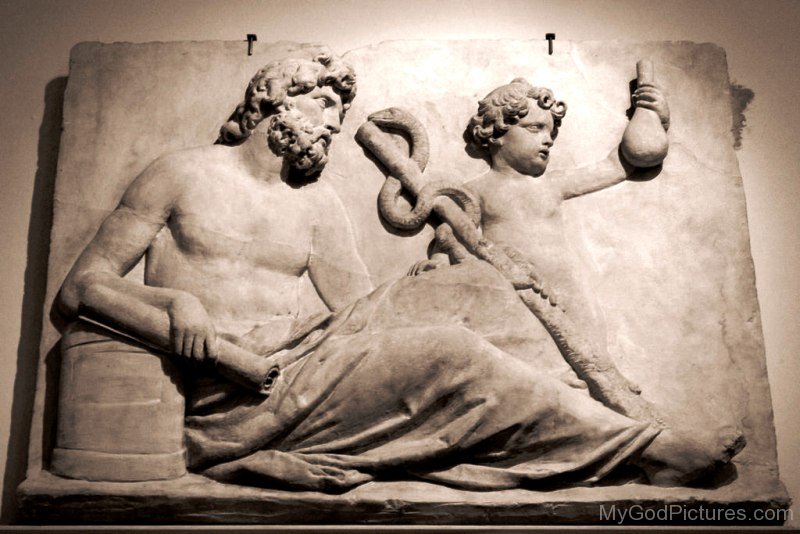
On the eighth day of Elaphebolion, the Asklepieia (Ἀσκληπίεια) was held in honor of Asklēpiós, who was honored monthly on the eighth. The Asklepieia is linked to the Epidausia, celebrated six months later, as both were special days where those in the medical profession--as well as those seeking medical counsel--made sacrifices to Asklēpiós. Will you join us today, on the 15th of March, at 10 am EDT? (Sorry, this one slipped by on me!)


In 242 BC, during the Mercenary War, the sanctuary at Epidaurus was granted immunity from war, and the Asklepieia Megala was established as a festival of athletic and musical competitions, held every four years, for a nine day period. Theater performances were also a huge part of the festival, and the famous theater of Epidaurus still stands today, one of the seven wonders of ancient Hellas.

The first of the festival days was spent preparing for the actual festival. The second day, religious exercises were undertaken. All temples and shrines were richly decorated and sacrifices were made to Apollon, Asklēpiós, Artemis, and Leto. Perhaps and the children of Asklēpiós--Hygieia (health, cleanliness, and sanitation), Iaso (recuperation from illness), Aceso (the healing process), Aglaea (beauty, splendor, glory, magnificence, and adornment), and Panakea (universal remedy)--also received sacrifice. Apollon received the first offering along with Asklēpiós: a cock, the fowl associated with Asklēpiós. They also received barley meal, wheat, and wine. Asklēpiós was then gifted a bull, a second bull was sacrificed to His male associates, and a cow to His female associates.

On the eve of the third day, a statue of Asklēpiós was driven through the precinct, and followed by torch-bearers and priests, who sung hymns to Him. The priests sang and spoke the praise of the Theos. There were vigils throughout the night, and during the daylight hours of the third day, there were feasts. The succeeding days were given up to athletic contests in the stadium, races, wrestling contests, singing contests and theater performances.

The Asklepieia Megala was only held at Epidaurus; all other asklepieia--as well as at Epidausus the other three years--held only a small ceremony for the Theos. The festival did not include athletic games outside of the Asklepieia Megala, but there might have been a focus on singing, and there might have been large banquets, held after sacrifices were made to the Theos.

You can find the ritual here, and we really hope you will join us on the Elaion Facebook page for this one, too!
Mentalfloss recently put together twelve facts about the Acropolis in Athens, which was quite entertaining. You can read the whole thing here, but below are the highlights.


ITS HUMAN HISTORY IS NEOLITHIC.
Humans have inhabited the limestone slopes of what became the Acropolis for centuries; they were likely drawn to the water from its natural springs. There's evidence of habitation in the area dating back to the Neolithic period between 4000-3200 BCE, with both a house and a grave identified from around this era. A series of shafts have also been discovered, with several vessels found in their deep chasms. One theory is that the shafts were once wells, while another is that they were a site of ritual burial, since human bones were found among the objects buried within.

ITS FIRST STRUCTURES WERE BUILT FOR DEFENSIVE PURPOSES.
From its central position above Athens, the Acropolis is perfectly positioned for strategic military defense—and its major initial structures were in fact focused on preparing for war. The ancient Mycenaeans built its first defensive wall in the 13th century BCE (a structure so strong that fragments still survive today), which was the primary defense of the Acropolis for around eight centuries. Eventually the site would gain religious significance, with temples being added to the area.

A COLOSSAL ATHENA ONCE PRESIDED OVER THE ACROPOLIS.
The Acropolis is the most complete surviving ancient Greek monumental complex, which is remarkable considering the centuries of natural disasters, war, and reconstruction. Still, much of its ornamentation and art is now gone. One of these losses is a colossal statue of Athena once located inside the Parthenon. Known as Athena Parthenos, it stood almost 40 feet tall and was made from gold and ivory by the sculptor Phidias. Dressed in armor and covered in jewelry, it was an awe-inspiring spectacle that reaffirmed Athens's spiritual and economic power.
The statue disappeared in late antiquity, and was likely destroyed—but thanks to Roman replicas, we can still get an idea of what the Athena Parthenos looked like. To experience a facsimile of its full scale, however, you must travel to Nashville, Tennessee. There, in the 1980s, artist Alan LeQuire created a full-sized reconstruction of Athena Parthenos, now housed within the city's Parthenon replica.

BRINGING MARBLE TO THE ACROPOLIS WAS A MONUMENTAL TASK.
The marble that composes the Acropolis’s classical structures, including the Parthenon, is not local. It was quarried at Mount Pentelicus, located 10 miles to the northeast of Athens and famed for the uniformity of its white marble. It was hard labor to quarry the marble, with stonemasons using iron wedges and mallets to pound apart blocks along their fissures. From Mount Pentelicus, workers used a downhill road to move the marble on its long journey to Athens, where they still had to get the rocks up the steep slopes of the Acropolis.

THE WORLD’S OLDEST WEATHER STATION IS AT ITS BASE.
Located on the slopes of the Acropolis is what's considered the oldest weather station in the world. Known as the Tower of the Winds, the octagonal marble structure dates back 2000 years, and is likely to have once held a bronze wind vane above its sundial. Many historians also believe that it contained a water clock that was hydraulically powered with water flowing down the steep Acropolis hill, so that Athenians could tell the time even after dark. Lord Elgin, who brought many of the Parthenon's sculptures to London, wanted to bring this structure as well, but was denied. After a recent restoration, it opened to the public for the first time in nearly two centuries in 2016.

RESTORATION STARTED 40 YEARS AGO—AND IT'S STILL GOING.
A major restoration of the Acropolis started in 1975, under the new Committee for the Conservation of the Monuments on the Acropolis, which meticulously examined the state of the hilltop and began work to return it to its ancient condition. Marble from the exact mountain where the original stone was quarried is used for structural interventions, and conservators employ similar tools to those employed by ancient artisans. But since just one block can take over three months to repair, the project is still ongoing—and will hopefully stabilize the site for centuries to come.
“Beyond the theater is the shrine of Aphrodite. In front of the foundation is a stele on which Telesilla, a poet of lyric, is depicted. Her books are tossed near her feet while she looks at the helmet she holds in her hand as she is about to put it on her head. Telesilla was famous among women and especially honored for her poetry.

But a greater story about her comes from when the Argives were bested by Kleomenes the son of Alexandrides and the Lakedaimonians. Some Argives died during the battle itself and however many fled to the grove of Ares died there too—at first they left the grove under an armistice but they realized they were deceived and were burned with the rest in the grove. As a result, Kleomenes led the Spartans to an Argos bereft of men.

But Telesilla stationed on the wall of the city all the slaves who were unable to bear arms because of youth or old age and, after collecting however many weapons had been left in homes or in the shrines, she armed all the women at the strongest age and once she had armed herself they took up posts were the army was going to attack.

When the Spartans came near and the women were not awestruck by their battle-cry but waited and were fighting bravely, then the Spartans, because they reasoned that if they killed the women the victory would be ill-rumored even as their own defeat would come with great insult, yielded to the women.

The Pythian priestess had predicted this contest earlier in the prophecy relayed by Herodotus who may or may not have understood it (6.77):

'But when the female conquers the male
And drives him away and wins glory for the Argives,
It will make many Argive women tear their cheeks.
These are the words of the oracle on the women’s accomplishment.'”

Greece is a varied country that presents numerous opportunities for subsistence, survival, and livelihood. The terrain changes significantly from one region to the next, imposing limits on the forms of livelihood of individuals of any particular region. Coastal and flood plains provided some poleis with rich fertile lands capable of producing large amounts of barley and wheat. The history of ancient Hellas is in many ways the story of how environment and geography shaped the ways that communities and individuals interacted with each other.


A changing climate could demand the adaptation of any particular region to those changes, either by forging human ties and relations or by encouraging revolutions in technology. The construction of terraces was a way of changing the face of the landscape to increase the amount of arable land for a region. In this regard, there is ample literary evidence that humans recognized the fertilizing value of manure and spread it on their gardens and fields to produce larger crop yields. Technological innovation in metallurgy, agriculture, and milling occurred at various points in antiquity, each time providing humans with a little more control over their environment.

In classical Hellas the natural environment was transformed but not destroyed. People were not conservation-minded but they seem to have known the strengths and weaknesses of their environment. This knowledge probably helped them to also develop an advanced civilization.
The ancient Hellenic landscape included both city and country. The basic political unit of the Hellenic world was the polis that included an urban center (asty) and its surrounding land (chora), often incorporating additional towns and villages. The Greek word polis is usually  translated into English as "city-state". But, whereas we usually think of cities only as urban centers, the Hellenic concept was that of the city plus its surrounding land as an integrated whole.

Τhe individual in ancient Hellas could use the land in a number of other ways. The shepherd could lead flocks from one patch of unused or unclaimed land to the next, following seasonal patterns of migration . Local potters could make use of clay beds to produce pottery and roof tiles; builders could use the same source to construct mudbrick houses. Moreover, the gathering and collecting of a variety of vegetation could supplement local diet, as could the hunting of hares and wild boar and fishing for a wide variety of sea creatures.

But even with the variety of exploitative strategies, nature was always unfair. The geography and the climate preferred some regions to others and provided limited economic opportunities for each city-state. It seems that people in classical Hellas had exploited the environment and used its natural resources or even abused some of them such as forests and game species. 

Overall, however, the practices they employed were not devastating but rather moderate resulting in a heterogeneous landscape. They did not exceed the limits of Mediterranean ecosystems to resilience. As a result, these ecosystems did not collapse but were able to self-regenerate and recover. By clearing, burning, terracing, coppicing, grazing, browsing, hunting and constructing, people in the classical period modified their natural  environment and established an agro-silva-pastoral equilibrium which apparently helped them to live in harmony with nature and create cultural artifacts as well as viable human societies.