Showing posts with label Asklepieia. Show all posts

The Epidauria was a festival of Asklepios placed smack in the middle of the Mysteries--exactly six months after the other major festival of Asklepios in Athens: the one during the Greater Dionysia. The day was named after Asklepios' healing centre to the south at Epidauros. It was said that on this day, the cult of Asklepios and Hygeia joined the Eleusinian Mysteries rites in Athens.


What, exactly, happened during the Epidauria is unclear as discussing the rites that took place at Eleusis carried a death sentence, but I think we can safely say that the rites at Eleusis involving Asklepios were most likely similar to the rites to Asklepios that took place at other places--including Epidauros. What we do know is that the evening rites of sacrifices were held at Demeter’s Eleusinion temple in Athens to honor Asklepios, His daughter Hygeia, and Demeter and Persephone, who also were revered as healing deities. Special blessings were invoked for doctors and healers, and perhaps healing practices were offered at Demeter’s Eleusinion temple.

Then started the part that we have to guestimate by way of other practices involving Asklepios. Asklepios' worship almost always included a 'night watch'; a night time period of meditation and contemplation at a temple to Asklepios; the Asklepion. During the Mysteries, the initiates would most likely sit, contemplate, and cleanse themselves of ailments, distress, and anything that might distract them form the proceedings to follow. The temple of Asklepios was built near the enclosure of a sacred spring in a small cave and it included an abaton, a sleeping hall sacred to Asklepios where initiates could sleep while watched over by priests of Asklepios who prayed to Asklepios to visit these initiates in their sleep and give them messages intended to heal and cleanse. The following morning, initiates would tell their dream to a priest of Asklepios or Hygeia, called 'therapeutes'. The initiate would then be encouraged to put the advice he or she had gotten into practice.

The Epidauria took place as a preparatory intermezzo: afterwards, the initiates were cleaned and focused, ready to be drawn further into the Mysteries. As these proceedings took place late at night, a certain lack of sleep might also occur, leaving the initiates more susceptible to the coming proceedings. Whatever the case, the initiates would soon be enveloped in the hectic but highly ritualized proceedings of the Mysteries, and likely feel far more ready--and worthy--to face them.

In Athens, a separate ritual took place. The night of the 18th may have been spent by the very devout in sleeping in the Temple of Aesculapius, southwest of the Acropolis, or in the Iaccheum, also called the Temple of Demeter. It was just where the road from the Piraeus entered Athens. The early morning of that day till about 9 a.m. was devoted to ordinary business, as we find decrees issued bearing that date. After this hour the Epidauria was celebrated in the Temple of Demeter or Iacchus and in the Temple of Aesculapius.

For those who have decided to join the Eleusinian Mysteries, both a night watch and the daytime ritual are included in the rituals provided. For those not participating, a separate ritual will be held on the 18th of Boedromion, which is on the 6th of September this year. You can find this separate ritual here and join the community here.
On the eighth day of Elaphebolion, the Asklepieia (Ἀσκληπίεια) was held in honor of Asklēpiós, who was honored monthly on the eighth. The Asklepieia is linked to the Epidausia, celebrated six months later, as both were special days where those in the medical profession--as well as those seeking medical counsel--made sacrifices to Asklēpiós. Will you join us tomorrow, on the thirth of March, at 10 am EST?


In 242 BC, during the Mercenary War, the sanctuary at Epidaurus was granted immunity from war, and the Asklepieia Megala was established as a festival of athletic and musical competitions, held every four years, for a nine day period. Theater performances were also a huge part of the festival, and the famous theater of Epidaurus still stands today, one of the seven wonders of ancient Hellas.

The first of the festival days was spent preparing for the actual festival. The second day, religious exercises were undertaken. All temples and shrines were richly decorated and sacrifices were made to Apollon, Asklēpiós, Artemis, and Leto. Perhaps and the children of Asklēpiós--Hygieia (health, cleanliness, and sanitation), Iaso (recuperation from illness), Aceso (the healing process), Aglaea (beauty, splendor, glory, magnificence, and adornment), and Panakea (universal remedy)--also received sacrifice. Apollon received the first offering along with Asklēpiós: a cock, the fowl associated with Asklēpiós. They also received barley meal, wheat, and wine. Asklēpiós was then gifted a bull, a second bull was sacrificed to His male associates, and a cow to His female associates.

On the eve of the third day, a statue of Asklēpiós was driven through the precinct, and followed by torch-bearers and priests, who sung hymns to Him. The priests sang and spoke the praise of the Theos. There were vigils throughout the night, and during the daylight hours of the third day, there were feasts. The succeeding days were given up to athletic contests in the stadium, races, wrestling contests, singing contests and theater performances.

The Asklepieia Megala was only held at Epidaurus; all other asklepieia--as well as at Epidausus the other three years--held only a small ceremony for the Theos. The festival did not include athletic games outside of the Asklepieia Megala, but there might have been a focus on singing, and there might have been large banquets, held after sacrifices were made to the Theos.

You can find the ritual here, and we really hope you will join us on the Elaion Facebook page for this one, too!
On the eighth day of Elaphebolion, the Asklepieia (Ἀσκληπίεια) was held in honor of Asklēpiós, who was honored monthly on the eighth. The Asklepieia is linked to the Epidausia, celebrated six months later, as both were special days where those in the medical profession--as well as those seeking medical counsel--made sacrifices to Asklēpiós. Will you join us today, on the 15th of March, at 10 am EDT? (Sorry, this one slipped by on me!)


In 242 BC, during the Mercenary War, the sanctuary at Epidaurus was granted immunity from war, and the Asklepieia Megala was established as a festival of athletic and musical competitions, held every four years, for a nine day period. Theater performances were also a huge part of the festival, and the famous theater of Epidaurus still stands today, one of the seven wonders of ancient Hellas.

The first of the festival days was spent preparing for the actual festival. The second day, religious exercises were undertaken. All temples and shrines were richly decorated and sacrifices were made to Apollon, Asklēpiós, Artemis, and Leto. Perhaps and the children of Asklēpiós--Hygieia (health, cleanliness, and sanitation), Iaso (recuperation from illness), Aceso (the healing process), Aglaea (beauty, splendor, glory, magnificence, and adornment), and Panakea (universal remedy)--also received sacrifice. Apollon received the first offering along with Asklēpiós: a cock, the fowl associated with Asklēpiós. They also received barley meal, wheat, and wine. Asklēpiós was then gifted a bull, a second bull was sacrificed to His male associates, and a cow to His female associates.

On the eve of the third day, a statue of Asklēpiós was driven through the precinct, and followed by torch-bearers and priests, who sung hymns to Him. The priests sang and spoke the praise of the Theos. There were vigils throughout the night, and during the daylight hours of the third day, there were feasts. The succeeding days were given up to athletic contests in the stadium, races, wrestling contests, singing contests and theater performances.

The Asklepieia Megala was only held at Epidaurus; all other asklepieia--as well as at Epidausus the other three years--held only a small ceremony for the Theos. The festival did not include athletic games outside of the Asklepieia Megala, but there might have been a focus on singing, and there might have been large banquets, held after sacrifices were made to the Theos.

You can find the ritual here, and we really hope you will join us on the Elaion Facebook page for this one, too!
The Epidauria was a festival of Asklēpiós placed smack in the middle of the Mysteries--exactly six months after the other major festival of Asklēpiós in Athens: the one during the Greater Dionysia. The day was named after Asklēpiós' healing centre to the south at Epidauros. It was said that on this day, the cult of Asklepios and Hygeia joined the Eleusinian Mysteries rites in Athens.


What, exactly, happened during the Epidauria is unclear as discussing the rites that took place at Eleusis carried a death sentence, but I think we can safely say that the rites at Eleusis involving Asklēpiós were most likely similar to the rites to Asklēpiós that took place at other places--including Epidauros. What we do know is that the evening rites of sacrifices were held at Demeter’s Eleusinion temple in Athens to honor Asklēpiós, His daughter Hygeia, and Demeter and Persephone, who also were revered as healing deities. Special blessings were invoked for doctors and healers, and perhaps healing practices were offered at Demeter’s Eleusinion temple.

Then started the part that we have to guestimate by way of other practices involving Asklēpiós. Asklēpiós' worship almost always included a 'night watch'; a night time period of meditation and contemplation at a temple to Asklēpiós; the Asklepion. During the Mysteries, the initiates would most likely sit, contemplate, and cleanse themselves of ailments, distress, and anything that might distract them form the proceedings to follow. The temple of Asklēpiós was built near the enclosure of a sacred spring in a small cave and it included an abaton, a sleeping hall sacred to Asklēpiós where initiates could sleep while watched over by priests of Asklēpiós who prayed to Asklēpiós to visit these initiates in their sleep and give them messages intended to heal and cleanse. The following morning, initiates would tell their dream to a priest of Asklēpiós or Hygeia, called 'therapeutes'. The initiate would then be encouraged to put the advice he or she had gotten into practice.

The Epidauria took place as a preparatory intermezzo: afterwards, the initiates were cleaned and focused, ready to be drawn further into the Mysteries. As these proceedings took place late at night, a certain lack of sleep might also occur, leaving the initiates more susceptible to the coming proceedings. Whatever the case, the initiates would soon be enveloped in the hectic but highly ritualized proceedings of the Mysteries, and likely feel far more ready--and worthy--to face them.

In Athens, a separate ritual took place. The night of the 18th may have been spent by the very devout in sleeping in the Temple of Aesculapius, southwest of the Acropolis, or in the Iaccheum, also called the Temple of Demeter. It was just where the road from the Piraeus entered Athens. The early morning of that day till about 9 a.m. was devoted to ordinary business, as we find decrees issued bearing that date. After this hour the Epidauria was celebrated in the Temple of Demeter or Iacchus and in the Temple of Aesculapius.

For those who have decided to join the Eleusinian Mysteries, both a night watch and the daytime ritual are included in the rituals provided. For those not participating, a separate ritual will be held on the 18th of Boedromion, which is on 28th September this year. You can find this separate ritual here and join the community here.
On the eighth day of Elaphebolion, the Asklepieia (Ἀσκληπίεια) was held in honor of Asklēpiós, who was honored monthly on the eighth. The Asklepieia is linked to the Epidausia, celebrated six months later, as both were special days where those in the medical profession--as well as those seeking medical counsel--made sacrifices to Asklēpiós. Will you join us on the 26th of March, at 10 am EDT?


In 242 BC, during the Mercenary War, the sanctuary at Epidaurus was granted immunity from war, and the Asklepieia Megala was established as a festival of athletic and musical competitions, held every four years, for a nine day period. Theater performances were also a huge part of the festival, and the famous theater of Epidaurus still stands today, one of the seven wonders of ancient Hellas.

The first of the festival days was spent preparing for the actual festival. The second day, religious exercises were undertaken. All temples and shrines were richly decorated and sacrifices were made to Apollon, Asklēpiós, Artemis, and Leto. Perhaps and the children of Asklēpiós--Hygieia (health, cleanliness, and sanitation), Iaso (recuperation from illness), Aceso (the healing process), Aglaea (beauty, splendor, glory, magnificence, and adornment), and Panakea (universal remedy)--also received sacrifice. Apollon received the first offering along with Asklēpiós: a cock, the fowl associated with Asklēpiós. They also received barley meal, wheat, and wine. Asklēpiós was then gifted a bull, a second bull was sacrificed to His male associates, and a cow to His female associates.

On the eve of the third day, a statue of Asklēpiós was driven through the precinct, and followed by torch-bearers and priests, who sung hymns to Him. The priests sang and spoke the praise of the Theos. There were vigils throughout the night, and during the daylight hours of the third day, there were feasts. The succeeding days were given up to athletic contests in the stadium, races, wrestling contests, singing contests and theater performances.

The Asklepieia Megala was only held at Epidaurus; all other asklepieia--as well as at Epidausus the other three years--held only a small ceremony for the Theos. The festival did not include athletic games outside of the Asklepieia Megala, but there might have been a focus on singing, and there might have been large banquets, held after sacrifices were made to the Theos.

You can find the ritual here, and we really hope you will join us on the Elaion Facebook page for this one, too!
The Epidauria was a festival of Asklēpiós placed smack in the middle of the Mysteries--exactly six months after the other major festival of Asklēpiós in Athens: the one during the Greater Dionysia. The day was named after Asklēpiós' healing centre to the south at Epidauros. It was said that on this day, the cult of Asklepios and Hygeia joined the Eleusinian Mysteries rites in Athens.


What, exactly, happened during the Epidauria is unclear as discussing the rites that took place at Eleusis carried a death sentence, but I think we can safely say that the rites at Eleusis involving Asklēpiós were most likely similar to the rites to Asklēpiós that took place at other places--including Epidauros. What we do know is that the evening rites of sacrifices were held at Demeter’s Eleusinion temple in Athens to honor Asklēpiós, His daughter Hygeia, and Demeter and Persephone, who also were revered as healing deities. Special blessings were invoked for doctors and healers, and perhaps healing practices were offered at Demeter’s Eleusinion temple.

Then started the part that we have to guestimate by way of other practices involving Asklēpiós. Asklēpiós' worship almost always included a 'night watch'; a night time period of meditation and contemplation at a temple to Asklēpiós; the Asklepion. During the Mysteries, the initiates would most likely sit, contemplate, and cleanse themselves of ailments, distress, and anything that might distract them form the proceedings to follow. The temple of Asklēpiós was built near the enclosure of a sacred spring in a small cave and it included an abaton, a sleeping hall sacred to Asklēpiós where initiates could sleep while watched over by priests of Asklēpiós who prayed to Asklēpiós to visit these initiates in their sleep and give them messages intended to heal and cleanse. The following morning, initiates would tell their dream to a priest of Asklēpiós or Hygeia, called 'therapeutes'. The initiate would then be encouraged to put the advice he or she had gotten into practice.

The Epidauria took place as a preparatory intermezzo: afterwards, the initiates were cleaned and focused, ready to be drawn further into the Mysteries. As these proceedings took place late at night, a certain lack of sleep might also occur, leaving the initiates more susceptible to the coming proceedings. Whatever the case, the initiates would soon be enveloped in the hectic but highly ritualized proceedings of the Mysteries, and likely feel far more ready--and worthy--to face them.

In Athens, a separate ritual took place. The night of the 18th may have been spent by the very devout in sleeping in the Temple of Aesculapius, southwest of the Acropolis, or in the Iaccheum, also called the Temple of Demeter. It was just where the road from the Piraeus entered Athens. The early morning of that day till about 9 a.m. was devoted to ordinary business, as we find decrees issued bearing that date. After this hour the Epidauria was celebrated in the Temple of Demeter or Iacchus and in the Temple of Aesculapius.

For those who have decided to join the Eleusinian Mysteries, both a night watch and the daytime ritual are included in the rituals provided. For those not participating, a separate ritual will be held on the 18th of Boedromion, which is on 8 September this year. You can find this separate ritual here and join the community here.
On the eighth day of Elaphebolion, the Asklepieia (Ἀσκληπίεια) was held in honor of Asklēpiós, who was honored monthly on the eighth. The Asklepieia is linked to the Epidausia, celebrated six months later, as both were special days where those in the medical profession--as well as those seeking medical counsel--made sacrifices to Asklēpiós. Will you join us on the 7th of March, at 10 am EST?


In 242 BC, during the Mercenary War, the sanctuary at Epidaurus was granted immunity from war, and the Asklepieia Megala was established as a festival of athletic and musical competitions, held every four years, for a nine day period. Theater performances were also a huge part of the festival, and the famous theater of Epidaurus still stands today, one of the seven wonders of ancient Hellas.

The first of the festival days was spent preparing for the actual festival. The second day, religious exercises were undertaken. All temples and shrines were richly decorated and sacrifices were made to Apollon, Asklēpiós, Artemis, and Leto. Perhaps and the children of Asklēpiós--Hygieia (health, cleanliness, and sanitation), Iaso (recuperation from illness), Aceso (the healing process), Aglaea (beauty, splendor, glory, magnificence, and adornment), and Panakea (universal remedy)--also received sacrifice. Apollon received the first offering along with Asklēpiós: a cock, the fowl associated with Asklēpiós. They also received barley meal, wheat, and wine. Asklēpiós was then gifted a bull, a second bull was sacrificed to His male associates, and a cow to His female associates.

On the eve of the third day, a statue of Asklēpiós was driven through the precinct, and followed by torch-bearers and priests, who sung hymns to Him. The priests sang and spoke the praise of the Theos. There were vigils throughout the night, and during the daylight hours of the third day, there were feasts. The succeeding days were given up to athletic contests in the stadium, races, wrestling contests, singing contests and theater performances.

The Asklepieia Megala was only held at Epidaurus; all other asklepieia--as well as at Epidausus the other three years--held only a small ceremony for the Theos. The festival did not include athletic games outside of the Asklepieia Megala, but there might have been a focus on singing, and there might have been large banquets, held after sacrifices were made to the Theos.
You can find the ritual here, and we really hope you will join us on the Elaion Facebook page for this one, too!
The Epidauria was a festival of Asklēpiós placed smack in the middle of the Mysteries--exactly six months after the other major festival of Asklēpiós in Athens: the one during the Greater Dionysia. The day was named after Asklēpiós' healing centre to the south at Epidauros. It was said that on this day, the cult of Asklepios and Hygeia joined the Eleusinian Mysteries rites in Athens.


What, exactly, happened during the Epidauria is unclear as discussing the rites that took place at Eleusis carried a death sentence, but I think we can safely say that the rites at Eleusis involving Asklēpiós were most likely similar to the rites to Asklēpiós that took place at other places--including Epidauros. What we do know is that the evening rites of sacrifices were held at Demeter’s Eleusinion temple in Athens to honour Asklēpiós, His daughter Hygeia, and Demeter and Persephone, who also were revered as healing deities. Special blessings were invoked for doctors and healers, and perhaps healing practices were offered at Demeter’s Eleusinion temple.

Then started the part that we have to guestimate by way of other practices involving Asklēpiós. Asklēpiós' worship almost always included a 'night watch'; a night time period of meditation and contemplation at a temple to Asklēpiós; the Asklepion. During the Mysteries, the initiates would most likely sit, contemplate, and cleanse themselves of ailments, distress, and anything that might distract them form the proceedings to follow. The temple of Asklēpiós was built near the enclosure of a sacred spring in a small cave and it included an abaton, a sleeping hall sacred to Asklēpiós where initiates could sleep while watched over by priests of Asklēpiós who prayed to Asklēpiós to visit these initiates in their sleep and give them messages intended to heal and cleanse. The following morning, initiates would tell their dream to a priest of Asklēpiós or Hygeia, called 'therapeutes'. The initiate would then be encouraged to put the advice he or she had gotten into practice.

The Epidauria took place as a preparatory intermezzo: afterwards, the initiates were cleaned and focussed, ready to be drawn further into the Mysteries. As these proceedings took place late at night, a certain lack of sleep might also occur, leaving the initiates more susceptible to the coming proceedings. Whatever the case, the initiates would soon be enveloped in the hectic but highly ritualized proceedings of the Mysteries, and likely feel far more ready--and worthy--to face them.

In Athenes, a separate ritual took place. The night of the 18th may have been spent by the very devout in sleeping in the Temple of Aesculapius, southwest of the Acropolis, or in the Iaccheum, also called the Temple of Demeter. It was just where the road from the Piraeus entered Athens. The early morning of that day till about 9 a.m. was devoted to ordinary business, as we find decrees issued bearing that date. After this hour the Epidauria was celebrated in the Temple of Demeter or Iacchus and in the Temple of Aesculapius.

For those who have decided to join the Eleusinian Mysteries, both a nightwatch and the daytime ritual are included in the rituals provided. For those not participating, a separate ritual will be held on the 18th of Boedromion, which is on 20 September this year. You can find this separate ritual here and join the community here.
On the eighth day of Elaphebolion, the Asklepieia (Ἀσκληπίεια) was held in honor of Asklēpiós, who was honored monthly on the eighth. The Asklepieia is linked to the Epidausia, celebrated six months later, as both were special days where those in the medical profession--as well as those seeking medical counsel--made sacrifices to Asklēpiós.


In 242 BC, during the Mercenary War, the sanctuary at Epidaurus was granted immunity from war, and the Asklepieia Megala was established as a festival of athletic and musical competitions, held every four years, for a nine day period. Theater performances were also a huge part of the festival, and the famous theater of Epidaurus still stands today, one of the seven wonders of ancient Hellas.

The first of the festival days was spent preparing for the actual festival. The second day, religious exercises were undertaken. All temples and shrines were richly decorated and sacrifices were made to Apollon, Asklēpiós, Artemis, and Leto. Perhaps and the children of Asklēpiós--Hygieia (health, cleanliness, and sanitation), Iaso (recuperation from illness), Aceso (the healing process), Aglaea (beauty, splendor, glory, magnificence, and adornment), and Panakea (universal remedy)--also received sacrifice. Apollon received the first offering along with Asklēpiós: a cock, the fowl associated with Asklēpiós. They also received barley meal, wheat, and wine. Asklēpiós was then gifted a bull, a second bull was sacrificed to His male associates, and a cow to His female associates.

On the eve of the third day, a statue of Asklēpiós was driven through the precinct, and followed by torch-bearers and priests, who sung hymns to Him. The priests sang and spoke the praise of the Theos. There were vigils throughout the night, and during the daylight hours of the third day, there were feasts. The succeeding days were given up to athletic contests in the stadium, races, wrestling contests, singing contests and theater performances.

The Asklepieia Megala was only held at Epidaurus; all other asklepieia--as well as at Epidausus the other three years--held only a small ceremony for the Theos. The festival did not include athletic games outside of the Asklepieia Megala, but there might have been a focus on singing, and there might have been large banquets, held after sacrifices were made to the Theos.
 
On the 17th of March, Elaion is hosting a PAT ritual for the Asklepieia, at the usual 10 AM EDT. You can find the ritual here, and we really hope you will join us for this one, too!
The festival season is starting up again, and Elaion is on a mission to host PAT festivals for all of them, so instead of spamming you with four posts for upcoming rituals, you are getting just one--with two of them, the Elapebolia, and the Asklepieia--today, and to--the Dionysia and the Pandia--in a few days.


The Elaphebolia
On the sixth of the month of Elaphebolion, the people of Athens and Phocis (Φωκίδα), and perhaps other cities and city-states, held a modest ritual that gave its name to the month: the Elaphebolia (Έλαφηβόλια). It appears that the festival was a major festival in honor of Artemis Elaphêbolos (Αρτεμις Ελαφηβολος) down to the time of Plutarch. It was mainly observed at Hyampolis, to commemorate a Phocian victory over the Thessalians. Afterwards, it seems to have lost its grander, most likely in the face of the Greater Dionysia which was held only a few days later, starting on the tenth of the month, and the Asklepia, held on the eighth.

Artemis Elaphêbolos is the stag-killer, the shooter of deer, the huntress, who relishes the chase. She's the slayer of prey, both animal and human, and in ancient Hellas, she guarded Hyampolis and the surrounding cities from the horrors of war.

The festival was most likely quite grand right after the war, but slowly became a festival which consisted almost entirely of a single offering. In the early days, the offering was always a stag, one per family, most likely. As the years went on, however, and the expansion of cities drove the stag far into the Athenian hills, only the city's elite was able to offer a stag to the Theia. Everyone else made due with cakes in the shape of stags. It seems these stag cakes--called 'elaphos' (ἔλαφος)--were made out of the basic dough mixture with honey, and sesame seeds.

The Elaphebolia was an important festival of Artemis. The 2015 festival day starts at dusk on the twenty-sixth of March, and will continue until dusk the day after. As Artemis Elaphêbolos is Ouranic, the sacrifice should be made during the daylight hours, so Elaion is hosting a PAT ritual for the Elapebolia on the 27th of March, at the usual 10 AM EDT. You can find the ritual here, and we really hope you will join us again.


The Asklepieia
Two days later, on the eighth day of Elaphebolion, the Asklepieia (Ἀσκληπίεια) was held in honor of Asklēpiós, who was honored monthly on the eighth. The Asklepieia is linked to the Epidausia, celebrated six months later, as both were special days where those in the medical profession--as well as those seeking medical counsel--made sacrifices to Asklēpiós.

In 242 BC, during the Mercenary War, the sanctuary at Epidaurus was granted immunity from war, and the Asklepieia Megala was established as a festival of athletic and musical competitions, held every four years, for a nine day period. Theater performances were also a huge part of the festival, and the famous theater of Epidaurus still stands today, one of the seven wonders of ancient Hellas.

The first of the festival days was spent preparing for the actual festival. The second day, religious exercises were undertaken. All temples and shrines were richly decorated and sacrifices were made to Apollon, Asklēpiós, Artemis, and Leto. Perhaps and the children of Asklēpiós--Hygieia (health, cleanliness, and sanitation), Iaso (recuperation from illness), Aceso (the healing process), Aglaea (beauty, splendor, glory, magnificence, and adornment), and Panakea (universal remedy)--also received sacrifice. Apollon received the first offering along with Asklēpiós: a cock, the fowl associated with Asklēpiós. They also received barley meal, wheat, and wine. Asklēpiós was then gifted a bull, a second bull was sacrificed to His male associates, and a cow to His female associates.

On the eve of the third day, a statue of Asklēpiós was driven through the precinct, and followed by torch-bearers and priests, who sung hymns to Him. The priests sang and spoke the praise of the Theos. There were vigils throughout the night, and during the daylight hours of the third day, there were feasts. The succeeding days were given up to athletic contests in the stadium, races, wrestling contests, singing contests and theater performances.

The Asklepieia Megala was only held at Epidaurus; all other asklepieia--as well as at Epidausus the other three years--held only a small ceremony for the Theos. The festival did not include athletic games outside of the Asklepieia Megala, but there might have been a focus on singing, and there might have been large banquets, held after sacrifices were made to the Theos.
 
On the twenty-ninth of March, Elaion is hosting a PAT ritual for the Asklepieia, at the usual 10 AM EDT. You can find the ritual here, and we really hope you will join us for this one, too!
Tonight at dusk, the Asklepieia festival kicks off, even though celebration of it is a daytime affair. I have written about it before and will quote from that post for this reminder. There were two incarnations of the festival: the regular Asklepieia, and the Asklepieia Megala (Μεγάλα Ασκληπιεία). The Asklepieia Megala, or 'greater Asklepieia', was a huge event, and part of the pan-Hellenic games. In 242 BC, during the Mercenary War, the sanctuary at Epidaurus was granted immunity from war, and the Asklepieia Megala was established as a festival of athletic and musical competitions, held every four years, for a nine day period. Theater performances were also a huge part of the festival, and the famous theater of Epidaurus still stands today, one of the seven wonders of ancient Hellas. Today, we only celebrate the one day event, but you can still get inspiration from the nine day cycle to fill your one day.

Homeric Hymn to Asklēpiós

The first of the festival days was spent preparing for the actual festival. The second day, religious exercises were undertaken. All temples and shrines were richly decorated and sacrifices were made to Apollon, Asklēpiós, Artemis, and Leto. Perhaps and the children of Asklēpiós--Hygieia (health, cleanliness, and sanitation), Iaso (recuperation from illness), Aceso (the healing process), Aglaea (beauty, splendor, glory, magnificence, and adornment), and Panakea (universal remedy)--also received sacrifice. Apollon received the first offering along with Asklēpiós: a cock, the fowl associated with Asklēpiós. They also received barley meal, wheat, and wine. Asklēpiós was then gifted a bull, a second bull was sacrificed to His male associates, and a cow to His female associates.

On the eve of the third day, a statue of Asklēpiós was driven through the precinct, and followed by torch-bearers and priests, who sung hymns to Him. The priests sang and spoke the praise of the Theos. There were vigils throughout the night, and during the daylight hours of the third day, there were feasts. The succeeding days were given up to athletic contests in the stadium, races, wrestling contests, singing contests and theater performances.

The Asklepieia Megala was only held at Epidaurus; all other asklepieia--as well as at Epidausus the other three years--held only a small ceremony for the Theos. The festival did not include athletic games outside of the Asklepieia Megala, but there might have been a focus on singing, and there might have been large banquets, held after sacrifices were made to the Theos.

Today, we should be reminded that doctors take the Hippocratic Oath, even if it was edited, and that all doctors are the hands of Asklēpiós. If you were putting off a doctor's or dentist's appointment, this is the day to plan them on. It is, of course, encouraged to give sacrifice to Asklēpiós and seek His guidance for all doctors and those in the medical profession, as well as our own health, and that of those around us. If you are struggling with your health, sacrifice to Asklēpiós and ask for Him to come to you in your dreams on this night. Note down your dreams in the morning (and of subsequent mornings, if you did not receive an oracular dream), and see if you can gleam a solution to your problems from them. This day is also a good day to fast, or to eat very healthy. Perhaps you can make a promise to yourself to eat healthier, or go to the gym more often. Think of your health and how you can stimulate it.
When I was younger, I used to be a regular at the local hospital. Nothing too serious, mostly check-ups, but I still owe a lot to a few doctors in my life. I've been fortunate that the operations I needed in my life all went well, and I attribute that mostly to the physicians who performed them. Today, at dusk, the festival day of the Asklepieia starts. The Asklepieia (Ἀσκληπίεια) was held on the eighth day of Elaphebolion, in honor of Asklēpiós, who was honored monthly on the eighth. The Asklepieia is linked to the Epidausia, celebrated six months later, as both were special days where those in the medical profession--as well as those seeking medical counsel--made sacrifices to Asklēpiós.


To describe the festival(s), we must first look at the worship of Asklēpiós, and the buildings that bore the same names as the festival. Asklēpiós was, and is, a much beloved Theos. He started out being honored as a hero--most notably in the Iliad--where his sons joined the battlefield of Troy as 'son(s) of the great healer Asklēpiós'. According to (amongst others) the Homeric Hymns, he was born as the son of Apollon and Koronis:

"I begin to sing of Asklepios, son of Apollon and healer of sicknesses. In the Dotian plain fair Koronis, daughter of King Phlegyas, bare him, a great joy to men, a soother of cruel pangs. And so hail to you, lord: in my song I make my prayer to thee!"

It seems Asklēpiós was such a fine healer, he could even bring the dead back to life. As dominion over the dead lies firmly in the hands of the Theoi, Zeus struck Asklēpiós with a lightning bolt, but placed his image into the sky as the constellation Ophiochus. This event also led to His apotheosis--his deification--and from that point on, around 400 BC, He was worshipped both as hero and Theos, or sometimes only one of two.

Worship places of Asklēpiós were called 'asklepieia' (Ἀσκληπίεια). An asklepieion (Ἀσκληπιεῖον) served as a temple, a hospital, and as a training-institute of the healing arts. The most famous of all the asklepieia was located at Epidaurus, and large parts of it are preserved. The site is open to visitors. In ancient Hellas, the sick would come to an asklepieion and offer a sacrifice to Asklēpiós--amongst the recorded sacrifices are black goats or sheep, gold, silver, or marble sculptures of the body part that required healing, and coins--in hopes of healing. They would then settle into the abaton (άβατον) or enkoimeterion (εγκοιμητήριοn), a restricted sleeping hall, which was occupied by the sick alone, or sometimes by a group of them, as well as a good few snakes.
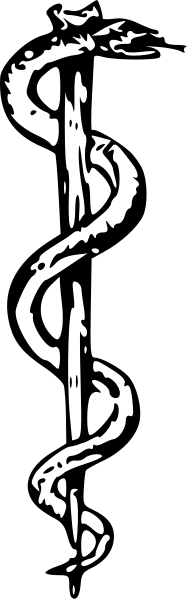
Snakes are considered sacred animals of Asklēpiós, and they promote healing. Our modern symbol of medication and healing, the asklepian, still shows this. The species of snakes found in the temple, on the grounds, and in the abaton were most likely Zamenis Longissimus, also known as the Aesculapian Snake. They can grow to a length of up to two meters, and are non-poisonous.

The sick would spend the night at the abaton, and would receive counsel from Asklēpiós Himself in his or her dreams, during an induced sleep known as 'incubation', or 'enkoimesis' (ενκοίμησις), where the patient drifts between waking and sleeping, and is said to be susceptible to messages of the Gods. If the god did not visit the patient the first night, incubation was continued on following nights. Asklēpiós would either heal the supplicant directly in the dream state, or tell him what to do to cure his illness or affliction. The priests listened to the dream, as described by the patient, and would divine the meaning of the Theos from it. As such, all healers were also master dream interpreters who would divine the treatment to be followed from the patient's account of the dream. Treatment often consisted of supplication, fasting, a special diet, meditation or prayer. There are accounts of surgeries having taken place at the asklepieia as well.

As for the festival of Asklepieia: there are two incarnations of it, the regular Asklepieia, and the Asklepieia Megala (Μεγάλα Ασκληπιεία). The Asklepieia Megala, or 'greater Asklepieia', was a huge event, and part of the pan-Hellenic games. In 242 BC, during the Mercenary War, the sanctuary at Epidaurus was granted immunity from war, and the Asklepieia Megala was established as a festival of athletic and musical competitions, held every four years, for a nine day period. Theater performances were also a huge part of the festival, and the famous theater of Epidaurus still stands today, one of the seven wonders of ancient Hellas.

The first of the festival days was spent preparing for the actual festival. The second day, religious exercises were undertaken. All temples and shrines were richly decorated and sacrifices were made to Apollon, Asklēpiós, Artemis, and Leto. Perhaps and the children of Asklēpiós--Hygieia (health, cleanliness, and sanitation), Iaso (recuperation from illness), Aceso (the healing process), Aglaea (beauty, splendor, glory, magnificence, and adornment), and Panakea (universal remedy)--also received sacrifice. Apollon received the first offering along with Asklēpiós: a cock, the fowl associated with Asklēpiós. They also received barley meal, wheat, and wine. Asklēpiós was then gifted a bull, a second bull was sacrificed to His male associates, and a cow to His female associates.

On the eve of the third day, a statue of Asklēpiós was driven through the precinct, and followed by torch-bearers and priests, who sung hymns to Him. The priests sang and spoke the praise of the Theos. There were vigils throughout the night, and during the daylight hours of the third day, there were feasts. The succeeding days were given up to athletic contests in the stadium, races, wrestling contests, singing contests and theater performances.

The Asklepieia Megala was only held at Epidaurus; all other asklepieia--as well as at Epidausus the other three years--held only a small ceremony for the Theos. The festival did not include athletic games outside of the Asklepieia Megala, but there might have been a focus on singing, and there might have been large banquets, held after sacrifices were made to the Theos.

Today, we should be reminded that doctors take the Hippocratic Oath, even if it was edited, and that all doctors are the hands of Asklēpiós. If you were putting off a doctor's or dentist's appointment, this is the day to plan them on. It is, of course, encouraged to give sacrifice to Asklēpiós and seek His guidance for all doctors and those in the medical profession, as well as our own health, and that of those around us. If you are struggling with your health, sacrifice to Asklēpiós and ask for Him to come to you in your dreams on this night. Note down your dreams in the morning (and of subsequent mornings, if you did not receive an oracular dream), and see if you can gleam a solution to your problems from them. This day is also a good day to fast, or to eat very healthy. Perhaps you can make a promise to yourself to eat healthier, or go to the gym more often. Think of your health and how you can stimulate it.

Image source: asklepian.