Showing posts with label current events. Show all posts

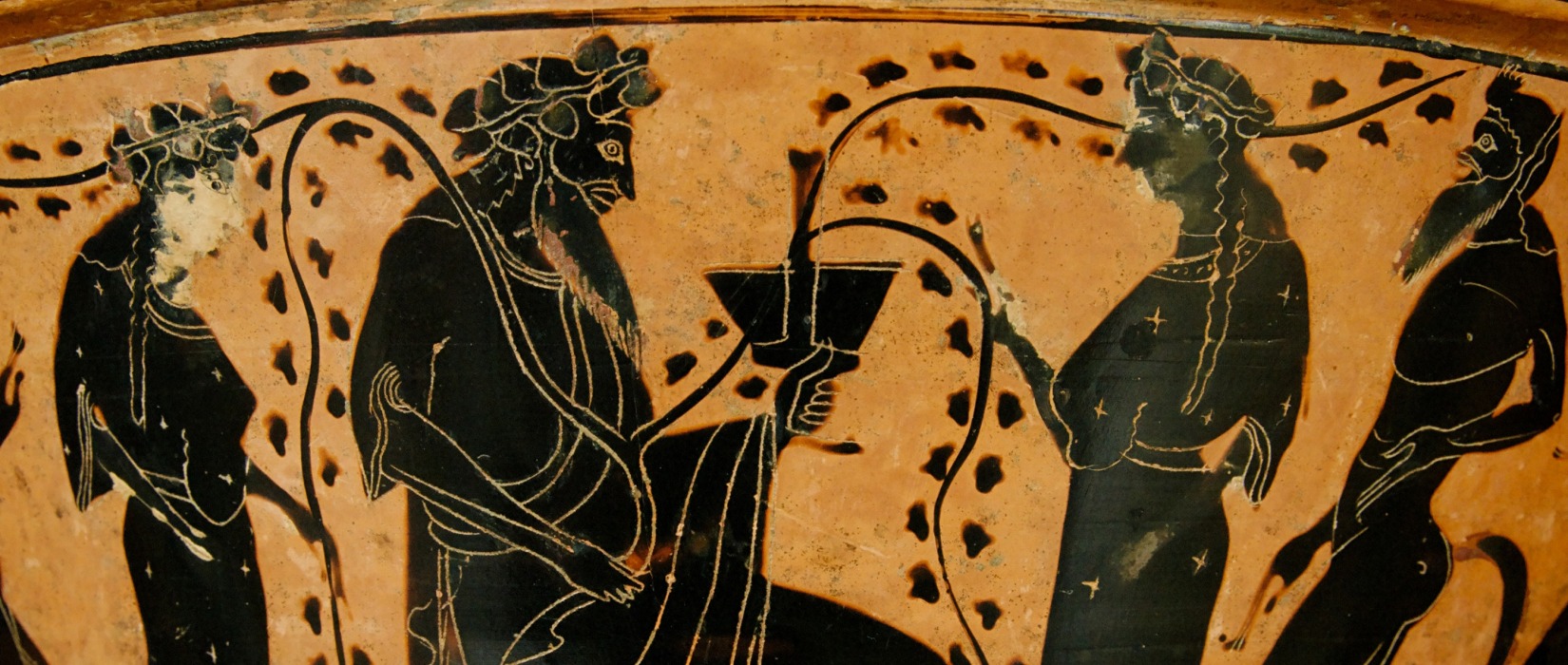
One of Hellenismos' most important festivals is the Anthesteria. It is held in honour of Dionysos Limnaios; of wine, and the dead. Elaion will hold a PAT ritual for the festival every day from 23 to 25  February at 10 am EST. Will you join us?


The Anthesteria was held annually for three days, the eleventh to thirteenth of the month of Anthesterion. It is an ancestral festival, the oldest of the festivals for Dionysos in Athens, a time of reflection and trust in the new growing season to come, a time to celebrate with the spirits of the departed the indefatigable resurgence of life. The festival centered around the celebration of the maturing of the wine stored at the previous vintage, whose pithoi were now ceremoniously opened, and the beginning of spring. The three days of the feast were called Pithoigia (after πίθοι 'storage jars'), Khoes (χοαί 'libations') and Khytroi (χύτροι 'pots').

On the first day, the pithoi were brought to the city of Athens and opened in the temple of Dionysos. Everyone from age three and up wore garlands of new flowers, and many were present when the pithoi of new wine were opened, and a libations was offered to Dionysos before drinking of it. It was a truly celebratory day.

On the second day, all temples were closed, except the temple of Dionysos. Social order broke down on this day--as slaves were permitted to celebrate alongside everyone else--and there was a drinking contest in the afternoon where three liters of wine were drunk in complete silence, from khoes. Whomever finished first, won. At the end of the day, the garlands that had been worn were wound around their khoes which they then took to the priestess in charge of the sanctuary at the Limnaios (the marsh) to be dedicated. The wife of the Archōn Basileus--the Archon in charge of religious and artistic festivals--the Basilinna might have taken part in a sacred marriage with Dionysos, either with her husband acting as a conduit for Dionysos, or one of His priests. Geriai, priestesses or followers of Dionysos, might have assisted in this ritual, or would have held their own cult rituals on this day. Young women swung in trees and decorated them to commemorate the death of Erigone, as chronicled below.

On day three, everyone joined in a procession to the temple of Dionysos. It was a somber day consisting of the preparation of a mixture of a panspermia, grains and beans boiled together (a good recipe can be found here), along with honey which was offered to Hermes Khthonios on behalf of the spirits of the dead, especially those who died in Deukalion’s flood. The slaves, as well as the dead, were then told to go home, as 'the Anthesteria had ended'.

The origins of the Anthesteria are based in myth. After the battle of Troy, King Agamemnon returns home to his wife Klytaemnestra (Κλυταιμνήστρα). When Agamemnon returns, playwright Aeschylus in his Oresteia, writes Klytaemnestra as not having been faithful to her husband. She has taken as her new lover and husband Aegisthos (Αἴγισθος), cousin of Agamemnon, and when Agamemnon and his young slave come home, Klytaemnestra kills them both. Orestes (Ὀρέστης), son of Agamemnon and Klytaemnestra ends up killing Aegisthos, as well as his mother for her crime, under orders of Apollon. Yet, the matricide is a terrible offense in the eyes of the Theoi, and the Erinyes--Khthonic deities of vengeance--are sent to kill Orestes. They chased him relentlessly and upon reaching Delphi he is told by Apollon that he should go to Athens to seek Athena's aid.

Phanodemus (Athenaeus 10.437c-d) describes what happens to Orestes next, as it is this practice that was reenacted again and again, during the second day of the Anthesteria:

“When Orestes arrived at Athens after killing his mother, Demophon [king of Athens] wanted to receive him, but was not willing to let him approach the sacred rites [to Dionysos] nor share the libations, since he had not yet been put on trial [and had not yet been cleansed of miasma]. So he ordered the sacred things to be locked up and a separate pitcher of wine to be set beside each person [instead of sharing a drinking vessel as usual], saying that a flat cake would be given as a prize to the one who drained his first. He also ordered them, when they had stopped drinking, not to put the wreathes with which they were crowned on the sacred objects, because they had been under the same roof with Orestes. Rather each one was to twine them around his own pitcher and take the wreathes to the priestess at the precinct in Limnai, and then to perform the rest of the sacrifices in the sanctuary.”

As mentioned, Orestes arrives at Athens during an existing festival to Dionysos. It is posed that this festival was the Aiora, a festival instituted to commemorate the death of Erigone, her father, and their dog Maera. The story goes that Ikários (Ἰκάριος) was such a fine winemaker that he could produce wine so strong, those who drank it appeared to be poisoned. His skill turned out to be his undoing; Íkaros was killed by those who drank his wine, thinking the wine maker was out to kill them. His daughter Erigone was taken to his body by the family hound, Maera, whereupon both she and the dog committed suicide by hanging. It may have been that Dionysos was so angry over the murder and the following suicides, He punished Athens by making all of the city's maidens (or only the daughters of those who had killed Ikários) commit suicide in the same way. The citizens of Athens turned to the oracle of Delphi to stop these suicides, and the oracle told them to burry the three with honors, and appease their spirits. The Athenians buried the bodies with full honors, and a festival was founded where young Athenian women swung in swings, and hung ribbons, cups, and dolls in trees.

The Anthesteria might sound like a confusing festival, and it was, in a way. The three days were almost completely separate events, but have a few things in common. It's a fertility festival, but birth is linked to death. All life is linked to death, after all, and both birth and death were miasmic events. After the rough winter, everything was dead: the soil, the remaining food stores, people... miasma tainted everything. So, as new life began from the ashes of the old, Dionysos was invoked and sacrificed to, to cleanse the old, to remove the miasma resting upon the earth and the people. It is not odd to find mythology connected to this festival which is so strongly linked to miasma, birth and death.

How does a modern Hellenist celebrate the Anthesteria? The first day should focus upon the fertility aspects of the festival: the coming abundance of flowers, wine, and fruit now the spring is almost upon us. Day two began at night, and was filled with... well... sex. People were intoxicated, enthusiastic about the upcoming spring and the end of winter, and they tended to find each other in the dark of night. I would suggest starting there for day two, if you have the option.

On this second day, I cover all other shrines I have in the house but the one on which I will honor Dionysos, to prevent them from becoming tainted with miasma. This is optional, of course. Do think about Orestes, and what he was forced to do--fail either his father by not punishing his killer, or fail his mother by killing her, and dooming himself, regardless--and think about hard decisions you have had to make, and ask forgiveness for them. If you are of legal age and have the opportunity to do so, empty a glass of wine, and feel it swirl in your stomach, as restless as the spirits of the mythic dead who will come up from the Underworld tomorrow. Swing on a swing, as high as you can, and revel in the feeling. Decorate trees with knick-knacks. If you made yourself a garland, take it outside, preferably somewhere wet, and beg that Dionysos accept it and cleanse you of the pollution you carry within you. Again, this night is perfect for making love, especially in honor of Dionysos.
Keep your shrines covered for the third day if you chose to do this, as miasma has not yet been lifted, and the dead roam the earth freely. Give honors to family members and others who were close to you, who have died. Speak with them and try to find closure. Make them a meal; a panspermia is best, but eggs, leeks and garlic also work well. There are different stories surrounding the eating of the panspermia yourself. Some say no one was to eat from it, but Walter Burkert in 'Greek Religion' notes:

"On the 13th Anthesterion, the day of the Pots, grains of all kinds are boiled together in a pot along with honey. This is the most primitive cereal dish of the early farmers, older than the discovery of flour-milling and bread-baking; in funeral customs it has survived down to the present day. But the idea of food for the dead, conjoined to an abridged version of an ancient source, has lead to the mistaken view that the living were actually prohibited from eating from the Pots. According to the full text, it is only the priests who are barred from eating this food, in accordance with the fact that all sanctuaries are closed on the Choes day. The meal of pottage is linked to the myth of the flood: once the water had subsided, the survivors threw everything they could find into a pot and cooked it as their first meal after the cataclysm, an occasion for summoning up new courage and yet in memory of the dead. One sacrifices to the chthonic Hermes for the sake of the dead and eats from the Pots in the certainty of life regained. The day of defilement is over, the masks and the dead lose their rights: 'Out you Keres, the Anthesteria are over' became a proverbial saying."

Yet, Harrison in 'Themis: A Study of the Social Origins of Greek Religion' has the following to say:
"The panspermia has not, I think, been rightly understood. In commenting on it before, misled by the gift-theory of sacrifice, I took it to be merely a 'supper for the souls.' No doubt as such it was in later days regarded when primitive magical rites had to be explained on Olympian principles. But it was, to begin with, much more. The ghosts had other work to do than to eat their supper and go. They took that 'supper', that panspermia, with them down to the world below and brought it back in the autumn a pankarpia. The dead are Chthonioi, 'earth people', Demetreioi, 'Demeter's people,' and they do Demeter's work, her work and that of Kore the Maiden, with her Kathodos and Anodos."

Where you stand, you must decide for yourself. Personally, I will not taste of the panspermia. Like with the Deipnon, however, setting outside the meal will lift the miasma from your person and the house, so afterwards, you can uncover your shrines again if you covered them in the first place.

The Anthesteria is a festival of deep, emotional, involvement, and it is best celebrated by emerging yourself as completely as you can. As with any rites to Dionysos, transformation within yourself is almost always a consequence. The Anthesteria is a heavy festival, but filled with joy, regardless, because you are working towards spring. Burdens will be lifted from you. Rejoice with us and you will get through these festivals just fine. You can find the rituals here and join the community here. Enjoy!

 It can't have escaped your notice that yesterday, the secular new year came to an end. Interestingly enough, I recognize many themes of the Deipnon within these festivities. Purification of the house and person, tying up loose ends of the old year, setting goals for a set period ahead. It makes me more comfortable to indulge in good food and friendship to recognize these very familiar efforts.

I've never really observed new year's as something special, mostly because I have celebrated it around Samhain since I was thirteen and in my Hellenistic tradition, new year's is still half a year away. The Athenians and the other Ionian peoples began their year with the first new moon after the summer solstice, the Dorians with the first new moon after the autumnal equinox, the Boeotians and other Aeolians with the new moon after the winter solstice. Still, it's a fun evening and night to spend with family, friends and other loved ones. I hope you enjoyed it as much as I did.

As a bit of a tradition, let me share the top ten search results that brought you here, my dear readers, just to show how awesome you guys are and how completely on topic!

- baring the aegis
- Hellenismos
- atlantis
- Elani Temperance
- aegis
- baring the aegis Persephone and Hades
- modern hellenism festival head covering
- ancient greek warriors
- ancient greek art about afterlife
- ancient greek honey cakes recipe

 I wish you all the absolute best in the secular new year! 

The Διονύσια κατ᾽ ἀγρούς, or μικρά, the rural or lesser Dionysia, a vintage festival, was celebrated in the various demes of Attica in the month of Poseideon. It was celebrated with a large procession in which men carried a phallus and cakes. Revelers and singers were also a part of the procession. A representation of the God was included to represent His coming. The festival also included stage comedies and the playing of lighthearted games. Generally, it was a joyful festival, shared by all, even the serfs. Will you join us for it on December 25th at 10 am EST?


The Dionysia was originally a rural festival in Eleutherae, Attica, probably celebrating the cultivation of vines. It was probably a very ancient festival, perhaps not originally associated with Dionysus. This 'rural Dionysia' was held during the winter, in the month of Poseideon. The central event was the pompe (πομπή), the procession, in which phalloi (φαλλοί) were carried by phallophoroi (φαλλοφόροι). Also participating in the pompe were kanephoroi (κανηφόροι – young girls carrying baskets), obeliaphoroi (ὀβελιαφόροι – who carried long loaves of bread), skaphephoroi (σκαφηφόροι – who carried other offerings), hydriaphoroi (ὑδριαφόροι – who carried jars of water), and askophoroi (ἀσκοφόροι – who carried jars of wine).

After the pompe procession was completed, there were contests of dancing and singing, and choruses (led by a choregos) would perform dithyrambs. Some festivals may have included dramatic performances, possibly of the tragedies and comedies that had been produced at the City Dionysia the previous year. This was more common in the larger towns, such as Piraeus and Eleusis.

Because the various towns in Attica held their festivals on different days, it was possible for spectators to visit more than one festival per season. It was also an opportunity for Athenian citizens to travel outside the city if they did not have the opportunity to do so during the rest of the year. This also allowed travelling companies of actors to perform in more than one town during the period of the festival.

The community for the event can be found here and the ritual here.

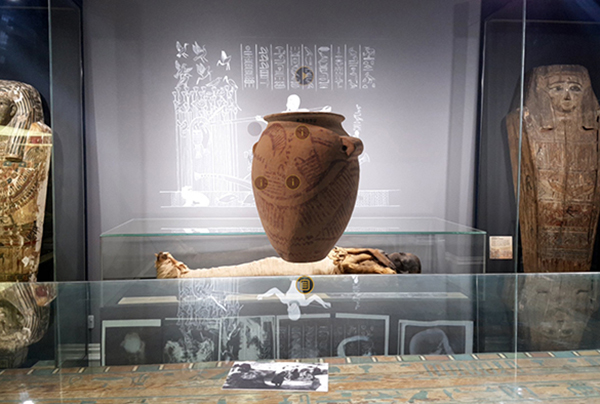
The University of Liverpool’s Garstang Museum of Archaeology secured £40,000 investment from the Art Fund to produce digital exhibitions using 3D imagery – and to share this knowledge, expertise and equipment with similar institutions across the North West.

The Museums of the North West Photogrammetry Hub: building virtual 3D futures project will use the technique of creating 3D models of objects held in collections using multiple 2D images, allowing the public to get as close to these unique items as possible, as Covid-19 continues to keep the physical buildings sealed.

Garstang Museum Curator, Dr Gina Criscenzo-Laycock said: “The museums of the North West have some of the UK’s most important collections, and this project represents a huge step towards opening up these collections to make them accessible to people from both within and outside the region.”

The investment, which was awarded from the Art Fund’s Respond and Reimagine appeal, will be used to engage a photogrammetry technician; purchase purpose-built computing equipment and software for the construction, editing and manipulation of 3D models; as well as allowing the purchase of photogrammetry equipment to loan to partner museums, to help support digital archiving of 3D models held across the region.

The Liverpool team will also provide training and direct working support to North West museum staff, which will help facilitate the construction of a digital exhibition, featuring augmented reality with accompanying app, that can be hosted at each partner institution.

Dr Ardern Hulme-Beaman leads the University’s Photogrammetry Team, in the Department of Archaeology, Classics and Egyptology, he said: 

“We’re extremely pleased to receive this grant from the Art Fund and we’re very much looking forward to starting this collaborative project. The Photogrammetry Team in the University has been working extremely hard to advance efficient photogrammetry practices, and this award lays the foundations for future projects with our collaborative partners, both in terms of creative public engagement and research activities.”

The Garstang Museum, which was founded in 1904, houses more than 20,000 artefacts from Egypt, Sudan and the Near East – including rare pieces from Nubia – but is currently closed to the public due to Covid-19 restrictions.

The funding will allow The Garstang and it’s North West partners; The Atkinson Museum in Southport; Bolton Museum; Manchester Museum; Tullie House Museum & Art Gallery in Carlisle and the University’s Victoria Gallery & Museum to continue to make their collections available – in 3D – to interested members of the public, academics and students across the world.

Campbell Price, Curator of Egypt and Sudan at Manchester Museum, added: “Manchester Museum is excited to be part of this project, which builds on our ambitions in this direction and – crucially – responds to a real need to engage with objects in new, virtual ways.”

To find out more about the University’s Photogrammetry Team, please visit https://www.liverpool.ac.uk/humanities-and-social-sciences/research/research-themes/centre-for-digital-humanities/projects/photogrammetry/ and to find out more about the Garstang Museum of Archaeology, please visit https://www.liverpool.ac.uk/garstang-museum/.

The Apatouria was a paternity festival. The first day was celebrated with a communal feast within the brotherhood, the second day sacrifice were made to Zeus Phratrios and Athena Phratria, and the third day young boys admitted to their father's brotherhood. We don't have these kinships anymore and we won't be celebrating all days of the festival because of it. What we do want to do is sacrifice to Zeus Phratrios and Athena Phratria in gratitude of the kinship we have found in Hellenismos and Elaion. Will you join us on the 4th of October at the usual 10 AM EDT?


The Apaturia (Ἀπατούρια) was an ancient Hellenic festival held annually by all the Ionian towns, except Ephesus and Colophon. In Athens, the Apatouria was the central element in the ritual calendar of the phratries, the kinship organizations crucial for determining Athenian citizenship. The three-day festival occurred in the autumn in the month Pyanepsion and was celebrated at the separate phratry shrines throughout Attica.

On the first day of the festival, called Dorpia or Dorpeia (Δορπεία), banquets were held towards evening at the meeting-place of the phratries or in the private houses of members.

On the second, Anarrhysis (from ἀναρρύειν, 'to draw back the victim's head'), a sacrifice of oxen was offered at the public cost to Zeus Phratrios and Athena Phratria.

On the third day, Kureōtis (κουρεῶτις), children born since the last festival were presented by their fathers or guardians to the assembled phratores, and, after an oath had been taken as to their legitimacy and the sacrifice of a goat or a sheep, their names were inscribed in the register. The name κουρεῶτις is derived either from κοῦρος, 'young man', i.e., the day of the young, or less probably from κείρω, 'to shear', because on this occasion young people cut their hair and offered it to the gods. The children who entered puberty also made offerings of wine to Herakles. On this day also it was the custom for boys still at school to declaim pieces of poetry, and to receive prizes.

Ancient scholarship links the Apatouria to the myth of the ritual combat between the Athenian Melanthos (the 'dark one') and the Boiotian Xanthos (the 'fair one') for the kingship of Attica, which Melanthos won through a trick (apate). Although some modern scholars have therefore seen a connection to the ephebes and to rites of passage involving social inversion, the rituals of the festival have no apparent connection to the narrative of the myth, and most modern scholars now link the Apatouria to the control, maintenance, and affirmation of kinship and of membership in society at every level.

Will you join us for this event? The ritual can be found here, the community page here.

Should you feel tempted to experience a breathtaking virtual reality revival of the major Bronze Age eruption of the volcano of Santorini, the siege of the ancient city of Rhodes in 304 B.C. or the discovery of the Antikythera mechanism in 1900, then your wish could be granted as early as in spring 2021. Noesis Science Centre and Technology Museum in Thessaloniki is in the process of developing a new and innovative virtual reality simulator platform and its accompanying films, which will empower users to step into the shoes of one of two distinct past-era characters in each story from the moment they put on their state-of-the-art VR headsets.


Powered by a generous half million euro funding by the EU through the Research-Create-Innovate state aid action, the Activator project, as it has been named, constitutes an ambitious effort to further develop experiential virtual reality with the aim of learning, acquainting the public with new technologies, disseminating knowledge, evolving research and also entertainment. Director of Noesis, Athanasios Kontonikolaou, states,

“This new technology that we are to introduce has nothing to do with the commercial virtual reality sets that you might have seen in entertainment venues. It will be far more upgraded and modern, and a real breakthrough once it becomes available.”

Supervised by the country’s General Secretariat for Research and Technology, the Museum has made a name for its ever-evolving informal education programs and exhibitions. Hence, the aforementioned scenarios of the first three films created for Activator are all relevant to the institution’s tradition of educating visitors on the technological and scientific achievements of the Ancient Greeks.

“In the first scenario, the viewer will be able to wander around the ancient Cycladean city of Santorini, and learn about all the technological innovations then in use at the site of Akrotiri. This was the oldest Greek, and possibly one of the first world civilizations to use structural elements of modern-day societies which were very advanced for that era, such as a sewage system and other innovations. Thanks to the motion simulator platform, users will be able to even feel the earthquake caused by the eruption of the volcano in 1613 B.C. that flattened out the city.”

Similarly, the film about the siege of Rhodes will allow visitors to familiarise themselves with the advanced war technology used in Greece around the end of the 4th century B.C..

On the other hand, the third scenario, the discovery of the Antikythera mechanism, was naturally picked up, given both the international fame of the artifact and also the specialist knowledge accumulated by several members of the Noesis Board of Directors and its researchers in extensive studies relating to this over the years.

As Kontonikolaou points out, the films created for Activator go above and beyond the customary VR gaming aesthetic: 

“Our graphics and animation are specialized and based on exceptional sensors so that we can really achieve an interlocking of view and motion in experiencing culture; one could only come across similar equipment in some of the most high-end temporary exhibitions abroad”.

The Centre for Research and Technology Hellas (CERTH), which does all the digital app research for the project and shares nearly half the funding, is the partner responsible for ensuring that exact sensory interlocking when using the platform. In addition to enjoying a 3D projection of the VR film and being in control of the viewing angle, the user will receive complete physical feedback through the specialized motion simulation equipment, thus physically feel the experiences in which they participate.

“Asides from the VR headsets, which offer what we call fourth dimension, there are certain “degrees” of movement in any motion simulator platform, such as right and left movement, the ability to rotate, to lift, to sit down… At this moment, the 4D platform offers right and left and back and forth movement, but it does not offer the possibility of rotation or of attaching sensors on the user, which would offer them an even livelier and more realistic experience.”

There is, however, extremely far-fetching potential for adding to these possibilities at a later stage: 

“We might discover newer technologies which we are unaware of today, compatible with Activator. It could offer 5- or 9-dimensional experience, as the platform would continue to progress in line with the latest technological trends – although keeping the safety of users is our first priority. There is an ongoing international discussion about whether the user could feel dizziness or fear and insecurity while watching multi-dimensional VR films, and these questions need to be answered before VR technology moves to the next level. That is why all these VR films have a maximum duration of up to 5 minutes; so that we can ensure a pleasant experience for the user, not the contrary”.

Despite delays by suppliers due to the Covid-19 pandemic, which has slowed down the production process, Activator could be set up at Noesis by March 2021, operating on a pilot basis. The first visitors to use it will be asked for feedback through questionnaires to rate the experience so that it can be further perfected.

At the same time, the project managers will declare competitions for VR experts who could help in the further development of the content of the films for the platform or even advance the latter with additional levels of motion experience in the future.

If the pilot operation goes as expected, Kontonikolaou would aspire to see Activator marketed internationally by the commercial branch of Noesis in the summer of 2021. 

“As an independent exhibit, Activator could be either licensed or granted to respective research centers abroad, with royalties on tickets. Another thought is that it could be added as part of the IDEA temporary exhibition, which we produced with funding from the Stavros Niarchos Cultural Foundation. It was presented in Athens and Slovenia and has contracts in place for touring in Cyrpus, Egypt and Canada.”

Since Noesis is self-funded to a level of 70-80% of its annual budget, any income generated from the commercialization of Activator would go towards the institution’s financial sustainability, but also be used for new investments on original educational and research programs that benefit society and take the community forward.

Ohhhh, I forgot somethign when I posted up 12 computer games set in ancient Hellas to enjoy during you isolation! Titan Quest: Atlantis! I adore Titan Quest. I've played both previous parts religiously and I knew a third was out but I haven't had the pleasure again. Test it out for me, will you?


From the co-creator of Age of Empires, Brian Sullivan, comes an action role-playing game set in the mythical worlds of ancient Greece and Egypt. Amazing visuals and fast-action gameplay deliver a true cinematic gaming experience. Lush ancient world settings crafted in near-photo realistic detail provide the player with an extraordinary canvas on which to set forth on an epic quest of the ultimate good versus evil.

The Titans, gods before the gods, have escaped from their eternal prison to wreak havoc on the world. In this titanic struggle between old and new gods it is the heroes of humankind who will ultimately determine the fate of all existence. The player quests throughout the ancient world in a race to uncover the secrets needed to once again imprison these ancient gods. Journeying to fabled locations such as the Parthenon, the maze at Knossos, the Great Pyramids, and the Hanging Gardens of Babylon, the player will have to overcome terrifying monsters and mythical beasts.

A flexible class system allows almost limitless ways for the player to develop their character. Skills can be customized in many ways, and never become obsolete. With addictive, fast action gameplay and tons of unique loot, epic gaming has never been so good.

Brave the trials of Titan Quest alone or bring a group of friends to share the glory while playing through the thrilling story-driven campaign.

The Hero meets an explorer that is searching for the mythical kingdom of Atlantis, and together they set out on a journey across the western Mediterranean. They will search for the legendary Diary of Herakles, rumored to be in the Phoenician City of Gadir, but their journey will take them beyond the edges of the known world…

The third expansion of the critically acclaimed Action-RPG Titan Quest is now available on PlayStation 4 and Xbox One. Heroes can dive into a brand new and epic storyline and explore new environments in the most mysterious of all cities.

Please not that the base game Titan Quest is required to play the expansion.

By the expansion here.
One of Hellenismos' most important festivals is the Anthesteria. It is held in honour of Dionysos Limnaios; of wine, and the dead. Elaion will hold a PAT ritual for the festival every day from 5 to 7 February at 10 am EST. Will you join us?


The Anthesteria was held annually for three days, the eleventh to thirteenth of the month of Anthesterion. It is an ancestral festival, the oldest of the festivals for Dionysos in Athens, a time of reflection and trust in the new growing season to come, a time to celebrate with the spirits of the departed the indefatigable resurgence of life. The festival centered around the celebration of the maturing of the wine stored at the previous vintage, whose pithoi were now ceremoniously opened, and the beginning of spring. The three days of the feast were called Pithoigia (after πίθοι 'storage jars'), Khoes (χοαί 'libations') and Khytroi (χύτροι 'pots').

On the first day, the pithoi were brought to the city of Athens and opened in the temple of Dionysos. Everyone from age three and up wore garlands of new flowers, and many were present when the pithoi of new wine were opened, and a libations was offered to Dionysos before drinking of it. It was a truly celebratory day.

On the second day, all temples were closed, except the temple of Dionysos. Social order broke down on this day--as slaves were permitted to celebrate alongside everyone else--and there was a drinking contest in the afternoon where three liters of wine were drunk in complete silence, from khoes. Whomever finished first, won. At the end of the day, the garlands that had been worn were wound around their khoes which they then took to the priestess in charge of the sanctuary at the Limnaios (the marsh) to be dedicated. The wife of the Archōn Basileus--the Archon in charge of religious and artistic festivals--the Basilinna might have taken part in a sacred marriage with Dionysos, either with her husband acting as a conduit for Dionysos, or one of His priests. Geriai, priestesses or followers of Dionysos, might have assisted in this ritual, or would have held their own cult rituals on this day. Young women swung in trees and decorated them to commemorate the death of Erigone, as chronicled below.

On day three, everyone joined in a procession to the temple of Dionysos. It was a somber day consisting of the preparation of a mixture of a panspermia, grains and beans boiled together (a good recipe can be found here), along with honey which was offered to Hermes Khthonios on behalf of the spirits of the dead, especially those who died in Deukalion’s flood. The slaves, as well as the dead, were then told to go home, as 'the Anthesteria had ended'.

The origins of the Anthesteria are based in myth. After the battle of Troy, King Agamemnon returns home to his wife Klytaemnestra (Κλυταιμνήστρα). When Agamemnon returns, playwright Aeschylus in his Oresteia, writes Klytaemnestra as not having been faithful to her husband. She has taken as her new lover and husband Aegisthos (Αἴγισθος), cousin of Agamemnon, and when Agamemnon and his young slave come home, Klytaemnestra kills them both. Orestes (Ὀρέστης), son of Agamemnon and Klytaemnestra ends up killing Aegisthos, as well as his mother for her crime, under orders of Apollon. Yet, the matricide is a terrible offense in the eyes of the Theoi, and the Erinyes--Khthonic deities of vengeance--are sent to kill Orestes. They chased him relentlessly and upon reaching Delphi he is told by Apollon that he should go to Athens to seek Athena's aid.

Phanodemus (Athenaeus 10.437c-d) describes what happens to Orestes next, as it is this practice that was reenacted again and again, during the second day of the Anthesteria:

“When Orestes arrived at Athens after killing his mother, Demophon [king of Athens] wanted to receive him, but was not willing to let him approach the sacred rites [to Dionysos] nor share the libations, since he had not yet been put on trial [and had not yet been cleansed of miasma]. So he ordered the sacred things to be locked up and a separate pitcher of wine to be set beside each person [instead of sharing a drinking vessel as usual], saying that a flat cake would be given as a prize to the one who drained his first. He also ordered them, when they had stopped drinking, not to put the wreathes with which they were crowned on the sacred objects, because they had been under the same roof with Orestes. Rather each one was to twine them around his own pitcher and take the wreathes to the priestess at the precinct in Limnai, and then to perform the rest of the sacrifices in the sanctuary.”

As mentioned, Orestes arrives at Athens during an existing festival to Dionysos. It is posed that this festival was the Aiora, a festival instituted to commemorate the death of Erigone, her father, and their dog Maera. The story goes that Ikários (Ἰκάριος) was such a fine winemaker that he could produce wine so strong, those who drank it appeared to be poisoned. His skill turned out to be his undoing; Íkaros was killed by those who drank his wine, thinking the wine maker was out to kill them. His daughter Erigone was taken to his body by the family hound, Maera, whereupon both she and the dog committed suicide by hanging. It may have been that Dionysos was so angry over the murder and the following suicides, He punished Athens by making all of the city's maidens (or only the daughters of those who had killed Ikários) commit suicide in the same way. The citizens of Athens turned to the oracle of Delphi to stop these suicides, and the oracle told them to burry the three with honors, and appease their spirits. The Athenians buried the bodies with full honors, and a festival was founded where young Athenian women swung in swings, and hung ribbons, cups, and dolls in trees.

The Anthesteria might sound like a confusing festival, and it was, in a way. The three days were almost completely separate events, but have a few things in common. It's a fertility festival, but birth is linked to death. All life is linked to death, after all, and both birth and death were miasmic events. After the rough winter, everything was dead: the soil, the remaining food stores, people... miasma tainted everything. So, as new life began from the ashes of the old, Dionysos was invoked and sacrificed to, to cleanse the old, to remove the miasma resting upon the earth and the people. It is not odd to find mythology connected to this festival which is so strongly linked to miasma, birth and death.

How does a modern Hellenist celebrate the Anthesteria? The first day should focus upon the fertility aspects of the festival: the coming abundance of flowers, wine, and fruit now the spring is almost upon us. Day two began at night, and was filled with... well... sex. People were intoxicated, enthusiastic about the upcoming spring and the end of winter, and they tended to find each other in the dark of night. I would suggest starting there for day two, if you have the option.

On this second day, I cover all other shrines I have in the house but the one on which I will honor Dionysos, to prevent them from becoming tainted with miasma. This is optional, of course. Do think about Orestes, and what he was forced to do--fail either his father by not punishing his killer, or fail his mother by killing her, and dooming himself, regardless--and think about hard decisions you have had to make, and ask forgiveness for them. If you are of legal age and have the opportunity to do so, empty a glass of wine, and feel it swirl in your stomach, as restless as the spirits of the mythic dead who will come up from the Underworld tomorrow. Swing on a swing, as high as you can, and revel in the feeling. Decorate trees with knick-knacks. If you made yourself a garland, take it outside, preferably somewhere wet, and beg that Dionysos accept it and cleanse you of the pollution you carry within you. Again, this night is perfect for making love, especially in honor of Dionysos.
Keep your shrines covered for the third day if you chose to do this, as miasma has not yet been lifted, and the dead roam the earth freely. Give honors to family members and others who were close to you, who have died. Speak with them and try to find closure. Make them a meal; a panspermia is best, but eggs, leeks and garlic also work well. There are different stories surrounding the eating of the panspermia yourself. Some say no one was to eat from it, but Walter Burkert in 'Greek Religion' notes:

"On the 13th Anthesterion, the day of the Pots, grains of all kinds are boiled together in a pot along with honey. This is the most primitive cereal dish of the early farmers, older than the discovery of flour-milling and bread-baking; in funeral customs it has survived down to the present day. But the idea of food for the dead, conjoined to an abridged version of an ancient source, has lead to the mistaken view that the living were actually prohibited from eating from the Pots. According to the full text, it is only the priests who are barred from eating this food, in accordance with the fact that all sanctuaries are closed on the Choes day. The meal of pottage is linked to the myth of the flood: once the water had subsided, the survivors threw everything they could find into a pot and cooked it as their first meal after the cataclysm, an occasion for summoning up new courage and yet in memory of the dead. One sacrifices to the chthonic Hermes for the sake of the dead and eats from the Pots in the certainty of life regained. The day of defilement is over, the masks and the dead lose their rights: 'Out you Keres, the Anthesteria are over' became a proverbial saying."

Yet, Harrison in 'Themis: A Study of the Social Origins of Greek Religion' has the following to say:
"The panspermia has not, I think, been rightly understood. In commenting on it before, misled by the gift-theory of sacrifice, I took it to be merely a 'supper for the souls.' No doubt as such it was in later days regarded when primitive magical rites had to be explained on Olympian principles. But it was, to begin with, much more. The ghosts had other work to do than to eat their supper and go. They took that 'supper', that panspermia, with them down to the world below and brought it back in the autumn a pankarpia. The dead are Chthonioi, 'earth people', Demetreioi, 'Demeter's people,' and they do Demeter's work, her work and that of Kore the Maiden, with her Kathodos and Anodos."

Where you stand, you must decide for yourself. Personally, I will not taste of the panspermia. Like with the Deipnon, however, setting outside the meal will lift the miasma from your person and the house, so afterwards, you can uncover your shrines again if you covered them in the first place.

The Anthesteria is a festival of deep, emotional, involvement, and it is best celebrated by emerging yourself as completely as you can. As with any rites to Dionysos, transformation within yourself is almost always a consequence. The Anthesteria is a heavy festival, but filled with joy, regardless, because you are working towards spring. Burdens will be lifted from you. Rejoice with us and you will get through these festivals just fine. You can find the rituals here and join the community here. Enjoy!
It can't have escaped your notice that yesterday, the secular new year came to an end. Interestingly enough, I recognize many themes of the Deipnon within these festivities. Purification of the house and person, tying up loose ends of the old year, setting goals for a set period ahead. It makes me more comfortable to indulge in good food and friendship to recognize these very familiar efforts.

I've never really observed new year's as something special, mostly because I have celebrated it around Samhain since I was thirteen and in my Hellenistic tradition, new year's is still half a year away. The Athenians and the other Ionian peoples began their year with the first new moon after the summer solstice, the Dorians with the first new moon after the autumnal equinox, the Boeotians and other Aeolians with the new moon after the winter solstice. Still, it's a fun evening and night to spend with family, friends and other loved ones. I hope you enjoyed it as much as I did.

As a bit of a tradition, let me share the top ten search results that brought you here, my dear readers, just to show how awesome you guys are and how completely on topic!

- baring the aegis
- Hellenismos
- atlantis
- Elani Temperance
- aegis
- baring the aegis Persephone and Hades
- modern hellenism festival head covering
- ancient greek warriors
- ancient greek art about afterlife
- ancient greek honey cakes recipe

 I wish you all the absolute best in the secular new year! 
The Διονύσια κατ᾽ ἀγρούς, or μικρά, the rural or lesser Dionysia, a vintage festival, was celebrated in the various demes of Attica in the month of Poseideon. It was celebrated with a large procession in which men carried a phallus and cakes. Revelers and singers were also a part of the procession. A representation of the God was included to represent His coming. The festival also included stage comedies and the playing of lighthearted games. Generally, it was a joyful festival, shared by all, even the serfs. Will you join us for it on December 7th at 10 am EST?


The Dionysia was originally a rural festival in Eleutherae, Attica, probably celebrating the cultivation of vines. It was probably a very ancient festival, perhaps not originally associated with Dionysus. This 'rural Dionysia' was held during the winter, in the month of Poseideon. The central event was the pompe (πομπή), the procession, in which phalloi (φαλλοί) were carried by phallophoroi (φαλλοφόροι). Also participating in the pompe were kanephoroi (κανηφόροι – young girls carrying baskets), obeliaphoroi (ὀβελιαφόροι – who carried long loaves of bread), skaphephoroi (σκαφηφόροι – who carried other offerings), hydriaphoroi (ὑδριαφόροι – who carried jars of water), and askophoroi (ἀσκοφόροι – who carried jars of wine).

After the pompe procession was completed, there were contests of dancing and singing, and choruses (led by a choregos) would perform dithyrambs. Some festivals may have included dramatic performances, possibly of the tragedies and comedies that had been produced at the City Dionysia the previous year. This was more common in the larger towns, such as Piraeus and Eleusis.

Because the various towns in Attica held their festivals on different days, it was possible for spectators to visit more than one festival per season. It was also an opportunity for Athenian citizens to travel outside the city if they did not have the opportunity to do so during the rest of the year. This also allowed travelling companies of actors to perform in more than one town during the period of the festival.

The community for the event can be found here and the ritual here.
Linear A is the yet-undeciphered language of the ancient Minoan civilization of Crete that flourished from roughly 1700 BCE to 1490 BCE. Linguist and archaeologist Brent Davis, a lecturer at the University of Melbourne, is one of only a handful of people around the world to have made any significant headway on solving Linear A in the last 50 years.


The Minoans live on in myth as people of the land of King Minos who kept the half-bull, half-man Minotaur in a labyrinth below his palace at Knossos. They are also possibly the oldest civilization of Western Europe, and their language could reveal more about a people and culture that was the foundation on which Ancient Greek and (ultimately) Roman culture were built.

The eccentric English architect Michael Ventris famously cracked Linear B, a slightly later but closely related script found in Crete and mainland Greece, in 1952. He discovered that Linear B was actually a very early form of ancient Greek—Mycenaean—and his finding extended the origin of ancient Greek civilization back a further 500 years earlier than first thought.

The Linear B tablets were preserved by chance when the dried clay that had been written on was fired as a result of palaces and other buildings burning down during natural and human-made calamities.
The information they revealed proved to be largely inventories of people, produce, accounts, offerings, and other goods, giving us glimpses of people and their occupations.

Linear A is likely to reveal similar information, but Davis says much Linear A occurs as religious script. “If we can decipher these inscriptions, we will have the personal prayers of Minoan people,” he says.

At the time he cracked Linear B, Ventris told the BBC it was like having to solve a crossword puzzle without knowing which spaces are blacked-out. In fact, Ventris’ achievement was built on the crucial work of little-acknowledged US classicist Alice Kober, who died in 1950. It was Kober who identified similar word endings in Linear B, allowing her to find some root words she thought were place names and which Ventris would later realize were akin to Greek. She also devised a method for tabulating the relationships between signs that Ventris would build on—leaving behind more than 180,000 index cards.

Deciphering Linear B was a monumental achievement, but the challenge of Linear A is even more difficult. That’s partly because the language behind the script doesn’t appear to be like any other language. Davis says:

"It seems to be a wholly unknown indigenous language. Linear B took most of its signs from Linear A, and because we can read Linear B, we can actually pronounce Linear A inscriptions, but if you do pronounce them, it just sounds like complete gobbledygook."

Like Ventris, Davis became fascinated with deciphering ancient languages as a boy, particularly the story of how Egyptian hieroglyphs were deciphered using the Rosetta Stone that Napoleon’s soldiers found in Egypt. But he’s always known that solving Linear A was a tough task.

"Ventris vowed, when he was just 14, that one day he’d solve Linear B. At the same age I was saying I’d love to solve Linear A, but I’m not promising anything."

By establishing the word order of the language, linguists can identify the function of a word in a sentence just from its position. It’s like finding a key word in a massive crossword puzzle.

"The definite word order in English is subject (S)-verb (V)-object (O), as in the phrase John likes cats. And we know that about 97% of human languages are either in this form or S-O-V (John cats likes) or V-S-O (Likes John cats). What we really need to find is a palace archive, which is where we are likely to find enough Linear A to finally decipher it."

But when Davis looked at other Bronze Age languages of this period in the region, none were like English. They were either S-O-V (like early Greek and Sumerian), or V-S-O (like ancient Egyptian). He guessed Linear A was likely to have one of these two word orders. He then applied this framework to a series of inscriptions that appear on Minoan offering bowls. To put it simply, he found that the words on the bowls tended to recur in what was obviously a formula, except for the second word in the inscription, which was always different from bowl to bowl. His guess was that this word was probably the name of the person (the subject) making the offering. If correct then Linear A was likely a V-S-O language.

That was confirmed when he found the Linear B sign for “olives” (which it borrowed borrowed from Linear A), occurring after the name as the object of the phrase. The repeated start of the phrase was therefore a verb, like “gives”, yielding the phrase “gives Yasumatu olives,” or in English, “Yasumatu gives olives.” Just such an offering of olives in a goblet has been found, preserved at the bottom of a sacred Minoan well. “It was a huge feeling of discovery, completely thrilling,” says Davis.

But he cautions that understanding the word order alone won’t be enough to solve Linear A.

"Examining the word order provides something of a magic key, but we if we are to crack it what we need most is simply more material."

Material was another advantage that Ventris had in deciphering Linear B. There were 20,000 examples of Linear B signs occurring in inscriptions, compared to just 7,000 examples of Linear A signs.

"That is about three-to-four A4 pages worth. Mathematicians tells us that if we are to crack Linear A, we’ll need something like 10,000 to 12,000 examples of signs, which means we aren’t that far away—but it all depends on archaeology. Discoveries are still being made, so I’m optimistic, but what we really need to find is a palace archive, which is where we are likely to find enough Linear A to finally decipher it."

Davis is the 2019 winner of the Michael Ventris Award at the University of London, which the Michael Ventris Memorial Fund supports.

Source: University of Melbourne.
One of Hellenismos' most important festivals is the Anthesteria. It is held in honour of Dionysos Limnaios; of wine, and the dead. Elaion will hold a PAT ritual for the festival every day from 16 to 18 February at 10 am EST. Will you join us?


The Anthesteria was held annually for three days, the eleventh to thirteenth of the month of Anthesterion. It is an ancestral festival, the oldest of the festivals for Dionysos in Athens, a time of reflection and trust in the new growing season to come, a time to celebrate with the spirits of the departed the indefatigable resurgence of life. The festival centered around the celebration of the maturing of the wine stored at the previous vintage, whose pithoi were now ceremoniously opened, and the beginning of spring. The three days of the feast were called Pithoigia (after πίθοι 'storage jars'), Khoes (χοαί 'libations') and Khytroi (χύτροι 'pots').

On the first day, the pithoi were brought to the city of Athens and opened in the temple of Dionysos. Everyone from age three and up wore garlands of new flowers, and many were present when the pithoi of new wine were opened, and a libations was offered to Dionysos before drinking of it. It was a truly celebratory day.

On the second day, all temples were closed, except the temple of Dionysos. Social order broke down on this day--as slaves were permitted to celebrate alongside everyone else--and there was a drinking contest in the afternoon where three liters of wine were drunk in complete silence, from khoes. Whomever finished first, won. At the end of the day, the garlands that had been worn were wound around their khoes which they then took to the priestess in charge of the sanctuary at the Limnaios (the marsh) to be dedicated. The wife of the Archōn Basileus--the Archon in charge of religious and artistic festivals--the Basilinna might have taken part in a sacred marriage with Dionysos, either with her husband acting as a conduit for Dionysos, or one of His priests. Geriai, priestesses or followers of Dionysos, might have assisted in this ritual, or would have held their own cult rituals on this day. Young women swung in trees and decorated them to commemorate the death of Erigone, as chronicled below.

On day three, everyone joined in a procession to the temple of Dionysos. It was a somber day consisting of the preparation of a mixture of a panspermia, grains and beans boiled together (a good recipe can be found here), along with honey which was offered to Hermes Khthonios on behalf of the spirits of the dead, especially those who died in Deukalion’s flood. The slaves, as well as the dead, were then told to go home, as 'the Anthesteria had ended'.

The origins of the Anthesteria are based in myth. After the battle of Troy, King Agamemnon returns home to his wife Klytaemnestra (Κλυταιμνήστρα). When Agamemnon returns, playwright Aeschylus in his Oresteia, writes Klytaemnestra as not having been faithful to her husband. She has taken as her new lover and husband Aegisthos (Αἴγισθος), cousin of Agamemnon, and when Agamemnon and his young slave come home, Klytaemnestra kills them both. Orestes (Ὀρέστης), son of Agamemnon and Klytaemnestra ends up killing Aegisthos, as well as his mother for her crime, under orders of Apollon. Yet, the matricide is a terrible offense in the eyes of the Theoi, and the Erinyes--Khthonic deities of vengeance--are sent to kill Orestes. They chased him relentlessly and upon reaching Delphi he is told by Apollon that he should go to Athens to seek Athena's aid.

Phanodemus (Athenaeus 10.437c-d) describes what happens to Orestes next, as it is this practice that was reenacted again and again, during the second day of the Anthesteria:

“When Orestes arrived at Athens after killing his mother, Demophon [king of Athens] wanted to receive him, but was not willing to let him approach the sacred rites [to Dionysos] nor share the libations, since he had not yet been put on trial [and had not yet been cleansed of miasma]. So he ordered the sacred things to be locked up and a separate pitcher of wine to be set beside each person [instead of sharing a drinking vessel as usual], saying that a flat cake would be given as a prize to the one who drained his first. He also ordered them, when they had stopped drinking, not to put the wreathes with which they were crowned on the sacred objects, because they had been under the same roof with Orestes. Rather each one was to twine them around his own pitcher and take the wreathes to the priestess at the precinct in Limnai, and then to perform the rest of the sacrifices in the sanctuary.”

As mentioned, Orestes arrives at Athens during an existing festival to Dionysos. It is posed that this festival was the Aiora, a festival instituted to commemorate the death of Erigone, her father, and their dog Maera. The story goes that Ikários (Ἰκάριος) was such a fine winemaker that he could produce wine so strong, those who drank it appeared to be poisoned. His skill turned out to be his undoing; Íkaros was killed by those who drank his wine, thinking the wine maker was out to kill them. His daughter Erigone was taken to his body by the family hound, Maera, whereupon both she and the dog committed suicide by hanging. It may have been that Dionysos was so angry over the murder and the following suicides, He punished Athens by making all of the city's maidens (or only the daughters of those who had killed Ikários) commit suicide in the same way. The citizens of Athens turned to the oracle of Delphi to stop these suicides, and the oracle told them to burry the three with honors, and appease their spirits. The Athenians buried the bodies with full honors, and a festival was founded where young Athenian women swung in swings, and hung ribbons, cups, and dolls in trees.

The Anthesteria might sound like a confusing festival, and it was, in a way. The three days were almost completely separate events, but have a few things in common. It's a fertility festival, but birth is linked to death. All life is linked to death, after all, and both birth and death were miasmic events. After the rough winter, everything was dead: the soil, the remaining food stores, people... miasma tainted everything. So, as new life began from the ashes of the old, Dionysos was invoked and sacrificed to, to cleanse the old, to remove the miasma resting upon the earth and the people. It is not odd to find mythology connected to this festival which is so strongly linked to miasma, birth and death.

How does a modern Hellenist celebrate the Anthesteria? The first day should focus upon the fertility aspects of the festival: the coming abundance of flowers, wine, and fruit now the spring is almost upon us. Day two began at night, and was filled with... well... sex. People were intoxicated, enthusiastic about the upcoming spring and the end of winter, and they tended to find each other in the dark of night. I would suggest starting there for day two, if you have the option.

On this second day, I cover all other shrines I have in the house but the one on which I will honor Dionysos, to prevent them from becoming tainted with miasma. This is optional, of course. Do think about Orestes, and what he was forced to do--fail either his father by not punishing his killer, or fail his mother by killing her, and dooming himself, regardless--and think about hard decisions you have had to make, and ask forgiveness for them. If you are of legal age and have the opportunity to do so, empty a glass of wine, and feel it swirl in your stomach, as restless as the spirits of the mythic dead who will come up from the Underworld tomorrow. Swing on a swing, as high as you can, and revel in the feeling. Decorate trees with knick-knacks. If you made yourself a garland, take it outside, preferably somewhere wet, and beg that Dionysos accept it and cleanse you of the pollution you carry within you. Again, this night is perfect for making love, especially in honor of Dionysos.
Keep your shrines covered for the third day if you chose to do this, as miasma has not yet been lifted, and the dead roam the earth freely. Give honors to family members and others who were close to you, who have died. Speak with them and try to find closure. Make them a meal; a panspermia is best, but eggs, leeks and garlic also work well. There are different stories surrounding the eating of the panspermia yourself. Some say no one was to eat from it, but Walter Burkert in 'Greek Religion' notes:

"On the 13th Anthesterion, the day of the Pots, grains of all kinds are boiled together in a pot along with honey. This is the most primitive cereal dish of the early farmers, older than the discovery of flour-milling and bread-baking; in funeral customs it has survived down to the present day. But the idea of food for the dead, conjoined to an abridged version of an ancient source, has lead to the mistaken view that the living were actually prohibited from eating from the Pots. According to the full text, it is only the priests who are barred from eating this food, in accordance with the fact that all sanctuaries are closed on the Choes day. The meal of pottage is linked to the myth of the flood: once the water had subsided, the survivors threw everything they could find into a pot and cooked it as their first meal after the cataclysm, an occasion for summoning up new courage and yet in memory of the dead. One sacrifices to the chthonic Hermes for the sake of the dead and eats from the Pots in the certainty of life regained. The day of defilement is over, the masks and the dead lose their rights: 'Out you Keres, the Anthesteria are over' became a proverbial saying."

Yet, Harrison in 'Themis: A Study of the Social Origins of Greek Religion' has the following to say:
"The panspermia has not, I think, been rightly understood. In commenting on it before, misled by the gift-theory of sacrifice, I took it to be merely a 'supper for the souls.' No doubt as such it was in later days regarded when primitive magical rites had to be explained on Olympian principles. But it was, to begin with, much more. The ghosts had other work to do than to eat their supper and go. They took that 'supper', that panspermia, with them down to the world below and brought it back in the autumn a pankarpia. The dead are Chthonioi, 'earth people', Demetreioi, 'Demeter's people,' and they do Demeter's work, her work and that of Kore the Maiden, with her Kathodos and Anodos."

Where you stand, you must decide for yourself. Personally, I will not taste of the panspermia. Like with the Deipnon, however, setting outside the meal will lift the miasma from your person and the house, so afterwards, you can uncover your shrines again if you covered them in the first place.

The Anthesteria is a festival of deep, emotional, involvement, and it is best celebrated by emerging yourself as completely as you can. As with any rites to Dionysos, transformation within yourself is almost always a consequence. The Anthesteria is a heavy festival, but filled with joy, regardless, because you are working towards spring. Burdens will be lifted from you. Rejoice with us and you will get through these festivals just fine. You can find the rituals here and join the community here. Enjoy!