
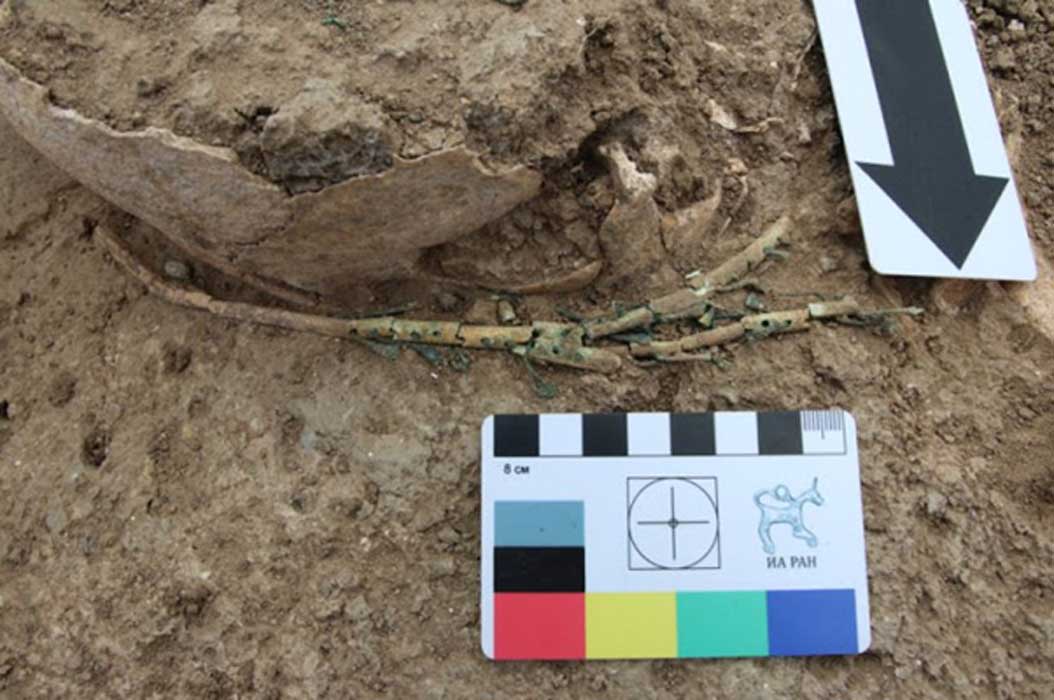
According to the News Agency TASS, a team of archaeologists has uncovered fragments of two ancient Hellenic musical instruments during an excavation in the Taman Peninsula, in southern Russia. The unearthing of remnants of musical instruments is quite rare, and the discovery is the first of its kind in many years. The discovery is an exciting one and it is showing the extent of the Hellenic presence in the Black Sea area in ancient times. The find will allow experts to have a better understanding of the local Hellenic societies.
The Hellenes colonized the north Black Sea area from at least the 8th century BC, drawn to the region by its rich natural resources. They established a series of colonies in the area, especially in what is now southern Russia. Over time, these became city-states or polis that became rich and powerful because of the trade in fish, grain, and slaves. The settlements remained largely Hellenic in culture, but they also interacted with the Steppe nomads such as the Scythians. The Taman Peninsula became the core area of the Bosporan Kingdom that endured in one form or another from the 4th century BC to the 4th century AD.
The find was in an area of southern Russia, that is located near the Crimea. Two important urban centers were situated there in antiquity, which became capitals of the Bosporan Kingdom. There have been extensive archaeological finds related in the Taman area in recent decades, that have deepened our understanding of Hellenic society in southern Russia.
The find was made by archaeologists of the Russian Academy of Sciences, led by Roman Mimokhod, who have been working in the area for three years. They made the discovery of the fragments near Volna, which is located near an extensive ancient Hellenic settlement. The fragments were unearthed at a large necropolis and they were buried with individuals, a common practice in antiquity.
The remains of the instruments are only the latest important discovery from the archaeological site. The team of archaeologists have excavated some 600 tombs in the necropolis and have made many discoveries that have thrown a light on Hellenic society in the region and the level of their interactions with local groups.
The fragments unearthed were a piece of a harp and a lyre and they have been dated to be from the 6th century BC. The instruments are only partially preserved because they were made from perishable material, namely wood. Because of this, such musical instruments are very rare to find and most of what we know about them is from images on vases. The discovery of the pieces of a harp and lyre are particularly important as, Tass quotes Mimokhad as stating that,
The find of the fragments of a harp and a lyre was unexpected and demonstrates the archaeological importance of the necropolis near the Volna settlement. The musical instruments will be investigated further and compared to the few other examples from antiquity. Such discoveries in the Taman Peninsula underline how the settlements north of the Black Sea remained culturally Hellenic, despite their interactions with native groups.
The Hellenes colonized the north Black Sea area from at least the 8th century BC, drawn to the region by its rich natural resources. They established a series of colonies in the area, especially in what is now southern Russia. Over time, these became city-states or polis that became rich and powerful because of the trade in fish, grain, and slaves. The settlements remained largely Hellenic in culture, but they also interacted with the Steppe nomads such as the Scythians. The Taman Peninsula became the core area of the Bosporan Kingdom that endured in one form or another from the 4th century BC to the 4th century AD.
The find was in an area of southern Russia, that is located near the Crimea. Two important urban centers were situated there in antiquity, which became capitals of the Bosporan Kingdom. There have been extensive archaeological finds related in the Taman area in recent decades, that have deepened our understanding of Hellenic society in southern Russia.
The find was made by archaeologists of the Russian Academy of Sciences, led by Roman Mimokhod, who have been working in the area for three years. They made the discovery of the fragments near Volna, which is located near an extensive ancient Hellenic settlement. The fragments were unearthed at a large necropolis and they were buried with individuals, a common practice in antiquity.
The remains of the instruments are only the latest important discovery from the archaeological site. The team of archaeologists have excavated some 600 tombs in the necropolis and have made many discoveries that have thrown a light on Hellenic society in the region and the level of their interactions with local groups.
The fragments unearthed were a piece of a harp and a lyre and they have been dated to be from the 6th century BC. The instruments are only partially preserved because they were made from perishable material, namely wood. Because of this, such musical instruments are very rare to find and most of what we know about them is from images on vases. The discovery of the pieces of a harp and lyre are particularly important as, Tass quotes Mimokhad as stating that,
"...the harp unearthed in Taman is one of the most ancient and well-preserved as far as ancient Hellenic musical instruments are concerned. The fragments of the instruments, according to the News Network Archaeology are believed to be older than previous significant discoveries, including those at the ‘Piraeus necropolis in Athens and the tuning pegs of a harp uncovered from a necropolis in Taranto, southern Italy."
The find of the fragments of a harp and a lyre was unexpected and demonstrates the archaeological importance of the necropolis near the Volna settlement. The musical instruments will be investigated further and compared to the few other examples from antiquity. Such discoveries in the Taman Peninsula underline how the settlements north of the Black Sea remained culturally Hellenic, despite their interactions with native groups.

