Showing posts with label symposion. Show all posts

It's the season of gift-giving! Even while socially distanced, this is possible, and of course encouraged. Who doesn't like gifts? And spreading some joy? Order online and have it delivered, or drop gifts off at the door. Why not buy someone a subscription to a service they might enjoy? Options galore! But where does the practice come from and is it important in Hellenism?

Giving gifts to friends, family members, or even acquaintances and complete strangers is a long standing tradition. It existed long before ancient Hellas, but was, indeed, a vital part of its culture. It was tied to both kharis and xenia. Gifts were exchanged between monarchs of city-states to create good will, and were thus an important part of diplomacy. All votives, thank-offerings, and pinakes were gifts from mortals to Theoi. Athletic competitions always concluded with a price--a gift--awarded to the winner. Gifts were given to the submissive partner in a pederastic relationship, and to favored prostitutes and serfs. Gifts played a much more significant role in ancient Hellenic society as a whole than they do in ours today. The giving of gifts in ancient Hellas was not just a social event, however. There was far more to the practice than one might assume, and today, we will look at the tradition of gift giving in greater detail.
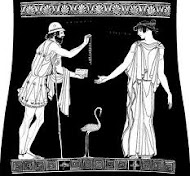

I have spoken of the importance of gifts in xenia before. A gift given as part of ritual hospitality was called a xenion (ξεινήιον). This xenion was expected to be expensive, and was presented to the guest upon departure. Needless to say, this practice was mostly executed by nobility, or at least the elite, and happened mostly when a man of equal social standing from another nation or city-state came to visit. In the Odysseia, Telemachos, son of Odysseus, receives from Menelaus a cup made by Hēphaistos Himself:

"But stay here in the palace, till the eleventh or the twelfth day, and I will send you off with honours, and fine gifts, a shining chariot with a trio of horses, and a glorious cup with which to pour libations to the deathless gods, while remembering me all your days."

The practice of gift giving to someone of another nation whom you might never see again, might seem counter-intuitive, but it's actually quite the opposite. By presenting a foreign equal with a great gift, not only do you establish kharis between the two of you, you also indebt the other person to you: they can not repay your kindness at this time, but they will compensate you for it when you visit, or when you are in need. On top of that, the recieving party will go home with tales of your hospitality, and your wealth, providing a boost in stature to the family and the land. It increases the honor of both, something very important to the ancient Hellenes. Gifts, in this context, functioned as a means of communication, legitimization, and mediation between benefactors and cities.

Beyond the elite, gift-giving was still very important, especially between men. The practice was a feature of the symposion, where it was displayed between men in a pederastic relationship, as well as between men of equal standing. Pederasty was where a mature male would take a young boy as his pupil and lover. The relationship was not about love: it was a social construct that allowed to boy time to get to know influential men, and to work himself up into their ranks. Because of this, there were many ritual acts connected to the practice, amongst which the giving of gifts, from mentor to pupil. Three gifts were traditional: military attire, an ox, and a drinking cup, but the youth most certainly received more expensive gifts.

One of the places the young lover would have been taken was the symposion. By allowing the young boy into the symposion it enabled the adults to prepare them for adult life and war in particular. Once the boys grew up, they became one of the men, taking young boys as lovers themselves, and teaching them the ropes of adult malehood. Gift giving in this context allows for a community to become closer, and for a young boy to prepare for his life as a man. Giving gifts--to their young lovers, as well as to those of equal age and standing--allowed men to teach the importance of equal distribution and redistribution of wealth, which was a founding factor of (mostly Athenian) society. It was also a status symbol: if one had time to visit the symposia, and give expensive gifts, they were not only citizens, but wealthy citizens, a clear mark that they were fit for greater responsibility within the political landscape of the city.

Most of these examples are from wealthy city-states like Athens, but there is evidence of gift-giving in other city-states as well. Sparta, for example, greatly frowned upon the flaunting of wealth, but they, too, gave gifts. These, however, were mostly practical in nature between the citizens themselves--fresh game, honey, perhaps a hunting dog--and were honors bestowed upon the person in the case of big events, or an a-symmetrical relationship. A Spartan winner of important sporting events, for example, would be allowed a place in the royal guard of the King, where Athenian winners would be set up for life, including food, housing, and status.

Another form of gift-giving was from a wealthy citizen to the community. This practice was dubbed 'Euergetism', from the Hellenic 'εὐεργετέω': 'I do good things'. While the money spent this way was, indeed a voluntary action on the part of the citizen, he was socially obligated to participate in the practice. Many roads and public buildings were funded this way, and thus bore the name of the citizen that had donated the funds--something we find archeological evidence for to this day.

Gift giving was of vital importance in the Archaic and Early Classical times, most notably in a social, ethical, economic, and political context. In the Classical period--which witnessed the development of elaborate monetary and law systems--the giving of gifts, and the associated benefits, became less prominent in economic and political contexts, though it did remain central in social and religious systems. Gift-giving and reciprocity did return to the Athenian stage, however, in the Hellenistic age, when much of the previously described took place.

Gift giving was of unparalleled important to the ancient Hellenes, but has lost much of its standing today. For those who reconstruct the ancient Hellenic religion, it might be a good exercise to examine these practices, and implement a symbolic exchange. Lavish gifts would not be necessary, but a parting gift by the host on days then the group comes together might make a nice, ritualistic, reminder that the contributions of the group were welcomed, and the effort to travel to the meeting place recognized--after the pandemic, of course!

This Christmas, we'll do door drop-offs with the family and then we're all meeting on Zoom from the safety of our own homes to unwrap the gifts we've gotten and read the poems we write along with them out loud to one another. You make do in a pandemic! 

Stay safe this season and stay smart. It's just one Christmas, the risks are not worth it.

Image taken from: Sparta Reconsidered
Giving gifts to friends, family members, or even acquaintances and complete strangers is a long standing tradition. It existed long before ancient Hellas, but was, indeed, a vital part of its culture. It was tied to both kharis and xenia. Gifts were exchanged between monarchs of city-states to create good will, and were thus an important part of diplomacy. All votives, thank-offerings, and pinakes were gifts from mortals to Theoi. Athletic competitions always concluded with a price--a gift--awarded to the winner. Gifts were given to the submissive partner in a pederastic relationship, and to favored prostitutes and serfs. Gifts played a much more significant role in ancient Hellenic society as a whole than they do in ours today. The giving of gifts in ancient Hellas was not just a social event, however. There was far more to the practice than one might assume, and today, we will look at the tradition of gift giving in greater detail.

I have spoken of the importance of gifts in xenia before. A gift given as part of ritual hospitality was called a xenion (ξεινήιον). This xenion was expected to be expensive, and was presented to the guest upon departure. Needless to say, this practice was mostly executed by nobility, or at least the elite, and happened mostly when a man of equal social standing from another nation or city-state came to visit. In the Odysseia, Telemachos, son of Odysseus, receives from Menelaus a cup made by Hēphaistos Himself:

"But stay here in the palace, till the eleventh or the twelfth day, and I will send you off with honours, and fine gifts, a shining chariot with a trio of horses, and a glorious cup with which to pour libations to the deathless gods, while remembering me all your days."

The practice of gift giving to someone of another nation whom you might never see again, might seem counter-intuitive, but it's actually quite the opposite. By presenting a foreign equal with a great gift, not only do you establish kharis between the two of you, you also indebt the other person to you: they can not repay your kindness at this time, but they will compensate you for it when you visit, or when you are in need. On top of that, the recieving party will go home with tales of your hospitality, and your wealth, providing a boost in stature to the family and the land. It increases the honor of both, something very important to the ancient Hellenes. Gifts, in this context, functioned as a means of communication, legitimization, and mediation between benefactors and cities.

Beyond the elite, gift-giving was still very important, especially between men. The practice was a feature of the symposion, where it was displayed between men in a pederastic relationship, as well as between men of equal standing. Pederasty was where a mature male would take a young boy as his pupil and lover. The relationship was not about love: it was a social construct that allowed to boy time to get to know influential men, and to work himself up into their ranks. Because of this, there were many ritual acts connected to the practice, amongst which the giving of gifts, from mentor to pupil. Three gifts were traditional: military attire, an ox, and a drinking cup, but the youth most certainly received more expensive gifts.

One of the places the young lover would have been taken was the symposion. By allowing the young boy into the symposion it enabled the adults to prepare them for adult life and war in particular. Once the boys grew up, they became one of the men, taking young boys as lovers themselves, and teaching them the ropes of adult malehood. Gift giving in this context allows for a community to become closer, and for a young boy to prepare for his life as a man. Giving gifts--to their young lovers, as well as to those of equal age and standing--allowed men to teach the importance of equal distribution and redistribution of wealth, which was a founding factor of (mostly Athenian) society. It was also a status symbol: if one had time to visit the symposia, and give expensive gifts, they were not only citizens, but wealthy citizens, a clear mark that they were fit for greater responsibility within the political landscape of the city.

Most of these examples are from wealthy city-states like Athens, but there is evidence of gift-giving in other city-states as well. Sparta, for example, greatly frowned upon the flaunting of wealth, but they, too, gave gifts. These, however, were mostly practical in nature between the citizens themselves--fresh game, honey, perhaps a hunting dog--and were honors bestowed upon the person in the case of big events, or an a-symmetrical relationship. A Spartan winner of important sporting events, for example, would be allowed a place in the royal guard of the King, where Athenian winners would be set up for life, including food, housing, and status.

Another form of gift-giving was from a wealthy citizen to the community. This practice was dubbed 'Euergetism', from the Hellenic 'εὐεργετέω': 'I do good things'. While the money spent this way was, indeed a voluntary action on the part of the citizen, he was socially obligated to participate in the practice. Many roads and public buildings were funded this way, and thus bore the name of the citizen that had donated the funds--something we find archeological evidence for to this day.

Gift giving was of vital importance in the Archaic and Early Classical times, most notably in a social, ethical, economic, and political context. In the Classical period--which witnessed the development of elaborate monetary and law systems--the giving of gifts, and the associated benefits, became less prominent in economic and political contexts, though it did remain central in social and religious systems. Gift-giving and reciprocity did return to the Athenian stage, however, in the Hellenistic age, when much of the previously described took place.

Gift giving was of unparalleled important to the ancient Hellenes, but has lost much of its standing today. For those who reconstruct the ancient Hellenic religion, it might be a good exercise to examine these practices, and implement a symbolic exchange. Lavish gifts would not be necessary, but a parting gift by the host on days then the group comes together might make a nice, ritualistic, reminder that the contributions of the group were welcomed, and the effort to travel to the meeting place recognized.

Image taken from: Sparta Reconsidered
It's time for another Pagan Blog Project post, and we're starting the 'U's. Great, except for the fact that there is no letter 'U' in the Greek alphabet. So, I have done some creative scrabbling and this is the result, a non-exhaustive listing of the various pottery shapes as used in ancient Greece. None of them is actually called an urn, but who cares, right?

Because of its durability, pottery fragments are one of the few things that have survived from all ages of ancient Hellas. They are a staple of archeological finds and provide us with some of the most wholesome information on ancient Hellenic life. Yet, today, the focus will not be on the images on these vases, but on the shapes and types of vases, because all had a specific purpose, and many of them tied into religious ceremonies, important life events and Hellenic ethics.

Amphoreus (ἀμφορεύς): basic amphorae were the bread and butter of the pottery world. They were used throughout the whole of the Hellenic reign for transporting and storing grapes, olive oil, wine, oil, olives, grain, fish, and other commodities during transport, at stores and at home. The basic amphoreus shape is called a 'belly amphoreus', because of the oval body with a continuous profile from the lip to the foot and two handles.

The neck amphoreus is a variation of the belly amphoreus which has an oval body, a offset neck with a thick mouth, two vertical handles and a heavy stand. The main difference between the 'belly' amphoreus and the 'neck' amphoreus, is that on the neck amphoreus, the handles are attached to the neck, which is separated from the belly by an angular carination.

There are many types of amphorae, including a two pointed versions, which need a stand to remain upright; a 'belly' amphoreus type and the 'neck' transport amphoreus, which doesn't have a foot, but a little ball on the underside. It was easy to stack them for long sea or cart voyages. Alternatively, they could be buried in the ground.

Another special shape is the Panathenaic amphoreus. This amphoreus is a 'neck' amphoreus, used solely as a price for winning the Panathenaic games. It contained olive oil from Athena's sacred grove at Akademia. The inscription read: 'τον αθενεθεν αθλον' (one of the prizes from Athens). The Panathenaia ta Megala, which was held every four years, added games to the yearly Panathenaia ta Mika, so the panathenaic amphorae were only given out once every four years.

Pelike (πελίκη): the pelike is a special type of belly amphoreus, with the belly placed lower, so that the widest point of the vessel is near its bottom.

Volute krater ( krater = κρατήρ): As I have mentioned before, in the post about taboos, drinking pure wine was considered a barbaric act by the ancient Hellens. As a result, they usually drank wine mixed with water. All 'kraters' are mixing bowls. The name comes from the word 'kerannmi': 'to mix'. The krater is named after the shape of the handles, which--for the volute--are in the form of a spiral with flanged sides rising from loops on the shoulder to above to the rim.

Drinking was usually done by men at a symposion (συμπόσιον). At the beginning of each symposion, someone was put in charge of mixing the wine and keeping an eye on the servants who served it to the participants. Keeping track of the level of inebriation, and adjusting the wine mixture accordingly was a fine art, and a good symposiarch (συμποσίαρχος) was invaluable and highly respected.

Calyx krater: A calyx krater differs from the basic krater shape, but not in its purpose. It has a deep body, with the lower part convex, and the upper part slightly concave. It rests on a heavy stand and has handles which are set at the top of the lower part, which curve upward. It's the only basic krater shape where the handles don't reach, or top, the rim.

Column krater: the column krater has a round body, a offset neck with a thick lip and a heavy stand. Each handle consists of a pair of cylindrical stems ending in a horizontal block joined to the rim. In short, the handles look like the tops of the columns holding up ancient Hellenic temples.

Bell krater: bell kraters, obviously, have a bell shaped body. They have loop handles placed high on the body, which curve slightly upward. The krater rests on a heavy stand. 

Loutrophoros (λουτροφόρος): a type of belly amphoreus which is characterized by an elongated neck with two handles. It was used to hold water during marriage and funeral rituals, and was placed in the tombs of the unmarried.

Stamnos: a stamnos is a bit of a mix between an amphoreus and a krater. It is much squatter than an amphoreus and has two stubby handles relatively high on its sides. It was used to store liquids, which were usually already mixed. From what I can tell, the stamnos wasn't a shape that was used much.

Psykter (ψυκτήρ): a psykter has a bulbous body set on a high, narrow foot. It was filled with (mixed) wine and placed inside a krater, in which is was created to fit. The krater was filled with cold water. In essence, a psykter served as a cooler, and was aptly named after the word 'psyko': 'cool'.

Hydria: hydriai were water carriers; their name is taken from the word 'hydor': 'water'. A regular hydria has an oval body, offset neck with round mouth, a vertical handle at the back, used for carrying, and two horizontal handles at the sides, used for lifting. Interestingly enough, they often depicted scenes out of Greek mythology that reflected moral and social obligations. 

A variation of the hydria is called the kalpis. It has a round body, three handles, like the hydria, and a continuous curve from the lip to the foot. The name 'kalpis' was used interchangeably with 'hydria' and modern scholars applied them with either shapes. The difference lies in the 'neck' and 'belly' issue, like with the amphoreus. The Hydria has the 'neck' and the kalpis the 'belly'.

Lebes gamikos: in form, it has a large bowl-like body and a stand that can be long or short. It has an M-shaped handle on either side, and a lid with a knob. It was used in marriage processions and rituals, most likely to sprinkle water on the bride before the wedding. I suspect this was also the type of vessel used as a khernibeionas.

Lebes: A lebes is a large bowl, without a foot, and without handles. It needed a tripod to stand on. The name can be translated as 'cauldron'. It was used mostly as a mixing bowl in food preparation. Herodotos describes a lebes made of bronze which was given out as a prize for athletic accomplishments during competitions.

Lekythos (λήκυθος): lekythoi were used for storing oil. It has a narrow body and one handle attached to the neck of the vessel. They were used for anointing dead bodies of unmarried men and many lekythoi are found in tombs.

Squat lekythos: squat lekythoi served the same purpose as the regular lekythos, but were of a different size. It has round, squat, body and offset neck with a heavy mouth and a handle. In later times, these squat lekythoi were preferred over the larger, regular, lekythoi, because they were easier to handle.

A variation of the squat lekythos is the acorn lekythos. It has a tall, slightly squat, body with a relief dot ornament on the lower part, which makes the jug look like an acorn. It has a tall neck with heavy mouth, a vertical handle and a heavy stand.

Oinochoe (οἰνοχόη): a oinochoe is a jug, used to pour pretty much anything, but was mostly used for wine. There are ten basic types, four which vary in handles (one with a curly pouring handle, attached to the rim, one with a short handle, attached to the rim, one with a low handle, which was called a 'chous'--which was given to the children who joined in 'Anthesteria' festival, which celebrated the harvest of wine--and one with a high handle), two slender ones (one with  a short handle and one with a high handle), two with a protruding sprout (one with an elongated sprout and one with an upwards sprout), one with a squat body, and one a circle ornament on the either side of the mouth. An older form of the oinochoe is the olpe (ὀλπή) and has an S-shaped profile from head to foot.

There are also oinochoe which look more like mugs, either with a handle and sprout, or without either. There is also a version with a slightly higher body than the other two mugs, but without a handle and sprout.

Kantharos (κάνθαρος): a kantharos is a drinking cup with two, high, ears. Like their similarly shaped brothers kylixes (see below), they are heavily decorated, most notably on the inside of the cup. As these drinking cups were usually used at symposion, the scenes portrayed on these cups were usually decorated with scenes of a humorous, light-hearted, or sexual nature that would only become visible when the cup was drained.

Kylix (κύλιξ): a kylix is a drinking cup for wine, and there are a lot of different shapes. The kind I put up yesterday is one of two best known types, a 'type b', meaning that the cup and the foot are continuous, instead of the 'type a' cup, where there is a small divide between the cup and the stem.

There are several other types of kylixes with a foot. The komast cup, for example, is deeper than the standard kylix, and has a shorter stand. The siana cup has a higher lip than the komast cup, but is equally deep. The little master cup has a concave lip, and the gordion cup has a regular lip but is a little deeper than a little master cup, leaving it somewhere between a saina cup and a little master cup. The droop cup is a shallower version of the little master cup but with a thicker lip, the chalkidizing cup doesn't have a stem, and the merrythought cup has handles that are shaped like wishbones.

Stemless kylix: besides all these many forms, there is also a completely stemless kylix, which sits on a short stand. 

Skyphos (σκύφος): a skyphos is another drinking cup. There are two standards, the 'type a', with two horizontal handles, and a 'type b', with one horizontal handle and a vertical handle. Both types are stemless. There is only one 'type b' shape, but many 'type a' shapes. The korinthian skyphos comes from Korinth and has a handle on either side below the lip that doesn't curve upwards. The hermogenian skyphos is deeper and has two horizontal handles that curve upwards slightly. The heron skyphos is equally deep as the hermogenian skyphos, with equally curved handles, but the lip also extends a little outwards. The last type is the cup skyphos, which is a squatter, and shorter variant which is a hybrid between the skyphos and the kylix.

Aryballos (αρύβαλλο): after bathing, it was customary to rub the body with oil, which was then scraped off. In leu of a bath, the oil was still applied and scraped off, taking the sweat with it. For men, the oil that was used for this practice was saved in an aryballos, a small jug with a round body, a disk-shaped mouth and one or two handles.

Alabastron (ἀλάβαστρον): what the aryballos was to men, the alabastron was to women. It was a small jug, with a tall body, a round bottom and a small mouth. Most often, they have no handle, though it may have loops or ears made of string.

Pyxis (πυξίς): a pyxis is a box-shaped piece of pottery with a lid that is used for ointments and cosmetics. Its name was used by Greeks in Roman time for a box-shaped container, though there is no evidence to prove it was used in Classical period. There are various forms, some with tripods or a stand, other with a flat surface to stand on. What unifies them is the lid, which very few Hellenic pottery shapes have, and their purpose.

There are many other types of pottery from ancient Hellas, but this should give you a good idea of the various uses of certain types of items which could be found inside any Hellenic home. This post will mostly be used as a reference guide, and will be updated as new information come up about the use of these various shapes in religious or mundane rituals.

Image taken from: here.