Showing posts with label Hippokrátēs. Show all posts
Listverse released a list of ten ancient Hellenic writers you should know. It's a good list, and the reasoning why these were chosen is a great read in and of itself. The ten who made the cut are:

10. Hómēros -- writer of the Iliad and the Odysseia
9. Sophocles -- the tragedian who wrote (amongst others) Antigone, Oedipus the King and Electra
8. Herodotos -- whose book The Histories is considered the first work of history in Western literature
7. Euripides -- the tragedian who wrote (amongst others) Alcestis, Medea and The Bacchus
6. Hippokrátēs -- who fathered modern medicine, mostly with his Hippocratic Corpus
5. Aristophanes -- the comic playwright who wrote (amongst others) The Clouds, The Wasps and Lysistrata
4. Plato -- one of the fathers of Western philosophy
3. Aristotle -- the last of the great Hellenic philosophers 
2. Euclid -- a mathematician and the father of geometry, whose main work--The Elements--is still used as a textbook in mathematics 
1. Archimedes -- a mathematician, engineer, inventor, physicist and astronomer whose ideas are as the basics of all these disciplines

I most certainly concur that this list lists some of ancient Hellas' most influential writers, but the list is far from complete. Today, I want to add five more to it, and most of my picks will no surprise you.

5. Sappho
Sappho (Σαπφώ) was a Hellenic lyric poet, born on the island of Lesbos (Λέσβος) around 620 BC, although the exact date is unknown. She wrote beautiful and highly romantic poetry that comes and goes straight to the heart. One of the most famous of her works is her Hymn to Aphrodite.

4. Aeschylos
As the original list includes both Sophocles and Euripides, it seems only fair to include Aeschylos. Aeschylos (Aiskhulos, Αἰσχύλος) was the first of the three Hellenic tragedians whose plays can still be read or performed. According to Aristotle, he expanded the number of characters in plays to allow for conflict amongst them, whereas previously characters had interacted only with the chorus. Aescholos' most famous works are undoubtedly the Seven against Thebes, the Supplicants and the Orestia. 

3. Pythagoras
Pythagoras of Samos ( Πυθαγόρας ὁ Σάμιος) was an Ionian Hellenic philosopher, mathematician, and the father of the religious movement called Pythagoreanism. He lived from about 570 BC to about 495 BC, and made influential contributions to philosophy, religious teaching, math, ethics, and science. His most famous work is, undoubtedly, the Pythagorean theorem (a^2 + b^2 = c^2), that's standard in every math textbook. Interestingly enough, not a single bit of writing has been preserved--if he ever wrote anything down to begin with. His works are mostly quoted by his students, or known through critiques by Aristotle.

2. Plutarch
Plutach (Ploútarkhos, Πλούταρχος) was an ancient Hellenic historian, biographer, and essayist who lived between 46 and 120 AD. He is known primarily for his Parallel Lives and Moralia, but much of his work is lost to us. Plutarch's writings are full of details about people and places, and are therefor a true treasure trove.

1. Hesiod
Hesiod (Hesiodos, Ἡσίοδος) was a Hellenic oral poet who lived between 750 and 650 BC, around the same time as Hómēros. I would dare say that his work--especially 'Works and Days' and the 'Theogony'--has shaped the way scholars and practitioners of Hellenismos view ancient Hellenic society, religion and way of life. This is why I strongly feel that anyone who feels drawn to the Theoi, might benefit from investing some time in reading his words.

It has been a long, long time since I did one of these, but a long time ago, I started a series about plants, trees and herbs which are mentioned in Hellenic mythology. You can find previous installments here. Today, I want to talk about valerian (root).

Valerian (Valeriana officinalis, Caprifoliaceae) is a perennial flowering plant native to Europe and Asia. In the summer when the mature plant may have a height of 1.5 metres (5 ft), it bears sweetly scented pink or white flowers. Crude extract of valerian root may have sedative and anxiolytic effects, and is commonly sold in dietary supplement capsules to promote sleep.

Valerian has been used as a medicinal herb since at least the time of ancient Greece and Rome. Hippocrates described its properties, and Galen later prescribed it as a remedy for insomnia.

The name valerian or Valeriana was not mentioned by Hippocrates, Theophrastus, Pliny, or Dioscorides, the major Greek authors from 500 B.C. until 100 A.D whose writings survive. Valerian first appeared in the literature sometime around the 9th or 10th century, but it is not certain whether the word originated from an earlier time in Greece, during the Roman Empire or later from Anglo-Saxon medicine or Arabian medicine (9th-12th centuries). As early as 1515 Valeriana was repeatedly said to be synonymous with fu or phu.

Although not a major medicinal plant in the Hellenic pharmacopoeia, valerian was valued as a bitter compound with digestive and diuretic uses. Its aroma was described as pleasant by these authors and it was often included in perfumes—certainly not the case for today’s users who often complain about the pungent, "dirty socks" odor of valerian.
A number of doctors participated in a ceremony reviving the Hippocratic Oath in its birthplace, the Asclepeion archaeological site on the Greek island of Kos in the Aegean Sea, where Hippocrates (460-370 BC), the ancient Greek "father" of medicine, lived and practiced, the International Health Tourism Center (IHTC) announced.


Doctors from east China's Anhui Province and representatives of medical associations and universities from Anhui and Shanghai, along with Italian doctors of Reproductive Medicine, took the authentic Hippocratic Oath during an event organized by IHTC that aims at cross border collaboration for high quality health tourism, according to an IHTC e-mailed press release.

The Hippocratic Oath is an ethical code which has been adopted as a guide to conduct by the medical profession throughout the centuries and is still used in graduation ceremonies of several medical schools across the world. In the oath, doctors pledge to do their best to treat their patients and live an exemplary professional and personal life.

The revival of the Hippocratic Oath is an initiative undertaken in cooperation with the Hippocratic Foundation as part of efforts to disseminate ancient Greek medical knowledge to today's and tomorrow's doctors worldwide, IHTC said.

Addressing the event, George Patoulis, IHTC's President, head of Athens Medical Association, and newly elected Governor of Attica, stressed the significance of strengthening such exchanges between medics from the West and the East. Peng Daiyin, head of Anhui University of Chinese Medicine, added:

"After what we lived, after what we felt, I will return to our university in Anhui and announce that from now on all our students will take the authentic Hippocrates Oath at Kos."

"Every doctor must once in his life come into this place to feel the energy, connect with the past, and understand that everything about Medicine really started here," Filippo Maria Ubaldi, Clinical Director of the General Center of Reproductive Medicine of Italy, noted on his part.

The physicians visited Greece on the occasion of a fertility forum organized by IHTC in Athens over the past weekend.
Remember when I said Hippocrates was on trial recently? He won. Hippocrates was on trial for potentially violating his oath when administering medical care to the dying King of Thebes. The King, desperate to be cured, offered Hippocrates many treasures and riches for remedies to his several ailments. Upon his death, the king's son and heir charged Hippocrates for violating the Oath he had written when taking up his medical practice, citing that Hippocrates stole his father's last days.


In a resounding victory for the Father of Medicine, Hippocrates was found innocent of violating the Hippocratic oath in administering medical treatment to the dying King of Thebes in the mock “Trial of Hippocrates” on February 20th, 2019.

Some of Chicago’s powerhouse lawyers, including Robert A. Clifford, founder and senior partner of Clifford Law Offices, and Dan Webb, co-executive chairman of Winston & Strawn, defended Hippocrates against the City of Thebes after treating the King on his deathbed for three days, according to ancient Greek history.

Attorneys Patrick M. Collins, partner at King & Spalding and former assistant U.S. Attorney, and Tinos Diamantatos of Morgan Lewis, prosecuted the case before a crowd of more than 600.
Christina Faklis Adair of Gozdecki Del Giudice cross examined a medical expert witness at the mock trial where audience members served as jurors by voting with a chip that was later placed on a scale of justice. The defense team clearly won.

Twelve guest jurors, that included lawyers and community leaders in Chicago, also voiced their individual votes following the arguments. Andrea Darlas, radio and television news anchor and reporter at WGN Radio and WGN-TV, served as moderator for the sixth annual program.

Presiding over the mock trial was Judge the Hon. Charles P. Kocoras of the Northern District of Illinois who was joined by the Hon. William J. Bauer of the U.S. Seventh Circuit, U.S. District Court Judge Sharon Johnson Coleman and Cook County Circuit Court Judge Anna H. Demacopoulos.
It also was announced at Thursday night’s trial at the Harris Theater in Millennium Park that last year’s trial, the Trial of Megacles, will be aired in April on Chicago’s Chicago public television station, WYYC, Channel 20. The event was sponsored by the National Hellenic Museum of Chicago.
Following highly-acclaimed successes with The NHM Trials of Socrates, Antigone, and The Parthenon Marbles, the National Hellenic Museum once again partners with prominent judges and attorneys to take on another case with ancient roots and modern consequences – The NHM Trial of Hippocrates.


The Case: Hippocrates, the father of medicine, was called to the bedside of the dying King of Thebes. The physician saw immediately that nothing could cure this illness. The King offered the physician a herd of horses for his care, which Hippocrates accepted, offering a potion for fever. The fever subsided, replaced by boils. Once again, Hippocrates said there was nothing to do, yet the King demanded treatment. Gold was given for a salve. Vineyards and a villa offered for a potion. Despite treatments, the King grew worse and died.  Hippocrates was arrested and brought before the King’s son and heir. Hippocrates had sworn to “help the sick . . . but never with a view to injury and wrong-doing.”

The National Hellenic Museum asks: Did Hippocrates violate his own Oath?

Attendees of The NHM Trial of Hippocrates will experience the court in the style of ancient Athens, for one night only, with a modern twist featuring the non-scripted wit of dynamic legal arguments, as professional lawyers debate whether the great Greek physician Hippocrates is guilty of violating his oath when administering medical care to the dying King of Thebes. 

Andrea Darlas, an award-winning Radio and Television News Anchor and Reporter at WGN Radio and WGN-TV, will open the trial as the Moderator and Dr. Peter Angelos, Associate Director of the MacLean Center for Clinical Medical Ethics at the University of Chicago, will serve as the Expert Witness.

Members of the 2019 jury include George Bellas, Senior Partner, Bellas & Wachowski, Attorneys at Law; Darby Dickerson, Dean, The John Marshall Law School; Michael L. Galaty, Director, University of Michigan Museum of Anthropological Archaeology; Hal R. Morris, Partner and Deputy General Counsel, Saul Ewing Arnstein & Lehr LLP; Constance Stavropoulos Palas, Vice President & Associate Counsel, Calamos Investments; Leon Platanias, Director, Robert H Lurie Comprehensive Cancer Center; Emily Reusswig, Executive Director, Chicago Cultural Alliance; Leah Rippe, Vice President, Marketing & Communications, Brookfield Zoo; Herm Schneider, Head Athletic Trainer-Emeritus, Chicago White Sox Baseball Club; Kris Swanson, Vice President and Forensic Services Practice Leader, Charles River Associates; Terri E. Weaver, PhD, RN, FAAN, ATSF, Dean and Professor, University of Illinois at Chicago College of Nursing; and Dr. Athanasios Zervas, Associate Professor, University of Macedonia Thessaloniki Greece.

Presiding over The NHM Trial of Hippocrates will be U.S. District Judge Charles P. Kocoras (presiding), U.S. Court of Appeals Judge William J. Bauer, U.S. District Judge Sharon Johnson Coleman and Cook County Circuit Judge Anna H. Demacopoulos, while the counsel will include Robert A. Clifford of Clifford Law Offices, Patrick M. Collins of King & Spalding, Tinos Diamantatos of Morgan, Lewis & Bockius LLP, Christina Faklis Adair of the Cook County's State Attorney's Office, former U.S. Attorney Patrick J. Fitzgerald of Skadden, Arps, Slate, Meagher & Flom and former U.S. Attorney Dan K. Webb of Winston & Strawn.
The Greek Reporter recently published a write-up about oregano in the ancient world. Quite interesting!


Back in ancient Hellas oregano was thought to bring good luck and good health, but it also symbolized joy. This herb is known as the “brilliant joy of the mountain.” The word itself even comes from two Greek words: “oros” (mountain) and “ganos” (brilliance of joy). The story goes that oregano is the creation of none other than Aphrodite, the goddess of love and beauty. Apparently, the Greek goddess created and grew the ancient herb high in her mountain-top garden on Mount Olympus, and made it a symbol of happiness and joy for everyone throughout the ancient lands.

In ancient times, Hellenes would plant oregano around their homes in hopes of warding off evil spirits. It is even believed that ancient Hellenes would wear a wreath of oregano on their head during sleep to encourage psychic dreams and they wore one during wedding ceremonies in acknowledgment of Aphrodite.

Oregano was also considered a source of great healing to the ancient Hellenes. Hippocrates even said “Let food be your medicine, and medicine be your food.” He applied oregano oil to treat skin infections from psoriasis and cuts, and he used it to cure stomachaches. Oregano was often steeped in hot water to create tea. With the addition of some honey, this was ancient Hellenes' cure for coughs, colds, and asthma. Made into a juice-like substance which was much more potent than tea, it was even used to cure tonsillitis.
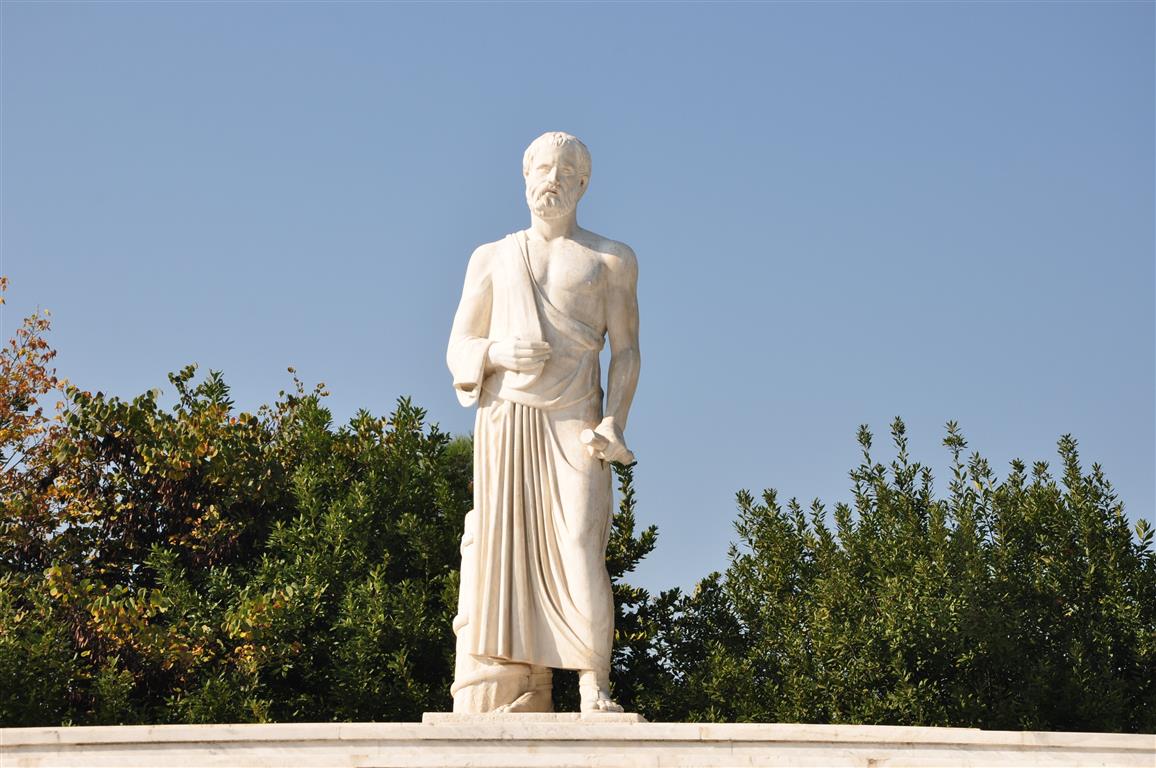
Ancient Hellas is often lauded as the birth place of modern science and philosophy. Certainly in the arts of medicine and healing, this is true. Hippokrátēs of Kos (Ἱπποκράτης) is seen by many as the founding father of medicine. Hippokrátēs was alive from 460 BC to about 370 BC. In his lifetime, he set about to advancing the systematic study of clinical medicine, summing up the medical knowledge of previous schools, and prescribing practices for physicians through the Hippocratic Corpus and other works (although he Corpus itself was most likely not written by him, but assembled in and slightly after his time). Hippokrátēs separated the discipline of medicine from religion, believing and arguing that disease was not a punishment inflicted by the Theoi but rather the product of environmental factors, diet, and living habits. Much of his theories came from his very basic understanding of the human body: in Hippokrátēs' time, it was forbidden to cut into a corpse, even for research.


It's often said that ancient Hellas was the birthplace of modern medicine, but it's important to note that ancient Hellas was also the birthplace of psychology and the relations between biology and psychology. Take for, example, Hippocrates in On the Sacred Disease:

"People should know that our pleasures, happiness, laughter, and jokes from nowhere else [but the brain] and that our griefs, pains, sorrows, depressions and mourning come from the same place. And through it we think especially, and ponder, and see and hear and come to perceive both shameful things and noble things and wicked things and good things as well as sweet and bitter, at times judging them so by custom, at others by understanding what is advantageous based on distinguishing what is pleasurable and not in the right time and [that] these things are not the same to us.

By this very organ we become both sane and delirious and fears and horrors attend us sometimes at night and sometimes at day. This brings us bouts of sleeplessness and makes us mistake-prone at terrible times,  bringing thoughts we cannot follow, and deeds which are unknown, unaccustomed or untried." [14]

All right, he was very off in the part that follows (which has to do with wet brains and biological process we've long debunked), but all of this makes sense. If you find yourself struggling emotionally, remember: the ancient Hellenes already knew that it was just your brain acting up. I don't know about you, but that's a comforting thought.
File this one under the heading of  "the more you know": ancient Hellenic aphrodisiacs! An aphrodisiac is a substance that increases libido when consumed. The name comes from the Greek ἀφροδισιακόν, aphrodisiakon, "sexual, aphrodisiac", from aphrodisios, "pertaining to Aphrodite." Throughout human history, food, drinks, and behaviors have had a reputation for making sex more attainable and/or pleasurable, but these ones, the ancient Hellenes knew (and used!) already.


1. Pomegranates
Even back in ancient Hellas, the pomegranate fruit was considered nutritious and it was also believed, in both ancient times and today, that the juice has aphrodisiac properties. Pomegrante is a noted source for three different antioxidants and it's rich in vitamin C. It has been used for generations to treat depression, settle sore stomachs and neutralize internal parasites. From an aphrodisiac standpoint, the juice may be the most powerful part of this plant. According to the International Journal of Impotence Research, in a double-blind study, men with mild to moderate erectile dysfunction served a daily dose of pomegranate juice showed marked improvement in their condition. Another study, conducted at Queen Margaret University, demonstrated that pomegranate juice has the power to raise testosterone levels in both men and women.

2. Truffles
Dating as far back as the 1st century AD, this fungi found its way into the limelight as an aphrodisiac as it is believed that it came into existence as a result of the combined action of water, heat, and thunderbolts as Zeus hurled a thunderbolt to Earth which landed close to an oak tree! The ancient physician Galen said that “the truffle is very nourishing and can direct voluptuousness.” Although it is clearly the aroma of truffles that moves men (and women), scent is not the only attribute of the truffle that contributes to an aphrodisiac reputation. Their rarity and short season make them among the most elusive, luxury goods of the culinary world. And it might be surprising to learn that truffles are high in protein.

3. Leeks
In ancient times, leeks were eaten raw and whole or cooked and were probably considered an aphrodisiac because of their phallic shape. Nowadays, people still believe that leeks are an aphrodisiac. Whether they work or not, you be the judge. The zinc in leek has been named as the source of the boost to the libido, but it's as high as in spinach and no one calls that an aphrodisiac, so this one remains unproven.

4. Garlic
At some point and time, people stopped believing that garlic was toxic and started eating it to prevent illness and congestion. In addition, people started believing that it possessed magical properties and that it is a natural aphrodisiac. It improves blood circulation and shows antibiotic properties, it has been generally accepted to be a potent aphrodisiac; but now it appears that an enzyme called nitric oxide synthase (NOS) is primarily responsible for the mechanism of erection. Studies have recently shown that garlic in certain forms can stimulate the production of NOS particularly in individuals who have low levels of this enzyme.

5. Legumes
Dating back as far as Hippocrates, legumes have been an essential part of the menu for men wishing to keep up their libido as they get older. Hippocrates prescribed a variety of legumes to eat by the bowl-full; while the Aristotle was a believer in lentil beans with the addition of saffron to keep a man’s libido active and in top shape. Legumes contain phytoestrogens, plant compounds with estrogen-like effects. Estrogen affects sex drive and helps increase sensation. This is most likely where the reputation comes from.
Even though the first case of cancer was recorded in Egypt in 1600 BC, it was Hippocrates (410-360 BC), the father of medicine, who identified and gave the name “cancer” to the illness that blights humanity to this day. He also, like many before and after his time, tried to treat it.


Hippocrates described several kinds of cancer, calling them “karkinos”, the Greek word for crab, or karkinoma (carcinoma). The word came from the appearance of the cut surface of a solid malignant tumour, with the veins stretched on all sides as crab’s feet.

Hippocrates’ conception of cancer was the humoral theory, as he believed that the body contained four humors (body fluids) — namely blood, phlegm, yellow bile and black bile. Any imbalance of these fluids would result in disease and excess of black bile in a particular organ site was thought to cause cancer. The humoral theory of cancer was standard through the Middle Ages for over 1300 years. During that period autopsies were prohibited for religious reasons, thus limiting knowledge about cancer. Humoral theory-based treatment remained popular until the 19th century, when cells were discovered.

Since ancient Hellenic tradition prohibited opening the body, Hippocrates only described and made drawings of visible tumors on the skin, nose, and breasts. Treatment was based on the humoral theory. According to the patient’s humor, treatment consisted of diet, blood-letting and/or laxatives.
Hippocrates believed that cancer was the result of an excess in black bile in any possible part of the body. If the spleen failed to clear out this bile, the patient would develop some kind of cancer. He had also described as early symptoms of cancer a bitter taste in the mouth that would be accompanied by a loss of appetite

The physicians of the time described different cancer types, including the hidden and obvious ones, the acquired and non-acquired type, as well as the tumor sizes differing from as small as an eyeball to as big as a melon. The ancient Hellenes had even noticed the presence of vascular dilatation in cases of cancer.

When examining the patient, ancient Hellenic physicians noticed that the cancer tumor was palpable and somewhat hard to the touch, irregular in shape, adherent to the surrounding tissue with dilatation of the veins, rather cool in temperature and sometimes sores would build up in the surrounding area of the body. It also caused swelling and was not accompanied by fever. Another characteristic symptom of cancer was recorded to be acute pain and bleeding.

Regarding treatment, ancient Hellenic doctors gave the patient medical solutions, and if they failed to help the patient, then they proceeded to remove the tumor with surgery. They used herbs such as asclepia, lichen, aristolochia, dragonvosis, erythematosus, erybuminus, ellevaros, raisinus and others.
In order to remove the malignant black bile they performed phlebotomy. If that did not suffice, they removed the tumor through surgery, if possible, and proceeded with  cauterization of the surrounding vessels to stop excessive and dangerous hemorrhage.

After surgery, the patient had to follow a particular health-boosting diet and exercise program to feel better. However, the vast number of herbs and medicines used indicates that ancient doctors already knew how low the chances were for a cancer patient to survive the illness.

Source.
A lot of people in my life are struggling with their mental health right now. Perhaps you are as well, January seems to bring it out in people. When I am having a bad mental health day, it helps me to remember that brain chemistry is largely to blame for how we feel. Even the ancient Hellenes seemed to realize that emotions stem from the brain (even though they attributed it to phlegm), and it's of all ages to struggle.

On the Sacred Disease is a work of the Hippocratic Corpus, written in 400 BCE. The authorship of the piece can't be confirmed and is therefore regarded as dubious. The treatise contains causes of illnesses that take them out of the realm of the supernatural and into the realm of naturalistic, which is considered a major break in the history of medicine.


“People should know that our pleasures, happiness, laughter, and jokes from nowhere else [but the brain] and that our griefs, pains, sorrows, depressions and mourning come from the same place. And through it we think especially, and ponder, and see and hear and come to perceive both shameful things and noble things and wicked things and good things as well as sweet and bitter, at times judging them so by custom, at others by understanding what is advantageous based on distinguishing what is pleasurable and not in the right time and [that] these things are not the same to us.

By this very organ we become both sane and delirious and fears and horrors attend us sometimes at night and sometimes at day. This brings us bouts of sleeplessness and makes us mistake-prone at terrible times,  bringing thoughts we cannot follow, and deeds which are unknown, unaccustomed or untried.

Yes, we suffer all these things from or brain when it is not health but is hotter than natural, too cold or too wet or too dry or suffers any other kind of thing contrary to its custom. We go insane because of its moistness. For whenever it is wetter than natural, it is forced to move. And when it moves, neither sight can be still nor hearing. Instead, we hear and see different things at different times and the tongue talks about the kinds of things it sees and hears each time. But a person can think as long as the brain remains still.”

Previously unknown classical Greek mythological and medical works and other centuries-old writings have been discovered concealed on manuscripts stored in Egypt’s St. Catherine’s Monastery, organizations behind the research project — including UCLA — announced Tuesday. Also uncovered were classical scientific texts preserved only in Syriac translation, religious texts in extinct languages, an ancient Christian poem describing Old Testament figures in Homeric style and detailed illustrations of plants, buildings and people. The collaboration represents the largest effort of its kind to recover erased or obscured information from historical source material.


The discoveries were uncovered as part of the Sinai Palimpsests Project, a five-year collaboration paid for by the Arcadia Fund and carried out by the UCLA Library, the Early Manuscripts Electronic Library and the monastery, it said. The dictionary defines palimpsests as writing material, such as a manuscript, on which the original writing has been removed to make room for later writing but of which traces remain. According to project organizers:

“Spectral imaging of rare and unique ancient manuscripts in the library of St. Catherine’s Monastery on Egypt’s Sinai Peninsula has revealed treasures of inestimable scholarly and religious value, which were hidden by subsequent writing when parchment was reused. The UCLA Library and the Early Manuscripts Electronic Library have partnered with the monastery on this project, which is funded by Arcadia.”

Organizers said 74 palimpsests totaling some 6,800 pages in 10 languages contain erased layers of writing from the fifth to the 12th centuries. They are now accessible to students, scholars and the public online at sinaipalimpsests.org. UCLA Norman and Armena Powell University Librarian Ginny Steel:

“By revealing these long-hidden materials and preserving them for future generations, this project makes possible advanced research and scholarship by scholars around the world. We are extremely grateful to Arcadia for its visionary support of this international effort. Access to its collection of ancient and medieval manuscripts, considered second only to that of the Vatican Library, has often been difficult due to its remoteness and the region’s volatile political climate. In addition to revealing hidden content and making it accessible, this project has also preserved these fragile materials.”

Among the palimpsests are some of the earliest surviving copies of several Hippocratic medical treatises and a previously unknown mythological poem from ancient Hellas that mentions Zeus, Hades, Hera, Hermes and Persephone. In addition to the oldest surviving illustration in a secular Latin manuscript, illustrations include medicinal herbs, human faces and figures and portions of buildings. There are a number of double palimpsests from parchment that was re-used multiple times.

The spectral imaging process involves illuminating a manuscript with successive wavelengths of light from ultraviolet through the visible spectrum to infrared. The raw data is then processed to generate derivative images that maximize the legibility of erased content.
Thousands of years ago, the Greek physician Hippokrates, widely considered to be the father of modern medicine, wrote about diseases he and his students observed and treated, including intestinal parasites. Modern scholars suspected that parasitic worms described in the medical text "Hippokratic Corpus" were actually roundworms, pinworms and tapeworms, but there was no physical evidence to back that up.  However, archaeologists recently discovered remnants of ancient poo that bolster historians' theory about Hippokrates' diagnostic prowess.


The poop — by now decomposed into soil — was found adhering to pelvic bones from a burial site on the Greek island of Kea, which holds remains dating from about 4,000 B.C. in the Neolithic period to A.D. 330. The researchers found that the fecal remnants contained eggs from two types of intestinal parasites — whipworm and roundworm — giving a modern name to Hippocrates' ancient diagnoses from 2,500 years ago and providing the earliest evidence of parasitic worms in the people of ancient Greece, the study authors reported. Study co-author Evilena Anastasiou, a biological anthropologist at the University of Cambridge in England, said in a statement.

"Finding the eggs of intestinal parasites as early as the Neolithic period in Greece is a key advance in our field."

In ancient Greek medical texts, three terms were typically used to describe parasitic worms: Helmins strongyle described "a large round worm," Helmins plateia referred to "a flat worm," and Ascaris was "a small round worm." Scholars suspected these names referred to parasites currently known as roundworms (Ascaris lumbricoides), tapeworms in the Taenia genus and pinworms (Enterobius vermicularis), the researchers wrote in the study:

To investigate that interpretation, the scientists analyzed 25 burials spanning 4,000 years, removing sediment that contained traces of decomposed human excrement. They found evidence of roundworm or whipworm eggs in four individuals, confirming that Hippokrates was probably talking about roundworms in his 2,500-year-old medical texts. The study's lead author Piers Mitchell, a lecturer in biological anthropology at the University of Cambridge, said in a statement:

"The Helmins strongyle worm in the ancient Greek texts is likely to have referred to roundworm, as found at Kea. However, Hippocrates may have conflated two common parasites in his texts. The Ascaris worm described in the ancient medical texts may well have referred to two parasites, pinworm and whipworm, with the latter being found at Kea."

One possible explanation for why only whipworm and roundworm eggs survived the test of time could lie in their robust outer membranes, which shielded the eggs from destruction. Meanwhile, the more delicate eggs of other intestinal parasites, such as hookworms and pinworms, were broken down, the researchers reported.

Previous research suggested that whipworms and roundworms have parasitized people throughout human evolution, and when the first settlers arrived on the Greek island of Kea, those intestinal parasites likely arrived with them, the scientists explained in the new study. In addition to confirming Hippokrates' description of roundworms, their findings also suggested that whipworms were present as parasites in the region thousands of years ago, the study authors reported. According to Mitchell:

"Until now we only had estimates from historians as to what kinds of parasites were described in the ancient Greek medical texts. Our research confirms some aspects of what the historians thought, but also adds new information that the historians did not expect, such as that whipworm was present. This research shows how we can bring together archaeology and history to help us better understand the discoveries of key early medical practitioners and scientists."

The findings were published online in the Journal of Archaeological Science: Reports.
On Friday July 21st, two tourists were killed and nearly 500 others were injured during an earthquake that struck the Greek island of Kos, birthplace of Hippocrates, founding father of modern medicine. The U.S. Geological Survey measured the quake as being of magnitude 6.7, with Greek and Turkish estimates a fraction lower. A tremor measuring a preliminary 4.4 magnitude struck at 8:09 p.m. (1709 GMT) on Saturday, and sixteen minutes later, a second 4.6-magnitude tremor struck. Now, crews of experts have begun examining the damage to cultural monuments and infrastructure on the island.

[Ancient columns toppled over in the southern part
of the 2nd-century agora in the main town]

The culture ministry team sent to the island included the ministry general secretary Maria Andreadaki-Vlazaki, the supervisor, engineers and conservators from the Dodecanese Antiquities Ephorate, as well as the head of the Newer Monuments Service for the Dodecanese. They inspected the medieval Castle Nerantzia, the Casa Romana, the Hanji Hasan Mosque, the Nefterdar Mosque, the medieval fortifications, the archaeological museum and warehouses and the other monuments and sites in the town of Kos. The inspection revealed damage to sites around the town, especially to the castle and the Ottoman mosques.

The tremor also caused the movement and damage of exhibits, especially pottery, at the island’s archaeological museum and this will be temporarily closed until the damage is restored, the ministry said, along with the Casa Romana monument on the island. For the more contemporary monuments, there will be collaboration with the Kos municipality, the ministry added.

The archaeological site of the Kos Asklepieion will remain open, however, and for the period when the museum and the Castle on Kos will be closed, the culture ministry is arranging to open to the public certain archaeological sites that were previously closed to visitors.

A Central Service team from the Byzantine and Post-Byzantine Monuments Restoration directorate will go to Kos on Saturday and Monday in order to assess the situation and finalize the actions to be taken moving forward. In the mean time, preliminary protection measures will be taken and the monuments will be restored after due study.
In the southern Sinai peninsula, at the foot of Mount Sinai, the Saint Catherine Monastery stands as one of the oldest Christian monasteries in the world. Recent restoration work inside the majestic building has revealed a 1,500-year-old manuscript that contains an ancient medical recipe derived from the research of the famous Hellenic physician Hippocrates.


Mohammed Abdel-Latif, assistant minister of antiquities for archaeological sites, explained that the discovered document is one of those known as 'Palmesit' manuscripts, dating to the 6th century AD. The manuscript is written on vellum, which is stretched leather--labirious and expensive to produce at the time and thus often reused, as was the case here.

The manuscript contains a medical recipe that the researchers attribute to Hippocrates, in addition to three other medical recipes written by an anonymous scribe, one of which contains drawings of medicinal herbs of the Greek recipe. The second layer of the book features extracts from the Bible known as 'Sinaitic manuscript' from the medieval eras.

The text was examined by researchers at the Early Manuscripts Electronic Library (EMEL), which has an ongoing partnership with St. Catherine's Monastery. EMEL uses spectral imaging to read palimpsests. The technique is able to reveal the text hidden beneath the second layer of text in the manuscript, thus revealing what can't be seen with the naked eye. Speaking with Egyptian newspaper Asharq Al-Aswat, Michael Phelps, a researcher at the EMEL, stated:

"With a modern adaptation, we read a Greek text that dates back to the sixth century. The manuscript, which contains three medical texts, will be enlisted among the oldest and the most  important manuscripts in the world."

The region, which sits in a relatively remote part of the desert, was first used in the 3rd or 4th centuries by hermits and religious scholars. Since the walls and church surrounding the historic location were constructed in the 6th century, the monastery has been inhabited by monks ever since. A small number of monks live and work in the monastery today where they observe practices unchanged for the past centuries.

The library itself contains an estimated 3,300 manuscripts that are primarily written in Greek; however, texts written in Christian Palestinian Aramaic, Syriac, Georgian, Arabic, and Latin have been recovered as well.

The actual text that was recovered has not yet been released, as far as I am aware, but if I (or anyone else) comes across it, I'll put it up.
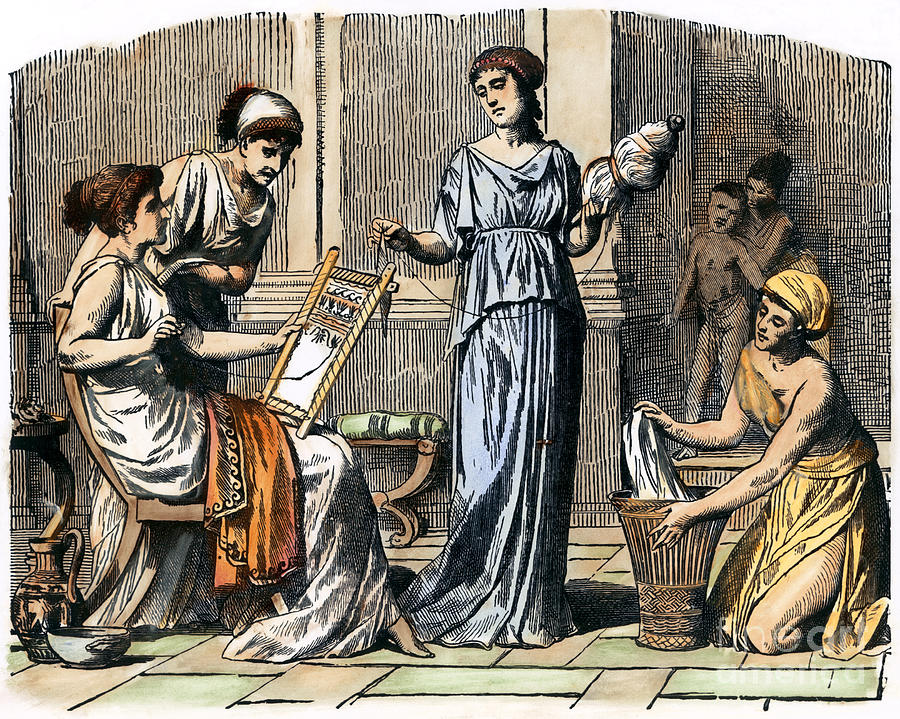
Classical Hellenic culture was strongly marked by gender segregation. Generally speaking, the public sphere was associated with men and the domestic sphere with women. It's a well known fact this is true, but it's less known (but much speculated about) why this was the case. One particular interesting angle to consider is the idea that this segregation arises from Hellenic ideas about the human body and the biological differences between males and females.


In the Greek tradition, mortal men and mortal women were created at different times and for different purposes, and indeed are different races of humans. According to Hesiod in his Works & Days, men were created first and lived free of evil, turmoil and the need to work. Then Pandora was created as a weapon in the contest against the Titan Prometheus and the race of women was born (the 'genos gynaikôn'). When she opened the pithos, she created the world we know today: a place where hard work has to be done, where life was hard and humanity became mortal because sexual reproduction began.

The ancient Hellenic medical writers differed in their ideas about male and female bodies. Roughly speaking, there are two 'schools' of thought: the 'two sex model' and the 'one sex model'. The Hippocratic school, as an example, saw men and women as separate species (two sex model), whereas Aristotle, for example, considered women imperfect or defective men, but men none the less (one sex model).

Hippocrates is credited with creating the theory of humoralism. Humoralism is a now discredited theory of the makeup and workings of the human body, positing that an excess or deficiency of any of four distinct bodily fluids in a person directly influences their temperament and health. The four humors of Hippocratic medicine are black bile (melan chole), yellow bile (chole), phlegm (phlegma), and blood (haima), and each corresponds to one of the traditional four elements. A person suffering from fever and sweats, for example, was diagnosed with an excess of blood, and was treated with instruments that were considered dry and cold.


Somewhat in line with this theory, men’s bodies were considered hot, dry, and compact where women’s bodies were cool, moist, and spongy. Women’s bodies were considered to be more open to outside influences (because of their spongy nature) and women thus lacked the firm control of bodily boundaries that men had. Because women's bodies changed during pregnancy and because they leaked (blood during their periods and tears when they got emotional), ancient Hellenic men figured that women ritually polluted (in the form of miasma) the world around them.

While women worshipped both male and female divinities and acted as priestesses in cult like as men acted as priests, performing many of the same activities, women’s bodies and voices were strictly controlled or semi-secluded in most areas of ancient Hellenic public life partly because of this potential to pollute. These were biological factors, created by the Gods and women were not faulted or blamed for them. The men simply acted according to this understanding of the female body and its properties.

The male body (and mind) and the female body (and mind) made them especially capable of maintaining relationships with the divine in different areas of life. War, athletics and politics were considered hard, dry subjects and thus men were best suited to undertake them, both in execution and in honouring the Gods connected to these subjects. Life-cycle rituals and especially rituals of reproduction and family were spongy and wet, far better suited for women.

Even in joined rites, men and women had different tasks, tabboos and specialties. One example: the ololygē, the ritual scream, that only women could perform during sacrifice. We are supposed to feel friction with our emotions when we take a life, animal or otherwise. Our instinct to preserve life is one of the strongest we have. As such, the moment within ancient Hellenic ritual when the animal's life was actually taken was marked with a scream. It was a joyous scream, one that marked the moment of giving to the Gods, the moment of closest connection and highest tension. After that the tension would wane and the sacrifice turned festive.

Only women could scream. Why? The ancient Hellenes had a masculine virtue called 'sophrosyne', which roughly translates to 'prudence (or soundness) of mind'. Men were expected to control their speech and utterances. Women lacked sophrosyne by nature and were especially suited to voice emotional cries Euripides writes in 'Andromache':

"There is in women is an inborn pleasure in having their present misfortunes always on their tongues." [94-95]

So, while women in public were ideally silent (much safer for everyone!), women’s voices played an important part in Hellenic ritual--critical, even. The same held true in other (but all connected to life and death, like the ololygē) areas of life. Women were actively involved in burials while men stayed away, fearing pollution. Women expressed their grieve loudly and lamented. Thought their cries and stories everyone could hear and remember the person who had passed--which was the way through which the ancient Hellenes claimed some sort of immortality: if their lives were forever remembered, they would never truly die.

The ancient Hellenes concluded that Hellenic men and women related differently to the Gods. Women had a more direct relationship with Them because they were more open (spongy) to Their influence and were thus expected to intercede with the Gods on behalf of their families and their city-states. Women’s behavior in ritual and situations related to life and death reflected these ideas.

The perceived polluting qualities of women’s bodies meant that they had to be tightly controlled, ideally even contained within the domestic sphere and veiled when they emerged into the public sphere. The perceptions of women allowed them special prominence in ritual even as it justified their marginalized status in society as a whole.
Hippokrátēs of Kos (Ἱπποκράτης) is seen by many as the founding father of medicine, and in his lifetime, he set about to advancing the systematic study of clinical medicine, summing up the medical knowledge of previous schools, and prescribing practices for physicians through the Hippocratic Corpus and other works (although he Corpus itself was most likely not written by him, but assembled in and slightly after his time). Hippokrátēs separated the discipline of medicine from religion, believing and arguing that disease was not a punishment inflicted by the Theoi but rather the product of environmental factors, diet, and living habits.

Hippokrátes is also credited with penning the Hippocratic Oath, the most widely known of Hellenic medical texts. In its original form, it requires a new physician to swear, by a number of healing Gods, to uphold specific ethical standards. Of historic and traditional value, the oath is considered a rite of passage for practitioners of medicine in many countries, although nowadays various modernized versions are often used; the message delivered is still the same, 'Do no Harm'.

I'd like to share Ioannis Stratakis' reading of the ancient Hellenic version of it with you today because it sounds bloody amazing!


Scientists at the University of Manchester are currently trying to establish whether there is a connection between weather patterns and the pain experienced by arthritis sufferers and others. Speculation on the link between weather and pain dates back to the time of Hippocrates in ancient Hellas. However, there is little clinical and scientific evidence to support the link. Daily data inputted from over 9000 UK participants in The University of Manchester-led 'Cloudy with a Chance of Pain' project has been viewed at the halfway stage of the 18-month study; these early results suggest a correlation between the number of sunny days and rainfall levels and changes in pain levels.


Hippokrátēs of Kos (Latinized as Hippocrates) was alive from 460 BC to about 370 BC. In his lifetime, he set about to advancing the systematic study of clinical medicine, summing up the medical knowledge of previous schools, and prescribing practices for physicians through the Hippocratic Corpus and other works (although he Corpus itself was most likely not written by him, but assembled in and slightly after his time). Hippocrates separated the discipline of medicine from religion, believing and arguing that disease was not a punishment inflicted by the Theoi but rather the product of environmental factors, diet, and living habits. Much of his theories came from his very basic understanding of the human body: in Hippocrates' time, it was forbidden to cut into a corpse, even for research.

Hippocrates, first and foremost, was an observer. He noted symptoms and linked them to diseases. He noted how often diseases appeared in his environment as well as the times and dates during which they did. As such, he was able to draw many conclusions on the influence fo the seasons--and subsequently the weather--on illness. Many of these observations are noted in section III of Aphorisms.

Modern science has long debated on--and resisted against--the influence of weather on various illnesses, inclusing the worsening or lessening of chronic pain contitions like artritis. A 2014 study, for example, found no link between cold weather and (chronic) back pain. This large 2016 study, however, indicates that while it may not be proveable, sufferers most certainly believe the link to exist.

The set-up of the 18-month project, called Cloudy With A Chance Of Pain, is simple: participants log on to an app and record their symptoms. The app also logs where they are and the exact weather at the time they enter the information. This information is collected for all 9000 participants and from that huge body of data, conclusions are drawn.

The participants who were based in Leeds, Norwich and London--reported that as the number of sunny days increased from February to June, the amount of time they experienced severe pain fell. However when there was a period of wet weather in June and fewer hours of sunlight, the level of pain increased once again.

Scientists think that it could be the fall in pressure behind the phenomenon which causes fluid in the joints to shift. Low pressure also brings rain, so people may be mistaking the downpour for the cause of their increased discomfort. Professor Will Dixon, who treats people with arthritis at Salford Royal hospital, is leading the research. He said:

"We have long heard anecdotal evidence about how people with chronic conditions say they suffer more when the weather is bad - a lot of my patients tell me that they can predict the weather based on how they are feeling. But amazingly there has never really been any real research into it--even though that around 28 million people in the UK suffer from some form of chronic pain. I think there is definitely a possible link. In terms of physiology, it makes sense that air pressure, which can affect weather, would influence pain--particularly in arthritis.

The project is currently at the halfway stage. People interested in joining the Cloudy with a Chance of Pain project--and who have access to a smartphone--can sign up at http://www.cloudywithachanceofpain.com. Dixon notes:

"To work out the details of how weather influences pain, we need as many people as possible to participate in the study and track their symptoms on their smartphone. Once the link is proven, people will have the confidence to plan their activities in accordance with the weather. In addition, understanding how weather influences pain will allow medical researchers to explore new pain interventions and treatments."
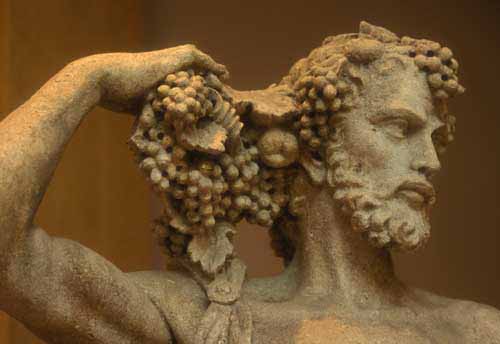
Ancient Hellas is one of the oldest and most important wine-producing civilizations, with evidence of production dating back 6,500 years. Because of the climate, soil and the native vine stocks of the Hellenic islands, ancient Hellenic wine was of great quality. It was a major trade good throughout Europe, and was grown throughout the Hellenic nation--in what is now modern day Italy, Iberia, Sicily, and the south of France. People as far away as modern-day Austria and Russia, as well as many other ancient societies--like the Etruscans, the Phoenicians, the Celts, the Scythians and the Romans--were influenced to some extent by the ancient Hellenic wine making business and culture. But what sort of wines did they drink and how was it made?


The ancient Hellenes called the cultivated vine 'hemeris' (ἡμερίς), after their adjective for 'tame' (ἥμερος), differentiating it from its wild form. They practiced an early form of pigeage when grapes were ready for crushing: wicker baskets filled with grapes were placed inside wooden or earthenware vats with a rope or plank above. Vineyard workers grasped the rope for balance to crush the grapes with their feet, occasionally to the accompaniment of a flute played in a festive manner. After crushing, the grapes were placed in large pithoi, jars where fermentation took place.

Both Hesiod's writings and Homer's Odyssey include some of the earliest mentions of straw wine production: laying out freshly harvested grapes on mats to dry nearly to raisins before pressing. A wine made on Lesbos known as 'protropon' was among the first known to be made exclusively from free-run juice, drawn from grape clusters expressing their contents under their own weight. Other Hellenic innovations include the harvest of deliberately unripe grapes in producing a more acidic wine for blending. The boiling of grape must was discovered as another means of adding sweetness to the wine.

The Ancient Hellenes believed wine could also be improved by adding resin, herbs, spice, seawater, brine, oil and perfume.Ancient Hellenic wine was sweet and aromatic. One form--called Retsina--includes pine resin and has a very special, although acquired, taste. In ancient Hellas, the resin was only added to the wine because the lid of the amphorae were sealed with it, but modern Retsina has the resin added to it directly. The range of ancient Hellenic wine was broad; from inky black to dark red, red, light red, or white. It was never drunk undiluted; the ancient Hellens considered the drinking of undiluted wine to be barbaric.

In addition to its significance as a trade commodity, wine also served important religious, social and medical purposes in ancient Hellenic society. Wine, wine making and wine drinking was, almost needless to say the domain of the Theos of Wine Himself: Dionysos. The medicinal use of wine was frequently studied by the ancient Hellenes, including Hippocrates, who did extensive research on the topic. He used wine as a cure for fevers, to ease convalescence and as an antiseptic. He also studied the effect of wine on his patients' stool. Various types of wine were prescribed by ancient Hellenic doctors for use as an analgesic, diuretic, tonic and digestive aid. They were also aware of some negative health effects, especially those arising from the consumption of wine beyond moderation.
Protothema reports on a remarkable feat of modern skill and ancient beauty: the woman depicted below was created by tested and tried methods to restore a face on a skull. In this case, the skull belonged to a teenage Amazonian warrior.
 

The remains of a 2,500-year-old female body unearthed at the Altai Mountains suggest that she may have been a member of the elite all-female virgin Amazon warriors revered by the ancient Hellenes. She lay entombed beside a much older man, accompanied by shields, battle axes, bows and arrowheads. A close examination of her body indicated that she had once been active, a skilled equestrian and archer. Furthermore, nine horses, four bridled, were buried with her, accompanying her to the afterlife.

Aged sixteen at the time of death, the teenage warrior girl’s face was revealed using intricate taxidermy techniques. Siberian archaeologist Dr. Natalya Polosmak had located the remains of the teenage warrior in 1990. Buried in her riding clothes, with horses, Polosmak explains that representatives of the little-known members of a Pazyryk elite, in which women, for social and economic reasons, were allowed to be war-like were buried in this way, these women were known from multiple mentions of the legendary Amazons. Hippokrátēs wrote of these women as a Scythian group famed for their mastery of mounted warfare:

“The women, so long as they are virgins, ride, shoot, throw the javelin while mounted, and fight with their enemies. They do not lay aside their virginity until they have killed three of their enemies, and they do not marry before they have performed the traditional sacred rites. A woman who takes to herself a husband no longer rides, unless she is compelled to do so by a general expedition.”