The first ever film screening at the Ancient Theatre of Epidaurus will take place on June 30 with the 1962 cinema version of the Greek tragedy “Electra” by renowned director Michael Cacoyannis, reports The Greek Reporter.


Every year, the Ancient Theatre of Epidaurus co-hosts the Athens Epidaurus Festival, with artistic performances – mostly Greek tragedies and opera – taking place at the 24-century-old theater, considered to be a perfect ancient theater in acoustics and aesthetic value.

This year, classic Greek tragedy “Electra” by Euripides will be presented in its film version, a rather bold move by the Ministry of Culture that sponsors the festival. The screening will be in collaboration with the 8th Athens Open Air Film Festival and the special screening will take place on Saturday, June 30 at 21:30.

“Electra” won the Best Cinematic Transposition award at the 1962 Cannes Film Festival where it won the award for Best Cinematic Transposition. The film was also nominated for an Academy Award for Best Foreign Language Film. At the Thessaloniki Film Festival, it won the awards for best film, best director (Michael Cacoyannis) and best actress (Irene Papas).
I've been thinking about and researching the myth of Pandora lately. I'm fairly certain most--if not all--of you know the myth of Pandôra. For those who may not, or not know it completely, I will retell it first:

After the Titanomachy ends, Zeus claims His throne as rightful King to the Deathless Ones. Humanity did not yet exist. While most Titans were locked away in Tartarus by Zeus, Prometheus and Epimetheus--who were brothers--had been either neutral or on the side of Zeus during the Titan War and were therefor given a task. Prometheus was given the task of creating man and Epimetheus was ordered go give good qualities to all creatures of earth. So did Prometheus and Epimetheus. Prometheus shaped man out of clay and Athena breathed life into him. Epimetheus spread swiftness, cunning, fur and wings but ran out of gifts when he came to man. Prometheus remedied the situation by allowing men to walk upright and gave them fire.

It soon became apparent that Prometheus loved man more than the Olympians. When Zeus decreed that man must give sacrifice to the Deathless Ones, Prometheus stood ready to aid humanity. He butchered an animal and divided it in to piles; the bones and fat formed one of them, the good meat wrapped in the hide of the animal, the other. Zeus vowed that he would abide by the choice He made now, and picked the tasty looking pile of bones. Zeus was angered but could not take back his vow. What he could take back, was the gift of fire, and this he did.

Mankind suffered greatly without fire and Prometheus traveled either to the sun or Olympus to reclaim fire for his beloved mankind. This, of course, angered Zeus even further and so he devised a plan. First, he imprisoned Prometheus. He ordered Hermes to tie Prometheus to a mountain and had a giant Eagle come every day to eat his liver. As an immortal, Prometheus' liver grew back over night so his torment was endless. Before Prometheus had been taken prisoner, however, he had told his brother Epimetheus never to accept a gift from Zeus, as Zeus' wrath would undoubtedly also extend to the mortal race He had created. 

And Zeus, indeed, was not done with His punishment. After imprisoning Prometheus, Zeus assembled the Theoi. He told Hēphaistos to fashion a woman out of water and clay. Hēphaistos did and brought the statue before Zeus. Zeus then asked Aphrodite to bless the woman with a beauteous face and feminine whiles. He asked Athena to dress her modestly and give her the ability to weave and craft, Demeter taught her to tend the garden. From Apollon, she received the ability to make music and sing. All Gods gave her treacherous gifts, including Hera, who made her curious, and Hermes, who made her cunning and quick of the tongue. Then, Zeus named her Pandôra (Πανδωρα), All-Giving, and breathed life into her. He then bade Hermes to deliver her to Epimetheus, along with a vase (pithos) Pandôra was never allowed to open.

Epimetheus had been warned by Prometheus never to open or accept a gift from Zeus, but he laid eyes on Pandôra's beauty and fell in love too deeply to reject her. He took her into his home amongst men and wedded her right away. And Pandôra loved Epimetheus, because he was a good man and good husband. She worked tirelessly to please him and helped him keep the home. Yet, she found herself drawn to the pithos she was told never to open. Her eyes would wander to it constantly and Hera's gift eventually prevented her from holding to her promise. 

On a day when Epimetheus was away from the home, Pandôra decided to risk a sneak peak at the contents she had fantasized about so often. She pulled the lid off of the pithos and out flew dark spirits of disease, death and the destruction of humanity. Pandôra hastened to seal the jar but managed to trap only Hope (Elpis)--by Zeus' decree or by mere accident.

Mankind was now plagued with illness, with failing crops, with all that make life hard. But they had Hope and soon, Pyrrha (Fire) was born to Epimetheus and Pandôra. Years later, when Zeus would flood the earth, Pyrrha and her husband Deukalion would survive and re-create the human race by throwing pebbles behind themselves as they walked; Deukalion would create the men and Pyrrha the women.

There are countless versions of this tale. It's featured heavily in Hesiod's Theogony and Works & Days but there seem to be older versions of the myth in which Pandôra was not made by Zeus but was an epithet of Demeter or Gaea who became a separate Deity. As such, Pandôra was a harvest Goddess, a Goddess risen from the earth to bestow gifts upon humanity. This would certainly seem closer to the meaning of her name; All-Giving.

The problem with the 'Pandôra's Box' myth as written above is in the inconsistencies. If Zeus wanted to punish mankind, why give them a beautiful woman? Why not drop the jar in front of some poor farmer and have him open it? Was there no curiosity in men at all? Why give Pandôra the ability to craft, sing and work diligently when she's there solely to punish mankind? If the pithos was a prison for the evils of the world, why was Hope locked in there as well? And if the pithos was, indeed, a prison, shouldn't we be without hope now? The same is true for a scenario in which there were actual gifts in the jar; why was Hope kept from humanity?

Scholars have tried valiantly to answer these questions but it doesn't become much clearer. There is a very old reference to pithos and Zeus in Hómēros' Illiad:

"There are two urns (pithoi) that stand on the door-sill of Zeus. They are unlike for the gifts they bestow: an urn of evils (kakoi), an urn of blessings (dôroi). If Zeus who delights in thunder mingles these and bestows them on man, he shifts, and moves now in evil, again in good fortune. But when Zeus bestows from the urn of sorrows, he makes a failure of man, and the evil hunger drives him over the shining earth, and he wanders resepected neither of gods nor mortals."

Could one of these have been given to Pandôra? And if so, which one? Was it the pithos holding the kakoi or the pithos holding the dôroi? Her name seems to indicate the latter, the myth the former. If it's the pithos holding the kakoi, why was hope in that jar? Shouldn't hope have been in the other jar? If it was the pithos holding the dôroi, why was it a good thing hope stayed behind? Don't we need hope? And if hope is a bad thing, why was it in the jar of blessings? Another possibility is that, when opening the jar, the blessings--because this theory works only if the pithos that was given to Pandora was a pithos of blessings--Pandôra caused mankind to lose the blessings Prometheus had bestowed upon them. All that was left, was hope.

Aeschylus, writer of a Hellenic tragedy dating back to C5th B.C. indicated that it was not Zeus, but Prometheus, who saved Hope from leaving the jar and, as Aeschylus explains it, our hearths:

Prometheus: Yes, I caused mortals to cease foreseeing their doom.
Chorus: Of what sort was the cure that you found for this affliction? 
Prometheus: I caused blind hopes to dwell within their breasts.
Chorus: A great benefit was this you gave to mortals.

If this was the case, the jar would have, indeed, contained blessings which were lost upon opening of the jar. Prometheus kept hope alive for humanity, allowing us to weather the evils already in the world even now we had lost most of our ability to withstand it. 

This idea is not as weird as it may sound; I spoke earlier of the Ages of Man. Every new age, we lost more gifts from the Gods because our gifts gave us hubris. Because this myth is set before the flood of Deukalion, it's set in the Bronze Age. Hesiod had this to say about the Bronze Age:

Zeus the Father made a third generation of mortal men, a brazen race, sprung from ash-trees, and it was in no way equal to the silver age, but was terrible and strong. They loved the lamentable works of Ares and deeds of violence; they ate no bread, but were hard of heart like adamant, fearful men. Great was their strength and unconquerable the arms which grew from their shoulders on their strong limbs. Their armour was of bronze, and their houses of bronze, and of bronze were their implements: there was no black iron. These were destroyed by their own hands and passed to the dank house of chill Hades, and left no name: terrible though they were, black Death seized them, and they left the bright light of the sun.

Parts of it come close to a world void of hope, full of evils and/or void of all goodness but hope. It was a bad age and the people who lived in it, destroyed themselves--perhaps due to whatever was in that pithos?--and remained forever nameless spirits. Of course, the creation myth part of this age doesn't fit the myth at all.

Perhaps, Pandôra was an invention of her time, following a shift in culture towards a patriarchal society. Perhaps, her myth got mangled when it came in contact with the story of Adam and Eve, which it resembles. It is said that the Theoi cannot impede on humanity's free will and so they created a creature with the will to do as they pleased. Quite a nice loop in that clause, hm? Whatever happened, I don't think Pandôra meant any harm. She was made to be a certain way, to reach a certain goal, and she did. 
The Carambolo Treasure is an assemblage of gold items of the first millennium BCE, whose origin has for about 50 years been the epicenter of a heated debate. New chemical and isotopic analyses, carried out by the UPV/EHU's Geochronology and Isotopic Geochemistry Service - Ibercron and commissioned by the University of Huelva and the Archaeological Museum of Seville, suggest that the source of the gold is not thousands of kilometers away from where the treasure was discovered but a deposit located only 2 km from the spot.


The high value in museum terms of this collection of gold items drastically limits the possibility of using classical techniques to analyze dissolved samples, so as a complementary means they used "a kind of laser ablation that makes a minute hole of only 100 micra or 0.1 mm", explained Dr Sonia García de Madinabeitia, one of the people in charge of carrying out the analyses. This service has one of the few laboratories existing internationally that does analyses of lead isotopes for archaeological studies. The laboratory combines a system of laser ablation with plasma mass spectrometry "with which we not only do isotope analyses but also elemental analyses directly on solid samples with the minimum possible impact".

The UPV/EHU researchers determine isotope ratios in archaeological objects as well as in the materials linked to the manufacture of these objects and on the materials potentially used to make them in order to find out where the raw materials came from. As García de Madinabeitia explained, "we are compiling a database of the different ancient mineral deposits so that the relationship existing between the archaeological remains and the possible mine they came from can be established".

"We base ourselves on a kind of footprint of the lead," explained the researcher. The isotope ratios of lead vary in terms of the function of the materials used and the age of the materials, and we determine the isotope ratio that the lead has. The fact is that there are considerable differences between some mineral deposits and others". Apart from that, the researchers at the laboratory conduct elemental analyses, in other words, they quantify the trace and ultratrace elements in the materials, "because we know that mines, however much they may be gold or silver mines, never consist of pure materials, but have a series of trace and ultratrace elements that subsequently allow links between the archaeological materials and the geological materials to be established," added García de Madinabeitia.

There are many research groups at centres and institutions not only in Spain (universities, provincial councils, museums, CSIC-National Research Council, etc.) but also abroad (United Kingdom, Italy, Portugal, France, United States, Australia) that have used data obtained in the UPV/EHU laboratory to study the source of the metals in archaeological objects of many different kinds: ranging from Etruscan bronze earrings, silver bracelets and rings, copper or lead ingots and funerary urns, various bronze weapons and other tools, Nuragic metalworking of Sardinia and many other remains, the age of which ranges between 1,000 and 5,000 years.

Through the numerous studies conducted by the UPV/EHU's research team, some hugely interesting facts for getting to know antiquity have come to light. They include the local supply and trade in metals in the south of the Iberian Peninsula long before the arrival of the first peoples from the Eastern Mediterranean; the recycling of gold by the cultures of the lower Guadalquivir river area since 3,000 BCE; or the use during the Bronze Age of raw materials that came from locations thousands of kilometers away.

The findings are published in the Journal of Archaeological Science.
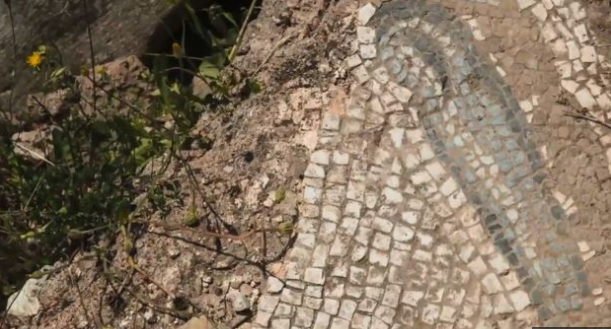
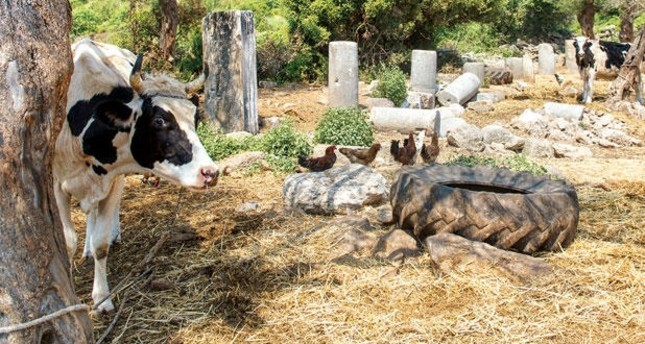
The ancient city of Bargylia, 30 kilometres from Bodrum, has come up for sale, Hürriyet newspaper reported. At the price of 35 million lira ($8.3 million), the 2,500-year-old site contains an acropolis, an odeon, a church, a cemetery, and some city walls still standing. However, much of it is in ruins, and the attention of treasure-hunters has left the site dotted with holes.

vargyl1

vargyl2

So far, no proper archaeological dig has been carried out at the site, which was mentioned by the Hellenistic geographer Strabo in ancient times for its excellent Temple of Artemis.

One of the owners of the site, 87-year-old Hüseyin Üçpınar, said that it was being put up for sale after years of using adjacent lands as olive groves because it could no longer be protected by its owners from amateur treasure-hunters. He said he was hoping for the Culture and Tourism Ministry to either nationalise the entire 300-hectare area or to take responsibility for the city before it is completely destroyed.

I read this and I immediately thought: "What is..?" What if we were developed enough as a religion to come together to flat-out buy this and revive it? What if we could rebuild the temple to Artemis and live on the property? What if we could live and practice together as a community.

It's been a while since I longed for this type of community building so much. Since I have longed so much for the renewal of the ancient Hellenic glory days. Of having a temple to worship in. Sigh. Does anyone have about ten million lying around?
On the 21th of Mounukhion, the sacrificial calendar of Erkhia dictates a sacrifice to the Tritopatores (Τριτοπατορες). We'll host a PAT ritual for the event on May 7th, at 10 a.m. EDT.


Suidas describes the Tritopatores as follows:

"Tritopatores : Demon in the Atthis says that the Tritopatores are winds (anemoi), Philochoros [Greek poet C4th B.C.] that the Tritopatores were born first of all. For the men of that time, he says, understood as their parents the earth (gê) and the sun (hêlios), whom then they called Apollon. Phanodemos [C4th B.C.] in [book] 6 maintains that only [the] Athenians both sacrifice to them and pray to them, when they are about to marry, for the conception of children. In the Physikos of Orpheus the Tritopatores are named Amalkeides and Protokles and Protokleon, being doorkeepers and guardians of the winds (anemoi). But the author of Explanation claims that they are [the offspring] of Ouranos (Heaven) and (Earth), and that their names are Kottos, Briareos and Gyges."

Which version(s) of the Tritopateres were worshipped at Erkhia is unclear. The latter in Suidas are often seen as the Hekatonkheires: Kottos (Κοττος, 'Grudge', 'Rancour'), Gyês (Γυης, 'Of the Land'), Briareôs (Βριαρεως, 'Strong', 'Stout'), Obriareôs (Οβριαρεως, 'Strong', 'Stout'), and Aigaiôn (Αιγαιων, 'Goatish', or 'Stormy'). As the Anemoi, the Tritopateres are: Amalkeidês (Αμαλκειδης, 'Bound to That Place'), Prôtoklês (Πρωτοκλης, 'First Locked Away), and Prôtokleôn (Πρωτοκλεων, 'First Confined').
Which version(s) of the Tritopateres were worshipped at Erkhia is unclear, but we find favour with the theory that they are connected to the wind-Gods. According to the Greater Demarkhia, the sacrifice to the Tritopatores was a ram, along with a 'libation not of wine'. In modern times, a libation of milk, honey, and/or water will most certainly do.

The ritual for the Tritopatores may seem rather strange (at least different) but it is based on elaborate and specific instructions from the inscription from the Selinus tablet and we think it is in the spirit of ancient sacrifice. The arrangement and sequence is crucial. Robert will conduct the sacrifice for the foul Tritopatores as that had to be done by a specific priestly group and as the senior member of Elaion, and with the facilities to conduct this sacred rite, he should be the one to do this. We have marked in the ritual which parts of the rite you should perform and which you should not.

You can find the ritual for the PAT ritual for the sacrifice to Tritopatores here and join the community page here. We hope you will join us!
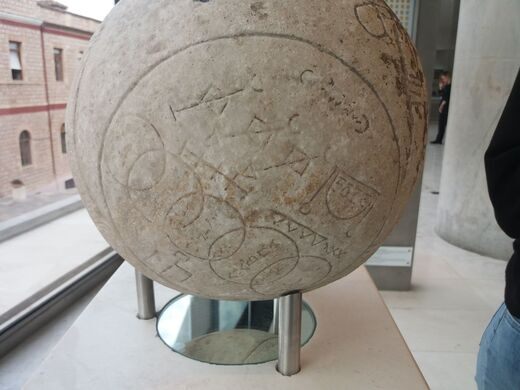
I have a research project. I came across this blog post yesterday, which talks about the "sphere of Helios". It's currently in the Acropolis Museum. I had never heard of it, which is not odd, considering the many things there are to hear about. How about you guys?


"The celestial symbols covering this odd orb bewitch the imagination. And according to some, that’s exactly the point, as it’s thought the ancient Greeks may have used the sphere in magic rituals.
The large marble sphere was found in 1866 at the Theater of Dionysus, which stands at the foot of the famed Acropolis. It’s believed the curious orb was created sometime between the second and third centuries CE.

Not much is known about the strange sphere. Because it was found buried near the Theater of Dionysus—a place where duels and other sporting events were held—it’s said the ball may have been used in magic rituals by those hoping to win.

The carvings adorning the sphere are mysterious and mystical. Most agree the human figure is a depiction of Helios, the god of the Sun. He sits atop a grand throne, clutching a whip in one hand and three lit torches in the other. A great beast rests at his feet, which is said to be either a lion or a dog and is thought to represent a constellation.

Other animal and celestial symbols cover the rest of the sphere. Scan the globe, and you’ll come across a whole medley of magical, alchemistic, and astral symbols."
At some point in our lives, most of us find ourselves in a situation where we are held back from practicing the way we want to. It can be a because we’re living with people who do not understand our religion or practice, or whom we simply do not want to come out to. It can be because we are on holiday, because we have guests over or because we’re busy and life is chaotic. I was asked advice on what to do when faced with these limitations. Here are my main tips:

  • Strip your religion back to its basics and/or find out which practices matter most to you. This allows you to maximize the time and the amount of privacy you have by uncluttering your head.

  • Make a portable altar/shrine kit. This is a box, can or any other medium in which you place those things you can’t practice without. I have two sets; my original Eclectic one and a Hellenic one. Within my Hellenic box are two tea-lights and a holder, a container with khernips, a container with ethanol, a container with olive oil, a cup for khernips, a cup to burn offerings in, cloth to dry my hands and face, some incense, a hair clip, matches, a little prayer book of the hymns I use most, a spoon and a container of barley. I use this kit when I travel but it can also be used to quickly set up a place of worship and break it down just as quickly. The box can be hidden away when not in use so it does not take up living space, a valued commodity for some people. 

  • Find substitutes. For those who like to have some sort of permanent altar or shrine but don’t have the liberty to do so, find substitutes for the basics of your altar needs. I have seen eclectic altars set up with pebbles, seashells, flowers, pompoms, even Barbies. For those who are not allowed open flame or candles, find substitutes. Electrical candles work just fine and look pretty realistic. Use essential oils to smell and a feather to set the air in motion. Substitutes are not perfect but they get the job done. Often, it’s the thought that counts.

Do you have other tips? Let me know in the comments or on social media