Showing posts with label Ouranos. Show all posts
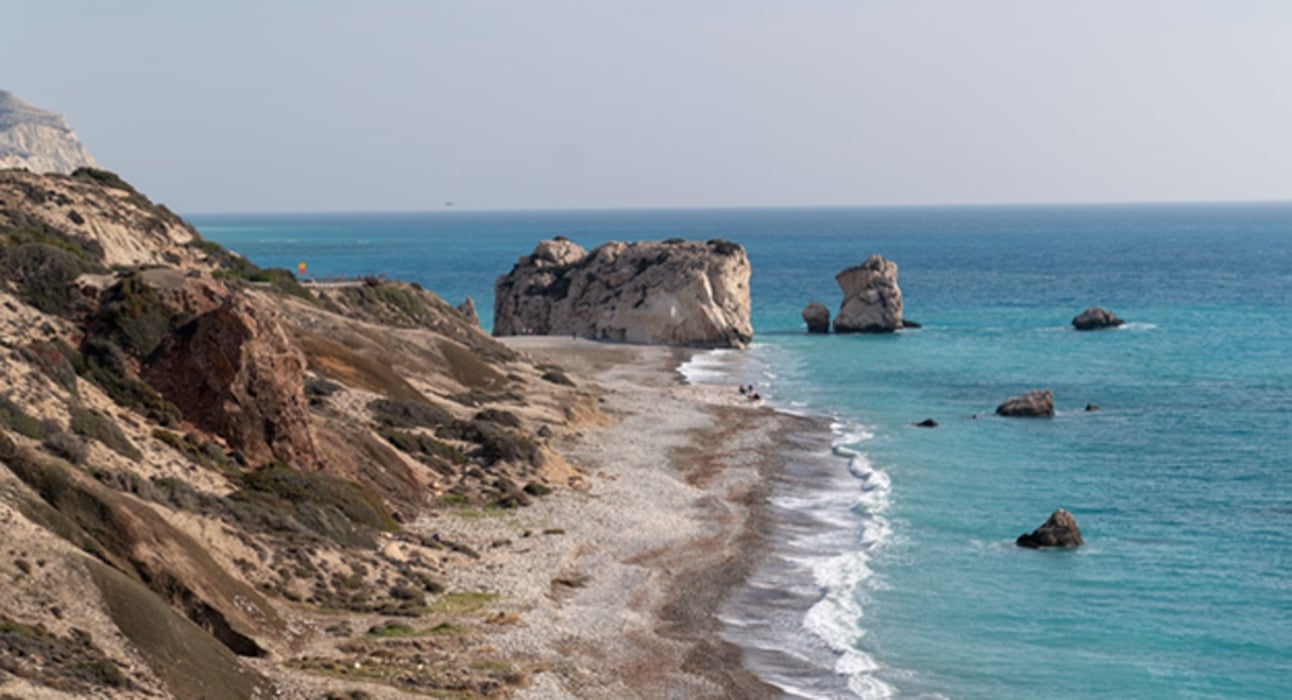
Ancient Origins recently put up an interesting article about Aphrodite Rock,a landmark located off the shore along the main road from Paphos to Limassol, on the island of Cyprus. As its name suggests, the rock is associated with Aphrodite, the Goddess of love. According to legend, this was the place where the Goddess was born.


The Hellenic pantheon literally has hundreds of Gods, Goddesses, Titans, nature spirits, heroes, kings and queens. Although Hellenismos focusses mostly on the Big Twelve, Hades, Hestia and Hekate, Hellenic mythology is a true treasure trove of immortals. Most of these 'lesser' immortals get very little attention, and I'd like to change this. So, ever now and again, I'm going to introduce one of the lesser known immortals and  try and find a place for them in modern Hellenistic worship, based off of their ancient Hellenic worship. Today, I'm introducing to you Hēlios (Ἥλιος), personification of the sun.


Hēlios is a Titan, born from Hyperion and Theia (Hesiod, Pindar), or Hyperion and Euryphaessa (Homeric Hyms). Hyperion (Ὑπερίων), meaning 'The High-One', was born from Gaea and Ouranos. He is the Lord of Light, and Titan to the east. Due to his (and Helios') epithets, there is often confusion between the two: Helios is refered to as 'Hyperion' by Homeros in the Odysseia, and one of the well known epithets of Hyperion is 'Helios Hyperion', yet the ancient Hellens distinguished between Them quite rigidly. Hyperion is the observer--and father--of many of the Titans connected to the sky. Diodoros Sikeliotes (Διόδωρος Σικελιώτης), Hellenic historian and writer of the Bibliotheca historica, says the following about Hyperion:

"Of Hyperion we are told that he was the first to understand, by diligent attention and observation, the movement of both the sun and the moon and the other stars, and the seasons as well, in that they are caused by these bodies, and to make these facts known to others; and that for this reason he was called the father of these bodies, since he had begotten, so to speak, the speculation about them and their nature."

Theia and Euryphaessa are generally regarded as the same Deathless woman: 'theia' is the Hellenic word for 'Goddess', so it was likely 'Theia Euryphaessa' translated to 'Goddess Euryphaessa'. This means that Hēlios' family tree is as follows:

Chaos --- Gaea
            |         |
  Ouranos --- |
                          Hyperion --- Euryphaessa
                      |
                     Hēlios

As far as confusion goes, Hēlios is also often confused with Apollon, mostly because of their conglomeration as a single Deity in the Roman era. In ancient Hellas, it was Phoibos (or 'Aiglêtos') Apollon who drove the chariot of the sun through the sky each morning, following the lovely Eos out of the heavenly gates. Phoibos Apollon is associated with carrying sunlight, but He is in no way the sun itself. That honor befalls Hēlios.

Hēlios is the sole Theos described as 'all-seeing' (Panoptes, because His rays reach (almost) everywhere on the Earth's surface. Most famously, He sees Aphrodite' affair with Ares, and warns Hēphaistos of it. As such, Hēlios is regarded as the enforcer of justice and vows. From Orphic Hymn seven:

"Dispensing justice, lover of the stream, the world's great despot, and o'er all supreme.
Faithful defender, and the eye of right, of steeds the ruler, and of life the light"

The most famous piece of mythology concerning Hēlios regards His son Phaethon (Φαέθων), by Klymene (Κλυμένη). The story is told to us by Ovid, a roman poet. In it, Klymene boasts to Phaethon that his father is the sun God Himself, and so, Phaethon goes up to Olympus to confirm. To prove His paternity, Hēlios swears of the river Styx to give Phaëthon anything he desires. Phaëthon grabs this opportunity to demand of his father to let him drive his golden chariot the next time the sun rises.

Hēlios tries to talk His son out of it, claiming that not even Zeus would attempt to drive the chariot, as it is hot with fire and the horses wild and fire breathing. Phaëthon will hear none of it, and so Hēlios must let him get on. He rubs his son's body with magical oil that will protect him from the heat and as Eos and Apollon leave the gates, so does Phaëthon.

The four horses of the chariot--Pyrois, Aeos, Aethon, and Phlegon--sensed Phaëthon's weaker hand and became virtually unsteerable. First, Phaëthon drove them too high, and the Earth below cooled and the people suffered. Then, he flew too low and entire cities burned, lakes and rivers dried up, and even the seas were affected. Mighty Poseidon tried to stop Phaëthon, but had to flee from the heat. It was Zeus who threw His lightning bolt and killed Phaëthon.

Hēlios was inconsolable, and refused to man the solar chariot for days on end. He blamed Zeus for His son's death, but Zeus rightly claimed He had no other choice. The Theoi eventually convinced Him to to take up His responsibility again, but His son's death pained Hēlios greatly. On the epitaph on Phaëthon's tomb was written:

"Here Phaëthon lies who in the sun-gods chariot fared. 
And though greatly he failed, more greatly he dared."

Another piece of Hēlios' mythology comes from Hómēros who writes in the Odysseia:

"we came swiftly to Helios Hyperion’s lovely island, where the sun-god grazed his fine broad-browed cattle, and his flocks of sturdy sheep. I could hear the lowing of cattle as they were stalled and the bleating of sheep from my black ship while I was still at sea, and the blind seer Theban Teiresias’ words came to mind, with those of Aeaean Circe, who both warned me to avoid the isle of Helios who gives mortals comfort."

Yet, not only do they not steer clear of the island, they kill and eat (unbeknownst to Odysseus), some of the sheep in Hēlios' herd as they become stranded on this island for days or even months.

"Now Lampetia of the trailing robes sped swiftly to Helios Hyperion with the news we had killed his cattle, and deeply angered he complained to the immortals: “Father Zeus and you other gods, immortally blessed, take vengeance on the followers of Odysseus, Laertes’ son. In their insolence, they have killed my cattle: creatures I loved to see when I climbed the starry sky, and when I turned back towards earth again from heaven. If they do not atone for their killing, I will go down to Hades and shine for the dead instead.""

"The gods at once showed my men dark omens. The ox-hides crawled about, raw meat and roast bellowed on the spit, and all around sounded the noise of lowing cattle. Nevertheless my faithful comrades feasted for six days on the pick of Helios’ cattle they had stolen. And when Zeus, Cronos’ son, brought the seventh day on us, the tempest ceased, and we embarked, and, raising the mast and hoisting the white sail, we put out into open water.

"It was not till the island fell astern, and we were out of sight of all but sky and sea, that Zeus anchored a black cloud above our hollow ship, and the waves beneath were dark. She had not run on for long before there came a howling gale, a tempest out of the west, and the first squall snapped both our forestays, so that the mast toppled backwards and the rigging fell into the hold, while the tip of the mast hitting the stern struck the steersman’s skull and crushed the bones. He plunged like a diver from the deck, and his brave spirit fled the bones.

"At that same instant Zeus thundered and hurled his lightning at the ship. Struck by the bolt she shivered from stem to stern, and filled with sulphurous smoke. Falling from the deck, my men floated like sea-gulls in the breakers round the black ship. The gods had robbed them of their homecoming."

The worship of Hēlios was quite widespread throughout ancient Hellas, but never in a measure beyond a cult. Athenians observed Helios as a Theos, but had no worship for Him. On the island of Rhodes, Hēlios was revered most, although evidence of His worship has been found in Corinth and Hermoine. The Colossus of Rhodes was dedicated to Him and the acropolis of Corinth was part of His worship as well.

For modern practitioners, there is not a lot to go on if you want to honor Hēlios. One can assume that manna is an acceptable offer because of His close identification with Apollon. There is also vague record of a festival on Rhodes, where a chariot with four horses was driven off of a cliff to commemorate the death of Phaëthon, but I would opt against this in modern day society. I would suggest thinking of Hēlios as He rises, and perhaps offering to Him when offering to Apollon in His solar aspects.

Helios is a beautiful, bright and all-encompassing Theos who deserves the worship of modern day practitioners. I, for one, would love to see a new cult rise on His name.
If you were a citizen of ancient Hellas, you strove for honor. It was earned through hard work, through arete, through excelling in combat (usually for men), athletics (men and women), science (mostly men, some women) and/or exacting vengeance upon those who wronged you, your family, or your country/city state.

We will look at large scale war--as described in the Iliad--first. Failure to bring a foe to justice was truly dishonorable to the ancient Hellens. Just the thought of leaving Troy without victory after nine years was impossible to bear for the Hellenic warriors who had come all this way.

"Doesn’t a sailor in his benched ship fret, when the winter gales and roaring seas keep him from wife and home for even a month; while we are still held here after nine long years? Small blame then to you Achaeans, impatient by your beaked ships, yet how shameful it would be after this to return empty-handed! My friends endure a little longer, so we may know the truth of Calchas’ prophecy."

The entire Trojan war is based upon honor and vengeance. The Trojans stole Helen away and bringing her back was unavoidable. To make it worth while, however, the grievance to every single man and the family he left behind had to be avenged, doubly so for those who stayed behind on the battlefield. As Nestor says:

"So no scrambling for home till each has slept with a Trojan woman, as reward for the pain and toil Helen brings him. If any man proves anxious to be gone, let him lay hands on his black benched ship, and meet his fated death before the others."

To stay with Hómēros; the link between honor and vengeance applies not just to large-scale wars, but also--or even more so--to the home. Take Odysseus' homecoming for example. Before he even reveals himself to his grieving wife, he plots to kill all her suitors. When he draws sword upon the suitors, he shouts:

"You dogs! You thought I’d never return from the land of Troy, so you laid waste my house, forced my maids, and wooed my wife in secret though I was still alive, without fearing the gods who rule the wide sky, or that mortal vengeance would find you. Now the net of fate is thrown over you all."

Before he can reclaim his wife, Odysseus must redeem himself in front of the men who have dishonored his oikos and all that is tied to it. By killing the suitors, Odysseus reclaims his honor before his son, his wife, his serfs, his deceased family line, everyone in Ithaca he rules over, and anyone who will ever hear his story.

Several  daímōns and Theoi preside over vengeance, either from mortal upon mortal, or from the Theoi upon mortals. The latter is firmly the domain of Nemesis (Νέμεσις). Nemesis destroys those who commit hubris. She takes from those who have too much. She crushes those who boast about skill, power or items they do not possess. She's a powerful Goddess, feared by mortals, respected by the Deathless Ones.

As for the former: the first are the Erinyes (Ερινυες). Although there are other stories about Their birth, the most common is the one where these three Khthonic deities were born from Gaea, from the blood of Ouranos, as Kronos cut off His testicles and threw them over His shoulder, into the ocean. According to ancient Roman poet Virgil, They are three sisters: Alecto ('the angry'), Megaera ('the grudging') and Tisiphone ('the avenger'). They can be petitioned by victims--or family of victims--of homicide, unfilial conduct, crimes against the gods, perjury and crimes committed by a child upon their parent(s). They are famous for continuing their unrelenting punishments until the perpetrator shows remorse. Due to their ability to enter and leave the Underworld at will, they will even continue Their punishment after the perpetrator is dead.

Then there is also the daímōn Alastôr (Αλαστωρ), daímōn of family blood feuds and the inflicton of vengeance upon a new generation for the crimes of their fathers. Where the Erinyes go after the perpetrator of the crime, Alastôr goes after the family of the perpetrator. In this regard, he is close to an epithet of a very familiar Theos: Zeus.

Zeus Meilichios (Ζεύς Μειλίχιος) is a Khthonic epithet of Zeus, who received only nighttime sacrifices, and only by way of a holókaustos. Zeus seems to have adopted the Meilichios epithet from an older Khthonic serpent daímōn or Theos. He is--like the Erinyes and Alastôr--an avenger of blood feuds between families. Yet, unlike the others, Zeus Meilichios is also a purifier. When someone avenged the murder of a family member by killing the killer--or even someone else from that family line--they could petition Zeus Meilichios with a holókaustos of sheep (although another four-legged creature would also suffice) and be cleansed of miasma caused by this murder. As a personal note, I would say that appeasing Zeus Meilichios would also get the Erinyes and/or Alastôr off of your back.

The vendettas Zeus Meilichios presided over were common in Homeric Hellas; like scholar John Gwyn Griffiths has stated: "Vendetta is a war, just as war is an indefinite series of vendettas; and such acts of vengeance are sanctioned by the gods". In a society where family matters often overruled the law, or where local law was set by local communities, it's understandable that taking vengeance into one's own hands makes sense. And so, the closest male relative to the murdered family member took it upon himself to reclaim the honor of the slain family member. This was usually the brother of the deceased, or their son.

How often this act was actually performed is unknown. If one counts the victims of war amongst those who died because of blood feuds, the number is huge; the Hellens fought a huge amount of wars. My gut instinct says that this practice was prevalent in ancient Hellas, and was most likely executed more often than we would like to accept in our current law-regulated society.

As I have said before: reconstruction of a religion is exactly that: reconstruction of a religion, not the full culture in which that religion was placed. This is not a call for Hellenics to go about murdering people (obviously!). Yet, the Erinyes and/or Alastôr can still be petitioned when seeking (judicial) vengeance upon someone who has wronged you or your family. The downfall of someone else is not a pretty thing to wish for, but there can still be situations in which it is called for--the decision to kill someone was most likely not taken lightly either--and Zeus Meilichios can still be petitioned to get rid of the miasma of the act of said vengeance.

Vengeance has become an ugly word. I'm not a vengeful person myself, and following the Rule of Three for nearly twelve years didn't help that any. Yet, in ancient Hellas, vengeance was seen as justice served. It was a punishment for a crime committed. It was serious business and was presided over by Theoi and daímōns who were not to be messed with. They still aren't. I have spoken about wishing things for yourself, and how that is perfectly alright within Hellenismos. Sometimes, we wish for dark things, and that's also alright.

Image credit: Nemesis, Zeus Meilichios
I'm a big fan of the myths that break the rule. I love Atalanta, I have a crush on Baucis and Philemon and I greatly enjoy reading the myth of Hera's revenge on Zeus, and the Hekatonkheire Briareos, who came to Zeus's rescue. The myth is one of the firsts I heard, but I've learned it's a very obscure myths to some. So, today, I want to share this myth with you, because it may show a completely other side of the Theoi we know and love, and the Hekatonkheires (Ἑκατόγχειρες), whom no one seems to know and love.

"First there was only Chaos. Then, Chaos gave birth to Gaea, Tartarus, Eros, Erebus and Nyx. Gaea gave birth to Ouranos, and gave birth to twelve Titans, three Cyclopses and three Hekatonkheires--the hundred-handed Ones--all fathered by her son. The Olympians, eventually, challenged the Titans and won. All Olympians went through an unsettled period, where Their domains were divided and They indulged themselves on mortals and immortals alike. Especially Zeus.

Zeus had taken Hera as his wife in the beginning of His reign, after a spree of lovers and offspring. Hera had refused His advances, but he had turned himself into a cuckoo, presenting Himself to Hera as hurt and drenched. Hera took pity on the bird and took it as a pet, pressing it to Her breast. Zeus turned back to His own form instantly and took Hera by force, shaming Hera into marrying Him.

Hera accepted Her fate, but was not light on the many lovers her husband had. Especially the children Zeus fathered, raised Her anger; they became daily reminders of Zeus' disloyalty to Her, and turned Her into a laughing stock to Her brothers and sisters. She had accepted all she could, and devises a plan for revenge.

The first thing She does, is enlist the help of nearly all other major Theoi. She convinces Them that They are no less than Her husband, and that His many children may one day pose a threat to them all. Many of the Theoi do not need much convincing. Zeus has become arrogant after His victory over the Titans. His bouts of unjust anger have upset the Theoi, and to many of Them, Zeus would make no better leader than They would. The Theoi, convinced, agree to assist Hera. All but Hestia.

One night thereafter, Hera slips a sleeping agent into Her husband's drink. When Zeus falls into a deep sleep, Hera and the other enlisted Theoi take Him and lay Him on His bed where They bind Him tightly with ropes. It's a coup; while Zeus reigned over Them, together They have the strength to end that reign and turn the card in Their favor.

When Zeus awakes, he soon realizes what had happened and becomes furious with His wife, as well as the brothers and sisters He has freed from the belly of Their father. Yet, try as He might, His bonds will not break, as they were fashioned with Immortal hands.

Zeus, deathly afraid for his reign and very existence, calls out for help. While the other Theoi argue amongst Themselves about who should lead in Zeus' stead, Zeus lays in his silent bedrooms and waits, plotting revenge to keep the worry from his mind. In the dead of night, it is the Hekatonkheire Briareos who comes to Zeus's aid. It was, after all, Zeus who freed him and his two brothers from Tartaros, where his father Ouranos had put them.

The Hekatonkheires were born monstrous; a hundred hands sprouted from their shoulders and each had fifty heads. They were giants, all possessing incredible strength. Their father feared them, and they were locked away. During the Titan War, it were the Hekatonkheires and their other monstrous siblings who had eventually turned the tides in the favor of Zeus's army, and Zeus had rewarded them well. As such, they remained loyal.

The primordial Goddess Thesis saw what had happened to Zeus and descended to Tartaros for aid. With his brothers guarding the gates to Tartaros, it was Briareos who came to Zeus' aid in the moment of His greatest fear. Diligently, his hundred hands undid the knots to Zeus' bindings while Zeus Himself held still, and waited. When His bonds fell away, He thanked Briareos humbly, and took His revenge.

Hera, He chained to the sky with golden chains, anvils tied to Her ankles until Zeus took mercy on Her and vowed to release Her if She promised to remain loyal to Him. Poseidon and Apollon were robbed of their Divine status for a year and forced to hard labor; They were sentenced to build the walls around the greatest of cities: Troy. How the others were punished is unclear, but the experience was a turning point for the Gods of Olympus. Zeus realized His behavior had gotten Him into this mess in the first place, and He strove to do better. He became a strong and consistent leader. He minimized His infidelity. He became the beacon of glorious power the other Theoi gladly bowed down to. The coup was forgiven, and Zeus and Hera's marriage improved. The nation settled, ruled justly by Zeus."

It is this myth, which made me want to devote myself wholly to the Hellenic pantheon. The hyper-inflated humanity displayed by the Theoi sets the basics for the Hellenic ethics. The struggle to be better, do better, to forgive and put trust in great leaders, to know your place and rise to glory within it; these are all lessons to be learned from this myth. These are also the basics of Hellenic ethics.

This is one of the very few myths in which Zeus is vulnerable, and we see that it was a very shocking experience to Him, probably more so than this retelling lets on. Zeus was on a power high, and this coup shattered His entire world view. It humbled Him. There is a card in the Olympus Tarot I use, which illustrates this myth. It's meaning when drawn is 'gratitude'.

The BBC series 'Clash of the Gods' has actually included a more aggressive version of this myth in their program. I've included it below.


What do you think of this myth? Did you know it? Does it change your views on Zeus? On the other Theoi? The Hekatonkheires? What would have happened to the pantheon without this coup? Let me know in the comments, if you will.
The Hellenic pantheon literally has hundreds of Gods, Goddesses, Titans, nature spirits, heroes, kings and queens. Although Hellenismos focusses mostly on the Big Twelve, Hades, Hestia and Hekate, Hellenic mythology is a true treasure trove of immortals. Most of these 'lesser' immortals get very little attention, and I'd like to change this. So, ever now and again, I'm going to introduce one of the lesser known immortals and  try and find a place for them in modern Hellenistic worship, based off of their ancient Hellenic worship. Today, I'm introducing to you Amphitrite (Ἀμφιτρίτη), wife of Poseidon.


Amphitrite's parentage is debated. She is described as being a daughter of Oceanos and Tethys, and thus one of the Oceanids, in Apollodorus' Bibliotheca, but Hesiod lists her as a Nereid, the daughter of Nereus and Doris. In the Theogony, Hesiod writes:

"And of Nereus and rich-haired Doris, daughter of Ocean the perfect river, were born children, passing lovely amongst goddesses, Ploto, Eucrante, Sao, and Amphitrite."

From this, we can deduce that Amphitrite's genealogy looks something like this, according to Hesiod:

Or like this, from the Bibliotheca:

Amphitrite is a sea Goddess, as is clear by Her parentage (no matter the author) and Her marriage to Poseidon, Lord of the Mediterranean seas. Amphitrite's offspring are many, seeing and both seals and dolphins were born from Her. She also had a merman son, Triton (Τρίτων), and a sea nymph daughter, Rhode (Ῥόδη), with Poseidon. According to the Bibliotheca, the two had another daughter, Benthesikyme, who went on to rear Her half brother Eumolpus, son of Chione and Poseidon.

Amphitrite didn't have a cult dedicated to Her worship back in ancient Hellas, but She was of great importance in the archaic age. She is mentioned in the Homeric Hymn to Delian Apollon as one of Leto's midwives and before Poseidon's rule of the sea became supreme, Amphitrite ruled it, along with Her Nereids. This remained true at least until the Illiad. Even after that, when Amphitrite was mentioned in texts which proclaimed Her dominance of the sea, Poseidon was rarely mentioned. If anything, He was mentioned as her husband, and not the other way around. There is evidence of Her worship at the temple of Poseidon at Korinthos, at the altar of Apollon at Amyklai in Lakonia and at Olympia.

Another indication that this was one special Lady is the tale of how the two ended up together. Poseidon saw her dancing with Her Nereids at Naxos (Νάξος), one of the larger islands of Greece. He fell for Her instantly and tried to take Her. She rebuffed His advances and fled to Atlas, the farthest end of the sea. Poseidon, sick with love, sent His dolphin after Her to persuade Her to talk to Him, at least. He eventually found Her and spoke on behalf of His master. His words were so sweet and rang so true, that Amphitrite decided to give Poseidon a chance. It was because of the dolphin, Poseidon eventually got to marry Amphitrite, and He was so grateful, He placed the dolphin in the sky as the constellation Delphinus.

Due to her marriage with Poseidon, She is often depicted with a crown on Her head. Most often, She is beside Him, on a throne or in His chariot, like above. She is depicted as a young woman, often with a hand raised like a pincer. Often times, Her hair is covered with a net, and small crab claws adorn Her brow like little horns. 

Amphitrite is the female personification of the sea; she is not merely of the sea, she is it. She is the Queen of the sea and its supreme ruler, although She shares this glory with Poseidon, Oceanos, and other immortals of the sea. When calling to Her, you may use one of Her official titles: the loud-moaning mother of fish, seals and dolphins. For modern Hellenists, it may be wise to praise and offer to Her as well as Her husband when traveling over water, or when celebrating His festivals. This is specially true when worshipping Poseidon in one of His sea-related epithets. Like Poseidon, She may be appeased with fumigations of myrrh incense and the outpour of (sea) water.
I wanted to write about mythology today but then I got caught-up reading Hómēros, got stuck on the idea of epithets and I couldn't get off it again. So I'm saving mythology for tomorrow and today, I'm writing about the many, many epithets of the Gods.

An epithet is an attachment to the name of a God or Goddess, used to indicate either a specific domain of the Deity, a specific origin myth or region from which the Deity came, or an entirely different entity, through either domain or origin. 

An example; Aphrodite is the Goddess of love, beauty, pleasure, and procreation. She's either born from Zeus as His daughter or from the sea foam after Kronos castrated His father Ouranos. In the latter case, Aphrodite is the daughter of Ouranos, a Titan and a half-sister to Zeus. some historians claim Aphrodite was actually an imported Goddess (hence the different creation myths) and used to be a Goddess of war. Some of Aphrodite's epithets include:

Aphrodite Paphos - Aphrodite of Paphos
Aphrodite Diôniaia - Daughter of Dione, daughter of Zeus
Aphrodite Anadyomenê - Risen from the sea Aphrodite 
Aphrodite Philommeides - Laughter-loving Aphrodite
Aphrodite Areia - Warlike Aphrodite

Epithets serve(d) either a ritualistic function or a literary on; hymns and chants are used in both aspects of Hellenismos and in both, destinctions are made between the various epithets of the Gods. 

Within ritual, epithets are used out of respect, devotion a out of practicality. It's seen as respectful to address the Gods by their various names. It shows you are aware of the names of the Gods as well as the domains They influence. As for the practical; well, some Gods rule over a variety of domains. Zeus, for example guards travelers in His epithet of Zeus Xenios but is seen as the bringer of storm-clouds in his epithet of Zeus Ombrios. It's rather obvious, but getting rained upon is probably not what you were after when asking Zeus for aid on your journey.

Within poetry, epithets are used out of respect, as clarification and to add some flair to the poetry written. Certain forms of poetry relied on a set amount of syllables or words to work. Inserting and epithet helped fill the lines so they adhered to poetic rules. When reciting poetry, poets also added epithets to fill in a part of the poetry they had forgotten or to give them some time to remember the next line. 

Within polytheism, epithets are of great interest. A short introduction on polytheism for those who are unsure of its meaning; there are two, or three, branches of polytheism; soft polytheism, hard polytheism and somewhere in the middle, is middle polytheism. All believe that Gods exist as actual beings and influence our lives. Soft polytheists believe that Gods with similar portfolios are the same God(dess). An example; Athena, Brighid, Sarasvati, Neith and Minerva rule the virtue of wisdom in their respective pantheons. For soft polytheists, this means they are the same Deity with different faces for each pantheon. Middle polytheists believe that some of these faces belong to the same Deity but definitely not all. Athena and Minerva are the same Goddesses but Brighid, Sarasvati and Neith are so different from each other, as well as from Athena and Minerva, that They can't be the same. Hard polytheists belief that each and every God and Goddess is a separate entity with His or her own powers, lives and story.

Epithets within polytheism pose a challenge; are all epithets different Gods or different faces of the same God(dess)? I belief Aphrodite Diôniaia and Aphrodite Anadyomenê are different Goddesses but the epithet Aphrodite Philommeides could be applied to both and is not a distinct Goddess. I have no set rule for this; it's a matter of feeling. Practically, this destination would mean I would say either this:

"Oh, blessed Aphrodite, Goddess of love and beauty, Aphrodite Diôniaia, Aphrodite Philommeides, I call on you, ruler over pleasure, oh, ever-laughing Goddess, now I struggle with love in my life. Aphrodite Diôniaia, Aphrodite Philommeides, daughter of Zeus the all-wise, if I have offered to you once, hear my plea and grant me aid."

or this:

"Oh, blessed Aphrodite, born from the foam of the sea, Aphrodite Anadyomenê, Aphrodite Philommeides, I call on you, protectress of those who take to the sea, oh, ever-laughing Goddess, now I journey over water to destinations at great distance. Aphrodite Anadyomenê, Aphrodite Philommeides, destined daughter of Ouranos, the primordial father, if I have offered to you once, hear my plea and grant me protection."

but I would never combine the two.

I'm fairly certain this destination is either completely unimportant, mildly important or critically important to other practitioners within Hellenismos; there is no set opinion in the Hellenic community on this as far, as I'm aware. Yet, if you are on this path, it might be something you want to get a clear opinion on.

For me, the use of epithets is important. They teach me a great deal about the Gods I worship and help focus my prayers and rituals. If you have an opinion on epithets, I would love to hear about it in the comments. 
I remember being new to Hellenic mythology. My first contact with the myths was through a study book in elementary school and focussed on the rise of Zeus over the Titans and, most importantly, his father Kronos. It was the basic story; Kronos was King of the Titans, son of Ouranos; Theos of the Sky, who was foretold one of His sons would cast Him off of the throne. To stop this from happening, Kronos ate His children whole, right after they were born. Rhea, his sister and wife, grew desperate and before giving birth to the last of Her children and ran to her mother, Gaea, for advice. Gaea told Her to hide Her child after birth and offer Kronos a rock to swallow. So done, Zeus was hidden from His father and grew up to a strong and competent young man who went on to overthrow His father, got Him to regurgitate Zeus's brothers and sisters and started the Titanomachy (Τιτανομαχία) or War of the Titans, which would last ten years and end with the victory of the Olympians and the incarceration of Kronos--and all who supported him--in Tartaros.

All I remember thinking was; 'Kronos is such a jerk! It's a good thing Zeus cast Him off of the throne!'

Now I'm a good deal older and a lot more versed in Hellenic mythology, I've come to rethink this position. I've since learned a good few things about Kronos that made me reconsider my opinion of Him. For one, Kronos, like Zeus, repeated a pattern He had learned from His parents. Ouranos did virtually the same to Kronos and the rest of His children as Kronos did, and for the same reason. Instead of eating them, Ouranos locked His many children in Tartaros. Kronos was the only one of Ouranos' children to take up the sickle His mother Gaea offered to Him and was eventually the one who cut off Ouranos' private parts and cast him down. 

Under Kronos' rule, men lived in a Golden Age. As Hesiod writes in Works and Days;

"First of all the deathless gods who dwell on Olympus made a golden race of mortal men who lived in the time of Cronos when he was reigning in heaven. And they lived like gods without sorrow of heart, remote and free from toil and grief: miserable age rested not on them; but with legs and arms never failing they made merry with feasting beyond the reach of all evils. When they died, it was as though they were overcome with sleep, and they had all good things; for the fruitful earth unforced bare them fruit abundantly and without stint. They dwelt in ease and peace upon their lands with many good things, rich in flocks and loved by the blessed gods."

After Kronos was cast down and men were ruled by Zeus, men slipped into the Silver Age, an age far worse than the Golden one;

"Then they who dwell on Olympus made a second generation which was of silver and less noble by far. It was like the golden race neither in body nor in spirit. A child was brought up at his good mother's side an hundred years, an utter simpleton, playing childishly in his own home. But when they were full grown and were come to the full measure of their prime, they lived only a little time in sorrow because of their foolishness, for they could not keep from sinning and from wronging one another, nor would they serve the immortals, nor sacrifice on the holy altars of the blessed ones as it is right for men to do wherever they dwell. Then Zeus the son of Cronos was angry and put them away, because they would not give honour to the blessed gods who live on Olympus."

When taking this under consideration, Zeus's actions against his father seem like a bad move for humanity. Although more ages followed, it never was again like it was in the Golden Age for us. It's something to think about, at least.

Kronos is often confused with Khronos; creator of the Gods and Lord of Time. Kronos--considered a harvest God for his link to the Golden Age--is outdated by Khronos by a few generations. In the Orphic cosmogony, Khronos was alone in the void. He created both Aether and Chaos who produced the Primordial Egg from with the hermaphroditic Theos Protogonos emerged. From Him, Ouranos was born, making Khronos, Kronos' great-grandfather. They are neither the same God, nor do they rule over the same domains. Most of the confusion comes from the Roman deity of Saturn, who is a harvest God, Father Time and the father of Jupiter--Zeus' equivalent--combined.

Saturn has His own festival in the Saturnalia but within Hellenismos, Kronos is honored during the Kronia. The Kronia was--and is--held on the twelfth day of the Attic month of Hekatombaion. I'll delve deeper into the Attic (Athenian) calendar in another post but this year, the Kronia was on July 2. I celebrated it today in a light but respectful manner. I followed standard practice, offered the darkest chocolate I could find (as well as Storax incense and barley) and read to Him the myths above, in which He overthrew His father and ruled over the Golden Age. 

Kronos is a a formidable Deity, a Titan of immeasurable power. Offering to Him seems only just. He's a strong ruler, a powerful harvest deity and a good example of the two sides every coin has. 

Did you celebrate Kronia? If so, how did it go? What are your experiences with Kronos? The comments section is open.