Showing posts with label Rhea. Show all posts

How about a little overview today? An overview of the fertility gods of Hellenismos. I'm going to start off with a lesser known deity: Priapos (Πριαπος), protector of sheep, goats, bees, the vine and of all garden produce. He was depicted with a huge male member, and can be petitioned for aid with any issues regarding the male genitalia. He was native to the Mysian city of Lampsakos on the Hellespont but the ancient Hellenes adopted the God as the son of either Hermes or Dionysos. His mother was usually Aphrodite. Fun fact: primitive statues of Priapos were traditionally set-up in vegetable plots to promote fertility with the added benefit of functioning as a type of 'scarecrow' scaring away birds.


Rhea (Ρεα), wife of Kronos, is a female fertility Goddess--amongst other things. She also looks after mothers and children, and is one of the great mother Goddesses in the pantheon having obviously given birth to the Olympians. Anything female-related (including issues with fertility) can be put before Her. Hera, by the way, has many of the same domains as Her mother--logical as she is the new generation's mother figure.

Aphrodite is also a fertility Goddess. She along with Zeus, Hera, Eileithyia and Hymenaios were the Theoi Gamelioi (Gods of Marriage) who presided over the wedding rites. She was invoked as the Goddess of the consummation of marriage and the fertility of the bride.

Speaking of which, Eileithyia (Ειλειθυια) is the Goddess of childbirth and labour pains. According to some there were two Eileithyiai, one who furthered birth and one who protracted the labour. Her name means 'she who comes to aid'.

Demeter and Persephone were regarded as fertility Goddesses in the Eleusinian Tradition, and during Their Thesmophoria festival, women actively asked for fertility from Them. Demeter, especially, is obviously also very important for the growth of plant life.

Dionysos is mostly associated with the fertility of the soil, and especially in regards to the grape vine, but human fertility is amongst His descriptors. Pan is regarded as much the same, as are many of the Satyrs and daimons connected to Them--like Tykhon, Konisalos, and Orthannes.

Phanes (Φανης) is the Protogenos of procreation in the Orphic cosmogony. He is the primal generator of life, and was the driving force behind reproduction in the early cosmos. Phanes was hatched from the world egg when it was split into its constituent parts by the ancient gods Khronos and Ananke. Arguably, He still drives the process of reproduction, be it in plants, animals, or humans.
The 12th of Hekatombion marks the start of the ancient Hellenic Kronia festival. The Kronia honours Kronos, Zeus' father, not to be confused with Khronos; creator of the Gods and Lord of Time. Will you be joining us for the celebration on July 4th, at the usual 10 am EDT?


In Athens, Kronos and Rhea--His wife and sister--shared a temple. They represented an age before the Theoi took to rule; a time when societal rules did not exist yet, and there was no hierarchy. As such, on the day Kronos was worshipped, the fixed order of society was suspended, and slaves joined--and even ruled over--a banquet given by their masters; they ran through the streets screaming and hollering. On Krete, they could whip their masters. As much fun as this was, the day served as a reminder that for a society to function, societal rules were necessary, and as such, it was also necessary for Zeus to overthrow His father and assume the throne.

Besides a banquette, the Kronia must have been celebrated with an official sacrifice as well, in the temple to Him and Rhea, as the Kronia was a harvest festival of sorts. Unlike many rites to Demeter, the Kronia focused on the harvest--most likely of cereals--that was completed around this time. It was the end of a hectic period where slaves were worked hard, and their masters as well. A communal meal and a little bit of payback on the side of the serfs was most likely at the root of this festival, along with gratitude for the successful harvest; the Hellenic summers were too hot to grow much of anything, so the food eaten in this barren season ahead needed to be taken in and thrashed (where needed) prior to the swell of summer heat. The Kronia was a good mark for this.

There is a little bit of evidence that human sacrifice--in the form of 'scapegoat' rituals was performed on or around the date of the Kronia in the very distant past, but by the time Hellas--and especially Athens--became civilized in the way we speak of today, this practice was long outdated. It seems that a criminal condemned to death was taken outside of the city gates for a reason now lost to us, possibly fed copious amounts of wine, and then killed in honor (or placation) of Kronos. Needless to say, there is no reason to bring this practice back.

You can find the ritual here and the community page here.
On 20 March, at 10 AM EDT, Elaion hosts a PAT ritual for the Galaxia. This rather obscure festival was held in many places in ancient Hellas, but most notably at Olympia. The Galaxia was closely linked to the vernal equinox, which was used to date it and was (amongst others) in honor of Kronos and Rhea.


The Galaxia is a festival held in honor of the Mother (of the Gods), who in Hellenic mythology is Rhea, although the title is also strongly associated with Gaia and Kybele, who have similar functions. She was worshipped as the mother of Zeus and the Galaxia celebrated His birth just as much as Her giving birth to him. Kronos--as Her consort and His father--was most likely also sacrificed to, along with Hera, who as Zeus' wife deserved honor alongside Him. In our ritual, we have included Helios and the Horai as well, as the Galaxia was associated so closely with the Spring Equinox.

The Galaxia had a special beverage attached to it--well, a special food item: a milk and barley porridge that may have been sacrificed to the Mother, but which was at least consumed at the festival. Pliny the Elder names the porridge a 'puls', which seems to have been a more general term which included pastes made from lentils and beans as well as from grain. On barley-based porridge, he has the following to say in his 'Natural History':

"There are several ways of making barley porridge: the Greeks soak some barley in water and then leave it for a night to dry, and next day dry it by the fire and then grind it in a mill. Some after roasting it more thoroughly sprinkle it again with a small amount of water and dry it before milling; others however shake the young barley out of the ears while green, clean it and while it is wet pound it in a mortar, and wash it of husk in baskets and then dry it in the sun and again pound it, clean it and grind it. But whatever kind of barley is used, when it has been got ready, in the mill they mix in three pounds of flax seed, half a pound of coriander seed, and an eighth of a pint of salt, previously roasting them all. Those who want to keep it for some time in store put it away in new earthenware jars with fine flour and its own bran. Italians bake it without steeping it in water and grind it into fine meal, with the addition of the same ingredients and millet as well." [XVIII-XIV]

Sources which mention the festival speak only of a milk and barley beverage that can be poured. Fundamentally, porridge is made by mixing oats with a fluid (normally water and or milk) and then heating it. Combine barley, water, and salt in a heavy saucepan. Cover, and bring to a boil over high heat, stirring continuously. Turn the heat to low and steam until grains are soft and all the liquid is absorbed. Add the milk once the water level drops below the level of the barley. Cooking time depends on the form of barley used. Use one cup dry barley on three cups of water.

- Hulled barley is unprocessed and takes the longest to boil, about an hour and 15 minutes before it's soft.
- Pearl Barley or Pearled Barley is the most common form of barley available and is sold in most supermarkets. Because the outer hulls including the bran have been removed, the grains have a pearly white color. Cooking time: 50-60 minutes.
- Quick Barley, or instant barley is pearl barley that is pre-steamed then dried, shortening the cooking time considerably, about 10 to 12 minutes.
- Barley Grits are processed similar to bulghur wheat. The grain is cracked, and toasted or parboiled, then dried, making it a quick-cooking product--about 2-3 minutes. As such, add a little less water or milk.
- Barley Flakes, Pressed Barley, or Rolled Barley have the appearance of rolled oats and are often included in muesli-type cereals. The cooking time is about 30 minutes.
- Barley Flour is hulled barley that is finely ground and has a lightness and delicate sweetness. It can be stirred into milk until the right consistency is reached.
To get a consistency where the puls can be poured, add milk or water to thin the porridge. If you want to sweeten the porridge a little, add warmed honey to the mixture.

We hope you will join us today, on March 20 at the usual 10 AM. The ritual can be found here and you can join the community here.
The 12th of Hekatombion marks the start of the ancient Hellenic Kronia festival. The Kronia honours Kronos, Zeus' father, not to be confused with Khronos; creator of the Gods and Lord of Time. Will you be joining us for the celebration on July 15th (so, today!), at the usual 10 am EDT?


In Athens, Kronos and Rhea--His wife and sister--shared a temple. They represented an age before the Theoi took to rule; a time when societal rules did not exist yet, and there was no hierarchy. As such, on the day Kronos was worshipped, the fixed order of society was suspended, and slaves joined--and even ruled over--a banquet given by their masters; they ran through the streets screaming and hollering. On Krete, they could whip their masters. As much fun as this was, the day served as a reminder that for a society to function, societal rules were necessary, and as such, it was also necessary for Zeus to overthrow His father and assume the throne.

Besides a banquette, the Kronia must have been celebrated with an official sacrifice as well, in the temple to Him and Rhea, as the Kronia was a harvest festival of sorts. Unlike many rites to Demeter, the Kronia focused on the harvest--most likely of cereals--that was completed around this time. It was the end of a hectic period where slaves were worked hard, and their masters as well. A communal meal and a little bit of payback on the side of the serfs was most likely at the root of this festival, along with gratitude for the successful harvest; the Hellenic summers were too hot to grow much of anything, so the food eaten in this barren season ahead needed to be taken in and thrashed (where needed) prior to the swell of summer heat. The Kronia was a good mark for this.

There is a little bit of evidence that human sacrifice--in the form of 'scapegoat' rituals was performed on or around the date of the Kronia in the very distant past, but by the time Hellas--and especially Athens--became civilized in the way we speak of today, this practice was long outdated. It seems that a criminal condemned to death was taken outside of the city gates for a reason now lost to us, possibly fed copious amounts of wine, and then killed in honor (or placation) of Kronos. Needless to say, there is no reason to bring this practice back.

You can find the ritual here  and the community page here.
How about a little overview today? An overview of the fertility gods of Hellenismos. I'm going to start off with a lesser known deity: Priapos (Πριαπος), protector of sheep, goats, bees, the vine and of all garden produce. He was depicted with a huge male member, and can be petitioned for aid with any issues regarding the male genitalia. He was native to the Mysian city of Lampsakos on the Hellespont but the ancient Hellenes adopted the God as the son of either Hermes or Dionysos. His mother was usually Aphrodite. Fun fact: primitive statues of Priapos were traditionally set-up in vegetable plots to promote fertility with the added benefit of functioning as a type of 'scarecrow' scaring away birds.

Rhea (Ρεα), wife of Kronos, is a female fertility Goddess--amongst other things. She also looks after mothers and children, and is one of the great mother Goddesses in the pantheon having obviously given birth to the Olympians. Anything female-related (including issues with fertility) can be put before Her. Hera, by the way, has many of the same domains as Her mother--logical as she is the new generation's mother figure.

Aphrodite is also a fertility Goddess. She along with Zeus, Hera, Eileithyia and Hymenaios were the Theoi Gamelioi (Gods of Marriage) who presided over the wedding rites. She was invoked as the Goddess of the consummation of marriage and the fertility of the bride.

Speaking of which, Eileithyia (Ειλειθυια) is the Goddess of childbirth and labour pains. According to some there were two Eileithyiai, one who furthered birth and one who protracted the labour. Her name means 'she who comes to aid'.

Demeter and Persephone were regarded as fertility Goddesses in the Eleusinian Tradition, and during Their Thesmophoria festival, women actively asked for fertility from Them. Demeter, especially, is obviously also very important for the growth of plant life.

Dionysos is mostly associated with the fertility of the soil, and especially in regards to the grape vine, but human fertility is amongst His descriptors. Pan is regarded as much the same, as are many of the Satyrs and daimons connected to Them--like Tykhon, Konisalos, and Orthannes.

Phanes (Φανης) is the Protogenos of procreation in the Orphic cosmogony. He is the primal generator of life, and was the driving force behind reproduction in the early cosmos. Phanes was hatched from the world egg when it was split into its constituent parts by the ancient gods Khronos and Ananke. Arguably, He still drives the process of reproduction, be it in plants, animals, or humans.
On 21 March, at 10 AM EDT, Elaion hosts a PAT ritual for the Galaxia. This rather obscure festival was held in many places in ancient Hellas, but most notably at Olympia. The Galaxia was closely linked to the vernal equinox, which was used to date it and was (amongst others) in honor of Kronos and Rhea.


The Galaxia is a festival held in honor of the Mother (of the Gods), who in Hellenic mythology is Rhea, although the title is also strongly associated with Gaia and Kybele, who have similar functions. She was worshipped as the mother of Zeus and the Galaxia celebrated His birth just as much as Her giving birth to him. Kronos--as Her consort and His father--was most likely also sacrificed to, along with Hera, who as Zeus' wife deserved honor alongside Him. In our ritual, we have included Helios and the Horai as well, as the Galaxia was associated so closely with the Spring Equinox.

The Galaxia had a special beverage attached to it--well, a special food item: a milk and barley porridge that may have been sacrificed to the Mother, but which was at least consumed at the festival. Pliny the Elder names the porridge a 'puls', which seems to have been a more general term which included pastes made from lentils and beans as well as from grain. On barley-based porridge, he has the following to say in his 'Natural History':

"There are several ways of making barley porridge: the Greeks soak some barley in water and then leave it for a night to dry, and next day dry it by the fire and then grind it in a mill. Some after roasting it more thoroughly sprinkle it again with a small amount of water and dry it before milling; others however shake the young barley out of the ears while green, clean it and while it is wet pound it in a mortar, and wash it of husk in baskets and then dry it in the sun and again pound it, clean it and grind it. But whatever kind of barley is used, when it has been got ready, in the mill they mix in three pounds of flax seed, half a pound of coriander seed, and an eighth of a pint of salt, previously roasting them all. Those who want to keep it for some time in store put it away in new earthenware jars with fine flour and its own bran. Italians bake it without steeping it in water and grind it into fine meal, with the addition of the same ingredients and millet as well." [XVIII-XIV]

Sources which mention the festival speak only of a milk and barley beverage that can be poured. Fundamentally, porridge is made by mixing oats with a fluid (normally water and or milk) and then heating it. Combine barley, water, and salt in a heavy saucepan. Cover, and bring to a boil over high heat, stirring continuously. Turn the heat to low and steam until grains are soft and all the liquid is absorbed. Add the milk once the water level drops below the level of the barley. Cooking time depends on the form of barley used. Use one cup dry barley on three cups of water.

- Hulled barley is unprocessed and takes the longest to boil, about an hour and 15 minutes before it's soft.
- Pearl Barley or Pearled Barley is the most common form of barley available and is sold in most supermarkets. Because the outer hulls including the bran have been removed, the grains have a pearly white color. Cooking time: 50-60 minutes.
- Quick Barley, or instant barley is pearl barley that is pre-steamed then dried, shortening the cooking time considerably, about 10 to 12 minutes.
- Barley Grits are processed similar to bulghur wheat. The grain is cracked, and toasted or parboiled, then dried, making it a quick-cooking product--about 2-3 minutes. As such, add a little less water or milk.
- Barley Flakes, Pressed Barley, or Rolled Barley have the appearance of rolled oats and are often included in muesli-type cereals. The cooking time is about 30 minutes.
- Barley Flour is hulled barley that is finely ground and has a lightness and delicate sweetness. It can be stirred into milk until the right consistency is reached.
To get a consistency where the puls can be poured, add milk or water to thin the porridge. If you want to sweeten the porridge a little, add warmed honey to the mixture.

We hope you will join us tomorrow, on March 21 at the usual 10 AM. The ritual can be found here and you can join the community here.
The 12th of Hekatombion marks the start of the ancient Hellenic Kronia festival. The Kronia honours Kronos, Zeus' father, not to be confused with Khronos; creator of the Gods and Lord of Time. Will you be joining us for the celebration on July 25th, at the usual 10 am EDT?


In Athens, Kronos and Rhea--His wife and sister--shared a temple. They represented an age before the Theoi took to rule; a time when societal rules did not exist yet, and there was no hierarchy. As such, on the day Kronos was worshipped, the fixed order of society was suspended, and slaves joined--and even ruled over--a banquet given by their masters; they ran through the streets screaming and hollering. On Krete, they could whip their masters. As much fun as this was, the day served as a reminder that for a society to function, societal rules were necessary, and as such, it was also necessary for Zeus to overthrow His father and assume the throne.

Besides a banquette, the Kronia must have been celebrated with an official sacrifice as well, in the temple to Him and Rhea, as the Kronia was a harvest festival of sorts. Unlike many rites to Demeter, the Kronia focused on the harvest--most likely of cereals--that was completed around this time. It was the end of a hectic period where slaves were worked hard, and their masters as well. A communal meal and a little bit of payback on the side of the serfs was most likely at the root of this festival, along with gratitude for the successful harvest; the Hellenic summers were too hot to grow much of anything, so the food eaten in this barren season ahead needed to be taken in and thrashed (where needed) prior to the swell of summer heat. The Kronia was a good mark for this.

There is a little bit of evidence that human sacrifice--in the form of 'scapegoat' rituals was performed on or around the date of the Kronia in the very distant past, but by the time Hellas--and especially Athens--became civilized in the way we speak of today, this practice was long outdated. It seems that a criminal condemned to death was taken outside of the city gates for a reason now lost to us, possibly fed copious amounts of wine, and then killed in honor (or placation) of Kronos. Needless to say, there is no reason to bring this practice back.

You can find the ritual here and the community page here.
On Monday, 27 March, at 10 AM EDT, Elaion hosts a PAT ritual for the Galaxia. This rather obscure festival was held in many places in ancient Hellas, but most notably at Olympia. The Galaxia was closely linked to the vernal equinox, which was used to date it and was (amongst others) in honor of Kronos and Rhea.


The Galaxia is a festival held in honor of the Mother (of the Gods), who in Hellenic mythology is Rhea, although the title is also strongly associated with Gaia and Kybele, who have similar functions. She was worshipped as the mother of Zeus and the Galaxia celebrated His birth just as much as Her giving birth to him. Kronos--as Her consort and His father--was most likely also sacrificed to, along with Hera, who as Zeus' wife deserved honor alongside Him. In our ritual, we have included Helios and the Horai as well, as the Galaxia was associated so closely with the Spring Equinox.

The Galaxia had a special beverage attached to it--well, a special food item: a milk and barley porridge that may have been sacrificed to the Mother, but which was at least consumed at the festival. Pliny the Elder names the porridge a 'puls', which seems to have been a more general term which included pastes made from lentils and beans as well as from grain. On barley-based porridge, he has the following to say in his 'Natural History':

"There are several ways of making barley porridge: the Greeks soak some barley in water and then leave it for a night to dry, and next day dry it by the fire and then grind it in a mill. Some after roasting it more thoroughly sprinkle it again with a small amount of water and dry it before milling; others however shake the young barley out of the ears while green, clean it and while it is wet pound it in a mortar, and wash it of husk in baskets and then dry it in the sun and again pound it, clean it and grind it. But whatever kind of barley is used, when it has been got ready, in the mill they mix in three pounds of flax seed, half a pound of coriander seed, and an eighth of a pint of salt, previously roasting them all. Those who want to keep it for some time in store put it away in new earthenware jars with fine flour and its own bran. Italians bake it without steeping it in water and grind it into fine meal, with the addition of the same ingredients and millet as well." [XVIII-XIV]

Sources which mention the festival speak only of a milk and barley beverage that can be poured. Fundamentally, porridge is made by mixing oats with a fluid (normally water and or milk) and then heating it. Combine barley, water, and salt in a heavy saucepan. Cover, and bring to a boil over high heat, stirring continuously. Turn the heat to low and steam until grains are soft and all the liquid is absorbed. Add the milk once the water level drops below the level of the barley. Cooking time depends on the form of barley used. Use one cup dry barley on three cups of water.

- Hulled barley is unprocessed and takes the longest to boil, about an hour and 15 minutes before it's soft.
- Pearl Barley or Pearled Barley is the most common form of barley available and is sold in most supermarkets. Because the outer hulls including the bran have been removed, the grains have a pearly white color. Cooking time: 50-60 minutes.
- Quick Barley, or instant barley is pearl barley that is pre-steamed then dried, shortening the cooking time considerably, about 10 to 12 minutes.
- Barley Grits are processed similar to bulghur wheat. The grain is cracked, and toasted or parboiled, then dried, making it a quick-cooking product--about 2-3 minutes. As such, add a little less water or milk.
- Barley Flakes, Pressed Barley, or Rolled Barley have the appearance of rolled oats and are often included in muesli-type cereals. The cooking time is about 30 minutes.
- Barley Flour is hulled barley that is finely ground and has a lightness and delicate sweetness. It can be stirred into milk until the right consistency is reached.
To get a consistency where the puls can be poured, add milk or water to thin the porridge. If you want to sweeten the porridge a little, add warmed honey to the mixture.

We hope you will join us next week, on March 27 at the usual 10 AM. The ritual can be found here and you can join the community here.
I often describe the pantheon of Hellenic Gods like a tapestry. The major displays woven into it are undoubtedly of Zeus and Hera, of Their brothers and sisters, of Their parents and well-known children like Apollon and Artemis. But the fringes of the tapestry are just as colorful as the main display. They hold the "minor" Gods and Goddesses who rule over our emotions, the weather, the stars, rivers and other bodies of water, and literally everything else in your environment. Without these minor Gods and Goddess, the tapestry would not only be plain, it would be threadbare.

I realize that this can be a somewhat theoretical statement. As such, I would like to give you an example of how the ancient Hellenes filled in a part of this tapestry and how the Gods work together to provide us with all we need. The text comes form Porphyry's "On Images". Porphyry of Tyre (Πορφύριος, Porphyrios) lived from 234 to 305 AD. He was a Neoplatonic philosopher who was born in Tyre, in the Roman Empire. He wrote many works on a wide variety of topics.


"The ruling principle of the power of earth is called Hestia, of whom a statue representing her as a virgin is usually set up on the hearth; but inasmuch as the power is productive, they symbolize her by the form of a woman with prominent breasts. The name Rhea they gave to the power of rocky and mountainous land, and Demeter to that of level and productive land. Demeter in other respects is the same as Rhea, but differs in the fact that she gives birth to Kore by Zeus, that is, she produces the shoot from the seeds of plants. And on this account her statue is crowned with ears of corn, and poppies are set round her as a symbol of productiveness.

[...]

But since there was in the seeds cast into the earth a certain power, which the sun in passing round to the lower hemisphere drags down at the time of the winter solstice, Kore is the seminal power, and Pluto the sun passing under the earth, and traversing the unseen world at the time of the winter solstice; and he is said to carry off Kore, who, while hidden beneath the earth, is lamented by her mother Demeter.

The power which produces hard-shelled fruits, and the fruits of plants in general, is named Dionysus. But observe the images of these also. For Kore bears symbols of the production of the plants which grow above the earth in the crops: and Dionysus has horns in common with Kore, and is of female form, indicating the union of male and female forces in the generation of the hard shelled fruits.
But Pluto, the ravisher of Kore, has a helmet as a symbol of the unseen pole, and his shortened sceptre as an emblem of his kingdom of the nether world; and his dog indicates the generation of the fruits in its threefold division - the sowing of the seed, its reception by the earth, its growing up. For he is called a dog, not because souls are his food, but because of the earth's fertility, for which Pluto provides when he carries off Kore.

Attis, too, and Adonis are related to the analogy of fruits. Attis is the symbol of the blossoms which appear early in the spring, and fall off before the complete fertilization; whence they further attributed castration to him, from the fruits not having attained to seminal perfection: but Adonis was the symbol of the cutting of the perfect fruits.

Silenus was the symbol of the wind's motion, which contributes no few benefits to the world. And the flowery and brilliant wreath upon his head is symbolic of the revolution of the heaven, and the hair with which his lower limbs are surrounded is an indication of the density of the air near the earth.
Since there was also a power partaking of the prophetic faculty, the power is called Themis, because of its telling what is appointed and fixed for each person.

In all these ways, then, the power of the earth finds an interpretation and is worshipped: as a virgin and Hestia, she holds the centre; as a mother she nourishes; as Rhea she makes rocks and dwells on mountains; as Demeter, she produces herbage; and as Themis, she utters oracles: while the seminal law which descends into her bosom is figured as Priapus, the influence of which on dry crops is called Kore, and on soft fruits and shellfruits is called Dionysus. For Kore was carried off by Pluto, that is, the sun going; down beneath the earth at seed-time; but Dionysus begins to sprout according to the conditions of the power which, while young, is hidden beneath the earth, yet produces fine fruits, and is an ally of the power in the blossom symbolized by Attis, and of the cutting of the ripened corn symbolized by Adonis.

Also the power of the wind which pervades all things is formed into a figure of Silenus, and the perversion to frenzy into a figure of a Bacchante, as also the impulse which excites to lust is represented by the Satyrs. These, then, are the symbols by which the power of the earth is revealed."
The 12th of Hekatombion marks the start of the ancient Hellenic Kronia festival. The Kronia honours Kronos, Zeus' father, not to be confused with Khronos; creator of the Gods and Lord of Time. Will you be joining us for the celebration on July 6th, at the usual 10 am EDT?


In Athens, Kronos and Rhea--His wife and sister--shared a temple. They represented an age before the Theoi took to rule; a time when societal rules did not exist yet, and there was no hierarchy. As such, on the day Kronos was worshipped, the fixed order of society was suspended, and slaves joined--and even ruled over--a banquet given by their masters; they ran through the streets screaming and hollering. On Krete, they could whip their masters. As much fun as this was, the day served as a reminder that for a society to function, societal rules were necessary, and as such, it was also necessary for Zeus to overthrow His father and assume the throne.

Besides a banquette, the Kronia must have been celebrated with an official sacrifice as well, in the temple to Him and Rhea, as the Kronia was a harvest festival of sorts. Unlike many rites to Demeter, the Kronia focused on the harvest--most likely of cereals--that was completed around this time. It was the end of a hectic period where slaves were worked hard, and their masters as well. A communal meal and a little bit of payback on the side of the serfs was most likely at the root of this festival, along with gratitude for the successful harvest; the Hellenic summers were too hot to grow much of anything, so the food eaten in this barren season ahead needed to be taken in and thrashed (where needed) prior to the swell of summer heat. The Kronia was a good mark for this.

There is a little bit of evidence that human sacrifice--in the form of 'scapegoat' rituals was performed on or around the date of the Kronia in the very distant past, but by the time Hellas--and especially Athens--became civilized in the way we speak of today, this practice was long outdated. It seems that a criminal condemned to death was taken outside of the city gates for a reason now lost to us, possibly fed copious amounts of wine, and then killed in honor (or placation) of Kronos. Needless to say, there is no reason to bring this practice back.

You can find the ritual here and the community page here.
On Monday, 20 March, at 10 AM EDT, Elaion hosts a PAT ritual for the Galaxia. This rather obscure festival was held in many places in ancient Hellas, but most notably at Olympia. The Galaxia was closely linked to the vernal equinox, which was used to date it and was (amongst others) in honor of Kronos and Rhea.


The Galaxia is a festival held in honour of the Mother (of the Gods), who in Hellenic mythology is Rhea, although the title is also strongly associated with Gaia and Kybele, who have similar functions. She was worshipped as the mother of Zeus and the Galaxia celebrated His birth just as much as Her giving birth to him. Kronos--as Her consort and His father--was most likely also sacrificed to, along with Hera, who as Zeus' wife deserved honour alongside Him. In our ritual, we have included Helios and the Horai as well, as the Galaxia was associated so closely with the Spring Equinox.

The Galaxia had a special beverage attached to it--well, a special food item: a milk and barley porridge that may have been sacrificed to the Mother, but which was at least consumed at the festival. Pliny the Elder names the porridge a 'puls', which seems to have been a more general term which included pastes made from lentils and beans as well as from grain. On barley-based porridge, he has the following to say in his 'Natural History':

"There are several ways of making barley porridge: the Greeks soak some barley in water and then leave it for a night to dry, and next day dry it by the fire and then grind it in a mill. Some after roasting it more thoroughly sprinkle it again with a small amount of water and dry it before milling; others however shake the young barley out of the ears while green, clean it and while it is wet pound it in a mortar, and wash it of husk in baskets and then dry it in the sun and again pound it, clean it and grind it. But whatever kind of barley is used, when it has been got ready, in the mill they mix in three pounds of flax seed, half a pound of coriander seed, and an eighth of a pint of salt, previously roasting them all. Those who want to keep it for some time in store put it away in new earthenware jars with fine flour and its own bran. Italians bake it without steeping it in water and grind it into fine meal, with the addition of the same ingredients and millet as well." [XVIII-XIV]

Sources which mention the festival speak only of a milk and barley beverage that can be poured. Fundamentally, porridge is made by mixing oats with a fluid (normally water and or milk) and then heating it. Combine barley, water, and salt in a heavy saucepan. Cover, and bring to a boil over high heat, stirring continuously. Turn the heat to low and steam until grains are soft and all the liquid is absorbed. Add the milk once the water level drops below the level of the barley. Cooking time depends on the form of barley used. Use one cup dry barley on three cups of water.

- Hulled barley is unprocessed and takes the longest to boil, about an hour and 15 minutes before it's soft.
- Pearl Barley or Pearled Barley is the most common form of barley available and is sold in most supermarkets. Because the outer hulls including the bran have been removed, the grains have a pearly white color. Cooking time: 50-60 minutes.
- Quick Barley, or instant barley is pearl barley that is pre-steamed then dried, shortening the cooking time considerably, about 10 to 12 minutes.
- Barley Grits are processed similar to bulghur wheat. The grain is cracked, and toasted or parboiled, then dried, making it a quick-cooking product--about 2-3 minutes. As such, add a little less water or milk.
- Barley Flakes, Pressed Barley, or Rolled Barley have the appearance of rolled oats and are often included in muesli-type cereals. The cooking time is about 30 minutes.
- Barley Flour is hulled barley that is finely ground and has a lightness and delicate sweetness. It can be stirred into milk until the right consistency is reached.
To get a consistency where the puls can be poured, add milk or water to thin the porridge. If you want to sweeten the porridge a little, add warmed honey to the mixture.

We hope you will join us a week from now, on March 20 at the usual 10 AM. The ritual can be found here and you can join the community here.
The 12th of Hekatombion marks the start of the ancient Hellenic Kronia festival. The Kronia honours Kronos, Zeus' father, not to be confused with Khronos; creator of the Gods and Lord of Time. Will you be joining us for the celebration on July 17th, at the usual 10 am EDT?


In Athens, Kronos and Rhea--His wife and sister--shared a temple. They represented an age before the Theoi took to rule; a time when societal rules did not exist yet, and there was no hierarchy. As such, on the day Kronos was worshipped, the fixed order of society was suspended, and slaves joined--and even ruled over--a banquet given by their masters; they ran through the streets screaming and hollering. On Krete, they could whip their masters. As much fun as this was, the day served as a reminder that for a society to function, societal rules were necessary, and as such, it was also necessary for Zeus to overthrow His father and assume the throne.

Besides a banquette, the Kronia must have been celebrated with an official sacrifice as well, in the temple to Him and Rhea, as the Kronia was a harvest festival of sorts. Unlike many rites to Demeter, the Kronia focused on the harvest--most likely of cereals--that was completed around this time. It was the end of a hectic period where slaves were worked hard, and their masters as well. A communal meal and a little bit of payback on the side of the serfs was most likely at the root of this festival, along with gratitude for the successful harvest; the Hellenic summers were too hot to grow much of anything, so the food eaten in this barren season ahead needed to be taken in and thrashed (where needed) prior to the swell of summer heat. The Kronia was a good mark for this.

There is a little bit of evidence that human sacrifice--in the form of 'scapegoat' rituals was performed on or around the date of the Kronia in the very distant past, but by the time Hellas--and especially Athens--became civilized in the way we speak of today, this practice was long outdated. It seems that a criminal condemned to death was taken outside of the city gates for a reason now lost to us, possibly fed copious amounts of wine, and then killed in honor (or placation) of Kronos. Needless to say, there is no reason to bring this practice back.

You can find the ritual here and the community page here.
On Thursday, 24 March, at 10 AM EDT, Elaion is hosting a PAT ritual for the Galaxia. This rather obscure festival was held in many places in ancient Hellas, but most notably at Olympia. The Galaxia was closely linked to the vernal equinox, which was used to date it and was (amongst others) in honor of Kronos and Rhea.


The Galaxia is a festival held in honour of the Mother (of the Gods), who in Hellenic mythology is Rhea, although the title is also strongly associated with Gaia and Kybele, who have similar functions. She was worshipped as the mother of Zeus and the Galaxia celebrated His birth just as much as Her giving birth to him. Kronos--as Her consort and His father--was most likely also sacrificed to, along with Hera, who as Zeus' wife deserved honour alongside Him. In our ritual, we have included Helios and the Horai as well, as the Galaxia was associated so closely with the Spring Equinox.

The Galaxia had a special beverage attached to it--well, a special food item: a milk and barley porridge that may have been sacrificed to the Mother, but which was at least consumed at the festival. Pliny the Elder names the porridge a 'puls', which seems to have been a more general term which included pastes made from lentils and beans as well as from grain. On barley-based porridge, he has the following to say in his 'Natural History':

"There are several ways of making barley porridge: the Greeks soak some barley in water and then leave it for a night to dry, and next day dry it by the fire and then grind it in a mill. Some after roasting it more thoroughly sprinkle it again with a small amount of water and dry it before milling; others however shake the young barley out of the ears while green, clean it and while it is wet pound it in a mortar, and wash it of husk in baskets and then dry it in the sun and again pound it, clean it and grind it. But whatever kind of barley is used, when it has been got ready, in the mill they mix in three pounds of flax seed, half a pound of coriander seed, and an eighth of a pint of salt, previously roasting them all. Those who want to keep it for some time in store put it away in new earthenware jars with fine flour and its own bran. Italians bake it without steeping it in water and grind it into fine meal, with the addition of the same ingredients and millet as well." [XVIII-XIV]

Sources which mention the festival speak only of a milk and barley beverage that can be poured. Fundamentally, porridge is made by mixing oats with a fluid (normally water and or milk) and then heating it. Combine barley, water, and salt in a heavy saucepan. Cover, and bring to a boil over high heat, stirring continuously. Turn the heat to low and steam until grains are soft and all the liquid is absorbed. Add the milk once the water level drops below the level of the barley. Cooking time depends on the form of barley used. Use one cup dry barley on three cups of water.

- Hulled barley is unprocessed and takes the longest to boil, about an hour and 15 minutes before it's soft.
- Pearl Barley or Pearled Barley is the most common form of barley available and is sold in most supermarkets. Because the outer hulls including the bran have been removed, the grains have a pearly white color. Cooking time: 50-60 minutes.
- Quick Barley, or instant barley is pearl barley that is pre-steamed then dried, shortening the cooking time considerably, about 10 to 12 minutes.
- Barley Grits are processed similar to bulghur wheat. The grain is cracked, and toasted or parboiled, then dried, making it a quick-cooking product--about 2-3 minutes. As such, add a little less water or milk.
- Barley Flakes, Pressed Barley, or Rolled Barley have the appearance of rolled oats and are often included in muesli-type cereals. The cooking time is about 30 minutes.
- Barley Flour is hulled barley that is finely ground and has a lightness and delicate sweetness. It can be stirred into milk until the right consistency is reached.
To get a consistency where the puls can be poured, add milk or water to thin the porridge. If you want to sweeten the porridge a little, add warmed honey to the mixture.

We hope you will join us on Thursday. The ritual can be found here and you can join the community here.
The Constellation series is done, but I have two bonus posts for you, one of which today. There is more in the sky than the constellations, after all. Today we will talk about the mythology about the MilkyWay. Not the candy bar (sadly), but the galaxy that contains our Solar system.


The term 'Milky Way' is a translation of the Latin 'via lactea', from the Greek 'γαλαξίας κύκλος', 'galaxías kýklos', which translates as 'milky circle'. From Earth, the Milky Way appears as a band because its disk-shaped structure is viewed from within.

The Milky Way is a barred spiral galaxy that has a diameter usually considered to be roughly 100,000–120,000 light-years but may be 150,000–180,000 light-years. The Milky Way is estimated to contain 100–400 billion stars, although this number may be as high as one trillion. The Solar System is located within the disk, about 27,000 light-years from the Galactic Center, on the inner edge of one of the spiral-shaped concentrations of gas and dust called the Orion Arm (yes, named for the Orion constellation). The Milky Way was just one of eleven 'circles' the ancient Hellenes identified in the sky, others being the zodiac, the meridian, the horizon, the equator, the tropics of Cancer and Capricorn, Arctic and Antarctic circles, and two colure circles passing through both poles.

The ancient Hellenes were aware of the Milky Way, but were very unsure of what it actually was. Among many others, Aristotle (384–322 BC) wrote about it that the Hellenic philosophers Anaxagoras (c. 500–428 BC) and Democritus (460–370 BC) proposed that the Milky Way might consist of distant stars. However, Aristotle himself believed the Milky Way to be caused by 'the ignition of the fiery exhalation of some stars which were large, numerous and close together' and that the 'ignition takes place in the upper part of the atmosphere, in the region of the world which is continuous with the heavenly motions'. From the 'Meteorologica':

"Let us now explain the origin, cause, and nature of the milky way. And here too let us begin by discussing the statements of others on the subject. Of the so-called Pythagoreans some say that this is the path of one of the stars that fell from heaven at the time of Phaethon's downfall. Others say that the sun used once to move in this circle and that this region was scorched or met with some other affection of this kind, because of the sun and its motion.

But it is absurd not to see that if this were the reason the circle of the Zodiac ought to be affected in the same way, and indeed more so than that of the milky way, since not the sun only but all the planets move in it. We can see the whole of this circle (half of it being visible at any time of the night), but it shows no signs of any such affection except where a part of it touches the circle of the milky way.

Anaxagoras, Democritus, and their schools say that the milky way is the light of certain stars. For, they say, when the sun passes below the earth some of the stars are hidden from it. Now the light of those on which the sun shines is invisible, being obscured by the of the sun. But the milky way is the peculiar light of those stars which are shaded by the earth from the sun's rays.

This, too, is obviously impossible. The milky way is always unchanged and among the same constellations (for it is clearly a greatest circle), whereas, since the sun does not remain in the same place, what is hidden from it differs at different times. Consequently with the change of the sun's position the milky way ought to change its position too: but we find that this does not happen. Besides, if astronomical demonstrations are correct and the size of the sun is greater than that of the earth and the distance of the stars from the earth many times greater than that of the sun (just as the sun is further from the earth than the moon), then the cone made by the rays of the sun would terminate at no great distance from the earth, and the shadow of the earth (what we call night) would not reach the stars. On the contrary, the sun shines on all the stars and the earth screens none of them.

There is a third theory about the milky way. Some say that it is a reflection of our sight to the sun, just as they say that the comet is. But this too is impossible. For if the eye and the mirror and the whole of the object were severally at rest, then the same part of the image would appear at the same point in the mirror. But if the mirror and the object move, keeping the same distance from the eye which is at rest, but at different rates of speed and so not always at the same interval from one another, then it is impossible for the same image always to appear in the same part of the mirror. Now the constellations included in the circle of the milky way move; and so does the sun, the object to which our sight is reflected; but we stand still. And the distance of those two from us is constant and uniform, but their distance from one another varies. For the Dolphin sometimes rises at midnight, sometimes in the morning. But in each case the same parts of the milky way are found near it. But if it were a reflection and not a genuine affection of these this ought not to be the case.

Again, we can see the milky way reflected at night in water and similar mirrors. But under these circumstances it is impossible for our sight to be reflected to the sun. These considerations show that the milky way is not the path of one of the planets, nor the light of imperceptible stars, nor a reflection. And those are the chief theories handed down by others hitherto." [1.8]

Mythologically speaking, Hyginus is our sole surviving account of the mythology behind it. He believed it to be either the breastmilk of Rhea or Hera. From the 'Astronomica':

"There is a certain circular figure among the constellations, white in color, which some have called the Milky Way. Eratosthenes says that Juno [Hera], without realizing it, gave milk to the infant Mercury [Hermes], but when she learned that he was the son of Maia, she thrust him away, and the whiteness of the flowing milk appears among the constellations.
 
Others have said that Hercules [Hēraklēs] was given to Juno to nurse when she slept. When she awoke, it happened as described above. Others, again, say that Hercules was so greedy that he couldn’t hold in his mouth all the milk he had sucked, and the Milky Way spilled over from his mouth.
 
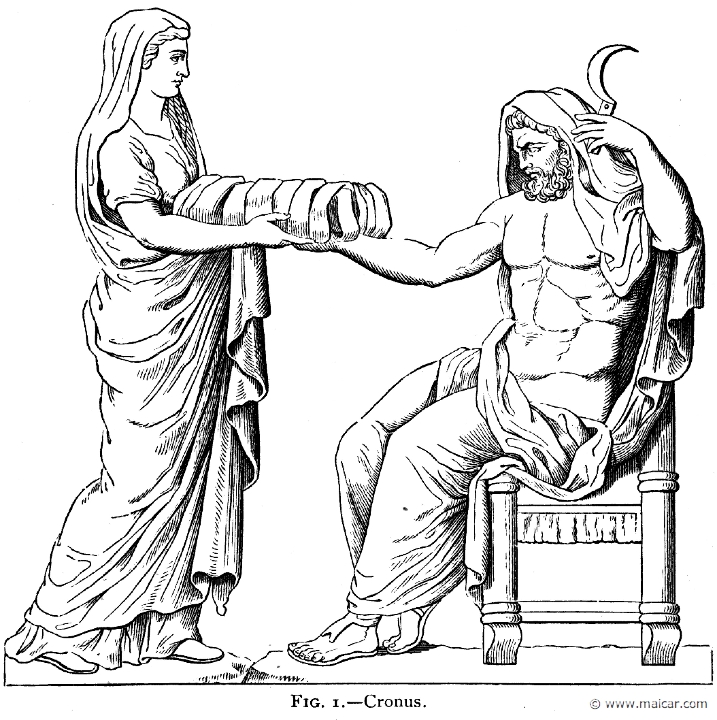
Still others say that at the time Ops [Rhea] brought to Saturn [Kronos] the stone, pretending it was a child, he bade her offer milk to it; when she pressed her breast, the milk that was caused to flow formed the circle which we mentioned above." [II.43]

As viewed from Earth, the visible region of the Milky Way's Galactic plane occupies an area of the sky that includes 30 constellations. The center of the Milky Way lies in the direction of the constellation Sagittarius; it is here that the Milky Way is brightest. From Sagittarius, the hazy band of white light appears to pass westward to the Galactic anticenter in Auriga. The band then continues westward the rest of the way around the sky, back to Sagittarius. The band divides the night sky into two roughly equal hemispheres. The Milky Way has a relatively low surface brightness. Its visibility can be greatly reduced by background light such as light pollution or stray light from the Moon. For observers from approximately 65 degrees north to 65 degrees south on Earth's surface, the Milky Way passes directly overhead twice a day.