Showing posts with label ethics. Show all posts

Ethics are at the very core of Hellenismos, and they support the heart of human life: arête, the act of living up to one's full potential. When one lives the way of arête, they live their life ethically, consciously, and in happiness. That is the true potential of arête: a life of happiness.


Living up to arête is not easy: it challenges up to be our best mentally, physically, and spiritually. It means taking control of our life, to become an active participant in it. To place blame only on yourself when things go wrong, and to keep trying to reach your goals, no matter what setbacks you suffer. Arête should become a way of life, and in that way of life, an ethical framework is essential. Ethics give you the tools to create internal order and consistent action. Both are necessary for happiness. Ethics will remove doubt, fears and regrets from your life, as you know exactly what you should and should not do to become the best you can be. 

The ancient Hellenes had many guidelines for this ethical framework. As such, Hellenismos is known for its highly developed ethical system, derived from ancient scripture like the Delphic Maxims I keep going on about as well as scholarly works like the Homeric Hymns, the Tenets of Solon, the Ethics of Aristotle (1,2), the Golden Verses of Pythagoras, the Philosophy of Epicurus, the Stoics, Works and Days by Hesiod and many, many others.

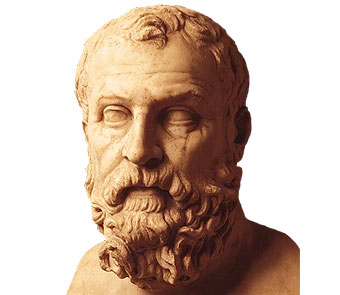
Today, I want to look into Solon and his tenets. Solon (Σόλων) was an Athenian statesman, lawmaker, and poet, who lived from 638 BC to 558 BC. He spend most of his adult life trying to legislate against political, economic, and moral decline in archaic Athens. His ideologies are often credited with having laid the foundations for Athenian democracy.

As a statesman, Solon put principles before expediency. In a time when Athens was struggling under the burden of civil war, his reforms strove to bridge the gap between the rich an the poor. He cancelled all debts, and purchased the freedom of all slaves, allowing everyone to start with a clean slate. This caused a massive financial crisis, for which new reforms were necessary, including new trade ties, and an halt in the export of all foodstuffs but olive oil, of which there was plenty. Solon did not stop there, however. Once he was given full legislative powers, he abolished political distinctions of birth in politics. Instead, he created four new groups:
  • Thetes, the lowest group, who paid no taxes, provided no equipment city state or its army, and who were not eligible to hold an office of any kind.
  • Zeugitae, the second lowest group, who paid tax at the lowest rate, provided body armor to the Athenian army, and who were eligible to hold office.
  • Hippeus, the second highest group, who paid higher taxes at the middle rate, provided their own war horse when they served in the army, and they were eligible for higher offices.
  • Pentacosiomedimni, the top class of citizens, who paid the highest amount of taxes, and were eligible for all top positions of government in Athens. Archons were chosen from this class.
Further political reforms brought stability to the political landscape, and eventually to the economic climate as well. From Diogénes Laértios (Διογένης Λαέρτιος), a Hellenic biographer, in his 'Lives of Eminent Philosophers':

"He was the first person also who assembled the nine archons together to deliver their opinions, as Apollodorus tells us in the second book of his Treatise on Lawgivers. And once, when there was a sedition in the city, he took part neither with the citizens, nor with the inhabitants of the plain, nor with the men of the sea-coast."

He gave the following advice, as is recorded by Apollodorus in his Treatise on the Sects of Philosophers (as written down by Laértios):
(1) Consider your honour, as a gentleman, of more weight than an oath.
(2) Never speak falsely.
(3) Pay attention to matters of importance.
(4) Be not hasty in making friends; and do not cast off those whom you have made.
(5) Rule, after you have first learnt to submit to rule.
(6) Advise not what is most agreeable, but what is best.
(7) Make reason your guide.
(8) Do not associate with the wicked.
(9) Honour the gods;
(10) respect your parents. 

Pausanias, in his 'Description of Greece', lists Solon as one of the seven sages whose aphorisms adorned Apollo's temple in Delphi (XXIV), and so it is not odd that many of Solon's tenets have a Delphinian counterpart in the maxims. These are common themes, reflected in most of the ethical teachings listed above. Common themes are honor, honesty, intelligent decision making, and family. Coincidentally--or perhaps not so much--these are also at the base of arête. 

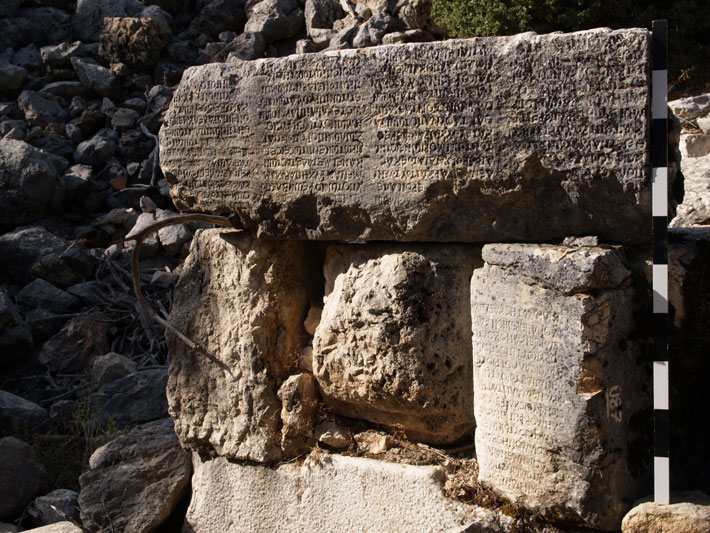
At a remote site in Turkey, archaeologists recently discovered fragments of the ancient world’s most massive inscription — and of course, it was in Greek — touting the benefits of the philosophy of Epicureanism.

The inscription, a quote from the Second century AD philosopher Diogenes, exhorts readers to follow Epicureanism, the way of life that encourages its adherents to seek modest, sustainable pleasure in the form of a state of ataraxia (tranquility and freedom from fear) through knowledge of the workings of the world, and limiting their desires.

One of ancient Hellas’s most notable schools of philosophy, it was created by Epicurus, who lived in the fourth century BC. Originally meant as a challenge to Platonism, it propounded the avoidance of all things that would cause pain in life along with the seeking of all that was just and desirable. Later opposed by the Stoics, it has at times been equated with the inordinate love of food and all things sensual, but this was far from the ideal as espoused by Epicurus.

One of the many schools of the ancient Hellenic philosophers, Epicureanism had one of its most zealous believers in Diogenes of Oenoanda, a wealthy disciple, who had a portico wall inscribed with tenets of the philosophy erected in the ancient Hellenic city of Oenoanda, Lycia.

Epicurus was an atomic materialist, leading him to assail the evils of superstition and divine intervention in every single event — such as weather — that occurred on the Earth.

Although Epicureanism is a form of hedonism insofar as it declares pleasure to be its sole intrinsic goal, its concept that the absence of pain and fear constitutes the greatest pleasure, and its advocacy of a simple life, make it very different from hedonism, or the unbridled pursuit of bodily pleasures.

Epicureanism flourished in the Late Hellenistic era and during the Roman era, and its followers established their own communities, such as those in Antiochia, Alexandria, Rhodes, and Herculaneum.

By the late 3rd century AD Epicureanism all but died out, however, being opposed by other philosophies (mainly Neoplatonism) that were now in the ascendant, as well as early Christianity. But interest in Epicureanism was resurrected in the Age of Enlightenment and it continues today in the modern era.

In Oinoanda, we can see just how much the philosophy meant to Diogenes, who inscribed his words in support of Epicureanism on the wall of a stoa, or portico, in a public square. Later dismantled and reused as building material by the Ottomans, the monumental rock with its inscription has at least survived to this day, a testament to a bygone world.

In the winter of 1884, two young French epigraphers who were exploring the ruins of the ancient city, located in what is now southwestern Turkey, discovered five stone fragments inscribed with the writings of the long-forgotten philosopher now known as Diogenes of Oinoanda.

Scattered in ruins on a hilltop that was by then covered in cedar trees, they found the massive stone with its inscription, in which Diogenes explains why he committed his thoughts to posterity.

“The majority of people suffer from a common disease, as in a plague, with their false notions about things, and their number is increasing. …I wished to use this stoa to advertise publicly the (medicines) that bring salvation.”

His words, now made immortal by having them carved into stone, make clear that he hoped Oinoandans and others who gazed at the stone would consider his words and be converted to the Epicurean school of thought.

After the discovery of the five fragments was published and their significance understood, French and Austrian archaeological teams visited the area between 1885 and 1895, recovering another 83 fragments of the inscription.

Today, it remains the only ancient philosophical text from the Hellenic and Roman world to have survived in its original form, according to Archaeology Magazine. A translation of the entire stone reads, in part: 

“As for the first bodies, also called elements, which on the one hand have subsisted from the beginning and are indestructible, and on the other hand generate things, we shall explain what they are after we have demolished the theories of others.”

Epicureanism argued that pleasure was the chief good in life, advocating living in such a way as to derive the greatest amount of pleasure possible during one’s lifetime, yet doing so moderately in order to avoid the suffering incurred by overindulgence in such pleasure.

The philosophy is often misunderstood, with an emphasis actually placed on pleasures of the mind rather than on physical pleasures. Unnecessary desires were to be suppressed, according to Epicurus.

The philosopher also sought to eliminate the irrational fear of the Gods and of death, seeing those two fears as chief causes of strife in life. He also actively recommended against passionate love, as an unnecessary desire that should be avoided.

“I learn that your bodily inclination leans most keenly towards sexual intercourse. If you neither violate the laws nor disturb well established morals nor sadden someone close to you, nor strain your body, nor spend what is needed for necessities, use your own choice as you wish. It is sure difficult to imagine, however, that none of these would be a part of sex because sex never benefitted anyone.”

Epicurus taught and gained followers in Mytilene, the capital of the island Lesbos, and then in Lampsacus and Athens, Epicurus bought a property in Athens for his school, which he called the “Garden.” Emphasizing friendship as an important ingredient of happiness, the Epicurean schools were very open to new adherents and fairly cosmopolitan by Athenian standards of the day — even including women and slaves among their ranks.

Epicurus laid such emphasis upon developing friendships as the basis of a satisfying life that he said, as quoted by Cicero:

“Of all the things which wisdom has contrived which contribute to a blessed life, none is more important, more fruitful, than friendship.”

The philosophy’s popularity grew and it became, along with Stoicism, Platonism, Peripateticism, and Pyrrhonism, one of the dominant schools of Hellenistic philosophy, lasting through the later Roman Empire.

Deciphered carbonized scrolls obtained from the library at the Villa of the Papyri in Herculaneum contain a large number of works by Philodemus, a late Hellenistic Epicurean, and even Epicurus himself, attesting to the school’s enduring popularity.

While the pursuit of pleasure formed the focal point of the philosophy, this was largely directed to minimizing pain, anxiety and suffering. In fact, Epicurus referred to life as a “bitter gift” in his “Letter to Menoeceus”.

“When we say … that pleasure is the end and aim, we do not mean the pleasures of the prodigal or the pleasures of sensuality, as we are understood to do by some through ignorance, prejudice or wilful misrepresentation. By pleasure we mean the absence of pain in the body and of trouble in the soul. It is not by an unbroken succession of drinking bouts and of revelry, not by sexual lust, nor the enjoyment of fish and other delicacies of a luxurious table, which produce a pleasant life; it is sober reasoning, searching out the grounds of every choice and avoidance, and banishing those beliefs through which the greatest tumults take possession of the soul.”

The Epicurean understanding of justice was inherently self-interested; it was deemed good because it was seen as mutually beneficial.

Epicureanism rejects immortality. From this doctrine arose the Epicurean Epitaph, “Non fui, fui, non sum, non curo (“I was not; I have been; I am not; I do not mind.”), which is inscribed on the gravestones of his followers and seen on many ancient gravestones of the Roman Empire.

Regarding ataraxia (tranquility, freedom from fear) and aponia (absence of pain) as the height of happiness, Epicurus considered prudence an important virtue, and perceived excess and overindulgence to be contrary to the attainment of ataraxia and aponia.

Epicurus preferred “the good”, and “even wisdom and culture”, to the “pleasure of the stomach,” dividing pleasure into two broad categories: the pleasures of the body and the pleasures of the mind.

One can only experience pleasures of the body in the moment, meaning they only exist as a person is experiencing them, while pleasures of the mind involve mental processes and states; feelings of joy, the lack of fear, and pleasant memories.

These pleasures of the mind do not only exist in the present, but also in the past and future, since memory of a past pleasant experience or the expectation of some potentially pleasing future can both be pleasurable experiences. Because of this, the pleasures of the mind are considered to be greater than those of the body.

“Vain and empty” desires, according to Epicurus, are neither innate to humans nor required for happiness or health; indeed, they are also limitless and can never be fulfilled. Desires of wealth or fame would fall in this class, and such desires are to be avoided because they will ultimately only bring about discomfort.

Epicurus was also one of the first Western thinkers to develop the notion of justice as a social contract. The point of living in a society with laws and punishments is to be protected from harm so that one is free to pursue happiness, he believed. Because of this, laws that do not contribute to promoting human happiness are not just.

“It is impossible to live a pleasant life without living wisely and well and justly, and it is impossible to live wisely and well and justly without living a pleasant life.”

Epicureanism, which incorporated much of social contract theory, attempts to address issues with the society described in “Plato’s Republic.” The Epicurean way of life also resembles Buddhism in its temperateness, including the belief that great excess leads to great dissatisfaction.

The Epicureans believed that all sense perceptions were true, and that errors arise in how we judge those perceptions. For example, if someone sees a tower from far away that appears to be round, and upon approaching the tower they see that it is actually square, they would come to realize that their original judgement was wrong and correct their wrong opinion.

Since Epicureans thought that sensations could not deceive, sensations are the first and main criterion of truth for Epicureans. Even in cases where sensory input seems to mislead, the input itself is true and the error arises from our judgments about the input.

For example, when one places a straight oar in the water, it appears bent. The observer makes the error in assuming that the image he or she receives correctly represents the oar and has not been distorted in some way.

In order to not make erroneous judgments about perceivable things and instead verify one’s judgment, Epicureans believed that one needed to obtain “clear vision” (enargeia) of the perceivable thing by closer examination.

One adherent to the teachings of Epicurus included the poet Horace, whose famous statement Carpe Diem (“Seize the Day”) illustrates the philosophy.

“If I had time I would add to my little book the Greek, Latin and French texts, in columns side by side. And I wish I could subjoin a translation of Gassendi’s Syntagma of the doctrines of Epicurus, which, notwithstanding the calumnies of the Stoics and caricatures of Cicero, is the most rational system remaining of the philosophy of the ancients, as frugal of vicious indulgence, and fruitful of virtue as the hyperbolical extravagances of his rival sects.”

 Growing up, my mother taught me a good few valuable lessons, but the one that has undoubtedly kept me out of trouble most was leaning to keep my mouth shut if I didn't have anything positive to contribute to the discussion. If all you're doing is pushing air and adding venom, then it's best to just remain silent. So, now I sit unraveling discussions out, I try not to take things personal, and when I contribute to any discussion, it is with respect to the other person, their opinion, and myself.


What I like most about our commandment-like scriptures--most notably the Delphic Maxims and the Tenets of Solon--is that they make sense. Following them helps you be a better person; to practice Arête, and you don't really need to study them at all to follow them. Most--if not all--made complete sense in the ancient Hellenic culture, and as our modern culture is inspired hugely by ancient Hellas, they are often still engrained within our own; if you're lucky, you are taught them at home, or in school, like to keep your mouth shut if you don't have something positive to add.

Almost all of the Delphic Maxims fit into the Tenets of Solon in some way. Take my example of keeping your mouth shut; it's the modern stating of the ancient maxim 'Restrain the tongue' (Γλωτταν ισχε). This maxim, along with  few other (most notably 'Control yourself' (Αρχε σεαυτου), 'Control anger' (Θυμου κρατει), 'Pursue honor' (Δοξαν διωκε), 'Long for wisdom' (Σοφιαν ζηλου), 'Exercise nobility of character' (Ευγενειαν ασκει), and 'Make just judgements' (Κρινε δικαια)) make up Solon's tenet of 'Make reason your guide'--or what I like to remember as the modern 'Think before you act'.

I am not an authority on ancient Hellenic philosophy, by far, but I do want to mention Plato and his student Aristotle for a moment, as we are discussing common sense. I love the English term 'common sense'. The Dutch equivalent means 'logical thought', and does not quite pack the same punch. Common sense implies that what is morally and ethically right or wrong is understood by the community which the individual is a part of; as such, actions are culturally understood to be either right or wrong. Plato believed in a Good that did not chance according to circumstances and individual folly (paraphrasing here, there is far more nuance in his actual writings). As such, the Platonic ideal is autarkia (αὐτάρκεια)--self-control and self-sufficiency--which would only be possible if we assume that our lives are under the sway of the idea of the Good that would be universal and therefore unchanged by any external circumstance.

Aristotle disagreed, saying that ethical deliberations and choices are always determined by the particular situation that we are in, where the right course of action can never be determined in advance. If human action were governed by rules--laws, maxims, tenets--then we would never have to deliberate about our actions, because it would always be clear and transparent what the correct action is. We would simply have to learn these rules in advance to be sure that we would not make the incorrect and unethical decision.

Taking an example from my more eclectic Pagan days: are you allowed to defend yourself against the burglar who enters your home and threatens to kill your family, even if it means killing him? This is why we have addendums to our laws; murder is forbidden, but if self-defense can be argued, you might walk away without (external) punishment.

The maxims and tents are guidelines, and if regarded as such, Plato's ideals of Good and autarkia are valuable, because just looking at the list of Delphic maxims, it is easy to envision these ideals were shared throughout the whole of Hellas. They even resonate well with modern society. Yet, as Aristotle points out, using maxims and tenets as laws is futile; there will always be situations where any of these guidelines will lead to an evil action, or one with great cost to the individual and those around him. Moderation is in order, therefore, and it so happens to be that that is one of the most important and well known Delphic Maxims: Nothing to excess (Μηδεν αγαν)

Hellenismos asks of all practitioners to consider the ethics. What they may be is up to the practitioner, but being informed and having an opinion on issues that esist in our world is a must. That can lead to a lot of black and white thinking, and 'us versus them' behavior. This is not the goal of phylosophy and ethics.

In Plutarch's essay, "How a Man May Become Aware of His Progress in Virtue" (79e), he writes something I like to remind people of every once in a while:

"Rightly has it been said: Adjust the stone to fit the line, and not the line to fit the stone. But those who do not adjust their tenets to fit the facts, but rather try to force the facts into an unnatural agreement with their own assumptions, have filled philosophy with a great number of difficulties, of which the greatest is that which would assign all men to a general category of badness with the single exception of the absolutely perfect man; the result of which is to make a puzzle out of what we call progress, since it falls but little short of the utmost foolishness, and represents men who have been released by it from all kinds of passions and weaknesses as living in a state of equal wretchedness with those who have not yet been freed from a single one of the worst evils.

Now these men really refute themselves when, in their lectures, they put the wrongdoing of Aristeides on an equality with that of Phalaris, and cowardice of Brasidas on equality with that of Dolon, Band the hard-hearted attitude of Plato as actually not differing at all from that of Meletus; whereas in their life and practice they show an aversion for these latter men and avoid them as ruthless, but the former they seem to think are men of great worth, for they cite them with confidence in the most important matters.

But as for us, we observe that there are degrees in every kind of evil, and especially in the indeterminate and undefined kind that has to do with the soul. (In the same way also there are different degrees of progress produced by the abatement of baseness like a receding shadow, as reason gradually illuminates and purifies the soul.) We do not, therefore, think that consciousness of the change is unreasonable in the case of persons who are, as it were, making their way upward out of some deep gorge, but there are ways in which it can be computed.

Of these I beg you to consider the first without further preface. Just as men sailing out into the open sea calculate their run by the time elapsed in conjunction with the strength of the wind, reckoning how much distance, after spending a certain time, while carried onward by a certain force, they are likely to have accomplished; so too in philosophy a man may take for himself as a proof that he is gaining ground the uniformity and continuity of his course, which makes on the way no frequent halts, followed by leaps and bounds, but smoothly and regularly forges ahead, and goes through the course of philosophic reasoning without mishap.

For the lines: If even small upon the small you place and do this oft, dare not merely well put in regard to the increase of money, but they apply to everything, and especially to advancement in virtue, since reason thereby gains the aid of constant and effective habit. But the variation and obtuseness often shown by students of philosophy not only cause delays and stoppages in their progress on the road to knowledge, but also bring about retrogressions, since vice always makes an onset on the man who yields ground by loitering, and carries him backward in the opposite direction."
Ethos is one of three modes of persuasion explained by Aristotle. It’s means “character” and serves as a measure of how credible one is when persuading an audience on the topic you are discussing--very important in rhetoric! According to Aristotle, there are three types of ethos: arête, phronesis, and eunoia. 

I have spoken about arête before. It's the Greek word for "virtue," and in an ethical sense, it measn being the best version of yourself you can be. Aristotle believed that the ultimate goal in life for a human is happiness. In order to be fully happy in life, one would have to be virtuous. He describes the necessary steps to achieve this happiness in Nicomachean Ethics:

"[...] the man who is to be good must be well trained and habituated, and go on to spend his time in worthy occupations and neither willingly nor unwillingly do bad actions, and if this can be brought about if men live in accordance with a sort of reason and right order [...]" [Book x]

Phronesis is a Greek word for wisdom or intelligence. Aristotle didn't just mean to use it as an indication of IQ but also how well knowledge and skill are implemented in every day life. Someone with a low intelligence level can still be made wise by experience, for example. Aristotle believed that gaining phronesis required experience and there was no other wait to gain it. 
            
Eunoia is Greek for “goodwill.” In rhetoric it is the relationship the reader cultivates with the audience to gain their trust. As a speaker, that trust is required to appear credible. Without it, you can't persuade an audience.

All three values--arête, phronesis, and eunoia--add up to create the meaning of ethos. According to Aristotle, ethos starts with good parenting, with teaching a child ethical behavior. Other teachers throughout life will add to this ethical framework. By learning skills we develop ourselves more, and also by exposing ourselves to many different experiences. By creating good habits and sticking with them until they become automatic, we develop each other even more. As a result, we will be happier, more productive people.
Epictetus (Ἐπίκτητος) was a Hellenic Stoic philosopher. He was born around 55 AD as a slave at Hierapolis, Phrygia (present day Pamukkale, Turkey). Philosophy, Epictetus taught, is a way of life and not just a theoretical discipline. To Epictetus, all external events are determined by fate, and are thus beyond our control; we should accept whatever happens calmly and dispassionately. However, individuals are responsible for their own actions, which they can examine and control through rigorous self-discipline. His teachings were written down and published by his pupil Arrian in his Discourses. 'The Golden Sayings' collect much of his teachings, and today I would like to share the fragments, which are one-sentence rules to live by, for sure.


I - A life entangled with Fortune is like a torrent. It is turbulent and muddy; hard to pass and masterful of mood: noisy and of brief continuance.
II - The soul that companies with Virtue is like an ever-flowing source. It is a pure, clear, and wholesome draught; sweet, rich, and generous of its store; that injures not, neither destroys.
III - It is a shame that one who sweetens his drink with the gifts of the bee, should embitter God's gift Reason with vice.
IV - Crows pick out the eyes of the dead, when the dead have no longer need of them; but flatterers mar the soul of the living, and her eyes they blind.
V - Keep neither a blunt knife nor an ill-disciplined looseness of tongue.
VI - Nature hath given men one tongue but two ears, that we may hear from others twice as much as we speak.
VII - Do not give sentence in another tribunal till you have been yourself judged in the tribunal of Justice.
VIII - If is shameful for a Judge to be judged by others.
IX - Give me by all means the shorter and nobler life, instead of one that is longer but of less account!
X - Freedom is the name of virtue: Slavery, of vice. . . . None is a slave whose acts are free.
XI - Of pleasures, those which occur most rarely give the most delight.
XII - Exceed due measure, and the most delightful things become the least delightful.
XIII - The anger of an ape--the threat of a flatterer:--these deserve equal regard.
XIV - Chastise thy passions that they avenge not themselves upon thee.
XV - No man is free who is not master of himself.
XVI - A ship should not ride on a single anchor, nor life on a single hope.
XVII - Fortify thyself with contentment: that is an impregnable stronghold.
XVIII - No man who is a lover of money, of pleasure, of glory, is likewise a lover of Men; but only he that is a lover of whatsoever things are fair and good.
XIX - Think of God more often than thou breathest.
XX - Choose the life that is noblest, for custom can make it sweet to thee.
XXI - Let thy speech of God be renewed day by day, aye, rather than thy meat and drink.
XXII - Even as the Sun doth not wait for prayers and incantations to rise, but shines forth and is welcomed by all: so thou also wait not for clapping of hands and shouts and praise to do thy duty; nay, do good of thine own accord, and thou wilt be loved like the Sun.
XXIII - Let no man think that he is loved by any who loveth none.
XXIV - If thou rememberest that God standeth by to behold and visit all that thou doest; whether in the body or in the soul, thou surely wilt not err in any prayer or deed; and thou shalt have God to dwell with thee.
Ataraxia (ἀταραξία) is a Greek term used by--amongst others--Pyrrho and Epicurus. Ataraxia is the Greek word for equanimity, sometimes translated as imperturbability.  It generally translates as tranquility, serenity, or peace, and it’s the telos or goal of all wholesome ethical philosophy. In Epicureanism, ataraxia was synonymous with the only true happiness possible for a person. It signifies the state of robust tranquillity that derives from eschewing faith in an afterlife, not fearing the Gods because They are distant and unconcerned with us, avoiding politics and vexatious people, surrounding oneself with trustworthy and affectionate friends and, most importantly, being an affectionate, virtuous person, worthy of trust.

Ataraxia is satisfaction with life as it is here and now, not seeking its perfection but accepting its limitations and never minding them. It’s the mental aboveness of one who’s learned to be happy and to live in a pleasant state always, regardless of conditions. Ataraxia is unconditional pleasure in living.

Note that ataraxia is not about eliminating doubt, but about eliminating the cause of the mental distress people experience when doubts assail their minds. This cause contains a desire for the certainty of knowledge coupled with a belief that such knowledge is possible; and when we desire something, we always desire more of it. The practice of ataraxia requires the acceptance of the inherent uncertainty of most of our opinions and calls us to stop searching for answers that do not exist in our world and can never be attained.

Epicurus insisted that ataraxia is a mindful, positive state of peaceful abiding which can be cultivated through certain disciplines, including the cultivation of deep gratitude to life, to nature, to one’s teachers and ancestors. Sextus Empiricus supplies an example of ataraxia:

"The Sceptic, in fact, had the same experience which is said to have befallen the painter Apelles. Once, they say, when he was painting a horse and wished to represent in the painting the horse's foam, he was so unsuccessful that he gave up the attempt and flung at the picture the sponge on which he used to wipe the paints off his brush, and the mark of the sponge produced the effect of a horse's foam. So, too, the Sceptics were in hopes of gaining quietude [ataraxia] by means of a decision regarding the disparity of the objects of sense and of thought, and being unable to effect this they suspended judgment; and they found that quietude, as if by chance, followed upon their suspense. [Outlines of Pyrrhonism 1.28—29]

How do we benefit by accepting a basic human ignorance? The reason is pragmatic. We benefit by releasing debilitating mental agitation. Where knowledge is unavailable, we can only make a choice. The those who practice ataraxia choose not to choose in cases where there are no clear conclusions and opposing positions continue to be asserted even while everyone knows they cannot all be true. The benefit is in letting go of any and all doubt an fear of that which will always remain uncertain.

Stoicism often made use of the term, as they too sought mental tranquillity and saw ataraxia as highly valuable. In Stoicism, however, ataraxia is not an end to be pursued for its own sake as it is in many other philosophical schools. Rather, it is a natural consequence that occurs in a person who pursues virtue.

Ataraxia is very important in Hellenic philosophy and in Hellenismos today. Christianity clings to many religious terms we use today--including the word ' religion', which is often seen as synonymous to Christianity. It's concepts of fear of Deity and death live on in many of our minds, even in those minds that were not formed by Christian ideology. In modern times, practicing ataraxia includes becoming aware of this influence and letting it go in favour of more ancient ways of philosophical thinking. In modern Hellenismos, ataraxia is an almost necessary practice to apply in order to get ethically and philosophically closer to the ancient Hellenes and through their way of thinking, the Theoi.
Hellenismos asks of all practitioners to consider the ethics. What they may be is up to the practitioner, but being informed and having an opinion on issues that esist in our world is a must. That can lead to a lot fo black and white thinking, and 'us versus them' behavior. This is not the goal of phylosophy and ethics.

In Plutarch's essay, "How a Man May Become Aware of His Progress in Virtue" (79e), he writes something I like to remind people of every once in a while:

"Rightly has it been said: Adjust the stone to fit the line, and not the line to fit the stone. But those who do not adjust their tenets to fit the facts, but rather try to force the facts into an unnatural agreement with their own assumptions, have filled philosophy with a great number of difficulties, of which the greatest is that which would assign all men to a general category of badness with the single exception of the absolutely perfect man; the result of which is to make a puzzle out of what we call progress, since it falls but little short of the utmost foolishness, and represents men who have been released by it from all kinds of passions and weaknesses as living in a state of equal wretchedness with those who have not yet been freed from a single one of the worst evils.

Now these men really refute themselves when, in their lectures, they put the wrongdoing of Aristeides on an equality with that of Phalaris, and cowardice of Brasidas on equality with that of Dolon, Band the hard-hearted attitude of Plato as actually not differing at all from that of Meletus; whereas in their life and practice they show an aversion for these latter men and avoid them as ruthless, but the former they seem to think are men of great worth, for they cite them with confidence in the most important matters.

But as for us, we observe that there are degrees in every kind of evil, and especially in the indeterminate and undefined kind that has to do with the soul. (In the same way also there are different degrees of progress produced by the abatement of baseness like a receding shadow, as reason gradually illuminates and purifies the soul.) We do not, therefore, think that consciousness of the change is unreasonable in the case of persons who are, as it were, making their way upward out of some deep gorge, but there are ways in which it can be computed.

Of these I beg you to consider the first without further preface. Just as men sailing out into the open sea calculate their run by the time elapsed in conjunction with the strength of the wind, reckoning how much distance, after spending a certain time, while carried onward by a certain force, they are likely to have accomplished; so too in philosophy a man may take for himself as a proof that he is gaining ground the uniformity and continuity of his course, which makes on the way no frequent halts, followed by leaps and bounds, but smoothly and regularly forges ahead, and goes through the course of philosophic reasoning without mishap.

For the lines: If even small upon the small you place and do this oft, dare not merely well put in regard to the increase of money, but they apply to everything, and especially to advancement in virtue, since reason thereby gains the aid of constant and effective habit. But the variation and obtuseness often shown by students of philosophy not only cause delays and stoppages in their progress on the road to knowledge, but also bring about retrogressions, since vice always makes an onset on the man who yields ground by loitering, and carries him backward in the opposite direction."
Ethics are at the very core of Hellenismos, and they support the heart of human life: arête, the act of living up to one's full potential. When one lives the way of arête, they live their life ethically, consciously, and in happiness. That is the true potential of arête: a life of happiness.

Living up to arête is not easy: it challenges up to be our best mentally, physically, and spiritually. It means taking control of our life, to become an active participant in it. To place blame only on yourself when things go wrong, and to keep trying to reach your goals, no matter what setbacks you suffer. Arête should become a way of life, and in that way of life, an ethical framework is essential. Ethics give you the tools to create internal order and consistent action. Both are necessary for happiness. Ethics will remove doubt, fears and regrets from your life, as you know exactly what you should and should not do to become the best you can be. 

The ancient Hellenes had many guidelines for this ethical framework. As such, Hellenismos is known for its highly developed ethical system, derived from ancient scripture like the Delphic Maxims I keep going on about as well as scholarly works like the Homeric Hymns, the Tenets of Solon, the Ethics of Aristotle (1,2), the Golden Verses of Pythagoras, the Philosophy of Epicurus, the Stoics, Works and Days by Hesiod and many, many others.

Today, I want to look into Solon and his tenets. Solon (Σόλων) was an Athenian statesman, lawmaker, and poet, who lived from 638 BC to 558 BC. He spend most of his adult life trying to legislate against political, economic, and moral decline in archaic Athens. His ideologies are often credited with having laid the foundations for Athenian democracy.

As a statesman, Solon put principles before expediency. In a time when Athens was struggling under the burden of civil war, his reforms strove to bridge the gap between the rich an the poor. He cancelled all debts, and purchased the freedom of all slaves, allowing everyone to start with a clean slate. This caused a massive financial crisis, for which new reforms were necessary, including new trade ties, and an halt in the export of all foodstuffs but olive oil, of which there was plenty. Solon did not stop there, however. Once he was given full legislative powers, he abolished political distinctions of birth in politics. Instead, he created four new groups:
  • Thetes, the lowest group, who paid no taxes, provided no equipment city state or its army, and who were not eligible to hold an office of any kind.
  • Zeugitae, the second lowest group, who paid tax at the lowest rate, provided body armor to the Athenian army, and who were eligible to hold office.
  • Hippeus, the second highest group, who paid higher taxes at the middle rate, provided their own war horse when they served in the army, and they were eligible for higher offices.
  • Pentacosiomedimni, the top class of citizens, who paid the highest amount of taxes, and were eligible for all top positions of government in Athens. Archons were chosen from this class.
Further political reforms brought stability to the political landscape, and eventually to the economic climate as well. From Diogénes Laértios (Διογένης Λαέρτιος), a Hellenic biographer, in his 'Lives of Eminent Philosophers':

"He was the first person also who assembled the nine archons together to deliver their opinions, as Apollodorus tells us in the second book of his Treatise on Lawgivers. And once, when there was a sedition in the city, he took part neither with the citizens, nor with the inhabitants of the plain, nor with the men of the sea-coast."

He gave the following advice, as is recorded by Apollodorus in his Treatise on the Sects of Philosophers (as written down by Laértios):
(1) Consider your honour, as a gentleman, of more weight than an oath.
(2) Never speak falsely.
(3) Pay attention to matters of importance.
(4) Be not hasty in making friends; and do not cast off those whom you have made.
(5) Rule, after you have first learnt to submit to rule.
(6) Advise not what is most agreeable, but what is best.
(7) Make reason your guide.
(8) Do not associate with the wicked.
(9) Honour the gods;
(10) respect your parents. 

Pausanias, in his 'Description of Greece', lists Solon as one of the seven sages whose aphorisms adorned Apollo's temple in Delphi (XXIV), and so it is not odd that many of Solon's tenets have a Delphinian counterpart in the maxims. These are common themes, reflected in most of the ethical teachings listed above. Common themes are honor, honesty, intelligent decision making, and family. Coincidentally--or perhaps not so much--these are also at the base of arête. 
Isocrates (Ἰσοκράτης), 436–338 BC, was an ancient Hellenic rhetorician. He was one of the ten Attic orators. Among the most influential Greek rhetoricians of his time, Isocrates made many contributions to rhetoric and education through his teaching and written works.

Hellenic rhetoric is commonly traced to Corax of Syracuse, who first formulated a set of rhetorical rules in the fifth century BC. His pupil Tisias was influential in the development of the rhetoric of the courtroom, and by some accounts was the teacher of Isocrates. Within two generations, rhetoric had become an important art, its growth driven by social and political changes such as democracy and courts of law.

I came upon a quote from "Panathenaicus" yesterday that I would like to share with you, because it resonated with me. I like these types of people as well, and I realized that I am very fortunate to know many who fit this description. Thank you!


“Which people do I call educated when I set aside the arts, sciences, and specialties? First, I prize those who handle well the events they meet each day and who have an appropriate judgment for each and the ability to plot the most advantageous path through them.

Then, I esteem those who always treat the people they are near appropriately and justly and who bear the unpleasantness and meanness of others with ease and good temper, and comport themselves towards their associates as lightly and measuredly as possible.

Then, I value those who always control their desires, who are not overcome by their misfortunes, but manage them bravely in a fashion worthy of the nature which we all happen to share.

Fourth—and most important—I consider people educated who are not ruined by their successes, who do not rebel against themselves and become arrogant, but instead remain positioned to be reflective and do not delight more in the goods they have received by chance than those which were theirs from the beginning by nature or thought. Those who have a mind well-fit not just to one of these qualities but to all of them are the men I say are prudent, complete people exhibiting all the virtues.” [30-32]
Brighton College, a co-educational school in East Sussex, will use Hellenic philosophers to teach pupils how to spot "fake news" on social media, as it prepares to launch a new course in the new year. They will begin offering the course next term as a way to encourage children to think critically about the information they receive online.


Aristotle’s teachings about truth are to feature on the course, which will be overseen by Leak Hamblett, the school's deputy headmistress. Ms Hamblett, a philosophy teacher, hopes the children will learn how to tell the difference between "what is real and what is true".

"I want to teach them to go looking at resources, looking at where your source comes from, are they respectable? If you're going to read something check it out on a few different platforms, don't necessarily think it's true because it's come through social media."

Ms Hamblett also said people have a "natural inclination" to believe the written word, and it takes analytical skills to question and establish if what they are reading is true.

"We are in an unprecedented era where news and 'facts' are available at the swipe of a smartphone - which the majority of secondary school children possess - yet until now we have not taught children how to be discerning. We have a responsibility as teachers to make children more savvy about what they hear and read. They need to know they can't trust everything that pops up on their phone and learn how to form opinions. The course we are introducing will ask has fake news always been around under another name and will use Aristotle's standard model of truth to help pupils unravel fact from fiction."

A report published earlier this year warned that children and young people in England do not have the critical literacy skills needed to identify fake news. The National Literacy Trust said its report showed that the phenomenon is a serious problem for children and young people, threatening democracy, confidence in governance and trust in journalism.
Kleos (κλέος) is a term used in Hellenic epic poetry that means immortal fame, but it can also mean rumor or renown. A very important theme in Homer's great epics The Iliad and The Odyssey, kleos often referred to having one's achievements venerated in poetry. Unlike the hero, the song would never die.

For example, in the Iliad Achilles discusses how his mother Thetis assured him his fame would be everlasting, that he would have a kleos that will be imperishable. A Hellenic soldier, like Achilles, could earn kleos through his own courage in battle, but he could also pass that kleos on to others. When Achilles's killed Hector in honor of Patroclus, he extended his own kleos to include Patroclus. A monument or proper burial could bring and reaffirm kleos, as can reports of one's offspring's virtuous deeds. The kleos of the mighty Hector survived his death, living on in the memory of his friends and the monuments built to honor him.

Although it was usually the bravest warriors who could achieve the long lasting fame of kleos, it was the poets who were responsible for making sure that their voices carried these tales far and wide and into the hands of future scholars.

Kleos, I feel, is something that translates well to modern culture. It's your reputation, the footprints you leave min the minds of others, but also online. It's what remains of your legacy once you die. It's the books you write, the work you do, the lives you change, the art you create. It's a part of arête, and thus it's something for us to be mindful of.

Arête is the act of living up to one's full potential. The term arête was applied to anything and anyone superior. It is linked to knowledge and wisdom as well as physical beauty. It could even be applied to an exceptionally well crafted vase, the person who made it or even the seller, who sold it for more than it was worth. Living up to arête challenges up to be our best mentally, physically, and spiritually. It means taking control of our life, to become an active participant in it. To place blame only on yourself when things go wrong, and to keep trying to reach your goals, no matter what setbacks you suffer.

In terms of Kleos, it means practicing self-control, to present ourselves as the version of ourselves we want others to remember after death. It means keeping in mind that all we do will be part of the poem of our lives and that that poem is our legacy. Make it a good one!
Ethos is one of three modes of persuasion explained by Aristotle. It’s means “character” and serves as a measure of how credible one is when persuading an audience on the topic you are discussing--very important in rhetoric! According to Aristotle, there are three types of ethos: arête, phronesis, and eunoia.

I have spoken about arête before. It's the Greek word for "virtue," and in an ethical sense, it measn being the best version of yourself you can be. Aristotle believed that the ultimate goal in life for a human is happiness. In order to be fully happy in life, one would have to be virtuous. He describes the necessary steps to achieve this happiness in Nicomachean Ethics:

"[...] the man who is to be good must be well trained and habituated, and go on to spend his time in worthy occupations and neither willingly nor unwillingly do bad actions, and if this can be brought about if men live in accordance with a sort of reason and right order [...]" [Book x]

Phronesis is a Greek word for wisdom or intelligence. Aristotle didn't just mean to use it as an indication of IQ but also how well knowledge and skill are implemented in every day life. Someone with a low intelligence level can still be made wise by experience, for example. Aristotle believed that gaining phronesis required experience and there was no other wait to gain it.
           
Eunoia is Greek for “goodwill.” In rhetoric it is the relationship the reader cultivates with the audience to gain their trust. As a speaker, that trust is required to appear credible. Without it, you can't persuade an audience.

All three values--arête, phronesis, and eunoia--add up to create the meaning of ethos. According to Aristotle, ethos starts with good parenting, with teaching a child ethical behavior. Other teachers throughout life will add to this ethical framework. By learning skills we develop ourselves more, and also by exposing ourselves to many different experiences. By creating good habits and sticking with them until they become automatic, we develop each other even more. As a result, we will be happier, more productive people.
I'm not always active in the online Hellenistic community but I get tagged in a lot and I do read that. I also get and answer a lot of questions from you. What I sense in many of your posts is a kind of fear about faith. Fear of the judgement of the Gods; a sense that the Theoi are always watching and ready to strike. Fear of the afterlife (or, perhaps, lack of same). The ancient Hellenes struggled with this as well. How do I know? Because there is a word to define the opposite of that fear: that word is ataraxia.

Ataraxia (ἀταραξία) is a Greek term used by--amongst others--Pyrrho and Epicurus. Ataraxia is the Greek word for equanimity, sometimes translated as imperturbability.  It generally translates as tranquility, serenity, or peace, and it’s the telos or goal of all wholesome ethical philosophy. In Epicureanism, ataraxia was synonymous with the only true happiness possible for a person. It signifies the state of robust tranquillity that derives from eschewing faith in an afterlife, not fearing the Gods because They are distant and unconcerned with us, avoiding politics and vexatious people, surrounding oneself with trustworthy and affectionate friends and, most importantly, being an affectionate, virtuous person, worthy of trust.

Ataraxia is satisfaction with life as it is here and now, not seeking its perfection but accepting its limitations and never minding them. It’s the mental aboveness of one who’s learned to be happy and to live in a pleasant state always, regardless of conditions. Ataraxia is unconditional pleasure in living.

Note that ataraxia is not about eliminating doubt, but about eliminating the cause of the mental distress people experience when doubts assail their minds. This cause contains a desire for the certainty of knowledge coupled with a belief that such knowledge is possible; and when we desire something, we always desire more of it. The practice of ataraxia requires the acceptance of the inherent uncertainty of most of our opinions and calls us to stop searching for answers that do not exist in our world and can never be attained.

Epicurus insisted that ataraxia is a mindful, positive state of peaceful abiding which can be cultivated through certain disciplines, including the cultivation of deep gratitude to life, to nature, to one’s teachers and ancestors. Sextus Empiricus supplies an example of ataraxia:

"The Sceptic, in fact, had the same experience which is said to have befallen the painter Apelles. Once, they say, when he was painting a horse and wished to represent in the painting the horse's foam, he was so unsuccessful that he gave up the attempt and flung at the picture the sponge on which he used to wipe the paints off his brush, and the mark of the sponge produced the effect of a horse's foam. So, too, the Sceptics were in hopes of gaining quietude [ataraxia] by means of a decision regarding the disparity of the objects of sense and of thought, and being unable to effect this they suspended judgment; and they found that quietude, as if by chance, followed upon their suspense. [Outlines of Pyrrhonism 1.28—29]

How do we benefit by accepting a basic human ignorance? The reason is pragmatic. We benefit by releasing debilitating mental agitation. Where knowledge is unavailable, we can only make a choice. The those who practice ataraxia choose not to choose in cases where there are no clear conclusions and opposing positions continue to be asserted even while everyone knows they cannot all be true. The benefit is in letting go of any and all doubt an fear of that which will always remain uncertain.

Stoicism often made use of the term, as they too sought mental tranquillity and saw ataraxia as highly valuable. In Stoicism, however, ataraxia is not an end to be pursued for its own sake as it is in many other philosophical schools. Rather, it is a natural consequence that occurs in a person who pursues virtue.

Ataraxia is very important in Hellenic philosophy and in Hellenismos today. Christianity clings to many religious terms we use today--including the word ' religion', which is often seen as synonymous to Christianity. It's concepts of fear of Deity and death live on in many of our minds, even in those minds that were not formed by Christian ideology. In modern times, practicing ataraxia includes becoming aware of this influence and letting it go in favour of more ancient ways of philosophical thinking. In modern Hellenismos, ataraxia is an almost necessary practice to apply in order to get ethically and philosophically closer to the ancient Hellenes and through their way of thinking, the Theoi.
I get a lot of questions from readers, and most of the time, the answers are fairly short. When I feel the question or the reply would be valuable to others as well, I make a post with a collection of them and post them in one go. Today is one of those posts.


"Do the Theoi mind if you worship other gods?"

As an individual? I doubt it. The Theoi, in general, are unconcerned with a specific worshipper. Our religion is at its core one of group worship. They remember us when we draw Their attention to us but only then. Stop praying to Them and you'll be forgotten. As a species, though? Yeah, I bet that pissed Them off something royal! But there is not much They could have done about that (see below).

~~~

"Hope this isn't a bad question, but why couldn't the Theoi save Hellas when the Romans, then Christianity, came?"

You are assuming the Romans conquering Hellas was a bad thing. Perhaps it fitted Their plan? Even without that, though, the invasion of the Romans and then the rise of Christianity was of human design and humanity abandoned the Theoi of their own free will. I think that might be waht you are really asking, is it not? Why did the Theoi allow humanity to convert to Christianity?

Hellenismos believes in free will of humanity; not even the Gods can end the will of a human being, but they can certainly influence the lives we live and instil in us through our environment a need to serve, a need to find Them, a need to honour Them. The concept of free will was a grateful one to the ancient Hellenic philosophers. After all, free will in a religious world poses a problem: if you believe in the Gods, and that the Gods have powers beyond ours--foresight, mostly, and a claim to the end of our lives--how can you make the case for free will?

 In the early days, a form of compatibilism was found where the idea that causal determinism and logical necessity are compatible with free will. As time and philosophy progressed, great thinkers like Anaximander and Heraclitus around the sixth century BC came up with theories to grapple with the supernatural as it ruled over the natural while leaving free will intact. Their resolution was to assign earthy causes to physical events like floods, taking them out of the realm of the supernatural and into the realm of the natural.

In a quest to give humanity back a sense of responsibility for their own actions, materialist philosophers Democritus and Leucippus posed a new theory: that everything--including humans--existed from atoms from the same source. It were great thinkers like the Pythagoreans, Socrates,  Plato, and Aristotle who attempted to reconcile an element of human freedom with material determinism and causal law, in order to hold man responsible for his actions. Aristotle, especially, introduced the notion of 'accidents' into Leucippus' thinking, paving the way for an element of chance to be introduced into the theory.

Aristotle's views were the foundation for a slew of new theories that built upon his, the most famous, perhaps, being Epicurus, who thought human agents had the ability to transcend necessity and chance. He argued that as atoms moved through the void, there were occasions when they would 'swerve' from their otherwise determined paths, thus initiating new causal chains. This paved the way for Lucretius, who saw the randomness as enabling free will.

 It was the Stoic school of philosophy that solidified the idea of natural laws controlling all things, including the mind. Their influence persists to this day, in philosophy and religion, even though most of their work on free will has been lost--most likely to the Christian church, who preached a dogma of determinism by way of an omnipotent God.

Free will is powerful: it gives us the agency we need to aspire to greatness. It gives us a sense of control over our lives. We choose to become servants to the Gods--we are not forced to do so, even though it might be destined we become servants; this makes all the difference in our joy of the execution of the Divine will. If we felt pressured and ordered into it, we would not find the same joy in it as we do now we are free to choice our path--or believe we are free to choose our path.

Sadly, or perhaps necessarily, this also paves the way for us to choose to denounce the Theoi, both as individuals as well as as a species.

~~~

"I was conducting a few actions for the Deipnon tonight, and one of my parents disapproved (I'm 14). What should I do about that?"

Nothing. They're your parents and until you are eighteen, you are under their rule and guidance. You don't mention if they are actively keeping you from further worship. I also don't know your home situation. What's perhaps a good course of action is to talk to them. Talk to them about your faith and your desire to practice. Ask them for their reasons for disapproving an see if they have the right idea about Hellenimsos (I doubt it). If at all possible, conversation is always the most prudent of courses of action.

If you do want to continue practicing, try to fidn a way to use regular things already in your room for it and choose times when they are not at home if at all possible. There are ways to hide it, but again, respecting your elders (and parents, especially), is one fo the core ethics of Hellenismos. Good luck!

~~~

"Is it normal to worry about not doing the rituals correctly?"

Especially when first starting out, I would say yes. I know I worried about it for a while when I first started. But truly, there is not much to Hellenistic ritual. Walk to your bomos (altar), cleanse yourself with water that has had something burning tossed into it, recite a hymn to the God(s), make your offerings, say your prayers, and make sure not to catch the house on fire during any part of it. That's basically it. You can get a lot more elaborate but it will still come down to procession, cleansing, hymns and prayers, and offerings.

~~~

"How can I get an involuntary, offensive-to-the-Theoi thought out of my mind?"

The Theoi, in general, don't look into our heads. Have you ever read Zeus getting ticked of at Herakles because he thought something bad? Have you ever read anything about the Gods judging a person upon their thoughts? Our Gods are not all-seeing (except for Helios, and that applies only to things actually visible to the naked eye as He beholds the earth from above and thus has a great range of vision). Our Gods need to be drawn to us to get attention, let alone randomly look into our heads at the exact moment you may or may not think something that They may or may not take offense to. Our minds are our own, which is why we say our prayers out loud. It's our actions that speak for us and draw the Theoi. It's through our actions that we must practice arete. Truly, you are safe from your thoughts.
Strictly speaking, I don't follow one of the ancient hellenic phylosophical and ethical paths. I'm a bit of a stoic when it comes to my ethical framework but most of it is a conglomoration of life's lessons, and ancient and modern words. I do have people whose words of ethical thought always--always--ring true to me. Well, I have one: Solon of Athens. For those of you not in the mood for a political rant, come back tomorrow. I don't ususally do this on my blog but I sometimes one needs an outlet for frustration.

Everyone who has been following this blog for a while knows how much I respect his work, his wisdom and his actions in life. Solon (Σόλων) was an Athenian statesman, lawmaker, and poet, who lived from 638 BC to 558 BC. He spent most of his adult life trying to legislate against political, economic, and moral decline in archaic Athens. His ideologies are often credited with having laid the foundations for Athenian democracy. As a statesman, Solon put principles before expediency. In a time when Athens was struggling under the burden of civil war, his reforms strove to bridge the gap between the rich an the poor. Solon's reforms created a system where the power was in the hands of the people, if they were willing to work hard for it.  For those without political aspirations, Solon's reforms provided judicial safety and a sense of power.

Solon's words of wisdom, of which quite a bit was preserved in fragments in the works of others, are sound. They speak of a way of life where hard work gets results and where complaining while sitting on your ass makes you a fool. That is the moral I live by every single day. It's a moral I honestly think everyone should live by every day. It would make the world a hell of a lot better.

I can't have escaped your notice that the world is in turmoil. I don't think there is a single country right now that is not feeling the effects of poor governemetn and/or the voices of hate. Hate against people coming for asylum from war, hate against the government for the loss of a job or funds, hate because they cannot see the many and great blessings of their life--like a roof over their head, food in their bellies every day, a big screen TV and Starbucks coffee. As a friendly reminder: people all across the world are dying in wars, from poverty, in droughts that have killed the crops, in floods, in forest fires, in little rubber boats in the middle of the sea. these people do not have homes, these people do not have food, these people do not have heathcare (no matter how expensive) and these people can only imagine the luxury of bug screen TV's and Starbucks.

Solon made an amazing statement once that I think holds true to this day:

"If you have suffered grief through your own wickedness, don’t blame the gods for this fate." [CURFRAG.tlg-0263.10]

This does not mean that you committed a crime and lost everything because you were sent to jail. To me, this means that you make your own damn happiness and if you spent 99% of your time complaining and bemoaning a higher power (be it religious or political) while losing sight of how damn good you actually have it then it's your own fault you feel miserable. I am running out of patience with you, extreme right voting, 'our people first', discriminating and often agressive inhabitants of my country and all other countries around the world. You know, Solon also said another thing:

"Good government makes everything well ordered and fit,
 And at the same time it throws shackles on the unjust.
 It levels out the rough, stops insolence, and weakens arrogance.
 It causes the growing blossoms of blindness to wither.
 It straightens crooked judgments and it levels out over-reaching deeds.
 It stops the acts of civil conflict and
 It stops the anger of grievous strife and because of it
 Everything among men is wisely and appropriately done." [Solon, fr. 4.32-39]

At this point in time, I think the world needs a Solon-inspired overhaul. Politicians, put on your ancient Athenian inspired big boy sandals and criminalize this hate. It may be born out of fear but it's still a hate that is consuming our countries and lives. Hunt down those who discriminate, ban it from your political landscape, make hate as punishable as acts of terror--because all actions of hate are acts of terror. Yes, it will cause riots, yes it will cause turmoil but we are in need of good, strong government. We are in need of elections where we don't have to hold our breaths in fear of the right wing extremists winning. We are in need of streets where muslim people can walk on without being terrorized. We are in need of soccer matches without banana's tossed onto the field. We are in need of open borders and a welcoming environment for refugees who truly need refuge. We are in need of strong government that speaks with one voice and a clear purpose.

As much as I love Solon, I think Socrates was right about one thing (paraphrased): people need governing. Solon had the right idea: idealy, people would govern themselves, but as Socrates put forth, an individual will put his or her percieved happiness before that of others every day. So I want a political overhaul that unifies the political landscape, an iron fist to smooth out the turmoil in the minds of people and reassure them that they can let go of their fear, and then put power back in their hands again. A massive overhaul to get back to true democracy with informed opinion. Because I am sick and tired of living in a country run by fear. It gives too much power to rogue extremists and it taints absolutely everything. We are better than this--we have been better than this for over 1600 years! No, ancient Hellas was not perfect and please let's not romanticise it, but at least they had the right idea every once in a while, which is more I can say for the current state of affairs.

This rant was brought to you because of fear mongers and hate enthousiasts who judge people by appearance, make hateful claims, speak and act out in violence and who are only able to feel accomplished when others have less than them. In the words of Solon: make reason your guide. Finally.
Solon (Σόλων) was an Athenian statesman, lawmaker, and poet, who lived from 638 BC to 558 BC. His family was Athenia nobility although they only possessed moderate wealth. Solon's father was probably Execestides. Solon's lineage, therefore, could be traced back to Codrus, the last King of Athens. According to Diogenes Laërtius, he had a brother named Dropides who was an ancestor (six generations removed) of Plato.

Solon spent most of his adult life trying to legislate against political, economic, and moral decline in archaic Athens. His ideologies are often credited with having laid the foundations for Athenian democracy. As a statesman, Solon put principles before expediency. In a time when Athens was struggling under the burden of civil war, his reforms strove to bridge the gap between the rich an the poor. He cancelled all debts, and purchased the freedom of all slaves, allowing everyone to start with a clean slate. This caused a massive financial crisis, for which new reforms were necessary, including new trade ties, and an halt in the export of all foodstuffs but olive oil, of which there was plenty.

Solon's reforms created a system where the power was in the hands of the people, because instead of leaving justice to be administered by the aristocracy, Solon formed a 'boule' (a group of 500 men who were representatives of their tribes). Solon's reforms were substantial, and took a lot of power away from the aristocracy. They gave every free man the hope that they could hold office one day, if they worked hard to reach the upper class. For those without political aspirations, Solon's reforms provided judicial safety and a sense of power: no matter who you were, if you were an adult male citizen, your opinion counted, and you could influence the course of the city's political and social landscape. Obviously, Solon's reforms did not create a democracy, but they did lay the groundwork for further reforms, and they did so wisely, and with consent from the elite--at least for his lifetime.

Solon gave the following advice, as is recorded by Apollodorus in his Treatise on the Sects of Philosophers (as written down by Laértios):

"Consider your honour, as a gentleman, of more weight than an oath."
"Never speak falsely."
"Pay attention to matters of importance"
"Be not hasty in making friends; and do not cast off those whom you have made."
"Rule, after you have first learnt to submit to rule."
"Advise not what is most agreeable, but what is best."
"Make reason your guide."
"Do not associate with the wicked."
"Honour the gods."
"Respect your parents."

Pausanias, in his 'Description of Greece', lists Solon as one of the seven sages whose aphorisms adorned Apollo's temple in Delphi (XXIV), and so it is not odd that many of Solon's tenets have a Delphinian counterpart in the maxims. These are common themes, reflected in most of the ethical teachings listed above. Common themes are honor, honesty, intelligent decision making, and family. Coincidentally--or perhaps not so much--these are also at the base of arête.
It has been a while since I last talked to you about the Delphic Maxims, but while I will be referencing them today, I won't be talking about any one of them specifically. Today, I want to talk to you about the Seven (Ancient) Sages, or the Seven Wise Men--and introduce a new mini series.


The maxims are said to have been delivered by Apollon Himself to his Oracle at Delphi. They represent a honest, worthy way of living but are not to be taken as commandments. They are guidelines, forming a framework to life, without restraining the mortal soul. Once noted down, they were shared with any who would listen.

Instead (or in addition to) the Oracle of Delphi, the maxims are sometimes contributed to the Seven Sages or the Seven Wise Men (οἱ ἑπτὰ σοφοί, hoi hepta sophoi). This was the title given by ancient Hellenic tradition to seven early 6th century BC philosophers, statesmen and law-givers who were renowned in the following centuries for their wisdom. They are usually identified as: Solon of Athens, Chilon of Sparta, Thales of Miletus, Bias of Priene, Cleobulus of Lindos, Pittacus of Mitylene and Periander of Corinth.

Solon of Athens (Σόλων ὁ Ἀθηναῖος)
Solon was an Athenian statesman, lawmaker, and poet, who lived from 638 BC to 558 BC. He spent most of his adult life trying to legislate against political, economic, and moral decline in archaic Athens. His ideologies are often credited with having laid the foundations for Athenian democracy.

Chilon of Sparta (Χίλων or Χείλων)
Chilon was an early 6th century BC Lacedaemonian (Spartan). Like Solon, he was a politician and a reformer of the way the city-state was ran in the time he was alive. He was part of the Spartan assembly, became an ephor in the 6th Olympiad, and it is clamed that he introduced the system where kings took ephors as their counselors for their term. The ephors (Ἔφορος) were leaders of ancient Sparta and shared power with the Spartan kings. Five ephors were elected annually, who 'swore on behalf of the city', while the kings swore for themselves. Chilon is said to have helped to overthrow the tyranny at Sicyon, which became a Spartan ally. He is also credited with the change in Spartan policy leading to the development of the Peloponnesian League in the sixth century BC.

Thales of Miletus (Θαλῆς ὁ Μιλήσιος)
Thalēs was a pre-Socratic Greek philosopher and mathematician from Miletus in Asia Minor. What made his philosophical musings uniue at the time was that he attempted to explain natural phenomena without reference to mythology. Of his time and of tyhe sages, he was often considered the most wise--which actually spared his life when he became a captive of war. Many commentators state that Thales was named as Sage because of the practical advice he gave to Miletus in particular, and to Ionia in general. Thalens is the only one of the Sages who did not leave behind a body of ethical sayings which can be attributed to him.

Bias of Priene (Βίας ὁ Πριηνεύς)
Bias, along with Thales, Pittacus, and Solon was one of the four men always named amongst the Sages. He was known for his goodness and was an advocate of many who had to appear in ancient Hellenic courts--very succesfully so.

Cleobulus of Lindos (Κλεόβουλος ὁ Λίνδος)
Cleobus (or Kleoboulos) was an ancient Lindosian poet and statesman. He was considered a tyrant but famed for his strength and beauty of person.

Pittacus of Mitylene (Πιττακός ὁ Μυτιλήνη)
Pittacus was a Mytilenaean general who, with his army, was victorious in the battle against the Athenians and their commander Phrynon. As a result, he reigned over Mytilene for ten years before he resigned his position. As a ruler and lawmaker, many of his sayings were recorded.

Periander of Corinth (Περίανδρος ὁ Κόρινθος)
Periander was the Second Tyrant of the Cypselid dynasty that ruled over Corinth. Periander was said to be a patron of literature, who both wrote and appreciated early philosophy. Some scholars have argued that the ruler named Periander was a different person from the sage of the same name.

Four names have become canonical (Thales, Pittacus, Bias, Solon), but there were many candidates for the remaining three positions. Diogenes Laertius, the author of the entertaining Lives of the Philosophers, mentions several writers who had included lists of seven sages in their books on the history of Greek philosophy, like Dicaearchus of Messene (late fourth century), Maeandrius of Miletus (early third century), and three authors whose names are not mentioned. The candidates for inclusion include: Myson, Anacharsis, Pythagoras, Aristodemus, Pamphylus, Epimenides, Leophantes, Acusilaos, Scabras, Pherecydes, Lasus, Aristoxenus, Anaxagoras, Orpheus, Linus, and Epicharmus.

Unlike collections of sages from other (religious) traditions--like the saptarishi from Hindu tradition or the seven apkallū from Babylon--the ancient Hellenic Seven Sages were not (semi-)mythical. The only (semi-)mythical thing about them was their relation to Apollon and the involvement of the Delpic oracle in forming the Delphic Maxims.

Personally, I think these men bundled their own ideals and ideologies into a coherent ethical framework, but that does not negates Apollon's involvement at all, as He would be credited with their wisdom and inspiration--and rightfully so. And Delphi was a meeting place of many people--likeminded or not, especially for the Phyian games. These men could have come together there or anywhere else to discuss philosophy and ethics. They were all essentially practical men who played leading roles in the affairs of their respective states, and were far better known to the earlier GHellenes as lawgivers and statesmen than as profound thinkers and philosophers, althoughn their Maxims were picked up quickly.

The coming seven weeks, every Monday, I would like you to get to know these men better--and the ethical guidelines they brought into the Delphic Maxims. We will be starting tomorrow with Solon, a man who has been featured on this blog before for his wisdom and legistrative skill. See you tomorrow for part one of the Seven Sages Series.