Showing posts with label Pegasus. Show all posts

Welcome to another constellation post; this one is one of my favourites. Who doesn't love a winged horse? The constellation is called 'Hippos' (the Horse) in Greek and has some badass mythology attached to it.
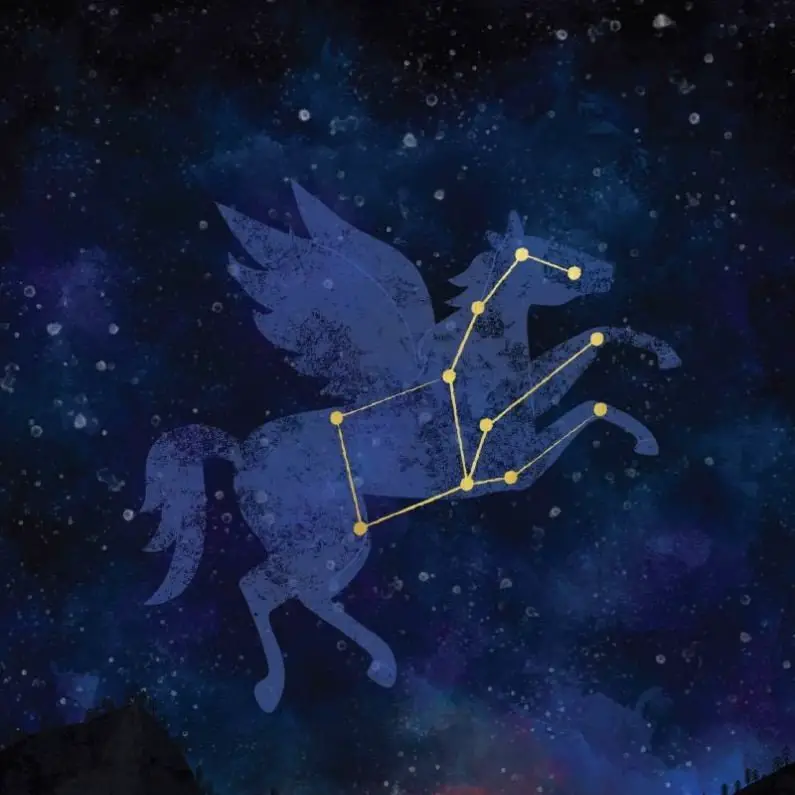

Pegasos was originally only one winged horse, born from the neck of Médousa when she was beheaded by the hero Perseus. Poseidon, Tamer of Horses, is his father. Hesiod describes in his 'Theogony' the curious circumstances of his birth:


"...Medusa who suffered a woeful fate: she was mortal, but the two [of her Gorgon sisters] were undying and grew not old. With her lay the Dark-haired One [Poseidon] in a soft meadow amid spring flowers. And when Perseus cut off her head, there sprang forth great Chrysaor and the horse Pegasus who is so called because he was born near the springs [pegae] of Ocean [Okeanos]; and that other, because he held a golden blade [aor] in his hands. Now Pegasus flew away and left the earth, the mother of flocks, and came to the deathless gods: and he dwells in the house of Zeus and brings to wise Zeus the thunder and lightning." [ll 270-294]

Pegasos was tamed by Bellerophon, a Korinthian hero, who rode him into battle against the fire-breathing Khimaira. Pindar, in his beautiful Olympian Odes describes this cooperation wonderfully:

"Bellerophon, who once suffered greatly when beside the spring he wanted to harness Pegasus, the son of the snake-entwined Gorgon; until the maiden Pallas brought to him a bridle with golden cheek-pieces. The dream suddenly became waking reality, and she spoke: “Are you sleeping, king, son of Aeolus? Come, take this charm for the horse; and, sacrificing a white bull, show it to your ancestor, Poseidon the Horse-Tamer.” The goddess of the dark aegis seemed to say such words to him as he slumbered in the darkness, and he leapt straight up to his feet. He seized the marvellous thing that lay beside him, and gladly went to the seer of the land,  and he told the son of Coeranus the whole story: how, at the seer's bidding, he had gone to sleep for the night on the altar of the goddess, and how the daughter herself of Zeus whose spear is the thunderbolt had given him the spirit-subduing gold. The seer told him to obey the dream with all speed; and, when he sacrificed a strong-footed bull to the widely powerful holder of the earth, straightaway to dedicate an altar to Athena, goddess of horses. The power of the gods accomplishes as a light achievement what is contrary to oaths and expectations. And so mighty Bellerophon eagerly stretched the gentle charmed bridle around its jaws and caught the winged horse. Mounted on its back and armored in bronze, at once he began to play with weapons. And with Pegasus, from the chilly bosom of the lonely air,7 he once attacked the Amazons, the female army of archers, [90] and he killed the fire-breathing Chimaera, and the Solymi. I shall pass over his death in silence; but Pegasus has found his shelter in the ancient stables of Zeus in Olympus." [13. 63]

As a constellation, it's arrival in the sky notes the arrival of the warmer weather of spring and seasonal rainstorms, which is also why it got the job and title of thunderbolt-bearer of Zeus. Hyginus in his 'Astronomica' speaks of the events that led up to Pegasos' immortalization in the sky:

"Others say that at the time Bellerophon came to visit Proetus, son of Abas and king of the Argives, Antia, the king’s wife, smitten with love for the guest, begged to visit him, promising him her husband’s kingdom. When she couldn’t obtain this request, out of fear that he would accuse her to the king, she anticipated him by telling Proetus that he had offered violence to her. Proetus, who had been fond of Bellerophon, was reluctant to inflict punishment himself, but knowing that he had the horse Pegasus, sent him to the father of Antia (some call her Sthenoboea), for him to defend his daughter’s chastity and send the youth against the Chimera, which at that time was laying waste with flames the country of the Lycians.

Bellerophon was victor, and escaped, but after the creation of the spring, as he was attempting to fly to heaven, and had almost reached it, he became terrified looking down at the earth, and fell off and was killed. But the horse is said to have flown up and to have been put among the constellations by Jove [Zeus]. Others have said that Bellerophon fled from Argos not because of Antia’s accusations, but so as not to hear any more proposals which were distasteful to him, or to be distressed by her entreaties." [II.18]

Although most would agree that it is Pegasos whom the constellation denotes, there is one other explanation, there because her mythology is usually tied to the constellation Equuleus: the little horse. Her name is Melanippe (Εὐίππη), daughter of the kéntauros Kheiron. She became pregnant and could not let her father know. As such, she begged the Gods to be transformed into a mare. Also from Hyginus's Astronomica:
 
"Euripides in his Melanippe, says that Melanippe, daughter of Chiron the Centaur, was once called Thetis. Brought up on Mount Helicon, a girl especially fond of hunting, she was wooed by Aeolus, son of Hellen, and grandson of Jove, and conceived a child be him. When her time drew near, she fled into the forest, so that her father, who supposed her a virgin, might not see that she had given birth to a grandchild. And so when her father was looking for her, she is said to have begged the power of the gods not to let her father see her in childbirth. After the child was born, by the will of the gods she was changed into a mare which was placed among the stars."

He also gives another reason for her change:

"Some say that she was a prophetess, and because she used to reveal the plans of the gods to men, she was changed into a mare. Callimachus says that because she ceased hunting and worshipping Diana [Artemis], Diana changed her into the shape we have mentioned. For the reason above, too, she is said to be out of sight of the Centaur, who some say is Chiron, and to show only half her body, since she didn’t want her sex to be known."

The constellation is visible at latitudes between +90° and −60°, and best visible at 21:00 (9 p.m.) during the month of October.
Mythologically speaking, Pegasos was originally only one winged horse, born from the neck of Médousa when she was beheaded by the hero Perseus. Poseidon, Tamer of Horses, is his father. Hesiod describes in his ‘Theogony’ the curious circumstances of his birth:

"…Medusa who suffered a woeful fate: she was mortal, but the two [of her Gorgon sisters] were undying and grew not old. With her lay the Dark-haired One [Poseidon] in a soft meadow amid spring flowers. And when Perseus cut off her head, there sprang forth great Chrysaor and the horse Pegasus who is so called because he was born near the springs [pegae] of Ocean [Okeanos]; and that other, because he held a golden blade [aor] in his hands. Now Pegasus flew away and left the earth, the mother of flocks, and came to the deathless gods: and he dwells in the house of Zeus and brings to wise Zeus the thunder and lightning." [ll 270-294]

Pegasos was tamed by Bellerophon, a Korinthian hero, who rode him into battle against the fire-breathing Khimaira. Pindar, in his beautiful Olympian Odes describes this cooperation wonderfully:

"Bellerophon, who once suffered greatly when beside the spring he wanted to harness Pegasus, the son of the snake-entwined Gorgon; until the maiden Pallas brought to him a bridle with golden cheek-pieces. The dream suddenly became waking reality, and she spoke: “Are you sleeping, king, son of Aeolus? Come, take this charm for the horse; and, sacrificing a white bull, show it to your ancestor, Poseidon the Horse-Tamer.” The goddess of the dark aegis seemed to say such words to him as he slumbered in the darkness, and he leapt straight up to his feet.

He seized the marvellous thing that lay beside him, and gladly went to the seer of the land,  and he told the son of Coeranus the whole story: how, at the seer’s bidding, he had gone to sleep for the night on the altar of the goddess, and how the daughter herself of Zeus whose spear is the thunderbolt had given him the spirit-subduing gold. The seer told him to obey the dream with all speed; and, when he sacrificed a strong-footed bull to the widely powerful holder of the earth, straightaway to dedicate an altar to Athena, goddess of horses.

The power of the gods accomplishes as a light achievement what is contrary to oaths and expectations. And so mighty Bellerophon eagerly stretched the gentle charmed bridle around its jaws and caught the winged horse. Mounted on its back and armored in bronze, at once he began to play with weapons. And with Pegasus, from the chilly bosom of the lonely air,7 he once attacked the Amazons, the female army of archers, [90] and he killed the fire-breathing Chimaera, and the Solymi. I shall pass over his death in silence; but Pegasus has found his shelter in the ancient stables of Zeus in Olympus." [13. 63]

Pegasos was not worshipped with ritual and sacrifices like the Theoi—the Hellenic Gods—were; only the Theoi were worshipped in that manner, and even then there were huge differences in Ouranic, Khthonic, and hero worship. He/they were featured in art, though, and was/were a beloved part of the Hellenic mythology; especially the Pegasos Bellerophon rode on, as he was featured on many coins throughout the years.
Mythologically speaking, Pegasos was originally only one winged horse, born from the neck of Médousa when she was beheaded by the hero Perseus. Poseidon, Tamer of Horses, is his father. Hesiod describes in his ‘Theogony’ the curious circumstances of his birth:

"…Medusa who suffered a woeful fate: she was mortal, but the two [of her Gorgon sisters] were undying and grew not old. With her lay the Dark-haired One [Poseidon] in a soft meadow amid spring flowers. And when Perseus cut off her head, there sprang forth great Chrysaor and the horse Pegasus who is so called because he was born near the springs [pegae] of Ocean [Okeanos]; and that other, because he held a golden blade [aor] in his hands. Now Pegasus flew away and left the earth, the mother of flocks, and came to the deathless gods: and he dwells in the house of Zeus and brings to wise Zeus the thunder and lightning." [ll 270-294]

Pegasos was tamed by Bellerophon, a Korinthian hero, who rode him into battle against the fire-breathing Khimaira. Pindar, in his beautiful Olympian Odes describes this cooperation wonderfully:

"Bellerophon, who once suffered greatly when beside the spring he wanted to harness Pegasus, the son of the snake-entwined Gorgon; until the maiden Pallas brought to him a bridle with golden cheek-pieces. The dream suddenly became waking reality, and she spoke: “Are you sleeping, king, son of Aeolus? Come, take this charm for the horse; and, sacrificing a white bull, show it to your ancestor, Poseidon the Horse-Tamer.” The goddess of the dark aegis seemed to say such words to him as he slumbered in the darkness, and he leapt straight up to his feet. He seized the marvellous thing that lay beside him, and gladly went to the seer of the land,  and he told the son of Coeranus the whole story: how, at the seer’s bidding, he had gone to sleep for the night on the altar of the goddess, and how the daughter herself of Zeus whose spear is the thunderbolt had given him the spirit-subduing gold. The seer told him to obey the dream with all speed; and, when he sacrificed a strong-footed bull to the widely powerful holder of the earth, straightaway to dedicate an altar to Athena, goddess of horses. The power of the gods accomplishes as a light achievement what is contrary to oaths and expectations. And so mighty Bellerophon eagerly stretched the gentle charmed bridle around its jaws and caught the winged horse. Mounted on its back and armored in bronze, at once he began to play with weapons. And with Pegasus, from the chilly bosom of the lonely air,7 he once attacked the Amazons, the female army of archers, [90] and he killed the fire-breathing Chimaera, and the Solymi. I shall pass over his death in silence; but Pegasus has found his shelter in the ancient stables of Zeus in Olympus." [13. 63]

Pegasos was not worshipped with ritual and sacrifices like the Theoi—the Hellenic Gods—were; only the Theoi were worshipped in that manner, and even then there were huge differences in Ouranic, Khthonic, and hero worship. He/they were featured in art, though, and was/were a beloved part of the Hellenic mythology; especially the Pegasos Bellerophon rode on, as he was featured on many coins throughout the years.
A well-preserved Roman mosaic, described as the "most exciting" discovery in decades, has been uncovered in Berkshire by a local community archaeology dig. It features many scenes from Hellenic mythology.


The mosaic, dated from around the 4th century AD, features Bellerophon, a Hellenic hero, riding the winged horse Pegasus. The panel shows a scene where they attack the fire-breathing monster Chimera. As a reward for killing the beast which had a lion's head, a goat's body, and a serpent's tail, Pegasus was offered the King Iobates' daughter, Philonoe. The myth would later form the basis of the St George and the dragon legend in Christian times. Joy Appleton from the Boxford History Project told The Independent:

"I was stunned. It’s an amazing mosaic with so many figures. There is every Greek mythical figure found on a British site. The owner of the Roman villa in which the mosaic was found, wanted to display his knowledge as there are so many characters and beasts from Greek mythology."

Among the most spectacular scenes is Hercules killing a centaur, possibly Nessus, whose poisoned blood later caused the death of Hercules. Other illustrative elements on the mosaic contain scenes previously unknown on other UK sites, said archaeological experts. Anthony Beeson, a member of the Association for the Study and Preservation of Roman Mosaics, described the find as:

"[...] without question the most exciting mosaic discovery made in Britain in the last fifty years and must take a premier place amongst those Romano-British works of art that have come down to modern Britons."

Luigi Thompson, who visited the site and is known for his paintings of mosaics said:

"If I had the choice of only doing one painting in my career, it would be this one. It is the most delightful, lively and charming pavement I have ever seen. It causes me to imagine, with pleasure, the villa owner entertaining his guests with his knowledge of classical mythology."

Less than half the mosaic, a six-meter strip richly patterned with mythical characters, was uncovered in the last two weeks. It has now been buried again to protect it. The dig volunteers, some without previous experience of working on archaeological sites, are hoping to fundraise for another excavation next year.
Oh my, so busy today. This post is going to be short, but I hope it will be interesting none the less. I was asked about Pegasos. They wanted to know if the ancient Hellenes worshipped Pegasos, and how he was seen in ancient times.

Mythologically speaking, Pegasos was originally only one winged horse, born from the neck of Médousa when she was beheaded by the hero Perseus. Poseidon, Tamer of Horses, is his father. Hesiod describes in his ‘Theogony’ the curious circumstances of his birth:

"…Medusa who suffered a woeful fate: she was mortal, but the two [of her Gorgon sisters] were undying and grew not old. With her lay the Dark-haired One [Poseidon] in a soft meadow amid spring flowers. And when Perseus cut off her head, there sprang forth great Chrysaor and the horse Pegasus who is so called because he was born near the springs [pegae] of Ocean [Okeanos]; and that other, because he held a golden blade [aor] in his hands. Now Pegasus flew away and left the earth, the mother of flocks, and came to the deathless gods: and he dwells in the house of Zeus and brings to wise Zeus the thunder and lightning." [ll 270-294]

Pegasos was tamed by Bellerophon, a Korinthian hero, who rode him into battle against the fire-breathing Khimaira. Pindar, in his beautiful Olympian Odes describes this cooperation wonderfully:
 
"Bellerophon, who once suffered greatly when beside the spring he wanted to harness Pegasus, the son of the snake-entwined Gorgon; until the maiden Pallas brought to him a bridle with golden cheek-pieces. The dream suddenly became waking reality, and she spoke: “Are you sleeping, king, son of Aeolus? Come, take this charm for the horse; and, sacrificing a white bull, show it to your ancestor, Poseidon the Horse-Tamer.” The goddess of the dark aegis seemed to say such words to him as he slumbered in the darkness, and he leapt straight up to his feet. He seized the marvellous thing that lay beside him, and gladly went to the seer of the land,  and he told the son of Coeranus the whole story: how, at the seer’s bidding, he had gone to sleep for the night on the altar of the goddess, and how the daughter herself of Zeus whose spear is the thunderbolt had given him the spirit-subduing gold. The seer told him to obey the dream with all speed; and, when he sacrificed a strong-footed bull to the widely powerful holder of the earth, straightaway to dedicate an altar to Athena, goddess of horses. The power of the gods accomplishes as a light achievement what is contrary to oaths and expectations. And so mighty Bellerophon eagerly stretched the gentle charmed bridle around its jaws and caught the winged horse. Mounted on its back and armored in bronze, at once he began to play with weapons. And with Pegasus, from the chilly bosom of the lonely air,7 he once attacked the Amazons, the female army of archers, [90] and he killed the fire-breathing Chimaera, and the Solymi. I shall pass over his death in silence; but Pegasus has found his shelter in the ancient stables of Zeus in Olympus." [13. 63]

Pegasos was not worshipped with ritual and sacrifices like the Theoi—the Hellenic Gods—were; only the Theoi were worshipped in that manner, and even then there were huge differences in Ouranic, Khthonic, and hero worship. He/they were featured in art, though, and was/were a beloved part of the Hellenic mythology; especially the Pegasos Bellerophon rode on, as he was featured on many coins throughout the years.
Welcome to another constellation post; this one is one of my favourites. Who doesn't love a winged horse? The constellation is called 'Hippos' (the Horse) in Greek and has some badass mythology attached to it.

http://mail.colonial.net/~hkaiter/zodiacconstellations.html

Pegasos was originally only one winged horse, born from the neck of Médousa when she was beheaded by the hero Perseus. Poseidon, Tamer of Horses, is his father. Hesiod describes in his 'Theogony' the curious circumstances of his birth:

"...Medusa who suffered a woeful fate: she was mortal, but the two [of her Gorgon sisters] were undying and grew not old. With her lay the Dark-haired One [Poseidon] in a soft meadow amid spring flowers. And when Perseus cut off her head, there sprang forth great Chrysaor and the horse Pegasus who is so called because he was born near the springs [pegae] of Ocean [Okeanos]; and that other, because he held a golden blade [aor] in his hands. Now Pegasus flew away and left the earth, the mother of flocks, and came to the deathless gods: and he dwells in the house of Zeus and brings to wise Zeus the thunder and lightning." [ll 270-294]

Pegasos was tamed by Bellerophon, a Korinthian hero, who rode him into battle against the fire-breathing Khimaira. Pindar, in his beautiful Olympian Odes describes this cooperation wonderfully:

"Bellerophon, who once suffered greatly when beside the spring he wanted to harness Pegasus, the son of the snake-entwined Gorgon; until the maiden Pallas brought to him a bridle with golden cheek-pieces. The dream suddenly became waking reality, and she spoke: “Are you sleeping, king, son of Aeolus? Come, take this charm for the horse; and, sacrificing a white bull, show it to your ancestor, Poseidon the Horse-Tamer.” The goddess of the dark aegis seemed to say such words to him as he slumbered in the darkness, and he leapt straight up to his feet. He seized the marvellous thing that lay beside him, and gladly went to the seer of the land,  and he told the son of Coeranus the whole story: how, at the seer's bidding, he had gone to sleep for the night on the altar of the goddess, and how the daughter herself of Zeus whose spear is the thunderbolt had given him the spirit-subduing gold. The seer told him to obey the dream with all speed; and, when he sacrificed a strong-footed bull to the widely powerful holder of the earth, straightaway to dedicate an altar to Athena, goddess of horses. The power of the gods accomplishes as a light achievement what is contrary to oaths and expectations. And so mighty Bellerophon eagerly stretched the gentle charmed bridle around its jaws and caught the winged horse. Mounted on its back and armored in bronze, at once he began to play with weapons. And with Pegasus, from the chilly bosom of the lonely air,7 he once attacked the Amazons, the female army of archers, [90] and he killed the fire-breathing Chimaera, and the Solymi. I shall pass over his death in silence; but Pegasus has found his shelter in the ancient stables of Zeus in Olympus." [13. 63]

As a constellation, it's arrival in the sky notes the arrival of the warmer weather of spring and seasonal rainstorms, which is also why it got the job and title of thunderbolt-bearer of Zeus. Hyginus in his 'Astronomica' speaks of the events that led up to Pegasos' immortalization in the sky:

"Others say that at the time Bellerophon came to visit Proetus, son of Abas and king of the Argives, Antia, the king’s wife, smitten with love for the guest, begged to visit him, promising him her husband’s kingdom. When she couldn’t obtain this request, out of fear that he would accuse her to the king, she anticipated him by telling Proetus that he had offered violence to her. Proetus, who had been fond of Bellerophon, was reluctant to inflict punishment himself, but knowing that he had the horse Pegasus, sent him to the father of Antia (some call her Sthenoboea), for him to defend his daughter’s chastity and send the youth against the Chimera, which at that time was laying waste with flames the country of the Lycians.

Bellerophon was victor, and escaped, but after the creation of the spring, as he was attempting to fly to heaven, and had almost reached it, he became terrified looking down at the earth, and fell off and was killed. But the horse is said to have flown up and to have been put among the constellations by Jove [Zeus]. Others have said that Bellerophon fled from Argos not because of Antia’s accusations, but so as not to hear any more proposals which were distasteful to him, or to be distressed by her entreaties." [II.18]

Although most would agree that it is Pegasos whom the constellation denotes, there is one other explanation, there because her mythology is usually tied to the constellation Equuleus: the little horse. Her name is Melanippe (Εὐίππη), daughter of the kéntauros Kheiron. She became pregnant and could not let her father know. As such, she begged the Gods to be transformed into a mare. Also from Hyginus's Astronomica:
 
"Euripides in his Melanippe, says that Melanippe, daughter of Chiron the Centaur, was once called Thetis. Brought up on Mount Helicon, a girl especially fond of hunting, she was wooed by Aeolus, son of Hellen, and grandson of Jove, and conceived a child be him. When her time drew near, she fled into the forest, so that her father, who supposed her a virgin, might not see that she had given birth to a grandchild. And so when her father was looking for her, she is said to have begged the power of the gods not to let her father see her in childbirth. After the child was born, by the will of the gods she was changed into a mare which was placed among the stars."

He also gives another reason for her change:

"Some say that she was a prophetess, and because she used to reveal the plans of the gods to men, she was changed into a mare. Callimachus says that because she ceased hunting and worshipping Diana [Artemis], Diana changed her into the shape we have mentioned. For the reason above, too, she is said to be out of sight of the Centaur, who some say is Chiron, and to show only half her body, since she didn’t want her sex to be known."

The constellation is visible at latitudes between +90° and −60°, and best visible at 21:00 (9 p.m.) during the month of October.