Showing posts with label Turkey. Show all posts

Ephesus, an ancient Hellenic city on the coast of Ionia, is one of the greatest archaeological treasures on Earth, with the entire city listed as a UNESCO World Heritage site. The great city, which went through endless transformations over the years as a result of earthquakes, wars and conquests, was founded in the 10th century BC on the site of the former Arzawan capital by Attic and Ionian Greek colonists.


The city was famous in its day for the nearby Temple of Artemis (completed around 550 BC), which was considered one of the Seven Wonders of the Ancient World. Its many monumental buildings included the Library of Celsus and a theater capable of holding no less than 24,000 spectators. Archaeologists estimate that the population of any ancient city was ten times that of the capacity of its largest theater; therefore, they believe the population of Ephesus was approximately 250,000.

Ephesus also had one of the “seven churches of Asia” referred to in the Book of Revelation. The Gospel of John may also have been written there, and it was the site of several 5th-century Christian Councils, including the Councils of Ephesus that took place in 431, 449 and 475 AD.

The city was destroyed by the Goths in their invasion in the year 263; although it was rebuilt, its great importance as a commercial center declined as its harbor was slowly silted up by the Meander River. In the year 614, it was partially destroyed by an earthquake. Eventually abandoned, this might have been a blessing in disguise for Ephesus, as its ancient ruins lie in plain sight, rather than being buried under centuries of buildings.

Today, the ancient city of Ephesus is a huge draw for international tourists and scholars because of its ancient provenance and its many historical treasures.

The areas around Ephesus were settled as far back as the Neolithic Age (about 6000 BC), as shown by evidence from excavations at the nearby artificial mounds known as “tells” in Arvalya and Cukurici. After being founded as an Attic-Ionian colony in the 10th century BC, the ruler Androklos drove away most of the native Carian and Lelegian inhabitants of the city and united his people with the remainder. He was a successful warrior, and as a king he was able to join the twelve cities of Ionia together into the Ionian League. During his reign the city began to prosper. Androklos and his dog are depicted on the Hadrian temple frieze, dating from the 2nd century.

A temple dedicated to the Egyptian god Serapis, which was also rediscovered in the ancient Greek city, was built in the 2nd century A.D. as a symbol of devotion to the Egyptian god; it is considered the best preserved and largest temple in all of Anatolia. It was constructed in an area measuring an astounding 7,700 square meters (194,520,997 square feet) while  the building alone measures over 1,000 square meters (10,764 square feet).

Although it was shaken by the earthquake, almost all of the temple’s pieces are still intact. The Ephesus Foundation has undertaken the restoration project, following the restoration of the city’s illustrious Celsius Library.

The Goddess Artemis and the great Anatolian Goddess Kybele were identified and worshipped together as “Artemis of Ephesus.” The many-breasted “Lady of Ephesus”, identified with Artemis, was venerated in the Temple of Artemis, which was the largest building in the ancient world, according to Pausanias.

The Temple of Artemis, one of the Seven Wonders of the Ancient World, once stood 418 feet by 239 feet with over 100 marble pillars each 56 feet high. The temple earned the city the title “Servant of the Goddess”.

Pliny tells us that the magnificent structure took 120 years to build but is now represented only by one lonely column, revealed during an archaeological excavation by the British Museum in the 1870s and still standing alone in the center of the ruins in a grassy field.

About 560 BC, Ephesus was conquered by the Lydians under King Croesus, who treated the inhabitants with respect and even became the main contributor to the reconstruction of the temple of Artemis. His signature has been found on the base of one of the columns of the temple (now on display in the British Museum). The city later fell to the Persian army commander Harpagos in 547 BC. The Persians then incorporated the Greek cities of Asia Minor into their Achaemenid Empire.

Ephesians participated in the Ionian Revolt against Persian rule in the Battle of Ephesus in 498 BC, which instigated the Greco-Persian wars. In 479 BC, the Ionians, together with Athens, were able to oust the Persians from the shores of Asia Minor. In 478 BC, the Ionian cities with Athens entered into the Delian League against the Persians.

During the Classical Roman period, which lasted from 129 BC to 395 AD, Ephesus, as part of the kingdom of Pergamon, became a subject of the Roman Republic, coming under its yoke in 129 BC after the revolt of Eumenes III was suppressed. Mark Antony was welcomed by Ephesus when he was proconsul of Rome; and again in 33 BC with Cleopatra ,when he gathered his fleet of 800 ships before the decisive Battle of Actium with Octavius. When Augustus became emperor in 27 BC, he made Ephesus the capital of proconsular Asia. According to the geographer Strabo, it was second in importance and size only to Rome.

Ephesus also served as an important center for early Christianity beginning as early as the AD 50s. From 52–54, the apostle Paul lived in Ephesus, working with the congregation and apparently organizing missionary activity into the hinterlands of Asia Minor. Initially, according to the Acts of the Apostles, Paul attended the Jewish synagogue in Ephesus, but after three months he became frustrated with the stubbornness of some of the Jews, and moved his base to the school of Tyrannus. Later a silversmith named Demetrios stirred up a mob against Paul, saying that he was endangering the livelihood of those making silver Artemis shrines.

Between 53 and 57 AD Paul wrote the letter known as 1 Corinthians from Ephesus — possibly from the “Paul tower” near the harbor, where he was imprisoned for a short time. Later, he wrote his Epistle to the Ephesians while he was in prison in Rome, around 62 AD. The Gospel of John might have been written in Ephesus a bit later, c. 90–100. Ephesus was one of the seven cities addressed in the Book of Revelation, indicating that the church of the city was already a major presence.

According to Eusebius of Caesarea, Saint Timothy was the first bishop of Ephesus. A legend, which was first mentioned by Epiphanius of Salamis in the 4th century, purported that the Virgin Mary may have spent the last years of her life in Ephesus. The Ephesians derived the argument from the apostle John’s presence in the city, and Jesus’ instructions to John to take care of his mother, Mary, after his death. Epiphanius, however, pointed out that while the Bible says John was leaving for Asia, it does not say specifically that Mary went with him. He later stated that she was buried in Jerusalem.

Since the 19th century, The House of the Virgin Mary, about 7 km (4 miles) from Selçuk, has been considered to have been the last home of Mary. It is still a popular place of Catholic pilgrimage. The city and temple were destroyed by the Goths in 263. This marked the first precipitous decline of the city’s ages of splendor. However, the emperor Constantine the Great rebuilt much of the city and even constructed new public baths. The Church of Mary near the harbor of Ephesus was the setting for the Third Ecumenical Council in 431, which resulted in the condemnation of Nestorius. A Second Council of Ephesus was held in 449.

Ephesus remained the most important city of the Byzantine Empire in Asia, however, after Constantinople, in the 5th and 6th centuries.The basilica of St. John was built during the reign of emperor Justinian I in the 6th century.

The importance of the city as a commercial center declined as the harbor was slowly silted up by the river despite repeated dredging during the city’s history. The loss of its harbour caused Ephesus to lose its access to the Aegean Sea, which was important for trade. People started leaving the city for the surrounding hills.

Eventually, the ruins of its great temples were tragically used as building blocks for new homes. Precious marble sculptures from antiquity were ground to powder to make lime for plaster. Sackings by the Arabs, first in the year 654–655 and later in 700 and 716, hastened the decline of the great city of Ephesus even further. By the time the Seljuk Turks conquered Ephesus in 1090, it was just a small village.

The Byzantines resumed control in 1097 and changed the name of the town to Hagios Theologos. They kept control of the region until 1308 — but by that time, the exquisite Temple of Artemis had been completely forgotten by the local population. It would have been lost to human memory completely if it were not for the excavation and restoration efforts of modern archaeologists.

The town surrendered, on October 24, 1304, to a Turkish warlord. Nevertheless, contrary to the terms of the surrender the Turks pillaged the church of Saint John and deported most of the local population to Thyrea, Greece. During these events many of the remaining inhabitants were cruelly massacred. The once-shining city of Ephesus, with its sweeping public spaces, temples and library, was completely abandoned by the 15th century.

But the city is still beloved by those who walk its broad, stone-paved central street and take in the breathtaking ruins of days gone by. Moreover, the ancient Greek city is set to once again have a harbor on the Aegean coast, as the result of an ambitious new project.

In the ancient era Ephesus, which is today one of Turkey’s top tourist attractions, was connected to a harbor on the Aegean Sea with a spacious canal, but the port and the canal became silted up by the river in the years since.

An ambitious canal project proposed by Turkey in 2018 pledged to uncover the canal and eventually link the ancient harbor city to the sea once again after a 6,130-meter length of the canal became covered with alluvial deposits over the centuries. So far, however, nothing has been done to make this project a reality.

The ruins of the once-glorious city still stand, however, and welcome visitors today from all over the world, continuing to tell the stories of its many illustrious inhabitants over the millennia.

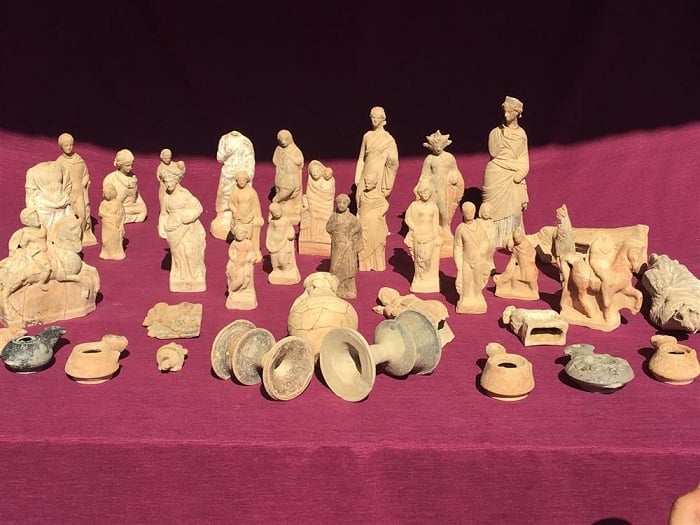
An archaeological discovery in Turkey resulted in the unearthing of dozens of terracotta figurines depicting ancient Hellenic Gods, men, women, and animals. The artifacts, which are over 2,000 years old, were found in the ancient town of Myra, which is now called Demre, in Turkey. Some of the figurines incredibly still had paint on them, and others had inscriptions, providing archaeologists with a view of life in the region in the 1st and 2nd centuries BC.

Nevzat Çevik, the leader of the excavation team and Archaeology Professor at Akdeniz University in Turkey, told Live Science that “Myra is one of the most important ancient settlements in Lycia.” Myra remained an important site throughout history, as the ancient Hellenes, Romans, Byzantines, and later the Ottomans inhabited the town.

In the modern era, the town was home to a rich and vibrant Greek population that was forced to leave Turkey during the population exchange between Greece and the country in the 1920s. 

The figurines give “rich clues about what existed in the mysterious Myra under a thick silt layer in the first and second centuries BC,” Çevik added.

The archaeological team was excavating parts of a 4th-century Roman theater between June and October of 2020 when they suddenly unearthed a second, smaller theater below the Roman remains. The older structure underneath dates back to the Hellenistic period, from 323 BC — at the time of the death of Alexander the Great — to the beginning of the Roman Empire in 30 BC.

What the researchers found was the massive collection of terracotta figurines scattered amongst the remains, along with the Hellenistic theater.

“It is as if the people of ancient Myra were resurrected and ran through the time tunnel all together and came to our day,” Çevik told his team when they found the figurines. There is an almost uncountable number of ancient Hellenic and Byzantine archaeological and historical sites in Turkey, many of which attract hundreds of thousands, even millions, of visitors every year.

Many of them are landmarks not to be missed by any travelers to Turkey, and they should especially not be missed by Greek travelers, since they are incontrovertible evidence of their people’s long, rich history and contributions to Western civilization.

We're doing a bit of a 101 post today, namely on Hellenic architectural orders. Why? Because they give you clues about the age and location of temples and other buildings, help you build timelines within architecture and knowing about these makes you look way cool at a museum which houses ancient art. Not unimportant, I would say!


All in all, there are five classical architectural orders: three ancient orders of architecture—the Doric, Ionic, and Corinthian—which originated in Greece and two more—the Tuscan and the Composite—added by the Roman. I'm not going to teach you about the Roman ones so just remember that the Tuscan is simpler than Doric and the Composite is more ornamental than the Corinthian. The Romans also had their own versions of the Hellenic orders, but we won't go into those either.

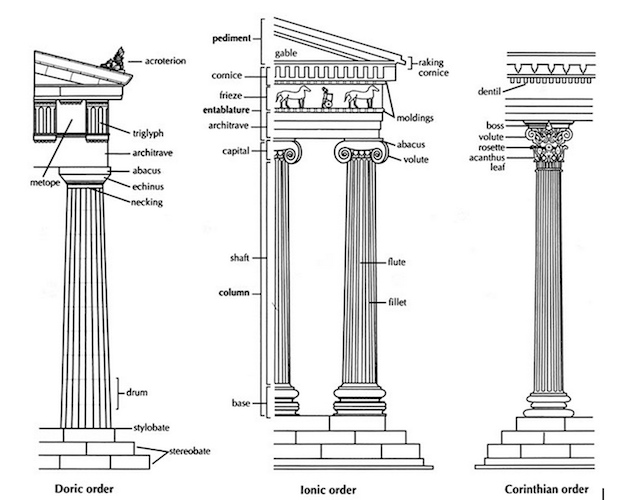
The basics on architectural orders: an order in architecture is a certain assemblage of parts subject to uniform established proportions, regulated by the office that each part has to perform. The architectural orders are the ancient styles of classical architecture, each distinguished by its proportions and characteristic profiles and details, and most readily recognizable by the type of column employed.

Each style has distinctive capitals at the top of columns and horizontal entablatures which it supports, while the rest of the building does not in itself vary between the orders. The column shaft and base also varies with the order. The capital rests on the shaft. It has a load-bearing function, which concentrates the weight of the entablature on the supportive column, but it primarily serves an aesthetic purpose. The necking is the continuation of the shaft, but is visually separated by one or many grooves. The echinus lies atop the necking. It is a circular block that bulges outwards towards the top to support the abacus, which is a square or shaped block that in turn supports the entablature. The entablature consists of three horizontal layers, all of which are visually separated from each other using moldings or bands. Those are a lot fo terms, I know. Click on the image above for a visual representation within the three styles.

The Doric order is sometimes considered the earliest order, but there is no evidence to support this. Rather, the Doric and Ionic orders seem to have appeared at around the same time, the Ionic in eastern Greece and the Doric in the west and mainland. Both the Doric and the Ionic order appear to have originated in wood.

The Doric Order
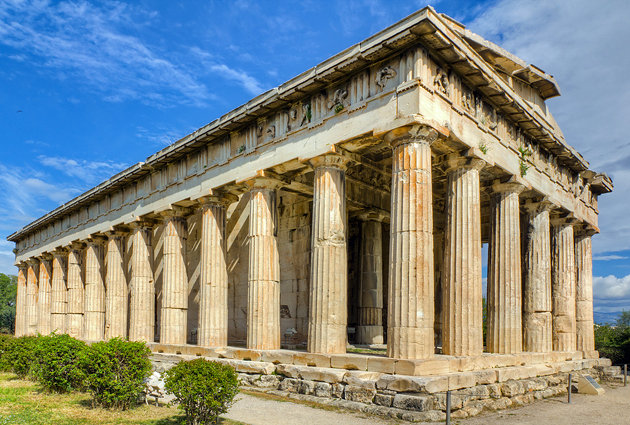
The Doric order is characterized by a plain, unadorned column capital and a column that rests directly on the stylobate of the temple without a base. The Doric entablature includes a frieze composed of trigylphs—vertical plaques with three divisions—and metopes—square spaces for either painted or sculpted decoration. The columns are fluted and are of sturdy, if not stocky, proportions. An example is the temple of the Delians on Delos, pictured to the side.

The Doric order emerged on the Hellenic mainland during the course of the late seventh century BC. It remained the predominant order for Hellenic temple construction through the early fifth century BC, although notable buildings built later in the the Classical period—especially the canonical Parthenon in Athens—still employed it.

The Ionic order
The Ionic order originated in Ionia, a coastal region of central Anatolia (what is now known as Turkey) where a number of ancient Hellenic settlements were located. It is distinguished by slender, fluted pillars with a large base and two opposed volutes (also called scrolls) in the echinus of the capital. The echinus itself is decorated with an egg-and-dart motif. The Ionic shaft comes with four more flutes than the Doric counterpart (totalling 24). The Ionic base has two convex moldings called tori which are separated by a scotia. The Ionic order is also marked by an entasis, a curved tapering in the column shaft. A column of the ionic order is nine times its lower diameter. The shaft itself is eight diameters high. The architrave of the entablature commonly consists of three stepped bands (fasciae). The frieze comes without the Doric triglyph and metope butsometimes comes with a continuous ornament such as carved figures instead.
The Ionic order developed during the mid-sixth century BC and had been transmitted to mainland Greece by the fifth century BC. The basic structure of the Ionic order can be found in the Temple of Athena Nike at the Acropolis of Athens.

The Corinthian order
The Corinthian order is both the latest and the most elaborate of the Classical orders of architecture. As the name suggests, the origins of the order were connected in antiquity with the Hellenic city-state of Corinth, where, according to the architectural writer Vitruvius, the sculptor Callimachus drew a set of acanthus leaves surrounding a votive basket. The defining element of the Corinthian order is its elaborate, carved capital, which incorporates even more vegetal elements than the Ionic order does. The stylized, carved leaves of an acanthus plant grow around the capital, generally terminating just below the abacus.

The oldest known building built according to this order is the Choragic Monument of Lysicrates in Athens, constructed from 335 to 334 BC. Perhaps the best known Corinthian capital comes from the Temple of Apollo Epicurius at Bassae and dates to c. 427 BC.

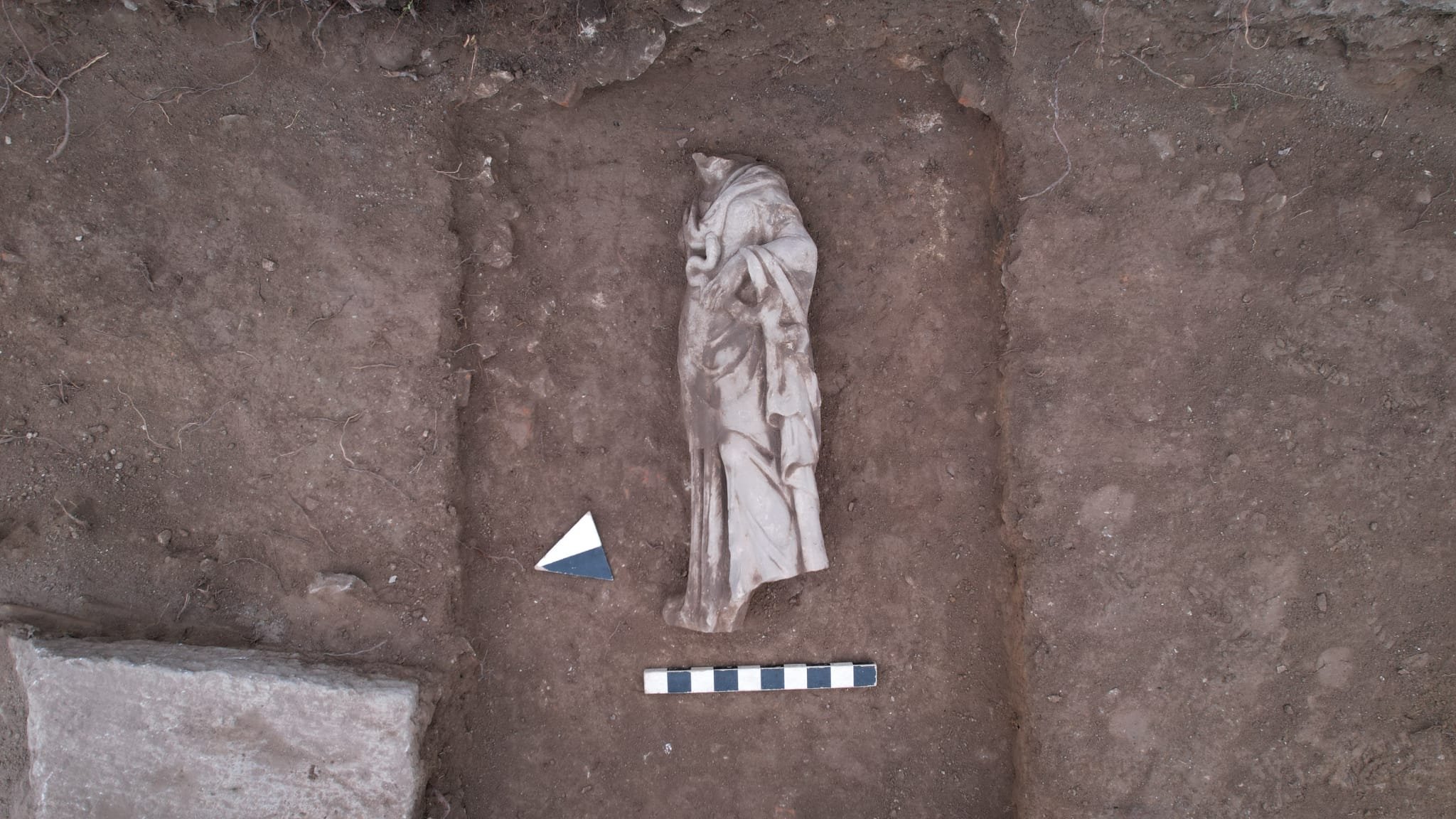
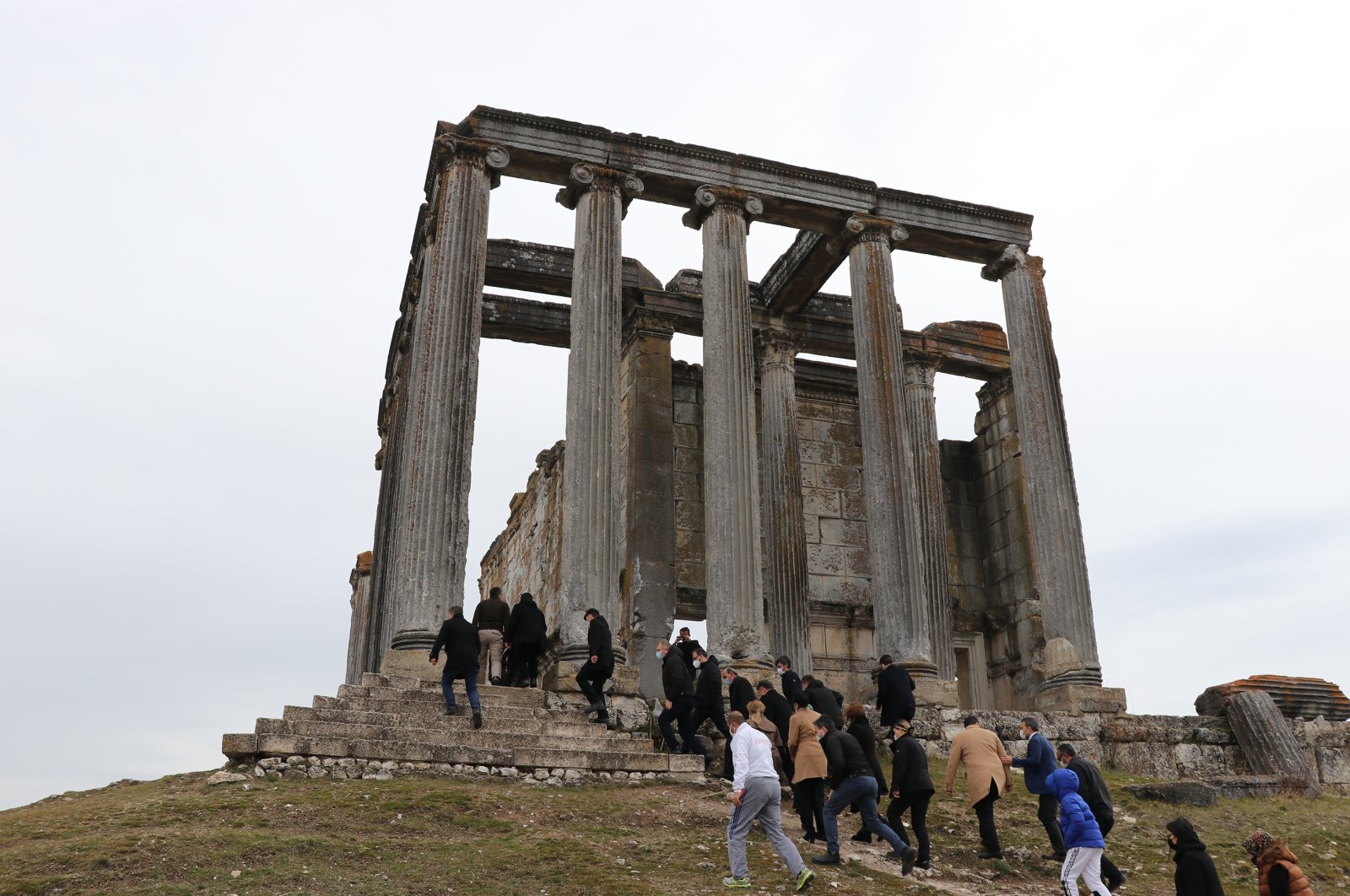
Archaeologists discovered a statue of Hygieia, Goddess of cleanliness and hygiene, during their excavations in the ancient city of Aizanoi, located in the Çavdarhisar district of western Turkey's Kütahya province. 

Noting that the marble statue’s head is missing, which is the fate of much ancient statuary, Coşkun, an archaeologist at Dumlupınar University in central Turkey, said: 

“Unfortunately, it hasn’t survived to the present day, but in its current form, we can see that this statue is about the size of a human. During past digs in Aizanoi, finds related to Hygieia were also found,” he said. “This situation makes us think that there may have been some construction and buildings related to the health cult in Aizanoi during the Roman era.”

Aizanoi is also home to one of the best-preserved temples in Anatolia dedicated to Zeus, the thunderbolt-wielding king of the Olympians.

Seen as boasting a history rivaling Ephesus, another iconic ancient city in Turkey, Aizanoi was added to the UNESCO World Heritage Tentative List in 2012, with excavation efforts ongoing now for almost a decade. Coşkun said that around 100 workers and 25 technical personnel are working on digs at the nearly 5,000-year-old site.

“We’re trying to reveal the columned galleries on the west and south wings of the agora (bazaar) and the shops right behind them.” 

Coşkun added that the statue of Hygieia – related to the modern word “hygiene” – was unearthed inside the columned gallery on the south wing of the agora.

Located 57 kilometers (35 miles) from the city center of Kütahya, the ancient site saw its golden age in the second and third centuries A.D. and became “the center of the episcopacy in the Byzantine era," according to the website of the Turkish Culture and Tourism Ministry.

Recent excavations around the Temple of Zeus indicate the existence of several levels of settlement in the city dating from as far back as 3000 B.C. In 133 B.C., it was captured by the Roman Empire. In 1824, European travelers rediscovered the ancient site.

Between 1970 and 2011, the German Archaeology Institute unearthed a theater and a stadium, as well as two public baths, a gymnasium, five bridges, a trading building, necropolises and the sacred cave of Metre Steune – a cultist site thought to be used prior to the first century B.C.

Since 2011, Turkish archaeologists have been carrying out the work at the ancient site. This year, the excavations were transferred to the Kütahya Museum Directorate.

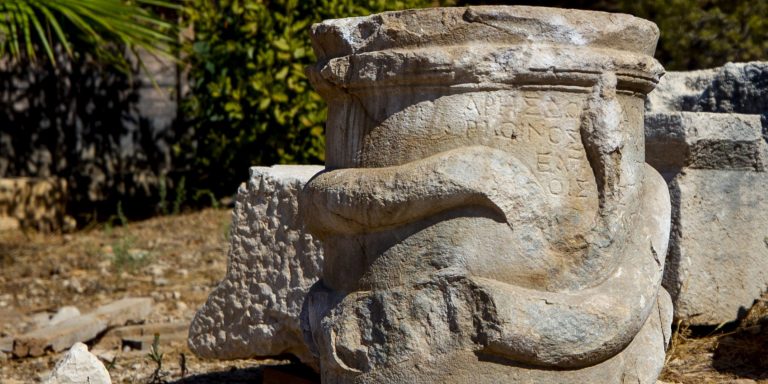
A marble altar with an ancient Greek inscription has been discovered at the site of Patara, close to the south-west coastal city of Antalya in Turkey. The ancient Hellenic altar, which features a relief of a snake wrapped around the ancient stone with a Greek inscription, is thought to be over 2,000 years old.

Speaking to Turkish media, Mustafa Koçak, an archaeologist working at the site, noted that such an altar has never been found in the area, but similar finds have been discovered at other ancient sites. He hypothesized that the snake motif relates to the worship of the Gods, as people would make sacrifices and give offerings to the gods at altars like this one.

Koçak added that archaeologists have encountered sculptural forms of large snakes throughout their excavations that resemble the one found on the altar, and theorized that they may have also been others present in the city during ancient times.

Further study and translation of the Greek inscription may reveal more information about the use and historic context of the altar. However, in descriptions of the impressive find, the Turkish press has not even mentioned the presence of the ancient Hellenic inscription on the column.

Antalya, now known as a Mediterranean resort destination on Turkey’s southern coast, was once home to a prominent ancient Hellenic city. The ancient city of Patara, located in Lycia, where the altar was found, was a hub for commerce and maritime activity in antiquity.

Taking its name after its mythological founder Patarus, son of Apollon, Patara served as an important site in Hellenic and Roman antiquity. In 333 BC, Alexander the Great conquered the city, and it was governed by a series of emperors throughout its long history.

Patara’s strategic location in modern-day southwest Turkey helped it preserve its economic and cultural importance through the Byzantine period as well, and it has significance to Christians, since it was the birthplace of St. Nicholas, the bishop of Myra, in 270 AD. With its ancient history, and because it was continually inhabited for so many centuries, the site is home to many Hellenic and Roman ruins, including an impressive Roman-era theater.

There is an almost uncountable number of ancient Hellenic and Byzantine archaeological and historical sites in Turkey, many of which attract hundreds of thousands, even millions, of visitors every year. These countless sites in not only Turkey but around the world, serve incontrovertible evidence of the Hellenic people’s long, rich history and contributions to world civilizations.

The restoration of the ancient city of Aizanoi, located in the Çavdarhisar district of western Turkey's Kütahya province, is expected to be resumed in April, Kütahya Governor Ali Çelik announced Sunday. Çelik stated that the excavation and restoration work at the 5,000-year-old site was to be continued in April after being halted due to the global COVID-19 pandemic.

“We will be restoring the Roman Bridge, five derelict structures across the temple and the Excavation Experience House whose project has been approved. We will also continue excavations at the sites of Penkalas creek and the Odeon region in April. We will be making environmental planning around the Penkalas creek in accordance with its ancient historical texture.” 

Aizanoi is a particularly special archaeological city of Turkey's many world-famous ancient sites, as it is home to one of the best-preserved temples in Anatolia dedicated to Zeus. Dubbed the second Ephesus of Turkey, the city was added to the UNESCO World Heritage Tentative List in 2012. Archaeologists began restoration work on the ancient city in June 2020.

The excavation and fieldwork are being carried out under the coordination of Pamukkale University's Archaeology Department. Recent excavations around the Temple of Zeus indicate the existence of several levels of settlement in the city dating from as far back as 3000 B.C.

In 133 B.C. the city was captured by the Roman Empire. In 1824, European travelers rediscovered the ancient site.

Between 1970 and 2011 the German Archaeological Institute conducted excavation work, unearthing the theater and a stadium, as well as two public baths, a gymnasium, five bridges, a trading building, necropolises and the sacred cave of Metre Steune – a cultist site thought to be used prior to the first century B.C.

Since 2011, Turkish archaeologists have been carrying out restoration work at the ancient site, and more recently an exceptional collection of 651 silver coins belonging to the Roman period were unearthed in January.

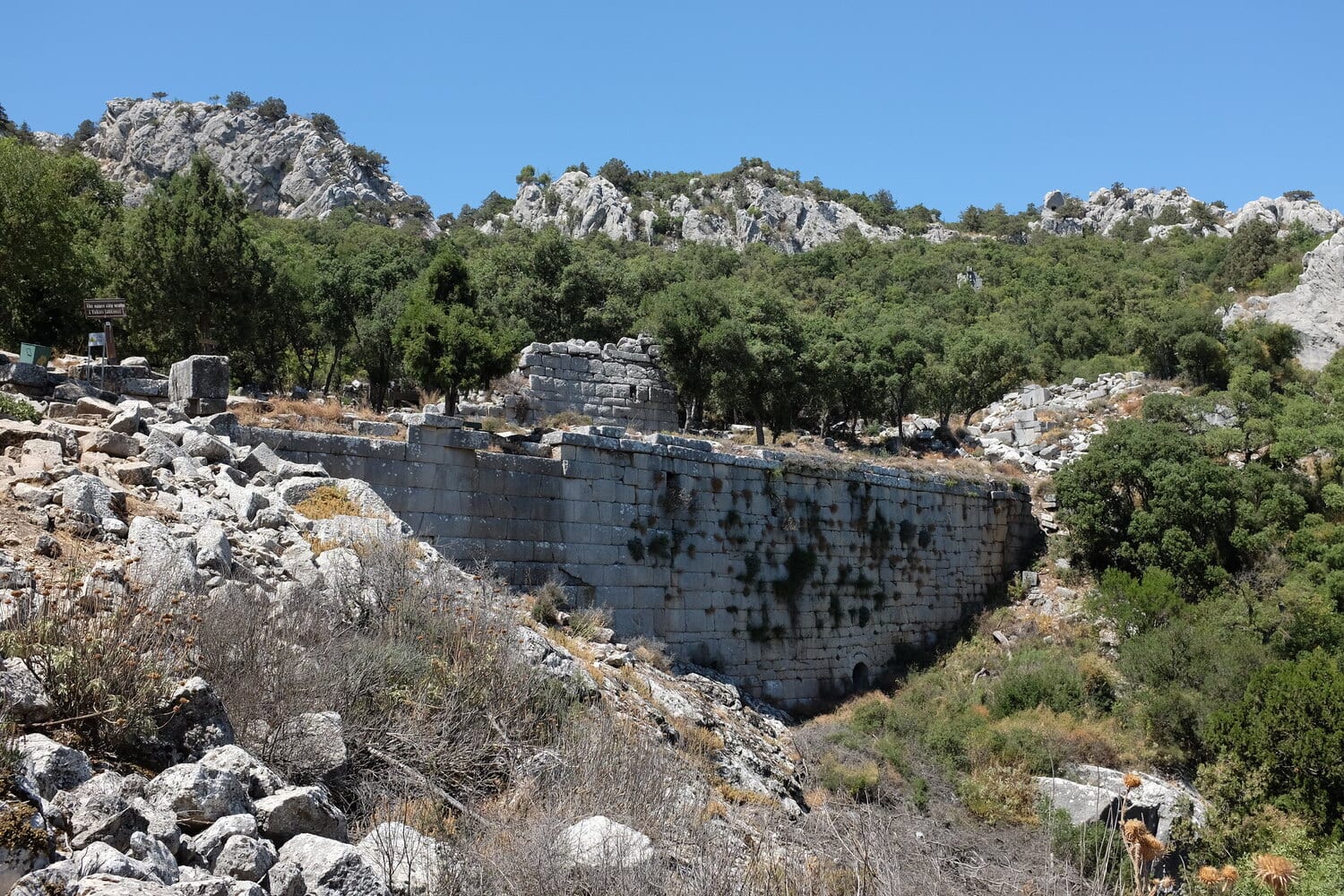
Termessos was a fortified city, founded by Pamphylian tribes called the Solymi (also called the Solims) near the peak of the Solymos (Güllük Dağı) mountain, in the Taurus mountain range in present-day Turkey. According to the Greek philosopher and historian Strabo, the Solymi derived their name from Solymeus, an Anatolian God who was later identified with Zeus, giving rise to the cult of Zeus Solymeus.

Little is known about the historical context of Termessos, but the earliest encounter with the city comes from text called the Anabis of Alexander by Arrian of Nicomedia, who describes the conquests of Alexander the Great. In the Anabis, Alexander surrounded Termessos in 333 BC, where Alexander likened the city to an “eagle’s nest”, failing to take the city.

An inscription found in the Lycian city of Araxa gives the next mention of Termessos, citing a war with the league of Lycian cities in the 2nd century BC, and again in conflict with its Pisidian neighbour Isinda.

In 71 BC, Termessos allied with Rome and was granted independent status, ensuring the freedoms of its citizens to have autonomy (documented in the minting of coins which bear the title “Autonomous”). Rome’s influence is apparent within the city’s monuments that show elements of Greek and Roman architectural features, and with the construction of a triumphal arch in dedication to the Emperor Hadrian.

At its peak, Termessos had an estimated population of 150,000 inhabitants, with the city consisting of a royal palace, a gymnasium, an odeon, six temples of varying sizes, an agora, a bouleuterion (council house), and a theatre with a seating capacity of some 4-5,000 spectators. To the south, west and north of the city, mostly within the city walls, there are large cemeteries containing rock-cut tombs.

Termessos, after a gradual decline, was abandoned in the 5th century AD, when an earthquake destroyed the primary aqueduct cutting off vital water to the inhabitants.

A 2,500-year-old Aphrodite temple was recently unearthed by a team of Turkish archaeologists in the Urla-Cesme peninsula in western Turkey.

The ancient Greek temple to the Goddess of love and beauty, Aphrodite, was located just outside of the city of Izmir, or Smyrna.

The first remnants of this temple were discovered in 2016 after archaeologists began to conduct extensive searches over a large area of 1,600 square meters (17,220 square feet) in the province.

Throughout their work surveying the plot, archaeologists have found a wealth of artifacts left by the region’s ancient residents.

In total, remnants from 35 settlements from the prehistoric period, 16 of which are from the Late Neolithic period, have been unearthed in the province of western Turkey.

Professor Elif Koparal from Mimar Sinan University leader of the excavations, spoke to Andalou Agency about the remarkable finds archaeologists have discovered in the region.

“During our screening of the surface, we detected the Aphrodite temple from the sixth century B.C. Aphrodite was a commonly worshiped figure back then. It is a fascinating and impressive discovery.” 

Koparal added that archaeologists have found evidence of an extensive ancient social and economic network in the province.

As the looting of artifacts is widespread and prevalent in the country, Koparal worked to gain the trust of local residents, creating a network of people who protected the priceless finds from thieves.

A marble altar with an ancient Greek inscription has been discovered at the site of Patara, close to the south-west coastal city of Antalya in Turkey. The altar, which features a relief of a snake wrapped around the ancient stone, is thought to be over 2,000 years old.

Speaking to Turkish media, Mustafa Koçak, an archaeologist working at the site, noted that such an altar has never been found in the area, but similar finds have been discovered at other ancient sites. He hypothesized that the snake motif relates to the worship of the Gods, as people would make sacrifices and give offerings to the Gods at altars like this one.

Koçak added that archaeologists have encountered sculptural forms of large snakes throughout their excavations that resemble the one found on the altar, and theorized that they may have also been others present in the city during ancient times.

Further study and translation of the Greek inscription may reveal more information about the use and historic context of the altar. However, in descriptions of the impressive find, the Turkish press has not even mentioned the presence of the ancient Greek inscription on the column.

The ancient city of Patara, located in Lycia, where the altar was found, was a hub for commerce and maritime activity in antiquity. Taking its name after its mythological founder Patarus, son of Apollo, Patara served as an important site in Greek and Roman antiquity. In 333 BC, Alexander the Great conquered the city, and it was governed by a series of emperors throughout its long history.

Patara’s strategic location in modern-day southwest Turkey helped it preserve its economic and cultural importance through the Byzantine period as well, and it has significance to Christians, since it was the birthplace of St. Nicholas, the bishop of Myra, in 270 AD.

With its ancient history, and because it was continually inhabited for so many centuries, the site is home to many Greek and Roman ruins, including an impressive Roman-era theater.

In these days of severely heightened tensions originating from Turkey’s repeated incursions into the waters of the Eastern Mediterranean in search of oil and gas, even the sending of warships to accompany drilling vessels there, it appears yet another threat looms on the horizon. However, this specter has to do with something quite different — the possible erasure of history by means of a newly-proposed Memorandum of Understanding, which some experts believe grants free rein to Turkey to pillage and loot the movable remnants of civilizations which once flourished in Turkey going as far back as 12,000 years.


Dr. Elizabeth Prodromou, a visiting Associate Professor of Conflict Resolution at the Fletcher School, a graduate school for international affairs at Tufts University in Boston, sees the potential signing of the new agreement as “preposterous, even outrageous,” considering Turkey’s history of looting, pillaging and selling artifacts from the Hellenic and Byzantine civilizations which once flourished within what now are its borders.

In October of 2019, the government of Turkey sent a request to the United States to sign a Memorandum, ostensibly for the “imposing of import restrictions to protect its cultural patrimony under Article 9 of the 1970 Convention,” according to the introduction to the document. However, cultural heritage experts and professionals, as well as social scientists and diplomacy experts such as Dr. Prodromou, believe this is simply a smokescreen for Turkey to continue its campaign to “destroy, appropriate and expropriate” any artifacts from all cultures which once flourished in what is now Turkey, including the Hellenic and Byzantine civilizations.

Prodromou explained that the cultural pillaging and looting which took place in occupied northern Cyprus after the Turkish invasion of 1974 reflects an ongoing pattern engaged in by Turkey regarding artifacts from any culture which preceded their own rule and will serve as a foretaste of what will happen after the possible signing of the MOU.

In a recent podcast with interviewers from the Hellenic American Leadership Council, the religion and geopolitics expert lamented that the Memorandum “would enable the Turkish state, unfortunately, to continue to do what they have done in the past; that is, to destroy, expropriate and appropriate — and that is why it is so concerning, because it will produce exactly the opposite outcome of such MOU’s, which are intended to protect cultural heritage.”

Speaking to Greek Reporter in an exclusive interview, the Tufts professor says that the United States “even considering” such an agreement is out of the question in light of how Turkey has disregarded all conventions and cultural norms as laid out by UNESCO and other global organizations.

Prodromou explains that there are four threshold conditions that must exist in order for the US to sign such an agreement — according to its own stipulations as established in its own cultural heritage laws, namely the 1983 Cultural Property Implementation Act — and that Turkey meets none of those four metrics.

“Turkey’s actions in occupied Cyprus should figure into the MOU discussions, because Turkey is considered an occupying power under international law and therefore, according to international law, Turkey must meet its obligations to safeguard and protect the cultural heritage, both tangible and intangible, in occupied Cyprus.”

Prodromou notes that

 “...this is obvious to anyone who has seen the documented evidence or traveled to occupied Cyprus. And indeed Turkey has utilized the occupation of the northern part of Cyprus to destroy, pillage and loot the rich cultural and religious heritage of that part of the island. I think that’s an important statement in and of itself, but it also relates directly to the paradoxes of the preposterous notion that Turkey could satisfy the “four threshold” requirements that are foundational for this proposed MoU.”

The recent move requesting the MOU with the United States, she explains to Greek Reporter, comes under the umbrella of what is called “cultural diplomacy,” which often tends to be overlooked in international relations.

“Certainly if we think about Turkey now and its actions, not only in the Middle East and the entire Mediterranean but in terms of US/Turkey relations, I think we tend to focus on political and military affairs, or economic issues, and now, energy. I think cultural policy and cultural diplomacy are so important, and this proposed MoU really highlights that. I think it speaks to the fact that Turkey, like other states, understands that cultural diplomacy is part of their larger diplomatic tool box; and in the case of Turkey, this proposed MOU is completely consistent with the broader ambitions and behaviors of Turkey for geopolitical hegemony on three continents — with Turkey lying at the intersection of Europe, Asia and Africa.”

“It is very concerning that the MOU could be signed,” she emphasizes, “especially because the decision is not a transparent one. A committee of experts — the Cultural Property Advisory Committee, in the State Department — evaluates the proposal, and then renders a recommendation to the Assistant Secretary and the Bureau of Educational and Cultural Affairs.

“The Assistant Secretary takes the recommendation under advisement, but can render a different decision, so the lack of transparency is accompanied by a kind of procedural arbitrariness. That’s why, she says, it is “particularly important for people to contact their Congressional officials to voice their concerns over the possible signing of the MOU. At a time in the US when there is great sensitivity to and understanding of historical accuracy and inclusion, with recognition of the symbolic meaning and active impact of cultural sites as signs of human dignity and respect for diversity, one hopes that the US government would be equally attuned to respect for diversity and inclusion in our foreign policy decisions regarding cultural heritage. The proposed MOU would put the US on the wrong side of international law and would signal that America does not support the protection of cultural heritage as a form of present-day inclusion and diversity — and the historical remembrance of cultural and religious diversity.”

Read the full article here.

An extremely expressive terra-cotta mask, thought to represent Dionysos, was recently unearthed during excavations of the ancient Hellenic city of Daskyleion in Western Turkey. The newly-discovered treasure, which appears to represent a rather tipsy god, was located in the city’s acropolis, and is thought to have served as a votive offering of gratitude to Dionysos, according to archaeologists.


The site of the ancient city of Daskyleion, which was first inhabited during the Bronze Age, was discovered in 1952. Since then, it has routinely produced important finds from many different historical periods. Located in the ancient region of Lydia, Daskyleion received its name around 750 BC from the king Daskylos, father of Gyges, a figure found in both history and myth.

Archaeologist Kaan İren of Mugla Sitki Kocman University said the mask was unearthed in the city’s acropolis. “This is possibly a votive mask,” he explained. “More information will become available over time with more research.” Earlier this year, Iren’s team excavated a 2,700-year-old kitchen cellar in the acropolis. The researchers are now looking for seeds and other organic matter in the soil for clues to the city's cuisine.

Widely known as the God of wine and revelry, Dionysos is also the God of theater and of ritual madness — the term “bacchanal” comes from his Latin name, “Bacchus” — and he served an important role in the development of ancient Greek theatre. In myth, Dionysus is known to free his followers from social and cultural restraints through wine or ritual, most notably in Euripides’ tragic play “The Bacchae.”


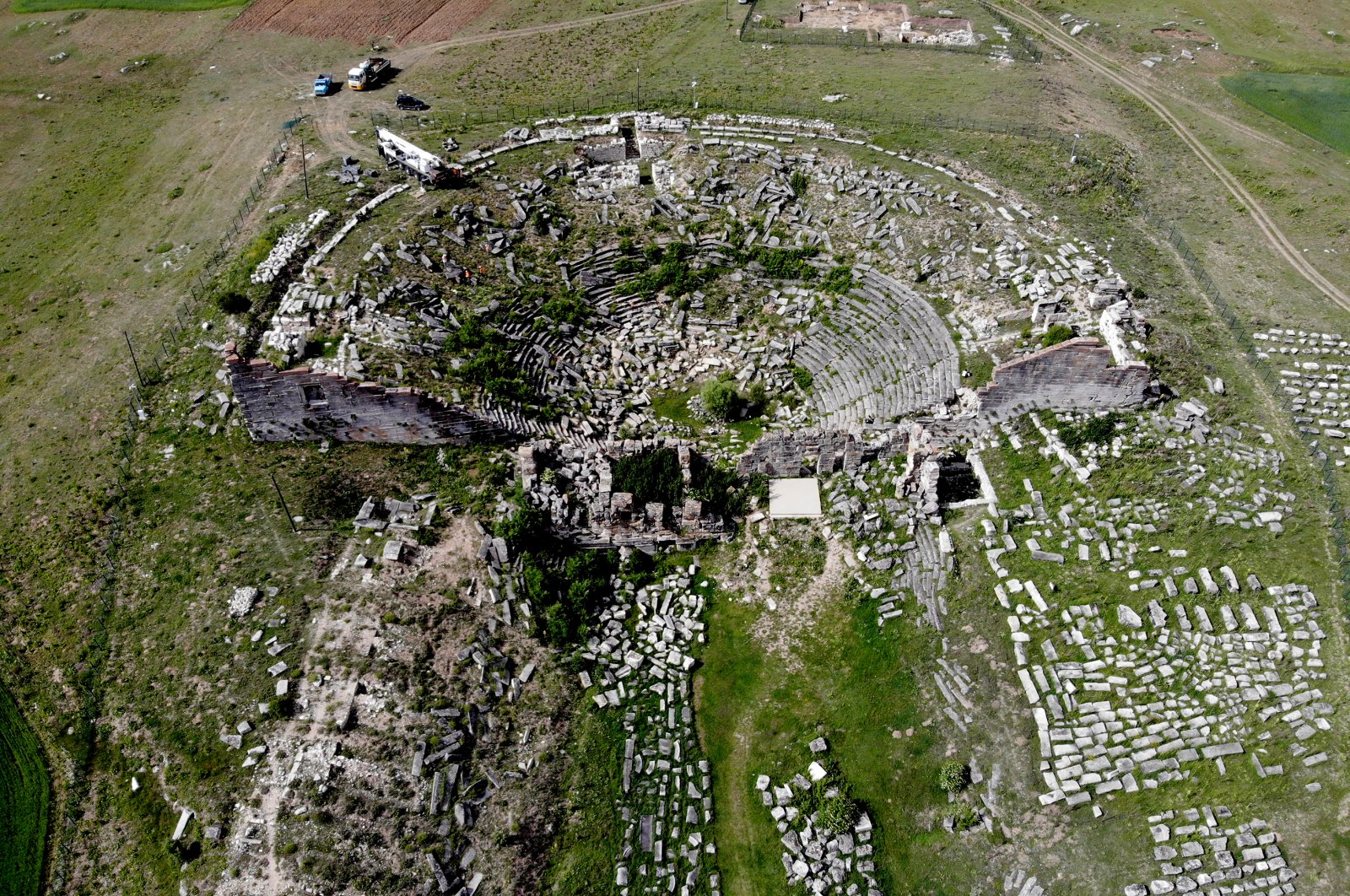
Archaeologists began restoration work on the ancient city of Aizanoi in central Kütahya province's Çavdarhisar district Wednesday. Elif Özer, an archaeology professor at Pamukkale University, told Anadolu Agency (AA) that the team had already begun work at the 5,000-year-old site's theater and stadium.


The archaeological site, where excavation efforts have been ongoing for the last nine years, is home to one of the best-preserved temples in Anatolia dedicated to the chief Olympian god Zeus of ancient Greek mythology. Dubbed as the “Second Ephesus” – another iconic ancient city in Turkey – the site joined the UNESCO World Heritage Tentative List in 2012.

Özer said the Turkish Culture and Tourism Ministry along with a businessman in Kütahya, Rıza Güral, signed a sponsorship protocol for the restoration of the 20,000-person capacity Roman theater and 13,500-person capacity ancient stadium. "We began to work with the support of the governor of Kütahya. With the project set to last about six years, we aim to make this place look like it did in ancient times and attract more tourists to the region," she added.

The project architect, Yalın Pekvar, also pointed out that natural disasters like earthquakes and landslides had damaged the ancient theater and stadium. Located 57 kilometers (35 miles) from the Kütahya city center, the ancient site "experienced its golden age in the second and third centuries A.D. and became the center of the episcopacy in the Byzantine era," according to the Turkish Culture and Tourism Ministry's website.

Recent excavations around the Temple of Zeus indicate the existence of several levels of settlement in the city dating from as far back as 3000 B.C. In 133 B.C. it was captured by the Roman Empire. In 1824, European travelers rediscovered the ancient site.

Between 1970 and 2011 the German Archaeological Institute conducted excavation work, unearthing the theater and a stadium, as well as two public baths, a gymnasium, five bridges, a trading building, necropolises and the sacred cave of Metre Steune – a cultist site thought to be used prior to the first century B.C.

Since 2011, Turkish archaeologists have been carrying out restoration work at the ancient site.
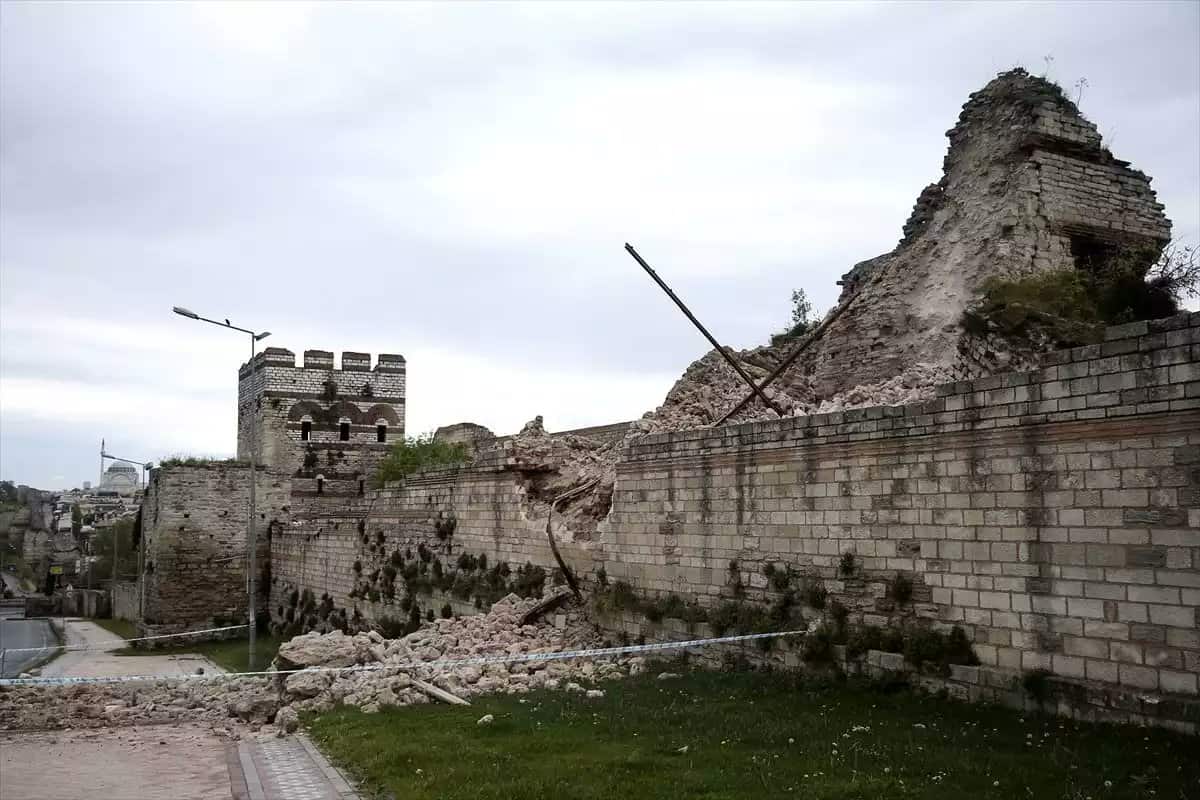
A part of the Greek-built Byzantine wall on Sulukule Street in the Topkapı neighbourhood of Constantinople, has fallen. Reports state that police and firefighters attended the scene. While there were no dead or injured in the incident, police inspected around the area where the crash occurred.


The Theodosian Walls (Tεῖχος Θεοδοσιακόν), were built in the 5th century, meaning they are over 1,500 years old. Despite the historic value, Turkey has made little efforts to restore and preserve them.

Turkey has a long history of letting the rich history it inherited when it invaded the Byzantine Empire ruin, in the hope of removing most traces of Greek civilisation that is not of financial value, like the Hagia Sophia Cathedral that is the second most visited site in Turkey.

The collapse of the wall comes as the Hagia Sophia Church in Pontus on Turkey’s eastern Black Sea coast, which first turned into a museum and then later a mosque, is now being buried in concrete and ancient hagiographies covered, as reported by Greek City Times yesterday.

The Hagia Sophia Church was built in 1250. After its conversion into a mosque in 2013, 800-year-old hagiographies were covered and some of them even destroyed.

Meanwhile, the famous Hagia Sophia Church in Constantinople is also falling into disrepair as Turkish authorities even refuse to give the ancient cathedral a new coat of paint. So long as it remains of touristic value, a minimum of restoration will be made to the cathedral to appease international visitors.
Archaeologists from the Oriental Institute have discovered a lost ancient kingdom dating to 1400 BC to 600 BC, which may have defeated Phrygia, the kingdom ruled by King Midas, in battle.


University of Chicago scholars and students were surveying a site with Turkish and British colleagues last summer in southern Turkey called Turkmen-Karahoyuk, when a local farmer told them he'd seen a big stone with strange inscriptions while dredging a nearby irrigation canal the previous winter. Asst. Prof. James Osborne of the OI, one of the foremost centers of research on the ancient world, said:

"We rushed straight there, and we could see it still sticking out of the water, so we jumped right down into the canal—up to our waists wading around. Right away it was clear it was ancient, and we recognized the script it was written in: Luwian, the language used in the Bronze and Iron ages in the area."

Translated by OI scholars, the pronouncement boasted of defeating Phrygia, the kingdom ruled by King Midas, legendary ancient ruler said to have a golden touch.

Osborne, an archaeologist who specializes in examining the expression of political authority in Iron Age cities, said it appears the city at its height covered about 300 acres, which would make it one of the largest ancient cities of Bronze and Iron Age Turkey. They don't yet know what the kingdom was called, but Osborne said its discovery is revolutionary news in the field.

"We had no idea about this kingdom. In a flash, we had profound new information on the Bronze Age Middle East."

Working under the Konya Regional Archaeological Survey Project, Osborne and UChicago students were mapping the site as part of the Turkmen-Karahoyuk Intensive Survey Project, located in an area littered with other famous ancient cities. Just by walking around the site's surface, they collected bits of broken pottery from three thousand years of habitation at the site—a rich and promising find—until the farmer's chance visit pointed them to the stone block known as a stele.

Osborne immediately identified a special hieroglyphic marking that symbolized the message came from a king. The farmer helped pull the massively heavy stone stele out of the irrigation canal with a tractor. From there it went to the local Turkish museum, where it was cleaned, photographed and readied for translation.

The hieroglyphs were written in Luwian, one of the oldest branches of the Indo-European languages. A unique language written in hieroglyphic signs native to the Turkish area, Luwian is read alternating between right to left and left to right.

While Osborne isn't an expert in reading the Luwian language, luckily he works down the hall from two of the foremost experts in the world on Luwian: OI colleagues Petra Goedegebuure and Theo P.J. van den Hout—editors of the Chicago Hittite Dictionary.

Their translation revealed that the stele king was called Hartapu, and Turkmen-Karahoyuk was probably his capital city. The stone tells the tale of King Hartapu's conquest of the nearby kingdom of Muska, better known as Phrygia—home to King Midas. "The storm gods delivered the [opposing] kings to his majesty," the stone read.

The OI's linguistic analysis suggested the stele was composed in the late-eighth-century B.C., which lines up with the time that Midas ruled.

It answers a long-standing mystery, though; not quite 10 miles to the south is a volcano with a well-known inscription in hieroglyphics. It refers to a King Hartapu, but no one knew who he was—or what kingdom he ruled.

Following a longstanding tradition of OI research in the area, Osborne is already planning the next site visit, hoping to complete the survey this summer.

"Inside this mound are going to be palaces, monuments, houses. This stele was a marvelous, incredibly lucky find—but it's just the beginning."

Osborne worked with colleagues Michele Massa with the British Institute at Ankara, Fatma Sahin with Cukurova University, and Christoph Bacchuber with Oxford University of the Konya Regional Archaeological Survey Project to explore and survey the site.
A magnificent Greek mosaic discovered in Hatay, Turkey continues to amaze archaeologists and historians who are attempting to ascertain the exact meaning of its images and inscriptions.


The floor mosaic, which was found in Hatay province, located on the Turkish-Syrian border, is divided into three parts, with two images complete and in nearly perfect condition. The third section is mostly destroyed, but its meaning has nevertheless been deciphered by archaeologists and historians.

The mosaic, which is likely from the 3rd century BC, is believed to have served as an elaborate centerpiece of a floor located in the dining room of a wealthy man’s home.

The first from the left, and the image which by far is the most discussed among experts, shows a skeleton lying down and enjoying a pitcher of wine and a loaf of bread alongside him. Above him, the Ancient Greek text reads: “Be cheerful, enjoy your life” (“ΕΥΦΡΟΣΥΝΟΣ”).

In the middle scene, there is a sundial and a clothed man running toward it with a barefoot servant behind him. The sundial shows a time between 9 p.m. and 10 p.m. The inscription on one side reads that the man is late for supper and on the other side there is a mention of the time (“ΠΕΧΕΔΙΠΝΟΣ-ΑΚΑΙΡΟΣ”).

All that remains of the third mosaic scene is the head and arms of a servant carrying a flame. According to experts, this represents the heating of water for the master’s bath before supper. The bath and supper were two of the most important parts of daily life during Greek and Roman times.

However, some other historians and archaeologists express a different opinion on the meaning of the depiction of the skeleton.

If the sequence of the three pictures is read from right to left, the man who rushes to eat and drink (meaning he places great importance on food and wine) is likely rushing to an earlier death — hence the image in the third picture is a skeleton.

The Hatay region is known for its numerous discoveries of Greek and Roman-era mosaics.

According to archaeologists, this particular mosaic most likely dates back to the third century BC, and is an artifact from the ancient Greek and Roman city Antioch, established in the end of the fourth century BC.

Antioch was founded by Seleucus I Nicator, one of the generals under Alexander the Great. The city’s geographic location was important in the spice trade as well. It also served as a stop along the famed Silk Road and the Royal Road.

The city of Antioch flourished for so long because of its great military strength as well, eventually rivaling Alexandria as the chief city of the Near East. The city served as the capital of the Seleucid Empire until 63 BC, when the Romans took control of the area.
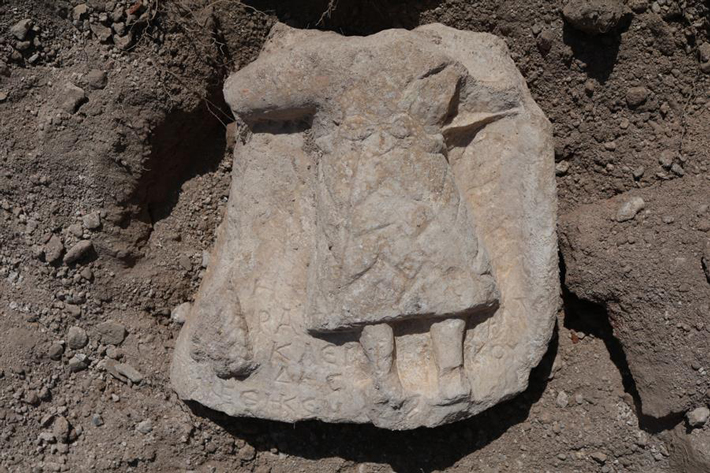
Hurriyet Daily News reports that a slab of limestone thought to have been engraved some 1,800 years ago has been unearthed at the site of Hadrianopolis in northern Turkey. She may depict Demeter.


Ersin Çelikbaş of Karabük University said the woman shown in the carving is wearing a traditional dress, a snake-shaped belt, and is holding ears of wheat. The inscription on the slab reads,

"Herakleides, son of Glaukos, presented this." 

The excavation of the ancient city has also uncovered two public baths, two churches, defensive structures, a theater, and villas. The churches feature mosaic floors with images of a bull, a lion, two peacocks, horses, elephants, griffins, and deer.
An ancient theatre in what was formerly the Hellenic city of Smyrna (Turkish İzmir), built during the Hellenistic period, is currently being excavated by a team from Dokuz Eylül University (DEU).


The excavations have reportedly unearthed sections of the cavea (ie. the semi-circular bank of seating) resting on the slopes of Mount Pagos (Kadifekale today).

Speaking to state-run Anadolu Agency, the head of the excavations, Akın Ersoy, who is also an associate professor of archaeology, said Smyrna had a history of 8,000 years and the latest chain of the history was on the slopes between the Agora and Mount Pagos.

He said the construction of the theatre, perched on a rocky hill with a magnificent view of the city, had started in 3rd century BC and was used for some 700 years, when it was abandoned in the 4th century.

"We started excavations in 2012. Theatre excavations are troublesome because both filling levels are too high and a significant amount of blocks were used in the construction of this monumental structure. We have reached the rows of seats during excavations after 1,500 years. Some of the walls had already been reached during the clearing of houses. Next year we hope that we will reach the orchestra pit, which is one of the most important parts of theatre structures."
Pithos burials have been discovered in the ancient city of Antandros, on the skirts of the Kaz Mountains, in the western province of Balikesir’s Edremit district, a Hurriyet Daily News report says.


Pithos are big vessels mainly made of clay used by ancients to store olive oil and other agricultural products. They were also used as graves in the particular region since the sixth century. Locals call them “cubic tombs.”

Professor Gurcan Polat, Ege University Archaeology Department academic and head of the Antandros excavations, told Hurriyet that the Antandros necropolis served from the eighth century BC to the first century AD. Pithos was among the burial types discovered in the area, he said.

"We have found two pithos burials used by the Greeks. Pithos burials are big potteries used to preserve the dead before inhumation and cremation. But none of them were made to be used as graves. They are normally used for storage. But they were used as graves from time to time."

Polat said pithos burials begun to be used in the middle of the sixth century BC.

"They were sometimes used as family burials. Two or three members of the same family were buried in these cubes. In one of these burials, we found the skeleton of a dog. I think a local of Antandros loved his dog so much and found this cube when trying to find a place for its body."
Yesterday's post about the discovery of the burial site of a female warrior in the Ukraine reminded me that it's easy to forget that ancient Hellas and modern Greece are not the same things, where it comes to the size of the nation. Ancient Hellas stretched out across large parts of Europe and it's good to keep that in mind. Turkey, especially, was a hub of activity in ancient Hellas. I'd like to share with you the top four Hellenic treasures in the country today.


TROY
Since Homer’s epic “Iliad”, Troy has become the staff of legend and source of artistic inspiration for millennia. Although a mythical place for many, it is actually a historical place, located on the mound of Hisarlik in modern north-west Turkey.

The excavation of the site is attributed to German entrepreneur Heinrich Schliemann, who began work there in the 1870s. With over 4,000 years of history as a connection point between Eastern and Western civilizations, Troy was named a World Heritage Site in 1998.


EPHESUS
Close to modern Selcuk in the Izmir province of western Turkey lies the port city of Ephesus, a remarkably well-preserved paragon of Greek, Roman and early Christian culture, inhabited since the 10th century BC. The Temple of Artemis that belongs to the Classical Greek era is one of the Seven Wonders of the Ancient World. The Library of Celsus is a Roman addition, and was designed to serve as a mausoleum for Senator Celsus, who is buried in the crypt below.


ANTIOCH OF PISIDIA
The city was founded in the Hellenistic period by Antiochus I Soter from the Seleucid dynasty, or possibly even earlier, by his father, Seleucus. The name “Antioch” was often used by Antiochus I when founding new settlements and renaming the already existing towns. He founded as many as 16 new Antiochs in Asia Minor and the Middle East.

The term “Pisidian” is frequently added to its name, to distinguish this particular city from other Antiochs. It is not entirely correct since Antioch is located on the border between the ancient Phrygia and Pisidia. Its location is better reflected by its Latin name – “Antioch ad Pisidiam” meaning Antioch [located] in the direction of Pisidia.


MILETUS
Miletus in western Anatolia was one of the most important cities of Ionia. It is located near the mouth of the Meander River in ancient Caria. Today the nearest village is Yenikoy. The archaeological site and the local museum with findings from Miletus, Didyma, Priene and Myous are a must, and so is the theater. Excavations in Miletus started by French archaeologists in 1868, while significant research has been carried out since 1899 under the auspices of the German Archaeological Institute.

Over the weekend, six ancient Hellenic statues dating back some 2,000 years were discovered during excavations at the ancient Hellenic city of Magnesia, which is located in the current-day Aydin province of Turkey.

The statues, four depicting females, one depicting a male and one with its gender unknown, were found intact and in good condition. They were discovered face-down in the ruins of a temple dedicated to Artemis.

The excavations at the ancient Helleniccity of Magnesia have been ongoing since 1984.
Thus far, more than 50 statues have been unearthed at the site and excavations are set to continue at the site.

When more information becomes available, I'll let you know.