Like the Pentagram of Wicca and Witchcraft, and the Mjölnir of Asatru, Hellenismos has its own symbols. Symbols are used for a couple of reasons; identification, for one. When I see someone wearing a pentagram, I almost automatically assume they are Pagan, for example.
Although the chances of running into another Hellenic Recon are slim here in the Netherlands, I am invested in the symbols of Hellenismos none the less. But what are they?
Besides the obvious representations of the Theoi, there are a few, but we'll look into the Theoi first. Most Hellenic Gods and Goddesses are associated with a specific animal or item. Wearing Their favored symbols on a necklace of bracelet is a good way to feel closer to Them. From myth, this is a (non-exhaustive) list of the Theoi and their favored animals.
Amphitrite: Dolphin, Seal, fish
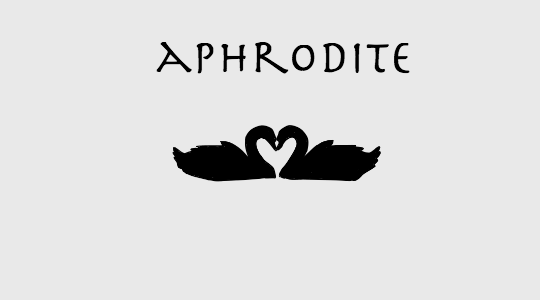
Aphrodite: Dove, Sparrow, Swan, Myrtle
Apollon: Crow, Dolphin, Laurel, Lyre
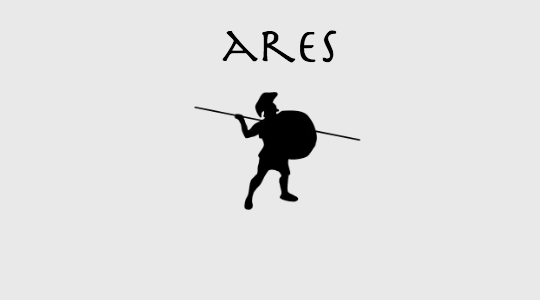
Ares: Vulture, Dog
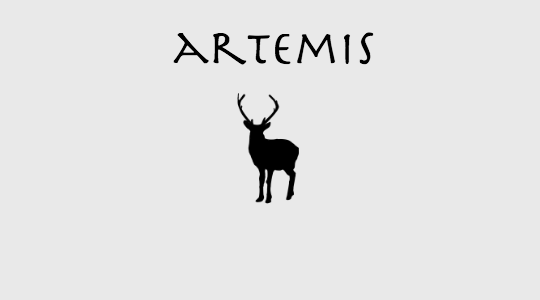
Artemis: Stag, Moon, Cypress, Rabbit
Athena: Owl, Shield, and Olive Branch
Demeter: Horse and Swine
Dionysos: Leopard, Lynx, Serpeant, Bull, Goat, Donkey and Dolphin
Eros: Hare
Hades: Helmet, Metals, Jewels, Screech Owl
Helios: Rooster and white Horse
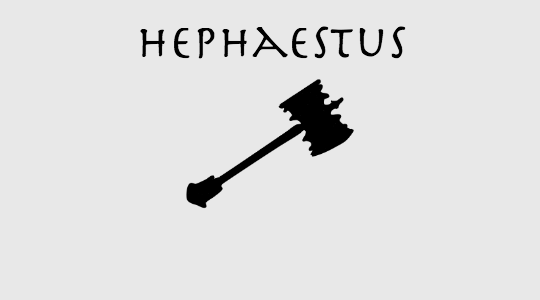
Hēphaistos: Fire, Blacksmith’s Hammer, Anvil
Hera: Peacock, Cow
Herakles: Lion
Hermes: Wand, Winged Sandals, Winged Helmet
Hestia: Fire, Swine
Pan: Goat, Sheep, Deer
Persephone: Screech Owl, Baby Chick, Hare
Poseidon: Trident, Horse, Bull
Psyche: Butterfly
Rhea: Lion
Zeus: Eagle, Aegis, Swan, Thunderbolt
As for the Hellenic Tradition itself, it doesn't have a universal one (yet). The ancient Hellenes never had one, so there are some in Hellenismos that vehemently refuse to adopt a symbol. Of course, back in the day, there was no alternative religion and there were no other Gods to worship. Symbols are used to differentiate and thus, I feel we need one. While the discussion goes on, there are a couple of symbols that could be used to represent Hellenismos. In the running are: the laurel wreath, the lightning bolt, the kithara, the cadaceus, the 'phi' symbol and the dodecagram.
The (Laurel) Wreath:
The wreath, which is already used by a number of Hellenic organization, has a strong link to Hellenic practice in ancient Hellas. For one, wreaths were often prices for winning a match, race or other sporting event. The
Olympics, for instance. Especially wreaths designed with twelve sets of leaves, one for each major Olympic God(dess) would serve the purpose well. Unfortunately, a wreath is hard to draw, making it a less fortunate choice for a symbol.
The Lightning Bolt:
It's the quintessential weapon of Zeus, and everyone with a cursory knowledge of Hellenic mythology will instantly recall the King of the Gods and His lightning bolts. While there is--obviously--a lot more to hellenic mythology than Zeus, a religion that includes Him would benefit greatly from a symbol that represents the head of said pantheon. It's an easy symbol to draw, possible to find, and already used in a multitude of logos for Hellenistic organizations. Downside: it reminds us mostly of Zeus, not the rest of the pantheon. For some, it may also have some Christian undertones.

The Kithara:
The Kithara is an ancient Greek instrument in the Lyre family. In mythology, it was gifted to Apollon by Hermes. Apollon used it to bring music into the world and thus it represents the bridge between the Theoi and us mortals. Because it was used by many mythological heroes (
Orpheus amongst them) and many famous Hellens, it's a good, solid, symbol which isn't that hard to draw. The only problem is that it isn't connected directly to all the Theoi, which means it lacks a bit in the one thing it's supposed to do: represent the whole of the religion.
 The Caduceus:
The caduceus suffers from the same drawback the kithara does: it represents only a small sampling of the Gods, in this case Hermes and, perhaps, Iris. Now, Hermes was everywhere, so it isn't that bad a symbol. Still, most of the Gods don't have anything to do with the caduceus. Personally, I'm not a fan of this symbol because it's easy to confuse it with the Rod of Asklepius, which has only one snake and no wings, and is a medical symbol.
 Phi:
Phi:
It's easy to draw, it's Greek and it is linked to mathematical and philosophical scholarly works. Phi is a universal symbol of the educated mind. The adoption of the symbol within Hellenismos is not that odd. Still, for many, any Greek letter of the alphabet brings associations of frat houses and college years. It's a possibility, though.
 The Dodecagram:
The dodecagram, or twelve pointed star, is one of the more widespread symbols of Hellenismos. The twelve points represent the twelve Olympic Gods and thus the symbol serves its purpose as a dedicational symbol well. Another version of this symbol is the
Star of Vergina, a symbol with sixteen points. The Star was used in ancient Hellas (Macedonia, mostly) and is still part of the
Macedonian flag today. Because of this association, the Star does not have my preference, but I'm a great fan of the dodecagram.
These are the main contestants in the race to win the honor of becoming the symbol of Hellenismos. My preference, obviously, lies with the dodecagram. I suspect, though, that what will decide the battle is the availability of the symbol. I would love to find a dodecagram to wear, but you can't order it anywhere, not even online. This means that I (and all Hellenics with me) would have to find someone who can make one, or make one themselves. That's not going to happen. I suspect that a lightning bolt, a phi symbol, or even the Caduceus, is much easier to find, making it a lot more tempting to adopt those.
I will remain on the look-out for a dodecagram to wear. I hope to run across one as soon as possible, but we'll see if that is going to happen. Out of all these, which one has your favor? Why? Do you have others you would like to suggest? I am all ears!