Showing posts with label Xenia. Show all posts

It's the season of gift-giving! Even while socially distanced, this is possible, and of course encouraged. Who doesn't like gifts? And spreading some joy? Order online and have it delivered, or drop gifts off at the door. Why not buy someone a subscription to a service they might enjoy? Options galore! But where does the practice come from and is it important in Hellenism?

Giving gifts to friends, family members, or even acquaintances and complete strangers is a long standing tradition. It existed long before ancient Hellas, but was, indeed, a vital part of its culture. It was tied to both kharis and xenia. Gifts were exchanged between monarchs of city-states to create good will, and were thus an important part of diplomacy. All votives, thank-offerings, and pinakes were gifts from mortals to Theoi. Athletic competitions always concluded with a price--a gift--awarded to the winner. Gifts were given to the submissive partner in a pederastic relationship, and to favored prostitutes and serfs. Gifts played a much more significant role in ancient Hellenic society as a whole than they do in ours today. The giving of gifts in ancient Hellas was not just a social event, however. There was far more to the practice than one might assume, and today, we will look at the tradition of gift giving in greater detail.
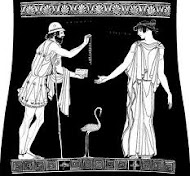

I have spoken of the importance of gifts in xenia before. A gift given as part of ritual hospitality was called a xenion (ξεινήιον). This xenion was expected to be expensive, and was presented to the guest upon departure. Needless to say, this practice was mostly executed by nobility, or at least the elite, and happened mostly when a man of equal social standing from another nation or city-state came to visit. In the Odysseia, Telemachos, son of Odysseus, receives from Menelaus a cup made by Hēphaistos Himself:

"But stay here in the palace, till the eleventh or the twelfth day, and I will send you off with honours, and fine gifts, a shining chariot with a trio of horses, and a glorious cup with which to pour libations to the deathless gods, while remembering me all your days."

The practice of gift giving to someone of another nation whom you might never see again, might seem counter-intuitive, but it's actually quite the opposite. By presenting a foreign equal with a great gift, not only do you establish kharis between the two of you, you also indebt the other person to you: they can not repay your kindness at this time, but they will compensate you for it when you visit, or when you are in need. On top of that, the recieving party will go home with tales of your hospitality, and your wealth, providing a boost in stature to the family and the land. It increases the honor of both, something very important to the ancient Hellenes. Gifts, in this context, functioned as a means of communication, legitimization, and mediation between benefactors and cities.

Beyond the elite, gift-giving was still very important, especially between men. The practice was a feature of the symposion, where it was displayed between men in a pederastic relationship, as well as between men of equal standing. Pederasty was where a mature male would take a young boy as his pupil and lover. The relationship was not about love: it was a social construct that allowed to boy time to get to know influential men, and to work himself up into their ranks. Because of this, there were many ritual acts connected to the practice, amongst which the giving of gifts, from mentor to pupil. Three gifts were traditional: military attire, an ox, and a drinking cup, but the youth most certainly received more expensive gifts.

One of the places the young lover would have been taken was the symposion. By allowing the young boy into the symposion it enabled the adults to prepare them for adult life and war in particular. Once the boys grew up, they became one of the men, taking young boys as lovers themselves, and teaching them the ropes of adult malehood. Gift giving in this context allows for a community to become closer, and for a young boy to prepare for his life as a man. Giving gifts--to their young lovers, as well as to those of equal age and standing--allowed men to teach the importance of equal distribution and redistribution of wealth, which was a founding factor of (mostly Athenian) society. It was also a status symbol: if one had time to visit the symposia, and give expensive gifts, they were not only citizens, but wealthy citizens, a clear mark that they were fit for greater responsibility within the political landscape of the city.

Most of these examples are from wealthy city-states like Athens, but there is evidence of gift-giving in other city-states as well. Sparta, for example, greatly frowned upon the flaunting of wealth, but they, too, gave gifts. These, however, were mostly practical in nature between the citizens themselves--fresh game, honey, perhaps a hunting dog--and were honors bestowed upon the person in the case of big events, or an a-symmetrical relationship. A Spartan winner of important sporting events, for example, would be allowed a place in the royal guard of the King, where Athenian winners would be set up for life, including food, housing, and status.

Another form of gift-giving was from a wealthy citizen to the community. This practice was dubbed 'Euergetism', from the Hellenic 'εὐεργετέω': 'I do good things'. While the money spent this way was, indeed a voluntary action on the part of the citizen, he was socially obligated to participate in the practice. Many roads and public buildings were funded this way, and thus bore the name of the citizen that had donated the funds--something we find archeological evidence for to this day.

Gift giving was of vital importance in the Archaic and Early Classical times, most notably in a social, ethical, economic, and political context. In the Classical period--which witnessed the development of elaborate monetary and law systems--the giving of gifts, and the associated benefits, became less prominent in economic and political contexts, though it did remain central in social and religious systems. Gift-giving and reciprocity did return to the Athenian stage, however, in the Hellenistic age, when much of the previously described took place.

Gift giving was of unparalleled important to the ancient Hellenes, but has lost much of its standing today. For those who reconstruct the ancient Hellenic religion, it might be a good exercise to examine these practices, and implement a symbolic exchange. Lavish gifts would not be necessary, but a parting gift by the host on days then the group comes together might make a nice, ritualistic, reminder that the contributions of the group were welcomed, and the effort to travel to the meeting place recognized--after the pandemic, of course!

This Christmas, we'll do door drop-offs with the family and then we're all meeting on Zoom from the safety of our own homes to unwrap the gifts we've gotten and read the poems we write along with them out loud to one another. You make do in a pandemic! 

Stay safe this season and stay smart. It's just one Christmas, the risks are not worth it.

Image taken from: Sparta Reconsidered
'If you are a stranger, act like one' is a Delphic Maxim that can be interpreted in many, many ways. I'm going to try to cover all the angles, but I am sure your interpretation of this maxim will be slightly different than mine, regardless. 

Traveling in ancient Hellas was not done on a whim. Most people stayed at home, or at least near their city or village, unless work or emergency called them away. The road could be a treacherous place, and the sea even more so. Family tended to stay close together, so people rarely had to travel out to visit parents or other loved ones. While there were mot certainly reasons to visit or move to other city states, a lot of people in ancient Hellas never had to, so why the maxim?

As I have written before, ancient Hellenic society was notoriously strict about who was part of it and who was not. If you were not a citizen, you were either a doûlos--slave--or a métoikos, more commonly referred to as 'metic'. All three classes had their parts to play in Classical Hellas. Métoikos were citizens of other Hellenic cities and beyond who came to Athens because of the unique opportunities the metropolis offered.

In ancient Athens, métiokos, while welcomed, were disadvantaged from the get-go. They had to register their status within a month of arrival. They had no political influence, were not entitled to governmental aid in case of emergencies, the could own no farm land or real estate unless they were given special permission by the government, and they were not allowed to procure a contract with the government to work the mines. They were, however, expected to enter the army, and pay taxes if they were wealth enough, like citizens. On top of that, they also had to pay a métoikos poll tax--the metoikon--which was twelve drachmas ($ 720,-) a year for men and six for women, as well as another special tax--xenikon telos--if they wanted to set up a stall in the market place.

Métiokos did have access to the judicial system; they could both prosecute others and be prosecuted themselves. Unlike citizens and very much like slaves, métiokos were not allowed to represent themselves; they needed a citizen to vouch for them--a sponsor, called prostates. Métiokos were entitled to take part in religious ceremony. Like slaves but unlike citizens, métiokos could be made to undergo judicial torture. The penalties for killing a métiokos were not as severe as for killing a citizen.

While citizens, métiokos and doûlos were indistinguishable in appearance and behavior, society functioned largely on their separation. Only Corinth and Athens had large populations of métoikos, but all city states had rules concerning their legal, religious, and societal status. Athens had the most lenient ones, but it was still easy for a métoikos to step out of line, and that could easily lead to a life of slavery. As such, knowing to 'act like a stranger' was a vital piece of knowledge for anyone choosing to visit or live in a city that was not the one he was born in. As such, the maxim in this regard does not so much allude to attitude, but awareness: a constant sense of knowing your place, even if you lived in a city for many years. You, as a métoikos, had a role to fulfill, and clear lines which not to cross. As such, specific behavior was asked of you, and you had to be familiar with these rules.

A second interpretation is related to xenia. Hospitality in ancient Hellenic was a complicated ritual within both the host and the guest has certain roles to fill and tasks to perform. Especially when someone unknown to the host came to the door, the ritual held great value. The host has many tasks in his process, but the guest has an important part to play as well: the guest is expected to be courteous and not be a burden to the host. The house was a sanctuary in ancient Hellas with a lot of social rules attached to it. Guests could not enter certain parts of the house, and male guests were kept away from women at all times. Long term guests had a slightly different statues, as they became part of the oikos, but they were still subject to restrictions when it came to social an religious behavior. Again, the maxim would have reminded guests to be mindful of their hosts and to be grateful to be included in the oikos of another.

The last point from ancient Hellas I want to make is religious. Métoikos and houseguests were almost always passive participants of religious rites. In the oikos, the kurios performed the rites, and in state festivals, Archons and priests performed that function. Métoikos were barred from attending a number of festivals. That said, the way Hellenic ritual structure worked, meant that even visitors of a city would recognize what was going on, and they would be able to partake of the rite fairly easily. There were undoubtedly differences between city states, but the basics were always there. This meant that rituals did not have to be adjusted for métoikos, and kharis would be preserved. In this spirit, I still call for standardization of practices within modern Hellenismos.

In a modern context, acting like a stranger, when you are one, means to be an attentive guest, to not overstay your welcome, to follow the rules of the house you are in and to ask for clarification if you are not sure what the host expects of you. It means investing time and energy into getting to know the place and people you are visiting, and to observe that this place and these people are not there to serve you: you are a guest, and as such, it is your place to follow their lead. To me, this maxim calls for modesty and attentiveness, and those are not bad virtues to foster within yourself. 
I am swamped, so I am going to repost an old post that new readers most likely have never read as it was published in 2012. I'm going to tackle a good old fashioned ancient Hellenic topic; the peculiar place of beggars in ancient Hellenic society. After all, of all professions there were in ancient Hellas, the profession of beggar is, perhaps, the most difficult to understand.

A beggar, or ptóchos (πτωχός), was both a welcomed and a loathed sight at the gates of ancient Hellenic cities. According to some sources, most notable Hesiod's Works and Days, being a beggar is a profession, equated with potters and minstrels. They performed a public function simply by being who they were and doing what they did. But what did they do?

In Hómēros' Odysseia, Odysseus is dressed as a beggar when he heads home, so his wife's suitors won't kill him on sight. He then runs into Antinous, one of the least noble of all of Penelope's suitors who tells him and his guide Eumaeus:

" ‘Eumaeus, the famous, why on earth did you drag this fellow here? Haven’t we vagrants enough already, beggarly nuisances to ruin our feasts? Isn’t it enough for you that they all crowd in here, swallowing your master’s stores, without you inviting this wretch too?’

Eumaeus, the swineherd, you answered him then: ‘Antinous, noble as you are your words sound ill. Who searches out foreigners himself, and invites them home, unless they are masters of some universal art: a seer, or physician, or architect, or perhaps a divine minstrel who delights men with song? Such men are welcome throughout the boundless earth, but no one would invite a burdensome beggar. You are the harshest Suitor where Odysseus’ servants are concerned, harshest of all to me: but I don’t care as long as loyal Penelope, my lady, and godlike Telemachus live here.’ "

Eumaeus seems to indicate that a beggar is not sought out and brought into a home. That, however, does not mean that being a beggar is not a profession. But what function did beggars fulfill in society? Why would he be welcomed in the house? They take food and drink, smell foul and generally don't keep their mouth shut. Yet, beggars were welcomed into a home. Most were glad to have them. This, of course, ties in heavily with Xenia; ritual hospitality. I wrote before about beggars in relation to Xenia but focussed only on the many occurrences in myth where Gods and Goddesses disguised themselves as beggars to test their hosts. Besides that, any wanderer, beggars included, are protected by Zeus Xenios.

There is a very specific ritual surrounding beggars who come to the home. The Odysseia is very clear about the role of both kurios and beggar and most likely reflects actual practice. Lets look at this ritual, step by step:
  • The beggar comes to the house, wearing the mandatory beggars' outfit (rags, staff and a beggars bag) and sets himself down against the doorpost, rubbing his shoulders against it to indicate discomfort while he waits to be acknowledged.
  • The kurios comes to to the door to offer the beggar a share of his food.
  • If a feast is held, the beggar is then encouraged to go from person to person to beg for more.
  • The beggar thanks the kurios and begs to plead to Zeus Xenios about the kindness bestowed upon him by the kurios and does so, asking for prosperity for the household and kind viewing of the kurios.
  • The beggar then visits the tables, asking for food. He receives his share but continually begs for more, until the guests are angered into striking the beggar or throwing objects at him.
  • The beggar takes this abuse and meanwhile accepts the food gifted to him. When he has made his rounds and his beggars bag is full, he returns to the doorpost and eats, blessing those who have given freely and cursing those who did not, or who abused him. 
  • Those who did not give him enough or who abused him eventually come to the beggar to offer more to him, usually some of the best meats or sweetest treats, if he will perform a task or tell a story. In most cases, this means beating the other beggars who have showed up for the feast.
  • The beggar accepts the challenge and performs it. He then receives his treats and eats them, taking his blessings from the appeased guests.
  • The beggar then leaves or finds a place to sleep on the property where he will not bother the guests, who will hear no more of him after the sharing of food is done.
The custom is an odd one; beating up a beggar who is a willing participant to the abuse and one who may not strike back. This series of exchanges can be boiled down to a single practice; purification. The beggar becomes a scapegoat to load onto the impurities of the kurios and his guests. He comes in to take not only gifts and abuse but, through them, impurity. When he leaves, the impurity leaves as well. This is also why a beggar is not invited to the home, like Antinous says, but is still a welcome sight at it. Inviting a beggar would be to invite the impurities of others into your home.

Those who have read my blog for a while know the importance of katharmos and the cleansing of miasma in ancient Hellas. The beggar's function was thus two-fold; he ridded the giver of his miasma and even went a step further by asking the Gods--and Zeus Xenios, specifically--to bless the giver. All the giver had to do to receive this blessing was put up with the smell and behavior of the beggar long enough for him to be appeased. Once the sharing of food was over, the beggar caused no more fuss. That said, it was the task of the beggar to eat and drink everything offered to him. Nothing could be saved for later or refused; it was part of his role as purifier to consume everything offered to him--and that was usually a lot.

The life of a beggar was not an easy one and many endured injury during this ritual. All dangers of the road were part of his life, but he served a useful role in society. He was a purifier but also a warning of hubris towards the Gods. Often, beggars shared their life's story, how they had ended up on the streets. Others listened and were reminded of the role of Deity in their lives, and that of fate. They gave freely to appease them and minded their step. Many gave out of sympathy for the beggar, as well. Eumaeus says it best when he allows Odysseus, disguised as a beggar, inside his humble home;

"Stranger, it would be wrong for me to turn a guest away, even one in a worse state than you, since every beggar and stranger is from Zeus, and a gift, though small, from such folk as us is welcome."
Today's post is a repost of a blog I posted near the start of Baring the Aegis. I do this occasionally when I think the post deserves to be read by more people, like this one. It's about the practice of the washing of feet within the context of xenia. It's something I have been curious about ever since I first read the Odysseia. 


When I first read the Odysseia, I was struck by a two of the later passages, where Odysseus is home, but in disguise, waiting to take his revenge on the suiters of his wife Penelope. During these passages, Penelope offers xenia to Odysseus, disguised as beggar.

"But, come, my maids, wash the strangers’ feet and make his bed, with blankets and bright rugs over the bedstead, so he may rest till golden-throned Dawn in warmth and comfort. In the morning early, bathe and oil him, so he is ready to breakfast in the hall, sitting by Telemachus’ side. And if any man vexes him and pains his spirit, so much the worse for that man’s prospects: he’ll gain nothing here, rage as he might."

A little later on, Odysseus has refused the washing of his feet by anyone but Eurykleia, his nursemaid whom is still alive, and living at the house. Penelope agrees to have the old woman wash Odysseus' feet, which she does while she laments the fate of Odysseus:

"Perhaps the women of some great house mocked at him in a far-off foreign land, just as these shameless hussies here mock you, sir.  You will not let them wash your feet, for fear of their insults, but wise Penelope, Icarius’ daughter, knowing my willingness, has asked me to wash them. So I shall wash your feet for Penelope’s sake and yours, while my heart is stirred with sadness. But listen to one thing I must say. Many a long-suffering traveller have we welcomed here, but never a man resembling another as you resemble Odysseus in looks and voice – even your feet.’

Then resourceful Odysseus answered her, saying: ‘That is what everyone says who has met us both, old woman, that we are very alike, as you remark.’

With this, the old woman, preparing to wash his feet, poured cold water into the shining basin then added hot. Odysseus swiftly sat down by the hearth, and turned towards the shadows, though he had a sudden premonition that as she handled him she would notice his scar and the truth would be out. As she approached and began to wash him, so it was: she immediately knew the scar Odysseus had received from a white-tusked boar, while hunting on Parnassus, when visiting his mother’s father, noble Autolycus, the greatest of all in thievery and oath-making.

[...]

It was this scar the old woman felt as she passed her hands over his leg, and recognising it she let his leg fall. The bronze rang as his foot struck the basin, upsetting it, and spilling the water on the ground. Joy and pain filled her heart at the same moment, her eyes filled with tears and her voice caught in her throat. She touched Odysseus’ face and said: ‘It is Odysseus, it must be. Child, I did not know you, until my hands had touched my master’s limbs."

Ancient evidence suggests there were three major contexts in which foot-washing was important: body hygiene, xenia, and religion. The first is easy to grasp: the ancient Hellenes rarely wore shoes. They tended to travel barefoot, or with light, open sandals. Boots were only for the rich. As roads were unpaved, and often dusty in the dry and hot climate, a traveler's feet tended to get dusty and dirty. Upon arrival at their destination, it was customary--and part of xenia--to offer the traveler a chance to wash their feet. Those with female serfs could offer the service of one of them to have their guest wash the guest's feet for them. In cases where no serfs were present, in case of very special guests--especially those above the host in standing--or between great friends, the host could offer to wash the feet of his guest for them.

Foot-washing was often the chore of female serfs, and was considered lowly work. For the ancient Hellenes, honor was very important. To wash the feet of those below themselves in standing was a breach of societal rules and would most likely be looked upon negatively, or even outright refused. I have found no ancient texts to support this, but I suspect that washing the feet of one of equal standing would be done only between dear friends, perhaps between those who had fought together and saved each other's lives. I suspect that, if this is true, this would extend also to the son(s) of one of the men: the son of the deceased host would extend these honors to the family guest to whom the father was indebted.

At home, washing the feet of elderly family members was considered a form of respect. Aristophanes, in The Wasps (Sphēkes/Σφῆκες ), mentions the pride and joy felt by a rich man when his daughter washes and anoints his feet upon his return from a day of hard work:

"But I am forgetting the most pleasing thing of all. When I return home with my pay, everyone runs to greet me because of my money. First my daughter bathes me, anoints my feet, stoops to kiss me and, while she is calling me "her dearest father," fishes out my triobolus with her tongue; then my little wife comes to wheedle me and brings a nice light cake; she sits beside me and entreats me in a thousand ways, "Do take this now; do have some more." All this delights me hugely." 

Women rarely traveled--if at all--so as far as I can tell, no record of the washing of feet of women, or between women, has survived. I also suspect that this has to do with modesty: in an age where women often went around baring one or two breasts, the ankles and feet were almost always covered up. To bare one's feet--to a man--might have been a sign of seduction. In the rare event of a woman traveling, she would travel with her husband, father, brothers, and/or female serfs. Once arriving at her destination, she would undoubtedly have been allowed and encouraged to wash up and change her clothing. If she had serfs, she would be assisted by them. Else, serfs of the hosting household might have lend a hand, or even the wife of the host. I do wonder if they would ever was the feet of one another.

It seems it was also considered unclean and disrespectful to the Theoi to enter a temple with unwashed feet. Some temples, therefor, offered special basins which a traveler could make use of. It's difficult to find proper information about this, however, because the washing of feet in a religious context is now considered a near-solely Abrahamic thing, and bible quotes are far easier to find than ancient Hellenic texts on the subject. I'm still picking apart Christian and Jewish writings for clues about the Hellenic practice.

I am not sure why this subject interests me so. There is something so very intimate and humbling in the practice; it speaks to me in a way that goes beyond the intellectual. I imagine that having your feet washed upon arrival would make you feel both welcome and respected--as that was what it was, a sign of respect. I would also imagine it would be wonderful to bestow a honor like this to a valued guest. If shared between host and guest--or simply very good friends, or even lovers--it would strengthen the bond between them, and be a wonderful way to practice strong xenia. I think it's a beautiful practice, although not very applicable in modern Hellenismos. Agreements could be made about this, though, like the giving of gifts--another vital part of xenia.
Today we will look into the little talked about practice of the washing of feet within the context of xenia. It's something I have been curious about ever since I first read the Odysseia. 


When I first read the Odysseia, I was struck by a two of the later passages, where Odysseus is home, but in disguise, waiting to take his revenge on the suiters of his wife Penelope. During these passages, Penelope offers xenia to Odysseus, disguised as beggar.

"But, come, my maids, wash the strangers’ feet and make his bed, with blankets and bright rugs over the bedstead, so he may rest till golden-throned Dawn in warmth and comfort. In the morning early, bathe and oil him, so he is ready to breakfast in the hall, sitting by Telemachus’ side. And if any man vexes him and pains his spirit, so much the worse for that man’s prospects: he’ll gain nothing here, rage as he might."

A little later on, Odysseus has refused the washing of his feet by anyone but Eurykleia, his nursemaid whom is still alive, and living at the house. Penelope agrees to have the old woman wash Odysseus' feet, which she does while she laments the fate of Odysseus:

"Perhaps the women of some great house mocked at him in a far-off foreign land, just as these shameless hussies here mock you, sir.  You will not let them wash your feet, for fear of their insults, but wise Penelope, Icarius’ daughter, knowing my willingness, has asked me to wash them. So I shall wash your feet for Penelope’s sake and yours, while my heart is stirred with sadness. But listen to one thing I must say. Many a long-suffering traveller have we welcomed here, but never a man resembling another as you resemble Odysseus in looks and voice – even your feet.’

Then resourceful Odysseus answered her, saying: ‘That is what everyone says who has met us both, old woman, that we are very alike, as you remark.’

With this, the old woman, preparing to wash his feet, poured cold water into the shining basin then added hot. Odysseus swiftly sat down by the hearth, and turned towards the shadows, though he had a sudden premonition that as she handled him she would notice his scar and the truth would be out. As she approached and began to wash him, so it was: she immediately knew the scar Odysseus had received from a white-tusked boar, while hunting on Parnassus, when visiting his mother’s father, noble Autolycus, the greatest of all in thievery and oath-making.

[...]

It was this scar the old woman felt as she passed her hands over his leg, and recognising it she let his leg fall. The bronze rang as his foot struck the basin, upsetting it, and spilling the water on the ground. Joy and pain filled her heart at the same moment, her eyes filled with tears and her voice caught in her throat. She touched Odysseus’ face and said: ‘It is Odysseus, it must be. Child, I did not know you, until my hands had touched my master’s limbs."

Acient evidence suggests there were three major contexts in which foot-washing was important: body hygiene, xenia, and religion. The first is easy to grasp: the ancient Hellenes rarely wore shoes. They tended to travel barefoot, or with light, open sandals. Boots were only for the rich. As roads were unpaved, and often dusty in the dry and hot climate, a traveler's feet tended to get dusty and dirty. Upon arrival at their destination, it was customary--and part of xenia--to offer the traveler a chance to wash their feet. Those with female serfs could offer the service of one of them to have their guest wash the guest's feet for them. In cases where no serfs were precent, in case of very special guests--especially those above the host in standing--or between great friends, the host could offer to wash the feet of his guest for them.

Foot-washing was often the chore of female serfs, and was considered lowly work. For the ancient Hellenes, honor was very important. To wash the feet of those below themselves in standing was a breach of societal rules and would most likely be looked upon negatively, or even outright refused. I have found no ancient texts to support this, but I suspect that washing the feet of one of equal standing would be done only between dear friends, perhaps between those who had fought together and saved each other's lives. I suspect that, if this is true, this would extend also to the son(s) of one of the men: the son of the deceased host would extend these honors to the family guest to whom the father was indebted.

At home, washing the feet of elderly family members was considered a form of respect. Aristophanes, in The Wasps (Sphēkes/Σφῆκες ), mentions the pride and joy felt by a rich man when his daughter washes and anoints his feet upon his return from a day of hard work:

"But I am forgetting the most pleasing thing of all. When I return home with my pay, everyone runs to greet me because of my money. First my daughter bathes me, anoints my feet, stoops to kiss me and, while she is calling me "her dearest father," fishes out my triobolus with her tongue; then my little wife comes to wheedle me and brings a nice light cake; she sits beside me and entreats me in a thousand ways, "Do take this now; do have some more." All this delights me hugely." 

Women rarely traveled--if at all--so as far as I can tell, no record of the washing of feet of women, or between women, has survived. I also suspect that this has to do with modesty: in an age where women often went around baring one or two breasts, the ankles and feet were almost always covered up. To bare one's feet--to a man--might have been a sign of seduction. In the rare event of a woman traveling, she would travel with her husband, father, brothers, and/or female serfs. Once arriving at her destination, she would undoubtedly have been allowed and encouraged to wash up and change her clothing. If she had serfs, she would be assisted by them. Else, serfs of the hosting household might have lend a hand, or even the wife of the host. I do wonder if they would ever was the feet of one another.

It seems it was also considered unclean and disrespectful to the Theoi to enter a temple with unwashed feet. Some temples, therefor, offered special basins which a traveler could make use of. It's difficult to find proper information about this, however, because the washing of feet in a religious context is now considered a near-solely Abrahamic thing, and bible quotes are far easier to find than ancient Hellenic texts on the subject. I'm still picking apart Christian and Jewish writings for clues about the Hellenic practice.

I am not sure why this subject interests me so. There is something so very intimate and humbling in the practice; it speaks to me in a way that goes beyond the intellectual. I imagine that having your feet washed upon arrival would make you feel both welcome and respected--as that was what it was, a sign of respect. I would also imagine it would be wonderful to bestow a honor like this to a valued guest. If shared between host and guest--or simply very good friends, or even lovers--it would strengthen the bond between them, and be a wonderful way to practice strong xenia. I think it's a beautiful practice, although not very applicable in modern Hellenismos. Agreements could be made about this, though, like the giving of gifts--another vital part of xenia.
I have many favourite Hellenic myths and many--if not all--of its many heroes and heroines inspire me. The stories of their many heroic deeds are reminders to do better, be braver, fight harder and aspire to achieve more. And some-inspire us to be kinder.

I am longing for kindness these days. The world is so harsh--people are so harsh. I long for xenia in an age of mistrust and hate. So today I wish to share with you an Hellenic myth far too few people know: the myth of Baukis and Philemon. It was written by Ovid and thus stands on the cusp between Hellenic and Roman, but the spirit of the ancient Hellenis views sparks brightly in it. Read it and be inspired yourself. This is the myth:


On a certain hill in Phrygia stands a linden tree and an oak, enclosed by a low wall. Not far from the spot is a marsh, formerly good habitable land, but now indented with pools, the resort of fen-birds and cormorants. Once on a time Zeus, in human shape, visited this country, and with him his son Hermes, without his wings. They presented themselves, as weary travellers, at many a door, seeking rest and shelter, but found all closed, for it was late, and the inhospitable inhabitants would not rouse themselves to open for their reception.

At last a humble mansion received them, a small thatched cottage, where Baukis, a pious old dame, and her husband Philemon, united when young, had grown old together. Not ashamed of their poverty, they made it endurable by moderate desires and kind dispositions. One need not look there for master or for servant; they two were the whole household, master and servant alike.

When the two heavenly guests crossed the humble threshold, and bowed their heads to pass under the low door, the old man placed a seat, on which Baukis, bustling and attentive, spread a cloth, and begged them to sit down. Then she raked out the coals from the ashes, and kindled up a fire, fed it with leaves and dry bark, and with her scanty breath blew it into a flame. She brought out of a corner split sticks and dry branches, broke them up, and placed them under the small kettle. Her husband collected some pot-herbs in the garden, and she shred them from the stalks, and prepared them for the pot. He reached down with a forked stick a flitch of bacon hanging in the chimney, cut a small piece, and put it in the pot to boil with the herbs, setting away the rest for another time. A beechen bowl was filled with warm water, that their guests might wash. While all was doing, they beguiled the time with conversation.

On the bench designed for the guests was laid a cushion stuffed with sea-weed; and a cloth, only produced on great occasions, but ancient and coarse enough, was spread over that. The old lady, with her apron on, with trembling hand set the table. One leg was shorter than the rest, but a piece of slate put under restored the level. When fixed, she rubbed the table down with some sweet-smelling herbs. Upon it she set some of chaste Athena's olives, some cornel berries preserved in vinegar, and added radishes and cheese, with eggs lightly cooked in the ashes. All were served in earthen dishes, and an earthenware pitcher, with wooden cups, stood beside them. When all was ready, the stew, smoking hot, was set on the table. Some wine, not of the oldest, was added; and for dessert, apples and wild honey; and over and above all, friendly faces, and simple but hearty welcome.

Now while the repast proceeded, the old folks were astonished to see that the wine, as fast as it was poured out, renewed itself in the pitcher, of its own accord. Struck with terror, Baukis and Philemon recognized their heavenly guests, fell on their knees, and with clasped hands implored forgiveness for their poor entertainment. There was an old goose, which they kept as the guardian of their humble cottage; and they bethought them to make this a sacrifice in honour of their guests. But the goose, too nimble, with the aid of feet and wings, for the old folks, eluded their pursuit, and at last took shelter between the gods themselves. They forbade it to be slain; and spoke in these words:

'We are gods. This inhospitable village shall pay the penalty of its impiety; you alone shall go free from the chastisement. Quit your house, and come with us to the top of yonder hill.'

They hastened to obey, and, staff in hand, laboured up the steep ascent. They had reached to within an arrow's flight of the top, when, turning their eyes below, they beheld all the country sunk in a lake, only their own house left standing. While they gazed with wonder at the sight, and lamented the fate of their neighbours, that old house of theirs was changed into a temple. Columns took the place of the corner posts, the thatch grew yellow and appeared a gilded roof, the floors became marble, the doors were enriched with carving and ornaments of old. Then spoke Zeus in benignant accents:

'Excellent old man, and woman worthy of such a husband, speak, tell us your wishes; what favour have you to ask of us?'

Philemon took counsel with Baucis a few moments; then declared to the gods their united wish,

'We ask to be priests and guardians of this your temple; and since here we have passed our lives in love and concord, we wish that one and the same hour may take us both from life, that I may not live to see her grave, nor be laid in my own by her.'

Their prayer was granted. They were the keepers of the temple as long as they lived. When grown very old, as they stood one day before the steps of the sacred edifice, and were telling the story of the place, Baukis saw Philemon begin to put forth leaves, and old Philemon saw Baukis changing in like manner. And now a leafy crown had grown over their heads, while exchanging parting words, as long as they could speak.

'Farewell, dear spouse,' they said, together, and at the same moment the bark closed over their mouths. The Tyanean shepherd still shows the two trees, standing side by side, made out of the two good old people."
There are very few things more important than the basic pillars of Hellenismos. There are also few things harder to grasp. As such, getting questions about katharmos or, as in this case, kharis is not odd to me. This question came through Tumblr. I am going to recycle bits and pieces from older post for this reply.

"Helloo! I haven't been able to find the answer to this question and i really really would like that someone answer..! Did everyone believe in/practice kharis in ancient greece? Like was it common knowledge that a reciprocal relationship with the gods was the right kind or something? Thank you!!"

One of the most important practices within Hellenismos and ancient Hellenic orthopraxy is kharis (xάρις). Kharis is--to give an incredibly limited definition--the act of giving to the Gods so They might give something in return. It's religious reciprocity. It's also so much more.

Kharis is an important word. It means everything from beauty to joy, delight, kindness, good will, grace, favor, benefit, boon, charm, attraction, appeal, elegance, gracefulness, pleasure, cheerfulness, wit, gratitude, thankfulness and gratification. It's the name of a Goddess as well; the Goddess of Grace and Beauty. This seems to complicate matters, but it actually ties in pretty well.

When we, in Hellenismos, petition the Gods for aid, we always do so with an offering. This offering can be incense, a libation, a food offering or anything else. It must be something tangible. Good thoughts and intentions don't count. This offering is given freely, joyfully, with pleasure, out of respect and love for the Gods. We ask what we feel we need--sometimes that's a new job, sometimes just a vague sentiment like honour and prosperity to the household--and never expect to be granted this request. Petitions aren't bribery. We give to the Gods and should They feel inclined to grand us our request, we thank Them by offering to Them again, to which the Gods might respond, to which we will sacrifice, and so on. This circular practice of voluntary giving is called kharis.

Kharis is one of the pillars of Hellenismos, together with xenia and katharmos. Those who practiced kharis properly in ancient Hellas were seen as humble, grateful and good people in general. Kharis is the base of a good few words we use to describe related acts and characteristics to this day; charisma, for instance, and charity. To word it differently; kharis represents your reputation with a specific Deity.

Building a relationship with the Theoi was vital for the ancient Hellenes and it's vital in Hellenismos today. It's the foundation of daily practice, of the large-scale festivals of old, of Xenia, katharmos and the whole of Hellenismos. You can't practice Hellenismos without striving for a reciprocal relationship with the Gods.

Did everyone believe in the practice of kharis...? Well, no one will ever be able to answer that question, but I can tell you that from what we have found out about their society, the huge majority of the ancient Hellenes did, in fact, practice their religion this way. The Theoi were seen as people, as powerful persons who could interfere in your life either positively or negatively. Keeping Them happy was of major importance. It was not just the right thing to do, it was the vital thing to do; it was an extension of xenia--ritual hospitality--linked to Theoxenia. It was a way of living that extended to the Gods, and in reverse, extended from the Gods to humanity.

One of my favourite Hellenic myths shows the link between kharis and xenia in great detail, and also shows that the ancient Hellenes were very aware of the way they related to the Theoi; it's the story of how Baucis and Philemon received some unexpected visitors. You can read a long version of the myth here but it comes down to this: 

"Zeus and His son Hermes descended to earth to test the hospitality of the little town that is home to the elderly couple of Baucis and Philemon, who live in a run down hut a little ways away from the small, rural village. The Gods are dressed as simple travellers, weary from their long journey on foot. They knock on the doors of all of the houses in the village but find no one willing to open the door and take them in. With every house the Gods pass, the anger of the Gods rises, but before They punish this town for their despicable ways, They decide to test the last house in the village as well; the house of Baucis and Philemon. 

It is Philemon who opens the door after the first knock and begs the travellers to enter. The hut is tiny and the two, who have been together for almost all of their long years, have not much to give. Still, the two bustle around the hut to repair enough stools for all to sit, to find enough food for all to eat and, as the night progresses, enough places for all to sleep. Neither Baucis nor Philemon realizes the true nature of their guests until they realize the small jug of wine has not run out, betraying the divinity of their guests.

Both Baucis and Philemon throw themselves down in front of the Gods, begging for forgiveness for such a sorry welcome but the Gods, who have not been offended in the least, beg them to rise and walk out with Them, to the top of the hill. There, Zeus turns to the village and floods the valley completely, killing all residents. He spares the hut that belongs to Baucis and Philemon and even transforms it into a temple. He then asks what favour the pair would want from the Gods, as they have truly deserved one. The pair asks to honour the Gods for their remaining years in the temple created below and ask that, when their dying day comes, that they may go together so they will never be without the other. This, the Gods grant happily."
 
This is how the ancient Hellenes saw religious reciprocity, and their relation to the Gods; it mattered greatly, and truly was a cornerstone of their life--and it should be ours as well.