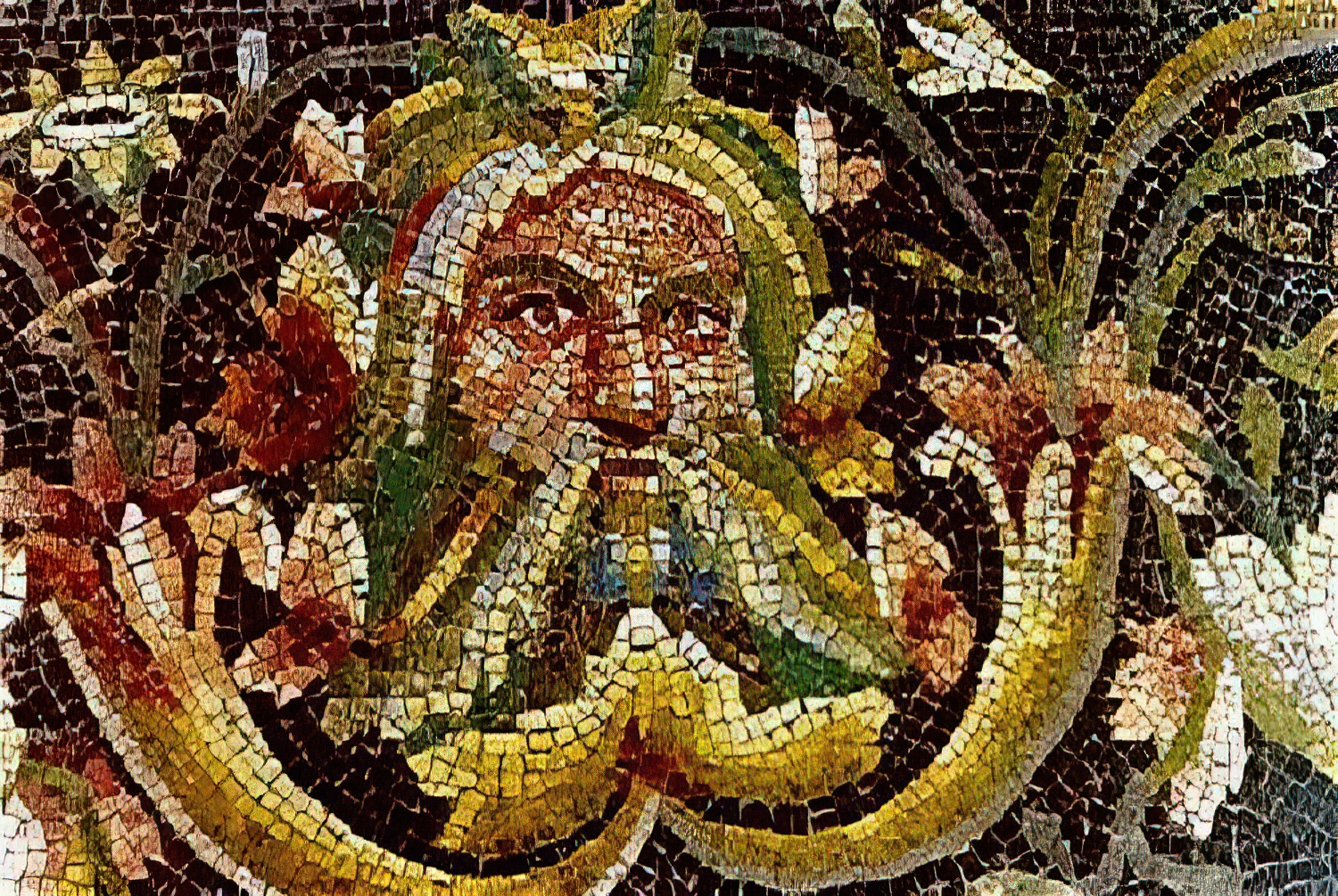
We all know the Orphic Hymns; a collection of eighty-seven short religious poems composed in either the late Hellenistic or early Roman (first or second century AD) era. They are based on the beliefs of Orphism, a mystery cult or religious philosophy which claimed descent from the teachings of the mythical hero Orpheus. The Mysteries were mostly connected to Demeter, Persephone, life after death and reincarnation. From the Orphic Hymns also comes a list of which incenses to offer to which deity. For all Orphic Hymns, go here. 


Beyond the Orphic Hymns, there are the Orphic Fragments, poems and lines connected to the Orphic school of thought. Many of these are a true treasure-trove of information and religious material. As I'm taking the day off from everything computer related today, I am leaving you with one of these poems on queue.

"Zeus is the first. Zeus the thunderer, is the last.
Zeus is the head. Zeus is the middle, and by Zeus all things were fabricated.
Zeus is male, Immortal Zeus is female.
Zeus is the foundation of the earth and of the starry heaven.
Zeus is the breath of all things. Zeus is the rushing of indefatigable fire.
Zeus is the root of the sea: He is the Sun and Moon.
Zeus is the king; He is the author of universal life;
One Power, one Dæmon, the mighty prince of all things:
One kingly frame, in which this universe revolves,
Fire and water, earth and ether, night and day,
And Metis (Counsel) the primeval father, and all-delightful Eros (Love).
All these things are United in the vast body of Zeus.
Would you behold his head and his fair face,
It is the resplendent heaven, round which his golden locks
Of glittering stars are beautifully exalted in the air.
On each side are the two golden taurine horns,
The risings and settings, the tracks of the celestial gods;
His eyes the sun and the Opposing moon;
His unfallacious Mind the royal incorruptible Ether."

Hekate is extremely important to me in my household worship. Like some of the early ancient Hellenes, I view Hekate as Hesiod's Hekate, the single-faced Titan, who rules in heaven, on the earth, and in the sea. She is a Theia of childbirth--to both animals and humans--and it is She who bestows wealth on mortals, victory, wisdom, good luck to sailors and hunters, and prosperity to youth and to the flocks of cattle. Yet, if mortals do not deserve Her gifts, she can withhold them from them just as easily. After the Titanomachy, Zeus bestowed upon Her the highest of honors. This is the Goddess I honor daily during my nighttime rites, but I do integrate some later practices and thoughts about Her; including Her role as protector of the house and 'crossroad Goddess'.

Personally, when I hear 'crossroad Goddess', I think Supernatural's crossroad's demon. I think it's exactly this modern view of supernatural forces at crossroads that makes it difficult to understand Hekate's role as a Goddess of crossroads. I therefor don't use the tem 'crossroad Goddess', because it is somewhat deceiving; Her imagery would have stood at crossroads, and offerings were left there for safe travel, but the crossroads Hekate was most valued for protecting was the crossroads leading from the street to he home; a 'T'-shaped crossroads where Hekate ever vigilantly watches over the threshold. 

In this incarnation, She is a Goddess of purification, expiation, and protection, associated with thresholds and gates, both reaching back to the Underworld association. This view of Her dates back to about the fifth century BC, where Hesiod's views date back to about the seventh century BC. I wrote about the development of views on Hekate in this blog post about Her, and She has been worshipped in many ways throughout the ages.

As Cara Schulz so eloquently puts it in her talk about Hekate, Hekate guards the home from forces outside of it--both from natural and supernatural forces. Ancient Hellenic (especially Athenian) homes were walled off to create a courtyard; the only entrance to the home was a single door, and a single threshold. This was where Hekate's influence was felt. As such, Her influence is stationary; where Apollon and Hermes' protection extends to journeying and travels. Her worship is more domestic, at least for me.

There were statues of Hekate placed at three-way crossroads not leading to homes; these served the same purpose as 'threshold statuary', though; protection and purification. Much later, Christian, sources, warn followers away from 'placing devilish charms at springs or trees or crossroads' to alleviate illness. 

In modern household worship, Hekate's role is generally considered as an averter of evil; a protector who keeps misfortune, illness, danger, and bad luck away from the oikos. This is why She often shares shrine space with Hermes and Apollon, near the entrance to the home, or at the crossroads from the street to the driveway; a crossroads, indeed, but very different than some might imagine.

An extremely expressive terra-cotta mask, thought to represent Dionysos, was recently unearthed during excavations of the ancient Hellenic city of Daskyleion in Western Turkey. The newly-discovered treasure, which appears to represent a rather tipsy god, was located in the city’s acropolis, and is thought to have served as a votive offering of gratitude to Dionysos, according to archaeologists.


The site of the ancient city of Daskyleion, which was first inhabited during the Bronze Age, was discovered in 1952. Since then, it has routinely produced important finds from many different historical periods. Located in the ancient region of Lydia, Daskyleion received its name around 750 BC from the king Daskylos, father of Gyges, a figure found in both history and myth.

Archaeologist Kaan İren of Mugla Sitki Kocman University said the mask was unearthed in the city’s acropolis. “This is possibly a votive mask,” he explained. “More information will become available over time with more research.” Earlier this year, Iren’s team excavated a 2,700-year-old kitchen cellar in the acropolis. The researchers are now looking for seeds and other organic matter in the soil for clues to the city's cuisine.

Widely known as the God of wine and revelry, Dionysos is also the God of theater and of ritual madness — the term “bacchanal” comes from his Latin name, “Bacchus” — and he served an important role in the development of ancient Greek theatre. In myth, Dionysus is known to free his followers from social and cultural restraints through wine or ritual, most notably in Euripides’ tragic play “The Bacchae.”


Should you feel tempted to experience a breathtaking virtual reality revival of the major Bronze Age eruption of the volcano of Santorini, the siege of the ancient city of Rhodes in 304 B.C. or the discovery of the Antikythera mechanism in 1900, then your wish could be granted as early as in spring 2021. Noesis Science Centre and Technology Museum in Thessaloniki is in the process of developing a new and innovative virtual reality simulator platform and its accompanying films, which will empower users to step into the shoes of one of two distinct past-era characters in each story from the moment they put on their state-of-the-art VR headsets.


Powered by a generous half million euro funding by the EU through the Research-Create-Innovate state aid action, the Activator project, as it has been named, constitutes an ambitious effort to further develop experiential virtual reality with the aim of learning, acquainting the public with new technologies, disseminating knowledge, evolving research and also entertainment. Director of Noesis, Athanasios Kontonikolaou, states,

“This new technology that we are to introduce has nothing to do with the commercial virtual reality sets that you might have seen in entertainment venues. It will be far more upgraded and modern, and a real breakthrough once it becomes available.”

Supervised by the country’s General Secretariat for Research and Technology, the Museum has made a name for its ever-evolving informal education programs and exhibitions. Hence, the aforementioned scenarios of the first three films created for Activator are all relevant to the institution’s tradition of educating visitors on the technological and scientific achievements of the Ancient Greeks.

“In the first scenario, the viewer will be able to wander around the ancient Cycladean city of Santorini, and learn about all the technological innovations then in use at the site of Akrotiri. This was the oldest Greek, and possibly one of the first world civilizations to use structural elements of modern-day societies which were very advanced for that era, such as a sewage system and other innovations. Thanks to the motion simulator platform, users will be able to even feel the earthquake caused by the eruption of the volcano in 1613 B.C. that flattened out the city.”

Similarly, the film about the siege of Rhodes will allow visitors to familiarise themselves with the advanced war technology used in Greece around the end of the 4th century B.C..

On the other hand, the third scenario, the discovery of the Antikythera mechanism, was naturally picked up, given both the international fame of the artifact and also the specialist knowledge accumulated by several members of the Noesis Board of Directors and its researchers in extensive studies relating to this over the years.

As Kontonikolaou points out, the films created for Activator go above and beyond the customary VR gaming aesthetic: 

“Our graphics and animation are specialized and based on exceptional sensors so that we can really achieve an interlocking of view and motion in experiencing culture; one could only come across similar equipment in some of the most high-end temporary exhibitions abroad”.

The Centre for Research and Technology Hellas (CERTH), which does all the digital app research for the project and shares nearly half the funding, is the partner responsible for ensuring that exact sensory interlocking when using the platform. In addition to enjoying a 3D projection of the VR film and being in control of the viewing angle, the user will receive complete physical feedback through the specialized motion simulation equipment, thus physically feel the experiences in which they participate.

“Asides from the VR headsets, which offer what we call fourth dimension, there are certain “degrees” of movement in any motion simulator platform, such as right and left movement, the ability to rotate, to lift, to sit down… At this moment, the 4D platform offers right and left and back and forth movement, but it does not offer the possibility of rotation or of attaching sensors on the user, which would offer them an even livelier and more realistic experience.”

There is, however, extremely far-fetching potential for adding to these possibilities at a later stage: 

“We might discover newer technologies which we are unaware of today, compatible with Activator. It could offer 5- or 9-dimensional experience, as the platform would continue to progress in line with the latest technological trends – although keeping the safety of users is our first priority. There is an ongoing international discussion about whether the user could feel dizziness or fear and insecurity while watching multi-dimensional VR films, and these questions need to be answered before VR technology moves to the next level. That is why all these VR films have a maximum duration of up to 5 minutes; so that we can ensure a pleasant experience for the user, not the contrary”.

Despite delays by suppliers due to the Covid-19 pandemic, which has slowed down the production process, Activator could be set up at Noesis by March 2021, operating on a pilot basis. The first visitors to use it will be asked for feedback through questionnaires to rate the experience so that it can be further perfected.

At the same time, the project managers will declare competitions for VR experts who could help in the further development of the content of the films for the platform or even advance the latter with additional levels of motion experience in the future.

If the pilot operation goes as expected, Kontonikolaou would aspire to see Activator marketed internationally by the commercial branch of Noesis in the summer of 2021. 

“As an independent exhibit, Activator could be either licensed or granted to respective research centers abroad, with royalties on tickets. Another thought is that it could be added as part of the IDEA temporary exhibition, which we produced with funding from the Stavros Niarchos Cultural Foundation. It was presented in Athens and Slovenia and has contracts in place for touring in Cyrpus, Egypt and Canada.”

Since Noesis is self-funded to a level of 70-80% of its annual budget, any income generated from the commercialization of Activator would go towards the institution’s financial sustainability, but also be used for new investments on original educational and research programs that benefit society and take the community forward.

A recent study by a team based at the University of Bologna, published in the Journal of Archaeological Science, has shed new light on the Minoan system of fractions, one of the outstanding enigmas tied to the ancient writing of numbers.

About 3,500 years ago, the Minoan civilization on the island of Crete developed a writing system composed of syllabic signs, called Linear A, which they sometimes used to inscribe offerings at sanctuaries and adorn their jewelry, but mainly assisted the administration of their palatial centers.

Today, this script remains largely undeciphered and includes a complex system of numerical notation with signs that indicated not only whole numbers, but also fractions (such as 1/2, 1/4, 1/8, etc.). While the whole numbers were deciphered decades ago, scholars have been debating on the exact mathematical values of the fractional signs.

Principal Investigator Silvia Ferrara, Professor of the Department of Classical Philology and Italian Studies of the University of Bologna, said: 

"We aimed to solve the problem through a lens combining different strands of research, very seldom tied together: close paleographical analysis of the signs and computational methods. In this way we realized that we could access information from a new perspective."

The members of the European Research Council project INSCRIBE (Invention of Scripts and their Beginnings), Michele Corazza, Barbara Montecchi, Miguel Valério, and Fabio Tamburini, led by Dr. Ferrara, applied a method that combines the analysis of the sign shapes and their use in the inscriptions together with statistical, computational and typological strategies to assign mathematical values to the Linear A signs for fractions.

The team first studied the rules that the signs followed on the clay tablets and other accounting documents. Two problems had so far complicated the decipherment of Linear A fractions. First, all documents containing sums of fractional values with a registered total were damaged or difficult to interpret, and second, they contradicted uses of certain signs, which suggest the system changed over time. Thus, the starting premise had to rely on documents concentrated to a specific period (ca. 1600-1450 BCE), when the numerical system was in coherent use across Crete.

To investigate the possible values of each fractional sign, the team excluded impossible outcomes with the aid of computational methods. Then all possible solutions - almost four million - were whittled down also comparing fractions that are common in the history of the world (e.g., typological data) and using statistical tests. Finally, the team applied other strategies that considered the completeness and coherence of the fractions as a system and in this way the best values were identified, with the least redundancies. The result, in this case, was a system whose lowest fraction is 1/60 and which shows the ability to represent most values of the type n/60.

The system of values suggested by the Bologna team has yielded further important implications.

The results explain how the Linear B script, adopted by the later Mycenaean Greek culture (ca. 1450-1200 BCE) from Linear A, reused some of these fractions to express units of measurement. The new results suggest that, for example, the Linear A sign for 1/10 was adapted to represent a capacity unit for measuring dry products which was, in turn, 1/10 of a larger unit. This explains a historical continuity of use from fractions to units of measurements across two different cultures.

This research aims to show that traditional methods and computational models, when used in synergy, can help us make remarkable progress into explaining some unresolved issues tied to ancient scripts that are still undeciphered.

Near the end of the month of Boedromion, there was a singular sacrifice organized in Erkhia, a deme of Attica. It was held in honor of the river God Achelous, his intended wife ('alochos') Deianeira, the Nymphs, Hermes, and Gaea. We will be holding a PAT ritual for this sacrifice on the 15th of September at 10 AM EDT.


In Hellenic mythology, Achelous (Ἀχελῷος Achelōios) is the patron deity of the 'silver-swirling' Achelous River, which is the largest river of Greece, and thus the chief of all river deities. His name is pre-Hellenic, its meaning unknown. His parents are generally believed to be Tethys and Okeanos. Very few of the river Gods have mythology about Them, but Achelous was featured heavily in the legends surrounding the hero Hēraklēs. In fact, we believe the origins for this sacrifice lie exactly there. The myth goes as follows:

Achelous, God of the most powerfully flowing river in Hellas, fell in love with the daughter of the king who ruled the land along the river. Deianeira, daughter of Oeneus king of Calydon came to age as the most beautiful woman in the land. For her hand, her father announced a contest: the strongest of her suitors would win her. Achelous, as a God, was by far the strongest in the region and was sure He would win her. But Hēraklēs had also heard of her beauty so in the end it came down to the two of them.

Hēraklēs was the strongest mortal in the world, but Achelous, being a God, had some advantages over him. He could change his shape at will. He could become a snake that curved like the winding river. He could become a bull that roared like the roaring river. And when He was a bull He could tear the very earth with His massive horns, just as the river carved away the land when it overflowed its banks. Even in the shape of a man, He had the horns of the bull on His head.

The fight was terrible. Achelous thrashed and fought Hēraklēs in all his shapes. When Hēraklēs pinned him, he became a snake and slithered loose. But Hēraklēs gripped him again and this time Achelous tried to shake free by changing into a bull. He bucked and raged, but Hēraklēs drove his horns into the Earth and with a mighty heave, he tore one off. Achelous howled and was forced to submit. As such, Hēraklēs won the match and won Deianeira's hand in marriage. And the people of Calydon won as well as the Nymphs hollowed out the horn and good Earth fills it with all the fruits and vegetables of the harvest. It became the Cornucopia, or Horn of Plenty.

This sacrifice, timed well with the reaping of the final fruits of the Earth before winter, includes all involved with the myth: Gaea's inclusion, as the source of all the fruits of harvest, speaks for Herself, Achelous (as the largest, life giving, river) was included because of His waters and the myth of the Cornucopia. That myth included his intended wife Deianeira and the manifestations of Achelous as the sacred bull, the serpent and the Minotaur--all creatures associated with Gaea. Because of their close connection to water, a fertilizing element, and the creation of the Cornucopia itself, the Nymphs were worshiped as daimons of fertility and vegetation. Hermes, as the Bringer of All that is Good helped bridge the divide between myth and humanity.

We hope you join us for this event on Facebook, and the ritual can be found here.

The first stage of the excavations of a fortified Hellenistic site from the second to the first century BC, located on Cape Chiroza between the Kraimorie district and the fishing village of Chengene Skele in Bourgas Bay on Bulgaria’s southern Black Sea coast was completed in July 2020, Bourgas municipality said on August 19. The excavations are being done by a joint team from Bulgaria’s National History Museum and the Regional History Museum in Bourgas, and are funded by Bourgas municipality.

The fortification had an area of ​​800 square metres and was protected by a stone wall and a large moat with a depth of 1.3 metres and a width of nearly four metres. An indicator of the dating of the site is the ceramic material, the statement said.

In 260 processed ceramic fragments, 40 per cent are made of Thracian ceramics – vessels made by hand, with plastic decoration and a polished surface. The other fragments are from amphorae, bottoms and sides of local and imported cups, and red lacquer ceramics with embossed decoration. A reliable marker for dating the site are the handles, the bottoms of bone amphorae (from the island of Kos) and the ceramic fragments of presumed origin from the area of ​​ancient Pergamum, according to the statement.

The discovery of the moat and the tracing, albeit at the initial stage, of the stone wall, makes it possible to assume that another late Hellenistic fortified centre was built on Cape Chiroza, dating from about the same time as the already known ones near the town of Primorsko (Farmakida), with Sinemorets, Brodilovo and Izvor. It is possible, however, that the narrow wall and the moat marked the temenos (enclosure) of a seaside sanctuary.

Underwater archaeological work was done from June 30 to July 7 in the eastern and southeastern waters off Cape Chiroza. Structures and other finds over an area of 0.1 hectares were discovered and mapped. At the same time, geophysical surveys and bathymetric surveys of the seabed were carried out, thanks to the support of the Centre for Underwater Archaeology – Sozopol, the statement said.

The work led to a number of finds and preliminary conclusions. Several scatterings of stones were found on an underwater terrace east of Cape Chiroza at a depth of four metres. The diving team managed to photograph many processed stone blocks of different sizes and shapes. The discoveries include a large number of fragments of Greek building ceramic tiles, Roman tegulas and imbrexes (overlapping roof tiles used in ancient Greek and Roman architecture as a waterproof and durable roof covering), as well as some intact Late Antiquity tiles.

The work led to a number of finds and preliminary conclusions. Several scatterings of stones were found on an underwater terrace east of Cape Chiroza at a depth of four metres. The diving team managed to photograph many processed stone blocks of different sizes and shapes.

During the underwater inspections, the diving team managed to collect from the seabed about 100 ceramic fragments, half a stone Greek anchor rod, a stone battle ball and several relatively well-preserved amphorae.

At this stage of the underwater research, it is assumed that the site at the foot of Cape Chiroza covered an area of 2000 square metres, the statement said.

For many more images, go here.