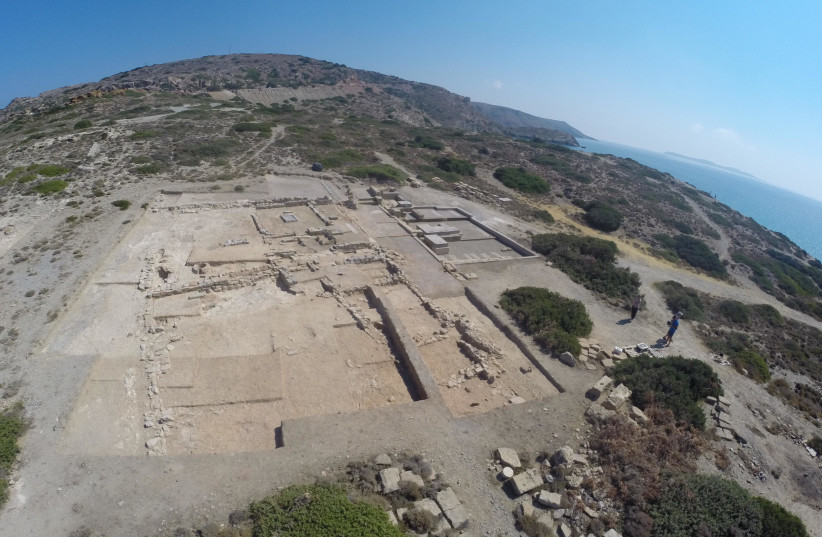
The discovery of a ceremonial building, burial monuments, cultic vessels and manipulated tombs has bolstered confidence that ancient worship was taking place 2,500 years ago at Itanos, an archaeological site of extreme importance on the island of Crete with a well situated harbor and a key place for trade roads.

Professor Didier Viviers, who is the co-director of the excavations alongside Professor Athena Tsingarida states:

“The fact that we have erected cenotaphs (burial monuments) and a concentration of cultic and drinking vessels clearly indicates that the activity within this necropolis was not daily life, but ritual practice. It was a place where the community gathered to honor their ancestors." 

The archaic building consisted of a large reception hall, adjoining a storeroom, where members of the family clan could hold a funeral banquet. But most of the surface area was devoted to a large courtyard, in which offerings to the dead were made around a erected cenotaph built on an ancient tomb. A separate room, where, probably more intimate, rites were performed, was used for another equipment also related to an ancient tomb.

“At the time of the construction of this funerary complex, some of the ancient burials were manipulated. They were emptied of their contents which were replaced with a pot (chytra), containing olive leaves, which may have been used during the preparation of ritual meals addressed to the dead.”

The discoveries at the communal burial ground at Itanos have rekindled a longstanding academic brawl over the lack of burials on Crete during this period which had been interpreted as a sign of austerity and decline of the Cretan society.

The excavators exploring Itanos are not saying that the cemetery was necessarily used to inhumed or incinerated the inhabitants per se. But they are now confident: Cretan ritual festivities worship took place there to honor the ancestors while the lack of burials does not necessary signify a decline of the society but rather reflects a change of social practices attesting frequent visits and tributes to the dead.

“This exceptional discovery helps to understand the political and social use of the cemeteries in Crete during this very important period for the construction of the Cretan city-states.”

Itanos is situated at the eastern tip of Crete and was established in the 9th century BCE but quickly rose to prominence thanks to its trade with purple dye that was obtained from shellfish or mollusks. Purple-dye was highly sought after in ancient times and became a mark of wealth since the amount of fluid acquired from each shellfish was small and a time-consuming process to extract. It is therefore easy to understand how Itanos quickly could rise to wealth and fame from selling this luxurious dye. Its fair harbor also made it a great international port where merchants from the Aegean, Anatolia, Egypt and other parts of the Mediterranean traded various commodities such as wine, perfume and ceramic wares.

Its vast material prosperity is also attested by the fact that the city-state minted its own coins which often depicts mythical sea creatures, such as Glaukos, a bearded god with a trident who was the protector of fishermen as well as coins with the sea-god Triton.

Many Itanian coins carry the image of Athena, the main divinity of the city which had a sanctuary on the western Acropolis. All good things come to an end and Itanos started to decline from the mid-7th century CE due to earthquakes that partly but repeatedly destroyed the town that was eventually abandoned.

The site of Itanos has been under excavations by the École Belge d´Athenes (Belgian School in Athens) since 2011, apart from the necropolis the excavations have uncovered numerous buildings dating from the 7th century BCE and downwards. 

The recent discovers in Itanos have forced archaeologists to rethink their ideas of Cretan burial sites in the 6th and 5th centuries BCE but also how the society at that time reinforced its social structure. At the edge of the necropolis, on top of a hill, the excavators discovered a cultic site featuring ritual feasting, a building complex sporting altar, offering pits and cultic opulent and imported objets d'art.

The ceremonial hall that was discovered, a spacious building, 6 meters long and 4,50 meters width, and was partly erected in clay on a stone foundation and had a hearth in its center used for burnt offerings. Numerous archaeobotanical remains such as grains and grapes were discovered in the courtyard in the several burnt offering pits that were used during the ritual ceremonies. Cultic, drinking and storage vessels such as goblets and chalices, perfume vases and amphoras which were used during ritual ceremonies honoring the dead were also found inside the building.

Professor Athena Tsingarida comments:

“This ceramic material is mostly imported (especially from Attica but also from the Aegean and East Greece). This international profile of imports is relatively exceptional in Crete and probably serves the family clan's desire to demonstrate its social status.”

Since no bodies was discovered in these tombs (that was converted into cenotaphs for worship), cults were dedicated to all the ancestors of the clan rather than to a single member suggests prof Viviers.

“The nature of these rituals and ceremonies suggests that the lack of actual burials or cremations in the necropolis of Itanos in the 6th and 5th centuries BCE, also known in other Cretan necropolis, was not necessarily a sign of recession or decline in the Cretan society but rather the result of a voluntary change in social behavior towards death and the rituals that go with it.”

Itanos was a port city that still has much to teach us about the burial practices in Crete from the Geometric to the Roman period. Therefore, Itanos is an excellent site for understanding the evolution of Cretan societies during these periods, which were in constant contact with the Greek world and the Eastern Mediterranean. Professor Didier Vivier concludes:

“The excavations taking place on the site allow us to highlight the leading role played by the port of Itanos in the maritime exchanges but also in the understanding of the trade circuits inland (for instance, through the distribution networks of locally maid ceramic products)."

The Belgian archaeological mission plans to resume excavations in summer of 2021, to explore the early necropolis more widely and reconstruct its topographical organization and the funerary landscape.

UK Culture Secretary Oliver Dowden rejected the chance of the UK returning the contentious Parthenon Marbles to Greece, calling the idea “impossible.” During an interview with the Times, Dowden claimed that returning the precious sculptures to Greece would be like “pulling on a thread” that could lead to the return of hundreds of other artifacts in museums in the UK and around the world.

The Parthenon Marbles were taken from Athens by British nobleman Lord Elgin after he claimed to have made a deal with the Ottoman ruler of the country in the 19th century. Many historians have since found evidence that the deal made by Lord Elgin to take the marble sculptures to England had no legal standing and is therefore void.

Despite this evidence, the British Museum has consistently refused to return the priceless marbles, despite pleas and protests by not only Greeks, but also by many others, who view Athens as the marbles’ rightful home.

Dowden stressed that many museums around the world are filled with precious artifacts from other countries, and argued that returning the Parthenon Marbles to Greece could throw museums into a crisis:

“There is an exceptionally high bar for this because I just don’t see where it ends..You go down a rabbit hole and tie up our institutions…Would we insist on having the Bayeux Tapestry back?”

The UK Culture Secretary even suggested that if the British had not taken the sculptures, they would have been destroyed during the brutal Nazi Occupation of Greece during the Second World War.

“Would they have survived the Nazis rampaging through Athens during World War II… It is a slightly trite argument but there is a truth.”

In his interview, Dowden echoes similar sentiments made by UK PM Boris Johnson, who remained firm that the ancient Greek sculptures do not belong to Greece during a statement to a Greek newspaper in early March.


Speaking to Ta Nea, he said: “The British government has a firm and long-standing position on the sculptures: they were legally acquired by Lord Elgin, in accordance with the laws in force at the time.”


He added that he understands the strong feelings of the Greek people on this issue. However, he opines that “The rightful owners are the commissioners of the British Museum since they came into their possession.”


Greece responded to Johnson’s assertion that the Marbles were rightfully British, pointing to new historical evidence that Elgin had stolen the ancient masterpieces and therefore, they belong in Greece.


Greece responds with historical evidence regarding possession of the sculptures


In a statement, Greece’s Minister of Culture Lina Mendoni said that historical evidence “shows that there has was never a legitimate acquisition of the Parthenon Sculptures by Lord Elgin and, therefore, neither has the British Museum ever acquired the Sculptures in a legitimate manner.”


“The Ministry of Culture and Sports can provide the necessary documentary evidence that can inform the British people that the British Museum possesses the Sculptures illegally,” Mendoni said in her statement.


The British Parliament, even back in 1816, wanted to be sure that Lord Elgin had authority to remove the Parthenon Marbles, and insisted on the production of a document to prove it.


One third of them had very serious reservations about the legality — or morality — of the taking of the marbles out of Greece, and they insisted on such proof. And an apparently official Ottoman document called a firman was indeed produced — in Italian.


According to many experts, the document the British Museum refers to as a firman is not an actual firman at all.


Professor Dr. Zeynep Aygen, the author of the book “International Heritage and Historic Building Conservation: Saving the World’s Past,” has stated that “the letter in the Italian language is not a firman at all; there is no way that it can be accepted as a firman.”


She explained to Greek Reporter that “the Ottoman Court would not give a letter written in the Italian language… we do not know where the original of the letter is.”


Dr. Aygen maintains that “a firman is a royal document with a number of special signs. Therefore it is clear that the letter in the Italian language is not a firman approved by the Sultan and not a “buyruldu” by the Grand Vizier.


“In both cases the necessary format is missing from the aforementioned letter.”


Author: Anna Wichmann | Source: Greek Reporter [March 28, 2021]


Support The Archaeology News Network with a small donation!


Donate with PayPal button 


 Labels Archaeology, Europe, Greece, Heritage, Southern Europe, UK

 In 430 BC, an 11-year-old girl from Athens called “Myrtis” − a victim of the great plague of Athens — could not imagine that after 2500 years, she would take part in the global effort in the fight against the COVID-19 pandemic. Myrtis, with her wisdom and her 2,500 years of experience, is being used to impart knowledge and to strengthen the global resolve in the fight against the scourge threatening the world today.


The ancient girls’ remains were discovered in 1994–95 in a mass grave during the construction works to build the metro station in the Kerameikos neighborhood of Athens. Her face, which was painstakingly recreated by a team under Professor Manolis Papagrigorakis, appears prominently in an animated video calling on us all to listen to the experts, fully respect the new sanitation and distancing rules, and take special care of our loved ones so that we can have them by our side tomorrow.

In the video, which was a created after a joint initiative of Papagrigorakis and the United Nations, the 11-year-old Greek girl who lived so long ago quotes the Secretary General of the United Nations, Antonio Guterres, and agrees with him that the whole of humanity, united together, will again win the fight against today’s common enemy.

The little girl, who used to play in the foothills of the Athens Acropolis, no doubt gazing at the Parthenon just as we do today, began her second journey around the world in 2010 in the Acropolis Museum.

Her collaboration with the United Nations also began during that same year. The UN named Myrtis a “Friend of the Millennium Development Goals” along with other international personalities such as the UN Secretary General, Kofi Annan, the President of Ireland Mary Robinson, and the activist Bianca Jagger.

In this capacity, Myrtis sent a widely-translated message to the leaders of the world, asking them to save the lives of millions of children who are dying of diseases such as the one that killed her. Diseases that nowadays can be prevented and even cured. The Athens girl continues her impressive journey around the world today. She has become an exhibition, a postage stamp, an image on a coin, and a painting.

Her story, which is taught in schools in Greece and abroad, has now been told to thousands of students across the world. She has even served as the theme of scientific conferences. The tiny ancient Greek girl has inspired thousands of people, carrying her timeless message warning us about the ravages of war, poverty and child mortality. In this way, an ancient Greek has become the very symbol of not only science but the universal values which have accompanied humans from ancient times up to the present day.

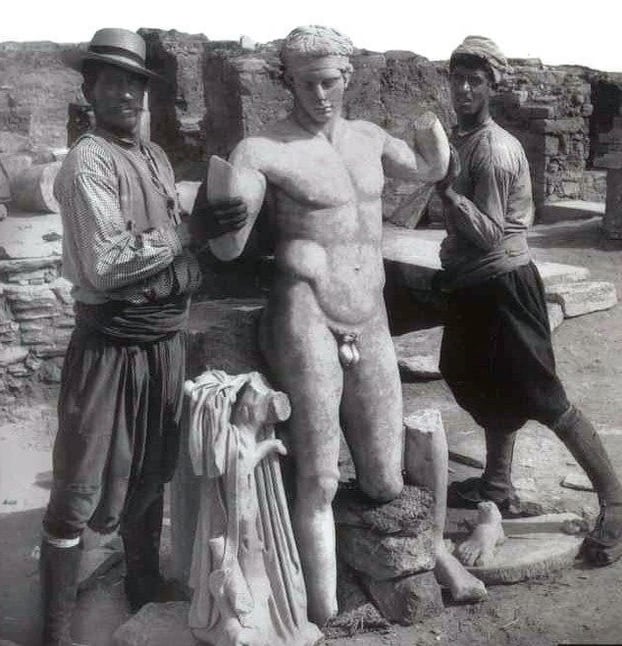
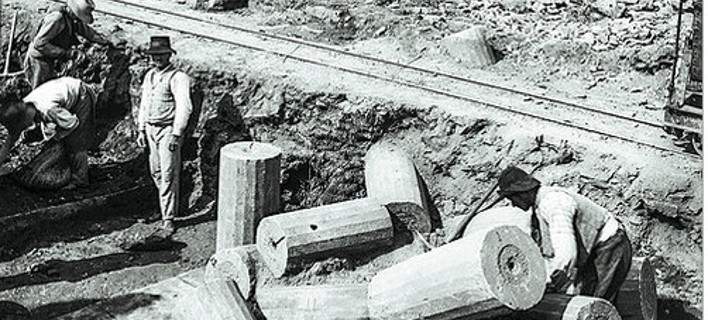
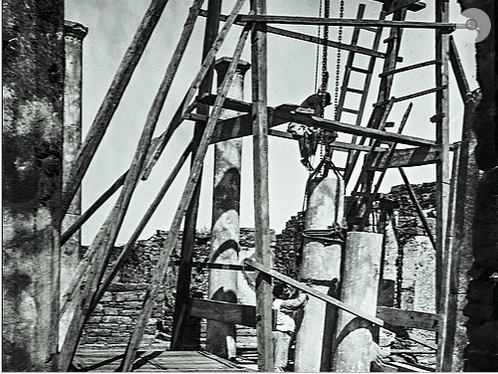
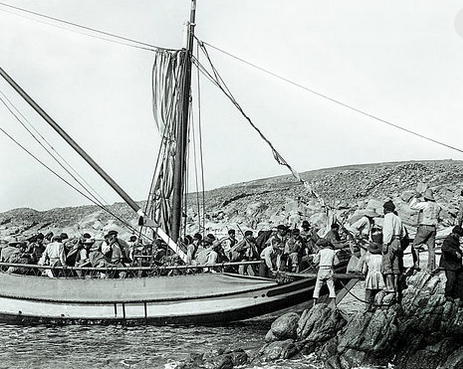
Rare photographs of the excavations at the Greek island of Delos from the 19th Century have come to light in a book by French archaeologists. The book “Delos 1873-1913” sheds light on the challenges facing the scientists and other skilled and unskilled workers who unearthed ancient monuments and artifacts in one of most important mythological, historical and archaeological sites in Greece.

Delos (Δήλος) was one of the most sacred places of ancient Greece, and one of the most robust trade centers as well. Its claim as the birthplace of Apollo gave Delos a strong religious identity that lasted all the way until Byzantine times.

Over the centuries, Delos was truly a cosmopolitan center with a diverse population that included people from all around the Mediterranean, but in 88 BCE the Romans razed the island during their war with Mithridates (and ally of the Athenians who controlled the island), a calamity Delos never recovered from.

Until the First World War, on the instigation of T. Homolle and then M. Holleaux, the emphasis was on the clearing of large areas in the Sanctuary zone and on the northern slopes of Cynthus, although the rest of the island was not neglected.

Several years apart (1894 and 1907), two archaeological maps of the island were drawn up, while a study of its physical geography was successfully completed by the geologist L. Cayeux (EAD IV). From 1903 onwards, the excavations enjoyed annual financial support from Joseph Florimont, Duke of Loubat (1831-1927), a rich American philanthropist and foreign corresponding member of the Academy of Inscriptions and Belles-Lettres.

This major contribution to work in the field was complemented in 1920 by the creation of a Greek epigraphy fund to support the Institute, from which the income was used for the publication of the Choix d’inscriptions de Délos by F. Durrbach (1921) and the Corpus des inscriptions de Délos.

From the 1920s onwards, the efforts of the School’s members focused on the study of monuments, batches of equipment and inscriptions discovered in the previous decades, and exploratory research concentrated more on buildings than groups of monuments.


Image source and more images: here.

I'm tackling a little constellation today,  Corvus, the Latin word for 'raven' or 'crow'. It comes from the Hellenic 'korax'. It's one of three constellations linked to a myth I will only partly reveal today, as it makes much more sense to place it with the constellation Crater, which will be the next one I tackle.


The raven and/or crow is connected to Apollon. For a variety of reasons, Hermes is often associated with these birds as well, but there is no ancient evidence for this. Apollon, on the other hand, has a long history with the birds. It seems odd that a deity associated with light is also associated with an animal with an image as negative as the raven. Ravens are often associated with battlegrounds, cemeteries, and death, with the rotting of carcasses, and funerals. In Hellenic myth, they are also associated with vision beyond that which is present. With oracular visions, and with spotting that which can not, or should not, be spotted.

One myth associated with the constellation Corvus is that of Apollo and Koronis (Κορωνίς). Koronis was Apollon's lover, and was pregnant with His son, when she fell for another man, a mortal man, Ischys (Ἰσχύς). A raven--then white--had been assigned by Apollon to watch over His lover, and when the raven returned to tell Apollon of Coronis' betrayal, Apollon was furious the raven had not pecked out the eyes of the mortal whom his lover fell in love with. In a fit of rage, Apollon turned its feathers black. Apollodorus wrote about this event (3:10:3), and the events that followed:

"Besides them Leucippus begat Arsinoe: with her Apollo had intercourse, and she bore Aesculapius. But some affirm that Aesculapius was not a son of Arsinoe, daughter of Leucippus, but that he was a son of Coronis, daughter of Phlegyas in Thessaly. And they say that Apollo loved her and at once consorted with her, but that she, against her father's judgment, preferred and cohabited with Ischys, brother of Caeneus. Apollo cursed the raven that brought the tidings and made him black instead of white, as he had been before; but he killed Coronis. As she was burning, he snatched the babe from the pyre and brought it to Chiron, the centaur, by whom he was brought up and taught the arts of healing and hunting."

In another myth, Corvus represents a raven or crow in service to Apollon, who was sent out on an errant for the Theos. He was asked to bring water to Him, but instead, he paused in his quest, most commonly assumed is that he stopped for a meal of figs. When the raven returned without water, Apollon questioned him. Instead of giving a straight answer, the raven lied, and said he had been kept from the water by a snake. In some accounts, he actually had a snake in his talons as he said this. Apollon, however, saw that the raven was lying, and flung the raven, the krater with which the raven was supposed to collect water, as well as the snake into the sky, where they remain to this day. To punish the bird further, Apollon made sure the krater would forever be just out of reach of the bird.

This Apollon-oriented constellation is visible at latitudes between +60° and −90°, and best visible at 21:00 (9 p.m.) during the month of May.

I get a lot of questions from readers, and most of the time, the answers are fairly short. When I feel the question or the reply would be valuable to others as well, I make a post with a collection of them and post them in one go. Today is one of those posts.


"Quick question, what is the greek name of the process in which barley groats are scattered around the temple/shrine area in order to not only acknowledge this area as sacred space, but also to purify? Would ground barley groats be used, crushed or whole form?"

I am actually not sure about the ancient Greek term. What is the words for 'strewing', or even 'sowing'? Do any of my readers know the correct term in ancient Greek? That is what they were doing, by the way by strewing barley groats. It was a part of purification (katharmos), but more importantly, it was the start of the process of kharis, where the strewing of barley groats on and around the altar of the Theoi was like a spiritual sowing to reap the benefits of later (asked for through prayer later on in the rite). As such, the barley that was used was whole form, just like it would be for actual sowing of the crop.


"I'm worried about the credibility of the scholarly books that were released during the 19th and early 20th century. I've tried to read a few, but the scholars seem to perceive Ancient Greek religion through the lens of their Judeo-Christian beliefs. What's your opinion on the older scholarly books?"

I think that it depends an awful lot on the book. To be honest, beyond Grote's 'History of Greece', I don't have any books from that period. Most of the books I refer to regularly date from about 1970 to now. Even those sometimes have the 'Christian problem' you refer to, but the good scholars either acknowledge their bias or simply present facts.

Now, it's important to remember that every scholar writes with the knowledge they have available to them at the time of writing. And with that knowledge comes an understanding that is limited by the information available. We have made huge leaps in information and knowledge, in understanding, ancient Hellas and the ancient Hellenic religion over the last few decades. As such, I research ancient Hellas in the older books, and I find much valuable information, but I do check if there is no new(er) information available on the subject, as published in new scholarly work. In discussions, I tend to defer to the newest information available, if presented in a way that makes sense in the picture that has been painted by scholars along the years.

As for dealing with biases in scholarly work (there are more than Judeo-Christian ones, including sexist ones, cultural ones, and even sensationalism): read anything you can get your hands on, check sources against each other and if you have more than three who say the same thing, try to understand why it says this, try to built up the world frame and if you don't understand how this new information fits in, you research more, you talk to other people, until you figure it out. Don't accept information just because it's in a book. Always think for yourself.


"Do you have to be ethnically Greek to worship the Greek gods? Does this belief have any precedent in Ancient Greece? My ancestry is Germanic, so it was suggested to me that I look into Ásatrú. I have no problem with Ásatrú, but I don't believe that the religion is right for me. I desire a close and intimate relationship with the gods, and their gods feel distant to me."

No, I don't think you have to be ethnically Greek to worship the Hellenic Gods. It might give you a bit of an advantage when it comes to the language and finding people to practice with, but that is about it. The Theoi call on whom they call. I'm not ethnically Greek, and it does not hold me back from worshipping the Hellenic Gods at all.

You know, I have the same feeling about the Norse Gods, although my Ásatrú friends tell me that is complete BS ;-) We all have religions we feel at home in and neither skin colour, nor ethnicity, not gender, nor sexuality, nor anything else can change that.

The diet of the ancient Hellenes is fascinating for so many reasons. They had impressively varied eating habits by any measure, but they naturally contrasted in many ways to ours — with the most characteristic difference being that they ate much less than we do today.

In ancient Hellas, people would begin their day with a very lean breakfast, which included a little barley bread, dipped in lukewarm wine, and figs. Another common breakfast food was actually a drink, called “Kykeonas,” a libation made of boiled barley, flavored with mint or thyme, which was believed to have healing properties.

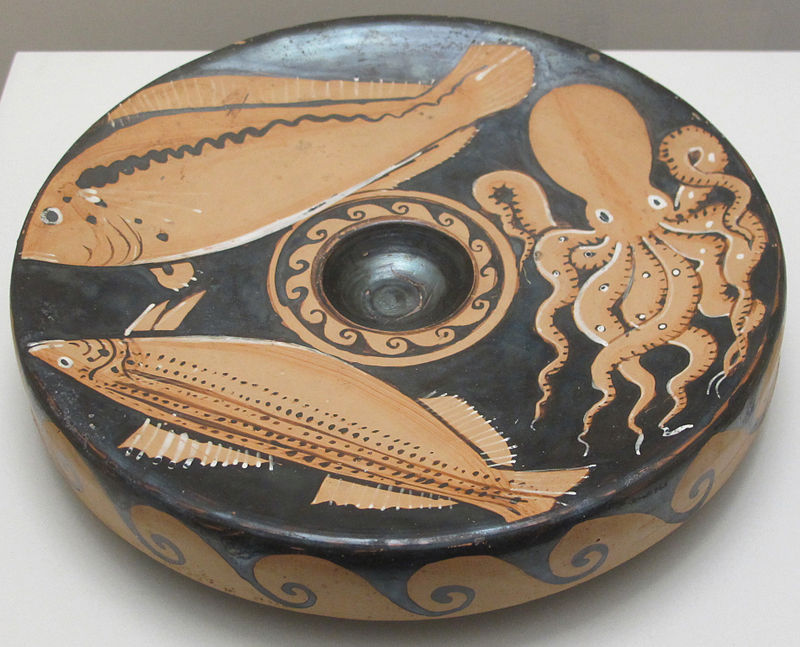
Hellenes of that time were very fond of fish, perhaps even more than we are today. For lunch, they would routinely dine on any fresh fish that was available, including sea bream, mullet, sardines and eels. There was always an assortment of legumes from which to choose, including lentils, beans, chickpeas, peas and broad beans, to eat with their fish. The eternal European staple of bread was always part of the midday meal, accompanied by cheese, olives, eggs, nuts and fruits.

Ancient Hellenes considered dinner to be the most important and enjoyable meal of the day. Although health specialists today recommend that we should eat particularly lightly in the evening, ancient Hellenes actually spent a lot of time together at the table at the end of the day, and ate fairly heavily at that meal. Dinner in ancient Greece was usually accompanied by desserts, the so-called “tragimata,” which could be composed of fresh or dried fruit, including figs, as well as nuts and grapes or honey-based sweets.

Regarding their meats, it was not often consumed in ancient Hellas. Usually only after public sacrifices, either on the day of, or sold in shops after. In their diet, the ancient Hellenes showed a particular preference for pork and veal, while they rarely ate goat or lamb. They also loved hunting, especially small birds such as thrush and quail, but they were not averse to taking deer as well, so venison was not unheard of at the ancient Hellenic table. Perhaps most surprisingly, the Hellenes also loved their snails; it is recorded that Cretans had eaten them since the time of Minos.

Fruits and vegetables were always present on the table, although not in the variety that we find today. Pears, pomegranates, apples, figs, berries, cherries and plums were always in high demand. Athenians were known to cultivate vegetables in their gardens, and they had a particular love for onions, garlic, lettuce, cucumbers, peas, artichokes, celery, dill and mint. Mushroom, fennel, asparagus, and even tender, edible nettles, were to be found in abundance in the fields.

As almost all of us still do, ancient Hellenes also loved their bread, and they would bake many different varieties of it, from flat breads to semolina bread, and even a coarse type of bread made from millet. They frequently dined on the types of fish which lived right along the rocky shores of the Aegean, but they also enjoyed fish from the open seas, such as tuna, a much-sought-after delicacy. They also enjoyed mackerel, bonito and anchovies, which were abundant during their season and were easy to catch with nets. “Garos,” a type of sauce made from a fried, salted fatty fish, was another basic element of the diet along the coast in ancient Hellas. High quality garos, made of tuna offal and blood, was actually quite expensive.

The kitchen shelves of an ancient Greek house were always stocked with an impressive variety of herbs and spices, including oregano, basil, mint, thyme, cardamom, coriander, capers and sesame, which they would add liberally to their dishes.

Most foods were particularly light, as they were baked in the oven and on a skewer, and the same was true for sweets, which were made from pastry, with dried or fresh fruit, and honey.

Every meal was accompanied by wine, of course, and olive oil was always on the table, especially for Athenians, as they considered it to be the goddess Athena’s gift to their city. They believed that the purpose of food was to satisfy the palate and not to actually fill the stomach. In that sense, and that sense only, one can even say that they were gourmands.

The only exception to this overall rule were the people of Sparta, who were by far the lightest eaters of all. True to form, even in their diet, they followed a laconic austerity, with their daily food consisting of a bowl of “black broth” and a piece of bread, while on special occasions and feasts, they would have boiled pork, accompanied by a little wine and some pita bread. But everywhere else in Hellas, there was a great variety of food at each and every meal, and people took an obvious delight in it.